General Atomics

Airbus ships ESM-4 for Artemis IV

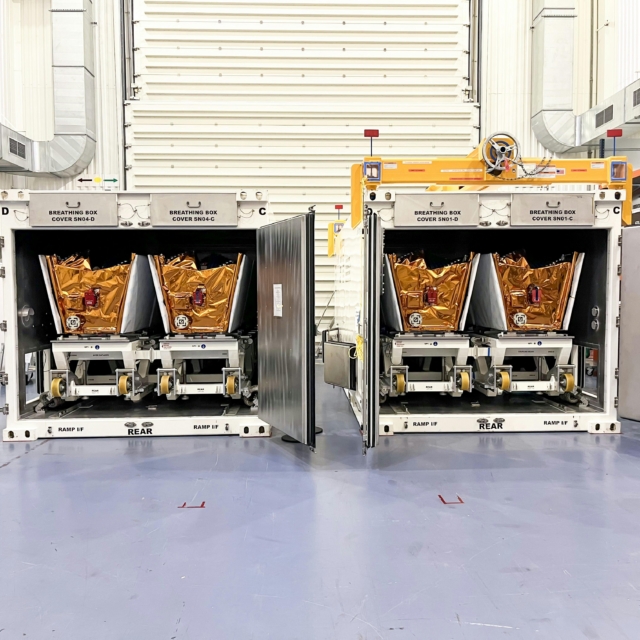
The fourth European Service Module (ESM-4) is on its way from Airbus’ facilities in Bremen, Germany to NASA’s Kennedy Space Center in Florida, USA, where it will be tested and integrated with the Orion Crew Module ready for the next stage of NASA’s Artemis programme.


Image copyright Airbus

Built by Airbus under contract to the European Space Agency (ESA), ESM-4 will be a vital part of the Artemis IV mission which envisages astronauts going to live and work in humanity’s first lunar space station, Gateway, which will enable new opportunities for science and preparation for human missions to Mars. 

Ralf Zimmermann, Head of Space Exploration at Airbus, said: “Delivering the fourth ESM takes us one step closer to a new space era with a lunar space station and increased opportunities for deep space scientific research. Europe’s role, through ESA, is crucial in this pioneering NASA-led programme."

Daniel Neuenschwander, Director of Human and Robotic Exploration at ESA, said: “ESM-4 will play a key role as the Artemis IV mission is due to deliver the International Habitation Module (Lunar I-Hab) of the Lunar Gateway space station. This state-of-the-art hardware, developed by Airbus Defence and Space and its subcontractors across Europe, demonstrates our ability to contribute to major international partnerships.”

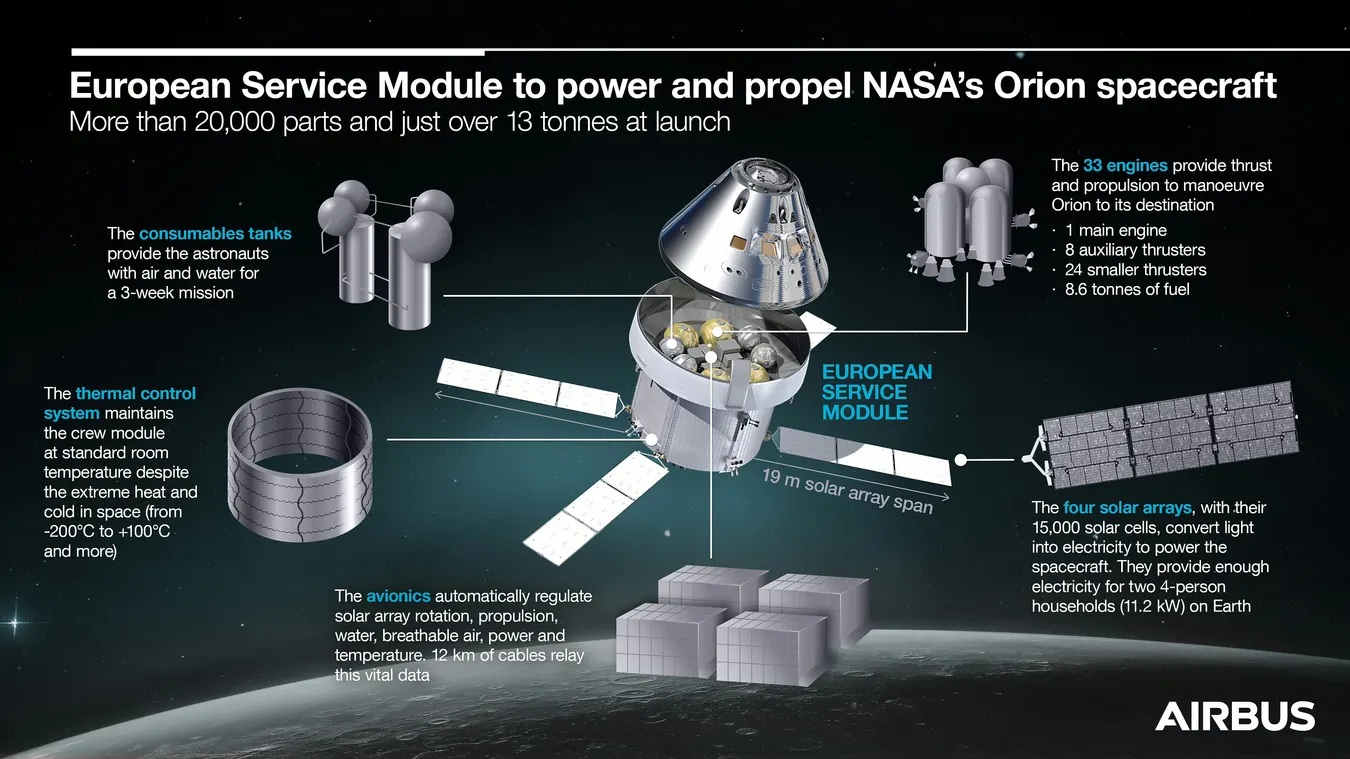
The ESM modules provide engines, power, thermal control and supply astronauts with water and oxygen. The ESM is installed underneath the crew module and together they form the Orion spacecraft. Thales Alenia Space Italia provides the thermal control system to keep the Orion crew modules between 18 and 24°C by radiating excess heat out of the ship but also keeping the cold at bay.

The four solar arrays on Orion generate 11.2 kW of electricity, enough to power two four-person households on Earth. Only about 10% of the power is needed for the ESM, with the remaining 90% going to the batteries and equipment in the crew module. The Artemis I mission showed the solar panels were able to produce a little more power than expected and this additional energy will be of use as the Artemis programme evolves.

The energy stored in the batteries of the Crew Module is key as it ensures that the Orion spacecraft has power even when the Sun is obscured. The batteries also provide power for a safe return when the ESM separates from the crew module at the end of the mission.

To enable astronauts to concentrate on the most important tasks, the electronics onboard the ESM, controlled by the Crew Module, provide a very high level of autonomy, such as temperature regulation and solar wing rotation to track the Sun.

Orion has 33 engines onboard the ESM to provide thrust and manoeuvring capabilities. The main engine, a repurposed Space Shuttle orbital manoeuvring system engine (OMS-E) provided by NASA, generates 26.5 kilonewtons of thrust. This provides enough force to escape Earth’s gravitational field and perform the translunar injection burn and to get into the Moon’s orbit. 

Eight auxiliary thrusters act as back-ups to the OMS-E and for orbital corrections. There are also 24 smaller engines for attitude control in space, enabling the spacecraft to rotate or change its angle during docking manoeuvres.

Related

Riyadh Air suspends flagship London and Manchester flights following airport attacks
Riyadh Air Boeing 787 at London Heathrow Airport in the sun
Riyadh Air suspends flagship London and Manchester flights following airport attacks
The closure of Riyadh’s main airport has disrupted the Saudi carrier’s UK connections, just weeks after it added Manchester to its growing network.
Aerospace

12 Oct 2026

Quieter drones could still face noise backlash as UK prepares for BVLOS expansion
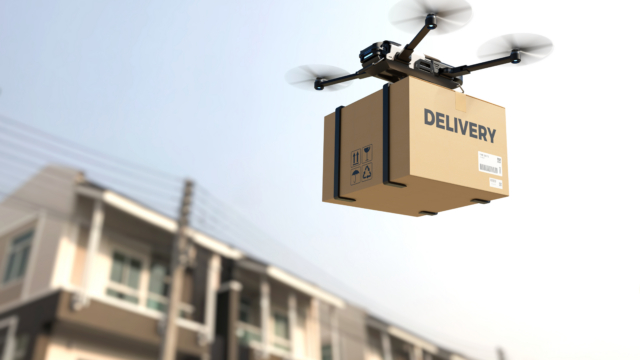
A drone flies with a package on delivery past residential houses.
Quieter drones could still face noise backlash as UK prepares for BVLOS expansion
The CAA wants early action on flight patterns, community engagement and noise assessment to help emerging aviation services grow without creating avoidable disturbance.
Aerospace

12 Oct 2026

NCC to lead business support for Greater South West robotics hub
GSWRAH
NCC to lead business support for Greater South West robotics hub
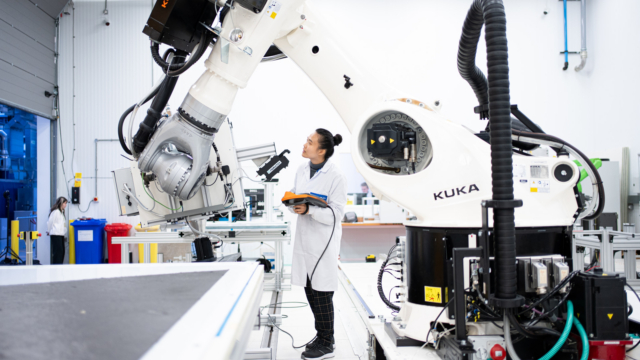
The UK's National Composites Centre (NCC) is to going to help businesses across the Greater South West navigate the challenges and opportunities of robotics and automation through a new £9.8 million regional programme.
Aerospace Defence

12 Oct 2026

Royal Navy seeks suppliers for Type 93 uncrewed submarine under AUKUS programme
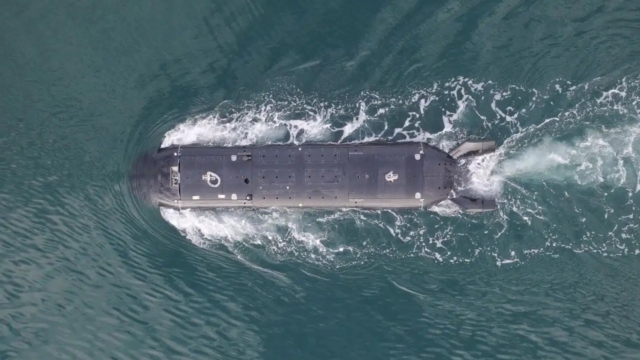
The Royal Navy's experimental XLUUV, XV Excalibur, conducts a trial at sea. Image: MSubs Ltd via LinkedIn
Royal Navy seeks suppliers for Type 93 uncrewed submarine under AUKUS programme
With the XV Excalibur uncrewed submarine now in service, the Royal Navy is seeking industry partners for its Type 93 XLUUV programme, supporting future AUKUS capabilities.
Defence

13 Oct 2026

ITURRI unveils GRITSTONE for British Army Light Mobility Vehicle programme
ITURRI GRITSTONE for the british army LMV programme
ITURRI unveils GRITSTONE for British Army Light Mobility Vehicle programme
The proposal has been developed specifically to meet the future mobility requirements of the British Armed Forces for an LMV to replace its existing Land Rovers.
Defence

12 Oct 2026

BAE Systems to produce new ACV variant for US Marine Corps
ACV
BAE Systems to produce new ACV variant for US Marine Corps
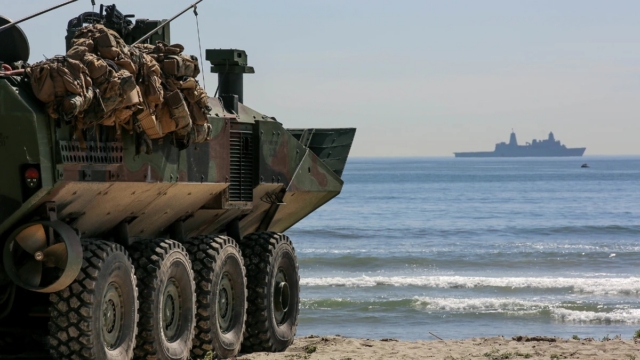
Under a $230 million contract, BAE Systems will adapt its modular Amphibious Combat Vehicle (ACV) design to produce a new variant that will complement the US Marine Corps’ advanced amphibious capabilities.
Defence Member News

12 Oct 2026

UK and Germany back SaxaVord in new European space launch deal
SaxaVord Spaceport, Shetland
UK and Germany back SaxaVord in new European space launch deal
The UK and Germany have agreed to deepen space launch cooperation, with Scotland's SaxaVord Spaceport securing European access to orbit.
Aerospace Defence Space

9 Oct 2026

Excelerate Technology to build UK CNI robotic security solution
Satellite in Earth orbit
Excelerate Technology to build UK CNI robotic security solution
In a project co-funded by the European Space Agency Business Applications and Space Solutions (ESA BASS) and supported by the UK Space Agency, Excelerate Technology will build and demonstrate how space-enabled assets can provide innovative safety and security solutions, including protection of Critical National Infrastructure (CNI) at a site in the UK.
World Space Week: How British technology will help ESA return to the Moon
ESA Argonaut
World Space Week: How British technology will help ESA return to the Moon
As Europe prepares to return to the Moon, British-developed LEIA LiDAR technology will help ESA's Argonaut lander autonomously identify safe touchdown zones on the lunar surface.
Space

5 Oct 2026

UK steps up AI cyber defences as minister warns dependence is a national security risk
Engineering team implements digital guardrails on autonomous AI agent to limit risk, Teamworking tech startup colleagues apply artificial intelligence safety constraints, brainstorming, camera A.
UK steps up AI cyber defences as minister warns dependence is a national security risk
The UK plans to expand AI-powered cyber protection and prepare for incidents involving autonomous systems, while calling for stronger UK technology capabilities.
Security

12 Oct 2026

UK opens weapons test ranges to SMEs as hypersonic testing investment advances
Project Safari hypersonics testing opens at QinetiQ MOD Hebridies for UK defence SMEs
UK opens weapons test ranges to SMEs as hypersonic testing investment advances
The MoD is easing SME access to UK weapons test ranges through Project Safari while advancing hypersonic missile testing plans at MOD Hebrides.
Defence Security

12 Oct 2026

Avon Protection secures US military order for MITR System
Avon Protection’s MITR System
Avon Protection secures US military order for MITR System
The United States Department of War (DoW) has placed an order for Avon Protection’s MITR System for its Special Operations Forces, becoming the second Five Eyes (FVEY) nation to adopt the system.