General Atomics

Pioneering programme to develop horizontal space launch

Ahead of the UK Space Conference (Manchester, 16th-17th July 2025), Frazer-Nash has announced it is leading a new research programme, known as INVICTUS, to develop a comprehensive concept design for a vehicle and its integrated systems, with the goal of building and flying a Mach 5-capable aircraft at the edge of space by early 2031.


Image courtesy Frazer-Nash 

INVICTUS is a €7million project funded by the European Space Agency and the stepping stone to developing commercially viable spaceplane technology. The programme aims to develop a reusable vehicle that takes-off horizontally from a runway, like an aeroplane. This capability strives to transform spaceflight and move us closer to widespread space access.

Over 12 months, INVICTUS has been tasked to deliver the concept and elements of preliminary design of the full flight system, complete with requirements, analysis, development plan, and programme definition to first flight. It strives to demonstrate the efficacy of hydrogen-fuelled, precooled air breathing propulsion at hypersonic speeds, technology that will ultimately enable horizontal take-off. 

Led by Frazer-Nash, INVICTUS has an expert consortium behind it with deep experience of delivering aircraft. Partners include Spirit AeroSystems, Cranfield University and a number of small-medium enterprises. Frazer-Nash has also welcomed a team of experts from Reaction Engines Ltd (REL) into their company who have been developing and demonstrating pre-cooler technology for more than a decade, maximising the value of legacy investment.

Aircraft that fly at hypersonic speeds – more than five times the speed of sound – face extremely high temperatures due to shock heating and the friction from the air. Typical aircraft engines cannot operate in these conditions as the air is too hot to handle. Whilst some specialised engines exist that can fly in this envelope, they present their own drawbacks such as limited windows of performance and inability to start on the ground. 

The precooler, originally developed and tested by REL, cools the air before it reaches the engine, allowing conventional aircraft engines to travel at hypersonic speeds.

Previous tests by REL validated the precooler technology at hypersonic flight conditions, successfully demonstrating the integration of the technology with existing jet engine architecture. It showed the precooler’s ability to cool airflow at speeds significantly more than the operational limit of any jet engine powered aircraft in history. Mach 5 is more than twice as fast as the cruising speed of Concorde and over 50% faster than the SR-71 Blackbird aircraft, the world’s fastest jet engine powered aircraft.

INVICTUS is set to unlock a new era of hypersonic capability through the development of pre-cooled propulsion systems, enabling a broad spectrum of future high-speed applications. As a dual-use technology initiative, INVICTUS aims to deliver transformative advances across propulsion, advanced materials, artificial intelligence, and autonomous systems—benefiting both defence and commercial sectors. By establishing a UK-led, reusable hypersonic test platform, the programme positions the UK and Europe at the forefront of next-generation aerospace innovation, making strides on current global launch technologies.

Dr Tommaso Ghidini, Head of the Mechanical Department at the European Space Agency, said: “Hypersonic flight is not just the next frontier of aerospace—it is the gateway to a new paradigm of mobility, defence, and space access. With INVICTUS, Europe is seizing the opportunity to lead in technologies that will redefine how we move across the planet and reach beyond it. By mastering reusable, air-breathing propulsion, we are laying the foundation for aircraft that take off like planes and reach orbit like rockets—revolutionising both terrestrial and orbital transportation. This is where dual-use innovation meets strategic autonomy.”

Sarah Wilkes, Managing Director at Frazer-Nash said: “INVICTUS is an exciting opportunity to provide advanced technology for space and advance capabilities in defence. With strong industry support and deep engineering and aerospace expertise – including Frazer-Nash colleagues with a decade of propulsion experience – we have all the right ingredients to make this ambitious vision a reality.”

Tony Forsythe, Head of Space technology at the UK Space Agency, said: "This exciting project, made possible by our investments in the European Space Agency, has significant potential to build on advanced cooling and hypersonic propulsion technology developed by UK engineers over many years. We look forward to seeing how the work develops and the opportunity it presents for boosting economic growth and national security.”

Related

Airport chiefs urge government to tackle business rates
Manchester Airport
Airport chiefs urge government to tackle business rates
AirportsUK chair Baroness Ruby McGregor-Smith has warned rising costs risk holding back future investment.
Aerospace

15 Oct 2026

Unions oppose £5.7bn easyJet takeover by Apollo over job security concerns
easyJet A320
Unions oppose £5.7bn easyJet takeover by Apollo over job security concerns
European employee representatives have opposed Apollo’s £5.7bn easyJet takeover, citing concerns over job security and long-term employment protections.
Aerospace

15 Oct 2026

UK airport drop-off charges face government review after sharp increases
A passenger with luggage walks next to a travelator in a London Heathrow Airport Central Terminal Area.
UK airport drop-off charges face government review after sharp increases
The UK Government will review airport drop-off fees after sharp increases, with some airports now charging £10 for short stops.
Aerospace

15 Oct 2026

Viasat orders ALL.​SPACE Hydra MAX Terminals for Ka-band networks
ALL.SPACE Hydra
Viasat orders ALL.​SPACE Hydra MAX Terminals for Ka-band networks
Viasat has placed an order for multiple ALL.​SPACE Hydra MAX terminals approved to operate on Viasat's global NextGen Ka-band network, providing resilient SATCOM connectivity for defence and government users.
Defence Member News Space

15 Oct 2026

MoD extends Leidos LCST contract to transform UK defence logistics support
Military convoy
MoD extends Leidos LCST contract to transform UK defence logistics support
Continuing its support of UK national security, defence and logistics programmes, Leidos is modernising supply chain resilience and defence logistics by heightening inventory visibility and extending integrated data access.
Defence Member News

15 Oct 2026

Royal Navy adds suspected counter-drone launchers to HMS Dauntless
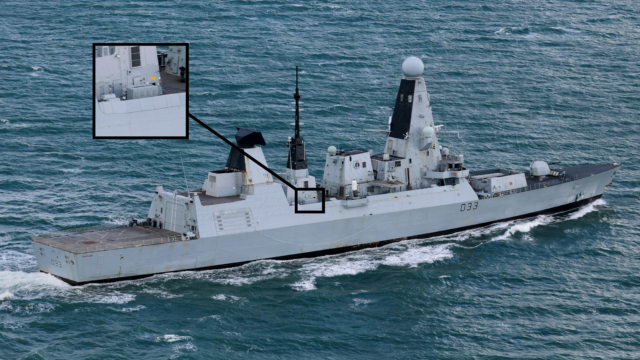
HMS Dauntless (D33) conducts a PASSEX with Ukrainian minehunters off the Isle of Wight on 10 October 2026. The inset image offers a closer look at the warship's new suspected C-UAS launcher. Image: MOD Crown Copyright/PO Phot Belinda Alker
Royal Navy adds suspected counter-drone launchers to HMS Dauntless
HMS Dauntless has received two unidentified launchers potentially designed for drone interception, amid the Royal Navy’s efforts to strengthen shipborne C-UAS defences.
Defence

15 Oct 2026

Viasat orders ALL.​SPACE Hydra MAX Terminals for Ka-band networks
ALL.SPACE Hydra
Viasat orders ALL.​SPACE Hydra MAX Terminals for Ka-band networks
Viasat has placed an order for multiple ALL.​SPACE Hydra MAX terminals approved to operate on Viasat's global NextGen Ka-band network, providing resilient SATCOM connectivity for defence and government users.
Defence Member News Space

15 Oct 2026

Cornwall Space Cluster launches £15k legal support programme for space SMEs
Goonhilly satellite near Cornwall Space Cluster
Cornwall Space Cluster launches £15k legal support programme for space SMEs
Cornwall Space Cluster has partnered with Stephens Scown to offer specialist legal advice to space businesses, helping them protect intellectual property, prepare for investment and support future growth.
Space

15 Oct 2026

ClearSpace selected to deliver UK’s first active debris removal mission
ClearSpace removing space debris
ClearSpace selected to deliver UK’s first active debris removal mission
The UK-led programme will remove two defunct satellites while creating specialist jobs, supporting supply chains and building capability in the growing in-orbit services sector.
Space

15 Oct 2026

NAD and CDS want accelerated capability as DSEI UK 27 launched
NAD and CDS launch DSEI UK 27
NAD and CDS want accelerated capability as DSEI UK 27 launched
As the National Armaments Director (NAD) and the Chief of the Defence Staff (CDS) launched DSEI UK 2027 yesterday, they said faster capability delivery, greater innovation and improved readiness are required to ensure the UK and its allies are suitably prepared for any future conflict.
Warwickshire Police turns to AI to review the quality of investigations
Chat with AI or Artificial Intelligence technology. Man touching chatting virtual with an intelligent artificial intelligence asks for the answers he wants. Smart assistant futuristic, Chatbot,
Warwickshire Police turns to AI to review the quality of investigations
An eight-agent system checks investigation records against policing standards, with officers retaining responsibility for decisions.
Security

14 Oct 2026

UK Connect Defence launches Rapid Broadband Kit
UK Connect Defence's RBK
UK Connect Defence launches Rapid Broadband Kit
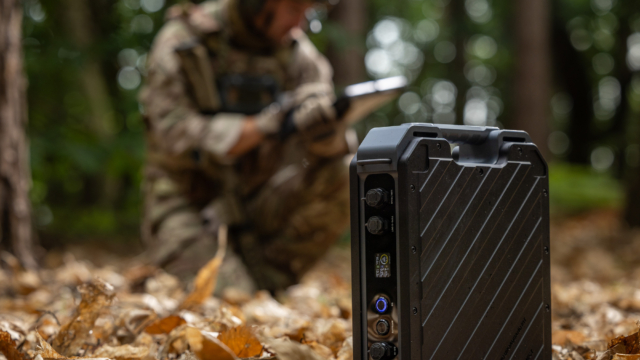
A new solution designed and manufactured in the UK, is set to deliver resilient integrated 5G and LEO satellite services broadband connectivity via a single rugged unit, connecting people, systems and services for defence, humanitarian and remote operations, with no external supporting infrastructure.