Leonardo’s PRS receiver certified for defence and emergencies across Europe
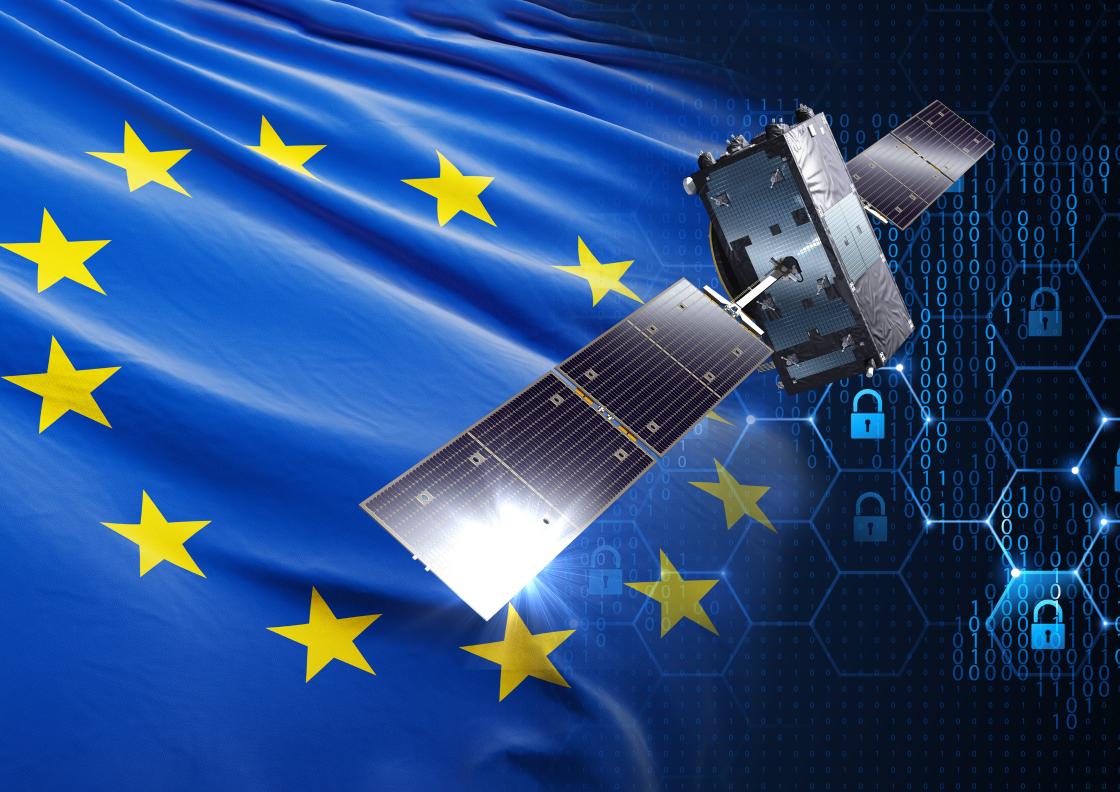
Leonardo has designed, developed and built the only receiver specifically conceived for the ultra-secure Public Regulated Service (PRS) - provided by the Galileo satellite navigation service - which is currently accredited for use throughout Europe.


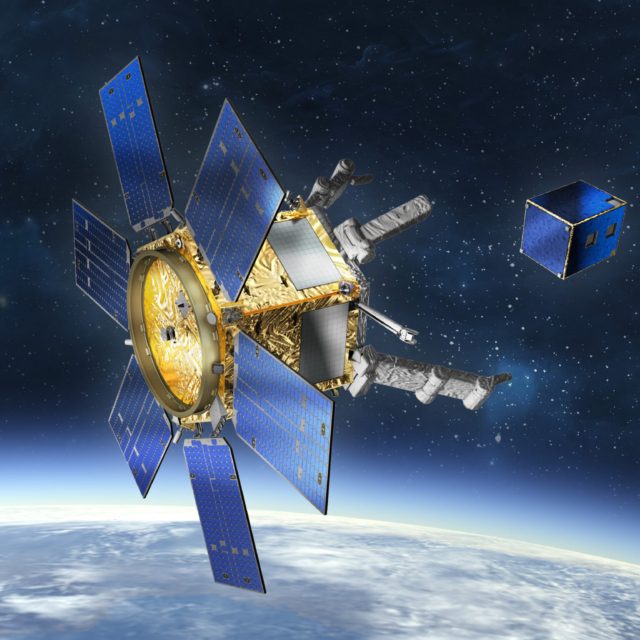
Image courtesy Leonardo

It is the first and only device to be accredited for use throughout the continent. Thanks to this accreditation, civil and military bodies will have access to Galileo’s PRS service for secure and accurate positioning and navigation information essential for public security.

The device – produced at the Leonardo plants for the Italian Space Agency and under the coordination of Italy’s Competent PRS Authority, expressed by the Department of Information Security – Central Secrecy Office – has won the approval of the Council of the European Union for IT (Information Technology) security products after successfully completing the process that requires double cryptographic evaluation.

In fact, in line with the directives of the Council of the EU, the receiver was first nationally certified and then tested by a second Authority (Appropriately Qualified Authority – AQUA), chosen from those recognised by the Council for the European certification of cryptographic products.

A series of rigorous tests has demonstrated the device’s high level of security under various aspects:
Computer operations (computer security)
Encryption for the protection of information (communications security)
The prevention of information leaks caused by electromagnetic emissions from terminals (emission security).

With its recently awarded certification, the Leonardo receiver will enable all authorised bodies, both civil and military, to access the PRS service of the European Galileo satellite programme, the most accurate worldwide. This encrypted, secure and resilient service is accessible only to EU Member State government authorised users and provides positioning, navigation and synchronisation data for sensitive applications, including defence, fire services, health services, search and rescue, police, coastguards and civil protection. The Leonardo receiver is installed on board the vehicles of bodies that use the PRS service to provide reliable, accurate and cyber-protected information.

The Leonardo receivers are now ready to be sent to Prague, where the EU Agency for the Space Programme (EUSPA) has its headquarters, for tests on the PRS signal in various European countries. This is a preparatory step before the service becomes fully operational. The first device was installed and is now operational at the Galileo security centre in Paris.

A flagship programme of the EU, Galileo is managed and funded by the European Commission. Since its inception, ESA leads the design, development and qualification of the space and ground systems, as well as procuring launches. ESA is also entrusted with research and development activities for the future of Galileo within the EU programme Horizon Europe. The EU Agency for the Space Programme (EUSPA) acts as the service provider, overseeing the market and application needs and closing the loop with users.

Galileo is the most accurate satellite navigation system in the world, serving more than four billion people and devices globally. All smartphones sold in the European Single Market are now guaranteed Galileo-enabled. In addition, Galileo is making a difference across the fields of rail, maritime, agriculture, financial timing services and rescue operations. Galileo provides positioning and navigation services that are accessible free of charge to the public, as well as ad hoc services for specific applications and an encrypted service, the PRS (Public Regulated Service), which is accessible only to users authorised by governments of the EU Member States. Galileo’s precision and accuracy is also made possible through the technological contribution of the Leonardo Group, which plays a leading role in both the land and the space-based components of the programme.

Related

Frewer Engineering completes leadership succession with ownership transfer
Dr Richard Lock, MD at Frewer Engineering
Frewer Engineering completes leadership succession with ownership transfer
Surrey engineering consultancy Frewer Engineering has completed a planned ownership transition, with managing director Dr Richard Lock acquiring a majority stake from founder Peter Frewer.
Aerospace Member News

20 Nov 2026

First UK-built Islander from revived Isle of Wight production line delivered to Falklands
FIGAS Britten-Norman Islander
First UK-built Islander from revived Isle of Wight production line delivered to Falklands
Britten-Norman has delivered the first Islander aircraft built on its revived Isle of Wight production line to the Falkland Islands Government Air Service following a three-week ferry flight.
Aerospace

20 Nov 2026

Viasat launches VIA to work across all in-flight connectivity networks
A cloud-delivered media platform that runs on any in-flight connectivity network - including via satellite - has been launched by Viasat, which can enable airlines to deliver their own branded experience across their fleets.
UK manufacturing orders rebound, with aerospace and defence demand providing a boost
British Army
UK manufacturing orders rebound, with aerospace and defence demand providing a boost
British manufacturing output rose in November for the first time since May 2024, driven by strong aerospace and defence orders, CBI says.
Defence Uncategorized

20 Nov 2026

Aircraft return to RAF Brize Norton after runway reopened
RAF Brize Norton runway
Aircraft return to RAF Brize Norton after runway reopened
Aircraft have returned to RAF Brize Norton following a full replacement of the Station’s three kilometre (1.86 miles) runway in just 16 weeks.
Defence Member News

20 Nov 2026

Kromek receives £2.5m radiation detectors order from MoD
Arnab Basu, CEO of Kromek
Kromek receives £2.5m radiation detectors order from MoD
The UK Ministry of Defence has placed a second order with Kromek for its wearable D5 RIID radiation detection device, valued at £2.5 million.
Defence Member News

20 Nov 2026

ESA awards OHB €102m ClearSpace-1 contract
ClearSpace Titel V2
ESA awards OHB €102m ClearSpace-1 contract
Following the selection of OHB as the prime contractor for the European Space Agency's ClearSpace-1 programme, Europe has moved a step closer to realising Europe’s first active space debris removal mission.
Member News Space

20 Nov 2026

Viasat launches VIA to work across all in-flight connectivity networks
A cloud-delivered media platform that runs on any in-flight connectivity network - including via satellite - has been launched by Viasat, which can enable airlines to deliver their own branded experience across their fleets.
Hexagon and Red Bull look beyond engineering degrees to find manufacturing’s future talent
Formula 1 car at Red Bull's MK7 campus
Hexagon and Red Bull look beyond engineering degrees to find manufacturing’s future talent
At Red Bull’s Milton Keynes campus, Hexagon brought students and employers together to explore how interests in gaming, data and problem-solving could become a route into manufacturing — and what industry needs to do to open those doors.
Met launches handheld facial recognition pilot for frontline identity checks
New Scotland Yard sign
Met launches handheld facial recognition pilot for frontline identity checks
The Metropolitan Police have launched a six-month trial of a new handheld facial recognition tool that allows officers to verify a person's identity without their consent by comparing a photograph taken on a police-issued mobile device against the force's custody image database.
Security

20 Nov 2026

Hexagon and Red Bull look beyond engineering degrees to find manufacturing’s future talent
Formula 1 car at Red Bull's MK7 campus
Hexagon and Red Bull look beyond engineering degrees to find manufacturing’s future talent
At Red Bull’s Milton Keynes campus, Hexagon brought students and employers together to explore how interests in gaming, data and problem-solving could become a route into manufacturing — and what industry needs to do to open those doors.
Expert shares what SMEs should do in the first two hours of an energy or cyber disruption
Server racks creating data center corridor 3d
Expert shares what SMEs should do in the first two hours of an energy or cyber disruption
Cyber attacks, grid failures and rising electricity demand are creating new business risks. Dr Phil Wu explains the three actions SMEs should take in the first two hours of a disruption.
Security

19 Nov 2026