

UKDI opens latest innovation competition to accelerate battlefield capability delivery


Building on lessons learned from the rapid iteration of development in Ukraine, the UK Defence Innovation (UKDI) has opened Cycle 8 of its “Innovation Support to Operations” themed competition.
This seeks fast, cost-competitive, manufacturable innovations from UK-registered entities that reach at least Technology Readiness Level (TRL) 6 in ≤4 months.
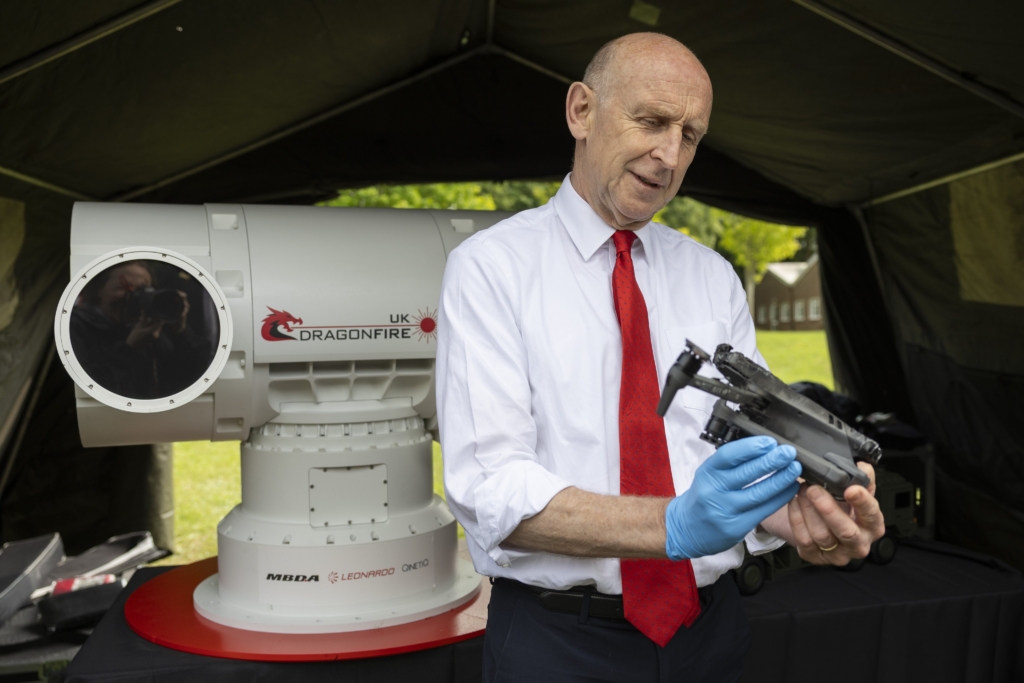
The innovations need to be demonstrated in representative environments and show a “credible path” to scaled manufacture and operational deployment “within 12 months of the end of the project.”
The recurring line and theme in the announcement is to deliver useful technology into service faster than Britain’s adversaries.
The challenge areas for innovation
The statement identifies five challenge areas that the programme will focus on where it wants novel technologies to deliver an immediate operational impact.
These are: counter UAS interceptor sensors, one-way attack UAS seekers, platform survivability, telemetry data communications, and maritime autonomous navigation.
Counter-UAS has become a driver of military innovation and spending around the world, with the US FY2027 budget now in the tens of billions.
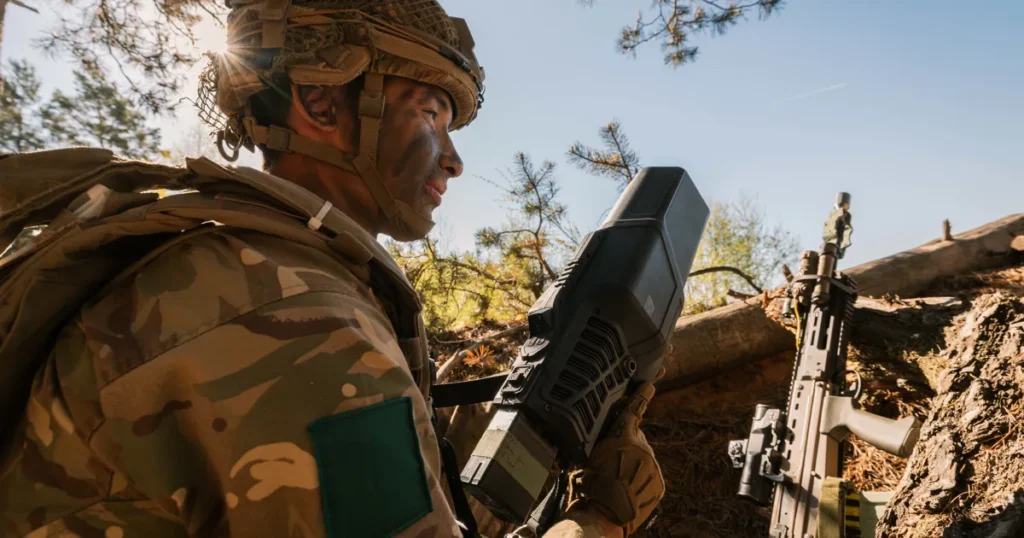
The UKDI is looking for sensor solutions for high-speed counter-unmanned aircraft system (UAS) interceptors engaging targets at a combined closing speed of up to Mach 1.
Its indicated target is for “a fixed wing UAS of up to approximately 3 metres in size, operating at 150–400 km/h, at altitudes of up to 15,000 metres, and constructed from modern composite materials such as carbon fibre and fibreglass.”
The guidelines specifically say that the UKDI does not want a full interceptor platform.
Project eligibility and establishment of the UKDI
British companies and institutions making applications are required to submit through the UKDI Online Submission Service by 12:00 midday (BST) on 22 September 2026. Successful projects have a target date to start in January 2027 and run for four months.
It adds, “Projects are expected to cost no more than £350,000, although proposals up to £1 million (excluding VAT) will be considered.”
The UK Defence Innovation (UKDI) organisation has been established and aims to streamline delivery of innovative technology to Armed Forces personnel.
— Ministry of Defence 🇬🇧 (@DefenceHQ) July 2, 2025
With a £400 million annual budget, it will help create high-skilled jobs in the tech sector and turbocharge economic growth. pic.twitter.com/3q4JWKcp9Y
The competition is open to UK-registered businesses, sole traders, and academic institutions that undertake the work in the UK.
The initiative is a multi-cycle, multi-phase competition that predates the full consolidation under UKDI. It started under the Defence and Security Accelerators (DASA) as “Innovation in Support of Operations,” which had its first cycles in 2024.
The UKDI was formally established in July 2025, consolidating the DASA, the Defence Innovation Unit (DIU), Command Innovation Hubs, and DE&S Future Capability Innovations under the National Armaments Director (NAD) Group. It has a budget of at least £400 million per year.
Sign up for our newsletter and get our latest content in your inbox.
Similar Reads




Sign up for our newsletter. Select all sectors relevant to you.
Related