

UK commits £8.4bn to launch next production phase of Dreadnought submarine programme


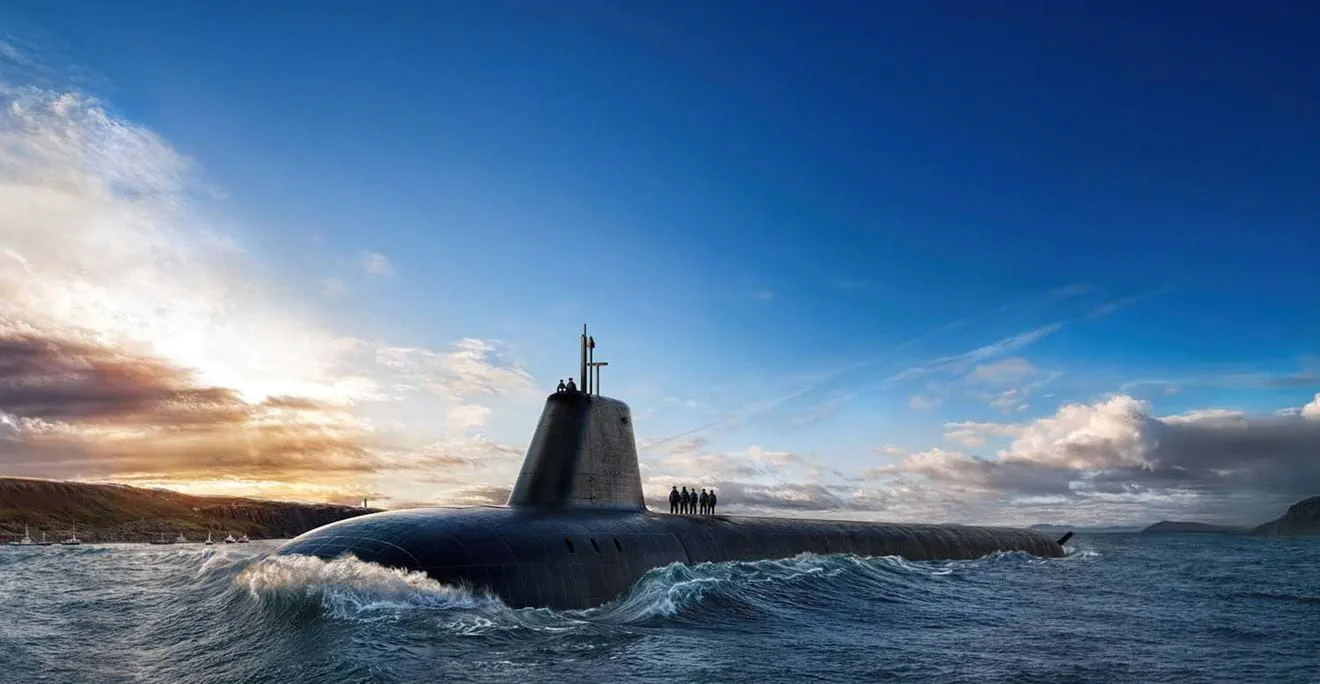
Britain has committed £8.4 billion to safeguard its nuclear deterrent for decades to come, launching the fourth production phase of the Royal Navy’s Dreadnought-class ballistic missile submarine programme.
The investment marks the start of Delivery Phase 4 (DP4), the latest stage in building the four submarines that will replace the Royal Navy’s Vanguard-class fleet from the early 2030s.
Under the new funding, HMS Dreadnought will progress through sea trials ahead of entering service, HMS Valiant will move closer to sea trials, while Warspite and King George VI will reach key construction milestones.
The package includes a £5.9 billion contract for BAE Systems, which is building the submarines at Barrow-in-Furness. Further investment will support Rolls-Royce Submarines in Derby, responsible for the nuclear propulsion systems, as well as the wider UK supply chain.
Investment strengthens Britain’s nuclear submarine enterprise
The Ministry of Defence said the latest production phase is designed to improve productivity and delivery while strengthening the UK’s defence industrial base.
The programme currently supports around 47,000 jobs and more than 6,000 companies across the Defence Nuclear Enterprise, with demand for skilled workers expected to grow further over the coming years.
The government said the new contracts will also encourage faster and more efficient delivery through performance-based incentives, while sustaining high-value manufacturing and engineering work across Britain’s submarine industrial network.
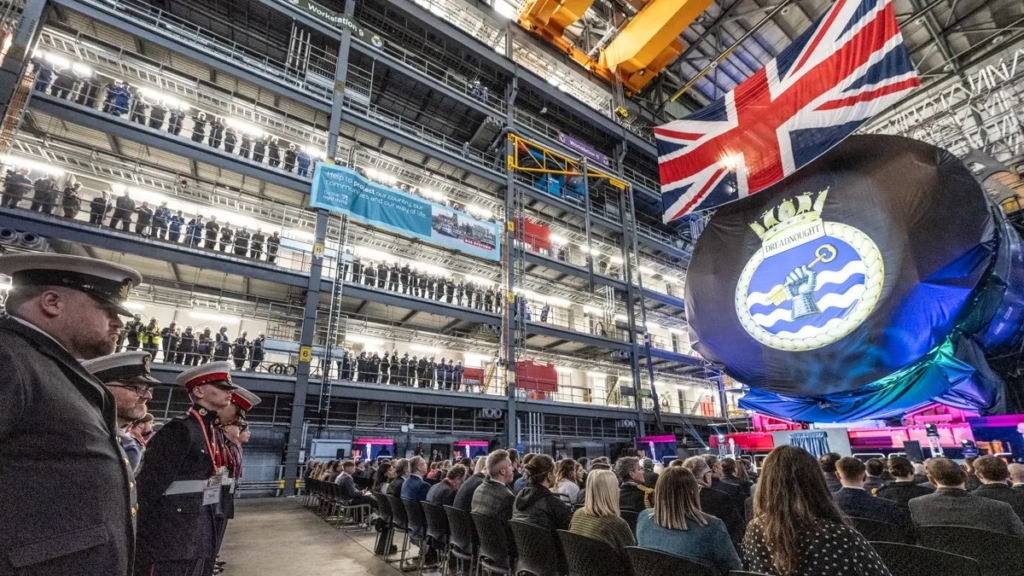
Defence Secretary Wes Streeting said the investment reflected the government’s commitment to both national security and domestic industry.
“Our nuclear-armed submarines are essential to keeping the UK secure, acting as the ultimate deterrent to our adversaries in an increasingly dangerous world,” Streeting said.
He added that the programme would secure thousands of highly skilled jobs while helping deliver the next generation of Britain’s nuclear deterrent.
Programme remains on course for service in the early 2030s
The Dreadnought programme will deliver four ballistic missile submarines to succeed the Vanguard-class fleet, ensuring the Royal Navy can continue its Continuous At Sea Deterrent (CASD) mission after the current submarines reach the end of their operational lives.
The first boat is expected to enter service in the early 2030s.
A partnership that extends across the Atlantic
Although the submarines are designed and built in Britain, the programme continues a defence relationship with the United States that stretches back more than six decades.
The 1958 UK-US Mutual Defence Agreement established the framework for nuclear cooperation, while the 1963 Polaris Sales Agreement enabled Britain to acquire the submarine-launched ballistic missile capability that underpins its strategic deterrent today.
That cooperation continues through the Trident II D5 missile system and the jointly developed Common Missile Compartment, which will be used by both the Royal Navy’s Dreadnought-class and the US Navy’s Columbia-class submarines. Sharing missile infrastructure and design standards allows both countries to reduce development costs while maintaining long-term interoperability between their strategic submarine fleets.
Supporting NATO’s nuclear posture
While Britain’s nuclear deterrent remains under full national control, it also forms an important part of NATO’s overall deterrence strategy. Together with the United States and France, the UK is one of the alliance’s three nuclear powers, providing what NATO describes as the supreme guarantee of Allied security.
British governments have consistently argued that maintaining an independent submarine-based deterrent strengthens both national security and NATO’s collective defence, particularly as the alliance confronts a more complex strategic environment marked by renewed great-power competition and expanding military capabilities among potential adversaries.
Looking beyond the current programme
By the time the fourth and final Dreadnought-class submarine enters service, the programme will have been in development and production for more than 30 years.
Yet officials view the effort as more than the delivery of four submarines.
It is intended to preserve Britain’s sovereign ability to design, build, operate and sustain nuclear-powered submarines well into the second half of the century, ensuring the specialist workforce, industrial capacity and engineering expertise developed over generations are not lost between programmes.
Sign up for our newsletter and get our latest content in your inbox.
Similar Reads

Sign up for our newsletter. Select all sectors relevant to you.
Related