

The solar storm behind the Northern Lights is helping reshape how the UK protects its skies


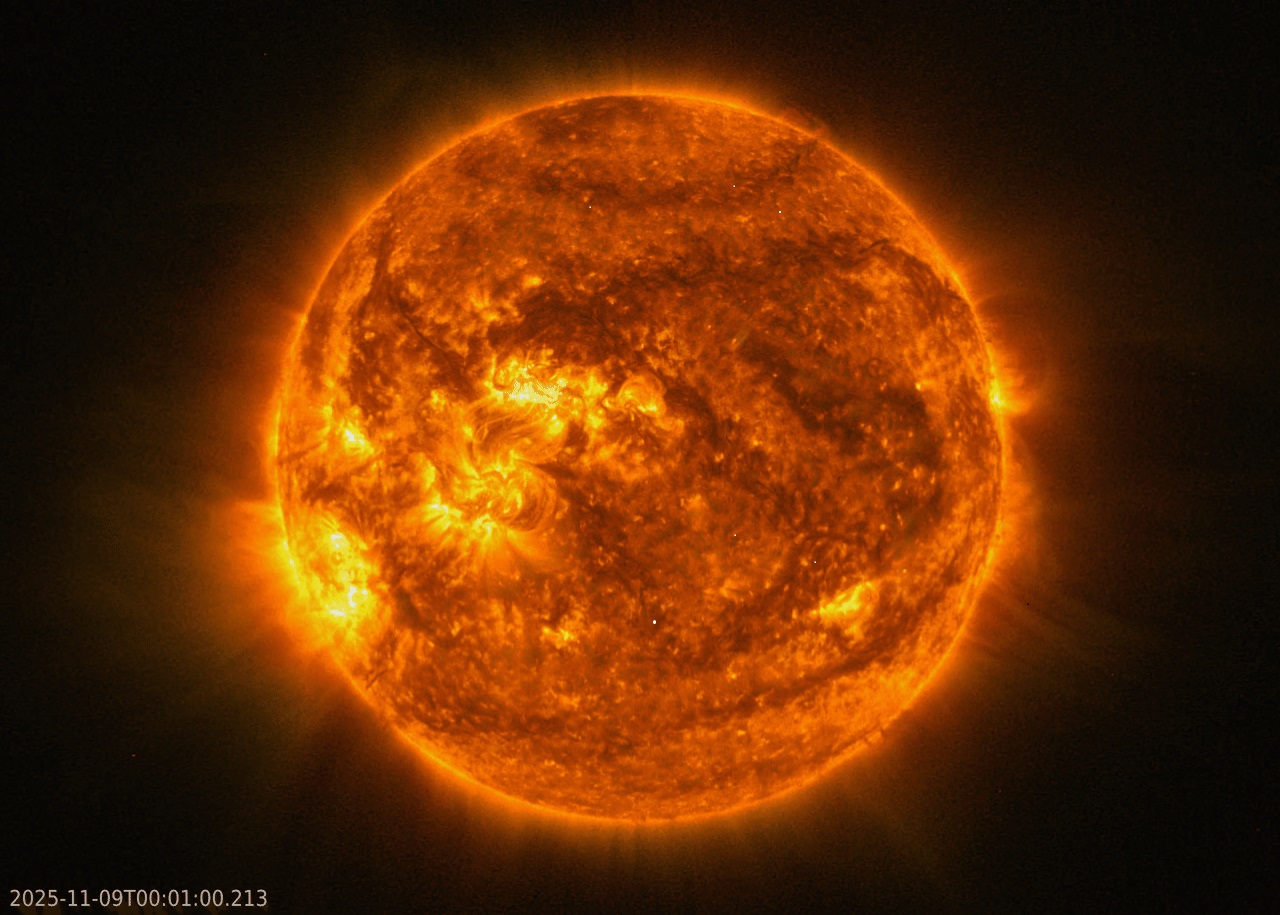
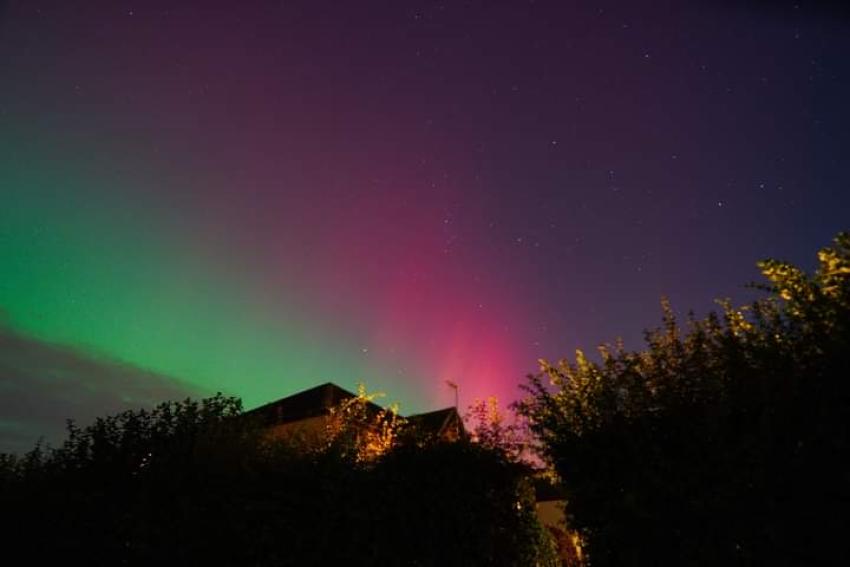
The spectacular Northern Lights that illuminated Britain’s skies in May 2024 were more than a celestial display. They also served as a reminder that the same solar storms capable of producing breathtaking auroras can disrupt aircraft, satellites, navigation systems and electricity networks.
While millions admired the rare spectacle, scientists were monitoring something far less visible: how charged particles from the Sun were affecting the systems that modern society depends on every day.
Now, an independent evaluation has concluded that a £20 million UK research programme has significantly strengthened the country’s ability to forecast and respond to severe space weather, accelerating the transition of scientific research into operational tools designed to help protect aviation, satellite services and critical infrastructure.
The assessment adds that the programme has met or partially met all seven of its mission objectives while laying the foundations for full operational integration of its forecasting capabilities during 2026.
The five-year Space Weather Innovation, Measurement, Modelling and Risk (SWIMMR) programme was funded through UK Research and Innovation’s Strategic Priorities Fund and delivered by the Science and Technology Facilities Council (STFC) and the Natural Environment Research Council (NERC).
It was established to improve the UK’s resilience to severe space weather, now classified by the Government as one of the country’s highest national risks because of its potential impact on aviation, communications, satellite services and power networks.
From scientific research to operational forecasting
One of the evaluation’s strongest findings is that SWIMMR has fundamentally changed how space weather research reaches operational forecasters.
Rather than producing scientific models that remained within research institutions, the programme was designed to move new forecasting capabilities rapidly into operational use at the Met Office’s Space Weather Operations Centre (MOSWOC).
According to the evaluation, researchers developed a cloud-based research-to-operations platform that reduced the time needed to transfer new forecasting models from several years to around six months, allowing operational users to work alongside researchers while the systems were still being refined.
The programme also advanced five UK-developed forecasting models covering solar wind propagation, radiation belts, ionosphere-thermosphere dynamics, aviation radiation and geomagnetically induced currents. Four have already reached advanced pre-operational status and are being used by the Met Office ahead of full operational integration during 2026.
The evaluation concludes that these developments have strengthened the UK’s sovereign forecasting capability while reducing dependence on overseas models.
Professor Ian McCrea, Resilient Society Theme Lead at RAL Space and Head of the SWIMMR programme, said the initiative had transformed the way the UK prepares for severe solar activity.
“SWIMMR has delivered a major advance in the UK’s space-weather capability, turning cutting-edge research into improved operational forecasting tools to protect satellites, aviation and the electricity grid,” he said.
“It has strengthened the UK’s ability to understand and respond to severe solar activity in real-time, placing the UK among the leading nations developing operational space-weather forecasting capability, through close international collaboration.”
The operational improvements extend beyond forecasting models. New measurement systems developed under the programme are already supplying live data directly to MOSWOC, giving forecasters earlier situational awareness during severe space weather events affecting satellites, communications, aviation and electricity networks.
Improving the UK’s understanding of aviation radiation
For aviation, one of SWIMMR’s most significant achievements has been the development of new capabilities to monitor and forecast radiation exposure during solar storms.
Researchers from the University of Surrey developed and installed radiation sensors on commercial aircraft and high-altitude balloons, allowing real-time measurements to be fed directly into the Met Office. Using those observations, the team developed MAIRE+, the UK’s first real-time model of aviation radiation exposure during both routine operations and severe solar events. A companion model, MAIRE-R, extends forecasting to very high altitudes, with both systems now supporting the Met Office in a pre-operational role
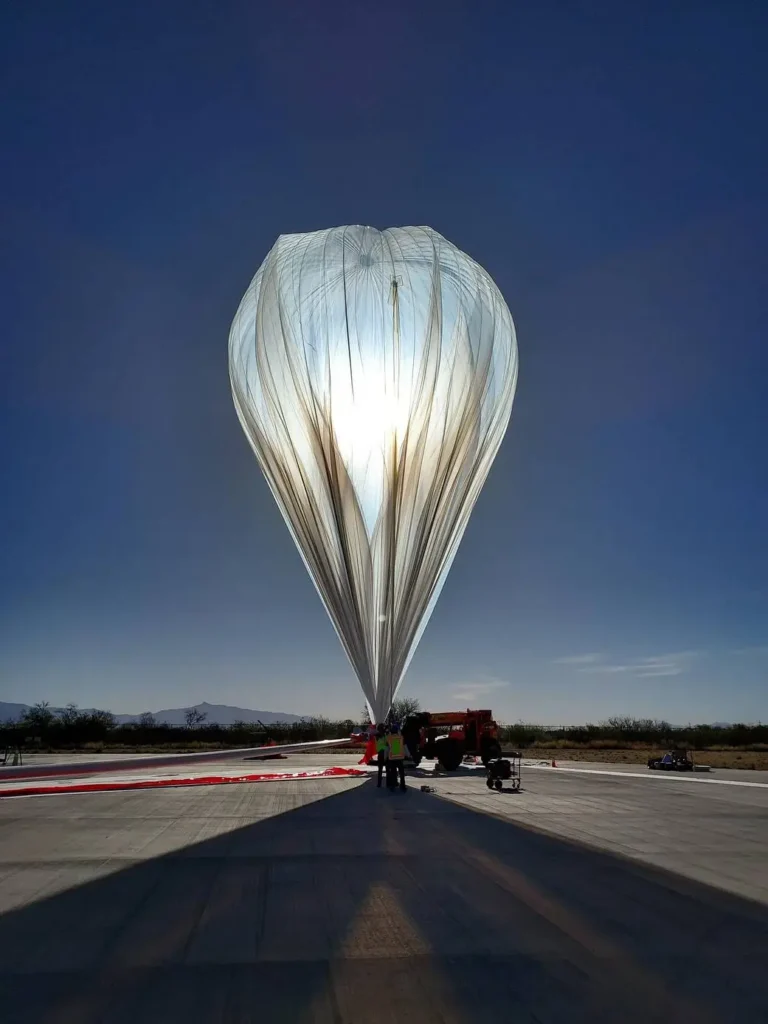
The evaluation identifies the aviation radiation model as one of the programme’s strongest technical advances, progressing from an early research concept to an operationally validated capability during the life of SWIMMR. Alongside improvements in forecasting solar wind, radiation belts and geomagnetically induced currents, it provides forecasters with a far more complete picture of how severe space weather develops and how different sectors may be affected.
A solar storm provided the first real operational test
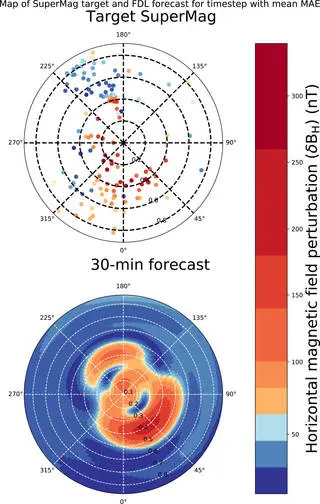
The programme’s capabilities were put to the test in May 2024, when one of the strongest geomagnetic storms in decades reached Earth. While the aurora captured public attention, scientists at the British Geological Survey were monitoring geomagnetically induced currents that can flow through the national electricity grid during major solar events.
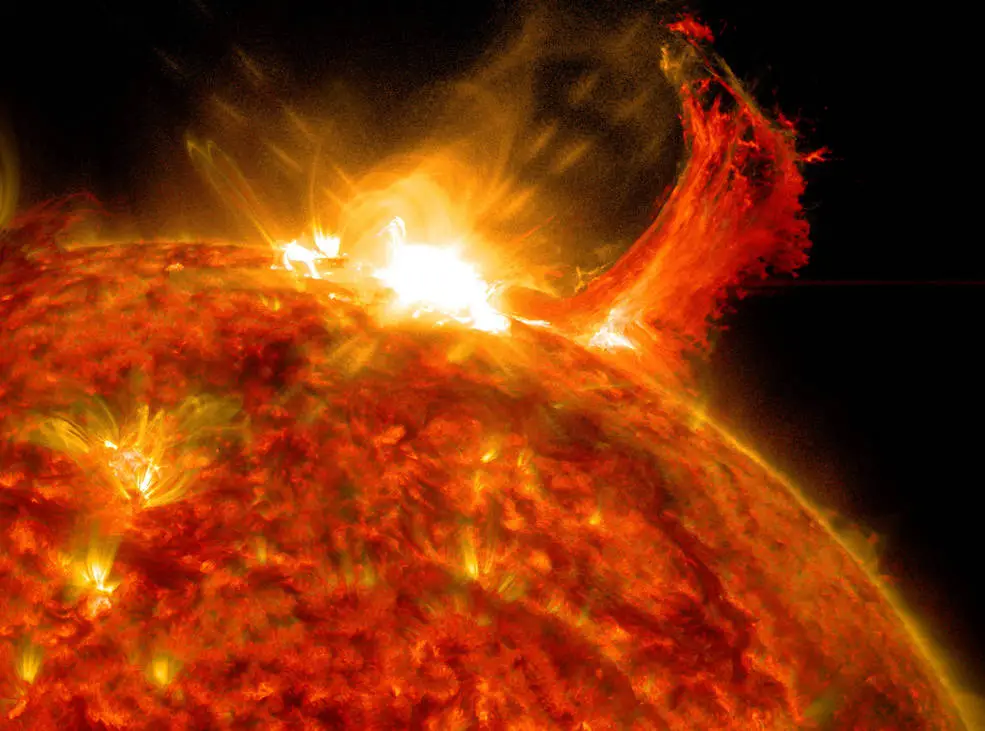
/NASA
Using forecasting tools developed under SWIMMR, researchers identified substations most likely to experience elevated currents before transformer alarms were triggered. According to UK Research and Innovation, it was the first time the UK had possessed that level of operational foresight during a significant space weather event. The National Electricity System Operator has since commissioned further work with SWIMMR partners and the Met Office to better understand how future solar storms could affect grid resilience.
The programme also delivered the UK’s first end-to-end forecasting capability for geomagnetically induced currents, providing infrastructure operators with earlier warning of conditions that could threaten electricity networks and other critical assets.
Creating capability beyond the space sector
The evaluation concludes that SWIMMR’s impact extends well beyond operational forecasting.
Among its lasting contributions is the expansion of the UK’s radiation-testing infrastructure through upgrades to the ChipIr facility at the ISIS Neutron and Muon Source and the creation of the Neutron Irradiation Laboratory for Electronics (NILE).
Together, the facilities enable engineers to test how electronic systems respond to radiation environments associated with severe solar storms, helping improve the resilience of technologies used in aerospace, communications, transport and healthcare. NILE also provides testing capability when the main ISIS facility is unavailable, increasing the UK’s overall resilience for electronics qualification.
The evaluation also points to growing commercial interest in the facilities and wider programme outputs. It found that SWIMMR supported around 40 specialist jobs, established dozens of domestic and international partnerships, and generated additional investment beyond its original public funding, demonstrating that the programme’s benefits extend into industrial capability as well as scientific research.
Progress recognised, but resilience remains a work in progress
While the independent evaluation concludes that SWIMMR has significantly strengthened the UK’s operational space weather capability, it also notes that the programme’s full benefits will only become clear as the forecasting systems are fully integrated into operational services.
That assessment mirrors the National Audit Office‘s conclusion that the Government has improved the UK’s resilience by strengthening forecasting capability and testing its response arrangements, but that important gaps remain. The watchdog said forecasting severe space weather continues to be inherently challenging, with warning times ranging from virtually no notice to as much as 96 hours depending on the type of solar event. It also warned that the government does not yet have a complete understanding of how some sectors would respond to widespread disruption, particularly where satellite navigation systems are affected.
The NAO further noted that a 2022 assessment estimated the potential economic impact of a severe space weather event at around £9 billion, underlining why improving forecasting has become a national priority. It recommended that the government define the level of resilience the UK should achieve, strengthen testing of emergency response plans and provide clearer guidance for businesses and the public.
For Professor McCrea, the next phase is no longer about proving the science but embedding those capabilities into everyday operations.
“SWIMMR has created a major advance in the UK’s space-weather capability, strengthening the ability to protect critical infrastructure, services and the wider economy from the impacts of severe solar activity,” he said.
“The priority now is ensuring these advances are embedded in operational services and continue to evolve through real-world use.”
As solar activity continues to rise during the current solar cycle, severe space weather will remain an unavoidable natural hazard. The Frazer-Nash evaluation suggests the UK is considerably better prepared than it was five years ago. The challenge now is ensuring those scientific advances become an enduring operational capability for the sectors that rely on them most, from aviation and satellite services to electricity networks and critical national infrastructure.
Sign up for our newsletter and get our latest content in your inbox.
Similar Reads


Sign up for our newsletter. Select all sectors relevant to you.
Related