

The UK wants sovereign drones, but who makes the batteries?


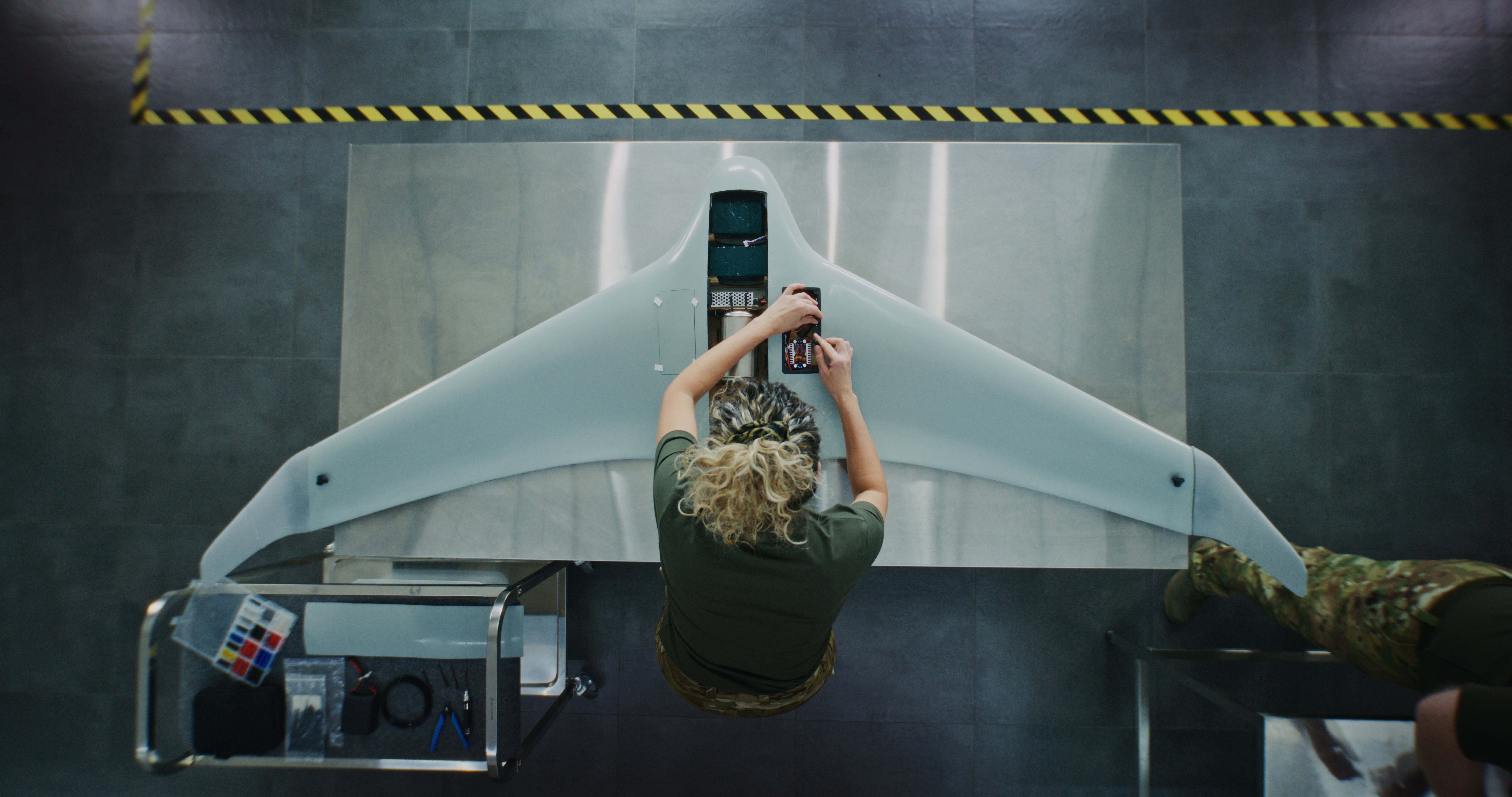
The UK has made its intentions for autonomous warfare unusually clear.
More than £5 billion will be invested in drones and autonomous systems over the next four years, spanning everything from inexpensive expendable systems and loitering munitions to autonomous aircraft and uncrewed naval vessels.
Alongside the money has come another signal to industry. The Defence Investment Plan promises to grow sovereign AI and autonomous technologies, support UK jobs and build the industrial capacity needed to manufacture them at scale.
For Johan Andersson, chief commercial officer at Coventry-based battery cell manufacturer Volklec, that change in language could be almost as important as the money.
“The signal that the market is getting from the Defence Investment Plan is important,” he told ADS Advance. “The most important sentence in that plan is the statement ‘buy British’, and the fact that procurement of sovereign solutions will get a higher kind of scoring point in procurement decisions than it’s had before.”
But there is a problem hidden beneath that ambition. A UK business might build the drone. It might integrate the sensors, write the software and assemble the battery pack. Look one or two tiers further down the supply chain, however, and much of the hardware can still trace its origins overseas. Andersson says batteries are a notable example.
“People are looking a bit deeper,” he said. “They’re not only looking at where the battery is assembled … they’re actually looking one level below that at where the battery cells are coming from, or even going a step beyond that and looking at where the materials are coming from that go into the battery cell as well.”
How ‘sovereign’ is a UK-made drone?
The issue was given an uncomfortable demonstration only days before Andersson spoke to ADS Advance.
A camera component fitted to Royal Navy K3 Scout uncrewed surface vessels was discovered during a routine cyber vulnerability assessment to be making so-called “heartbeat” communications to an internet address in China. The Ministry of Defence said no sensitive information had been transmitted or compromised.
It was not a battery problem, but illustrates the difficulty facing defence procurement. A platform supplied by a UK company can contain components several levels down whose provenance matters.
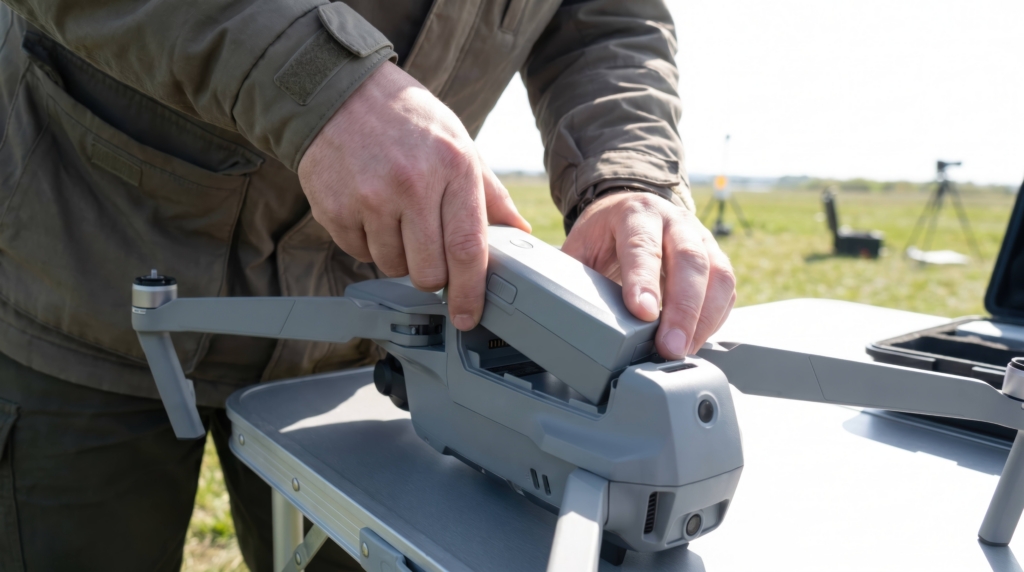
Batteries make that problem particularly complicated because the UK has plenty of expertise in designing and assembling packs, but much less capability to manufacture the cells inside them.
“We actually have a great battery industry in the UK,” Andersson said, pointing to pack manufacturers and engineering businesses supplying defence customers. “But they are still reliant on imports of battery cells for those packs because there is no one in the UK producing battery cells. So they’re tied into, I would say, a non-resilient supply chain.”
For Andersson, replacing that dependency is much harder than simply redesigning a circuit board or changing a camera supplier.
“The hardest part to replace is actually what we are doing: battery cells.”
Using China to become less dependent on China
There is an obvious complication to Volklec’s sovereignty argument: Its own route into UK cell manufacturing began with China.
Volklec announced in 2025 that it would use technology from Chinese manufacturer Far East Battery (FEB), transferring established designs, manufacturing processes and expertise to the UK Battery Industrialisation Centre (UKBIC) in Coventry. The deal was deliberately designed to accelerate Volklec past some of the problems that have plagued attempts to establish new European battery manufacturers.
“Battery cell manufacturing is, excuse my language, bloody hard,” he said. “It’s really, really, really difficult to produce battery cells at scale.”
He points to the troubles experienced by companies including Britishvolt and Northvolt. Developing cell chemistry is expensive and risky. Building a factory and learning how to manufacture at consistent quality and high yield is a huge challenge. Trying to do both simultaneously, he argues, compounds the risk.
Volklec’s answer was to separate them. Rather than immediately building a greenfield factory, the company struck an agreement to use UKBIC. And for the technology, it went to an industry that has spent decades perfecting the manufacture of quality battery cells at high volume.
“China has been perfecting the manufacturing of battery cells for the last 20 years or so,” Andersson said. “They are the best at it. They know exactly how to ramp up and increase the yield to a level where it becomes commercially viable to manufacture battery cells. So why would we go through all of that hard work and not even try to get that knowledge, experience and technology from the ones who’ve mastered it?”
Crucially, Andersson says Volklec has acquired the intellectual property and technology rights rather than remaining permanently tied to a licensed product.
“We’re doing the knowledge transfer from China, from Far East Battery Technology to Volklec and the UK Battery Industrialisation Centre,” he explained. “Then we are fully independent from them,” he said. “We are free of all kinds of restrictions that would come from technology licences or ownership.”
It is an unusual route to sovereignty: use established Chinese expertise to avoid spending years rediscovering what China already knows, then progressively remove the dependency.
The other 97%
Transferring the manufacturing knowledge only solves part of the problem. The materials entering the cells still come through a deeply international supply chain, and Andersson readily acknowledges that Volklec’s initial production will use the existing supply chain associated with its transferred technology.
“We’re very open about that,” he said.
But Volklec has spent the past three months mapping alternatives, with 97% of the bill of materials already identified. Potential sources include Finland, Norway and Sweden, as well as the US, Australia and Latin America. Those alternatives now have to be tested to ensure that replacing an existing material does not degrade the cell’s performance.
“The UK is probably not going to be the biggest supplier of those materials,” he explained, “but it’s not going to be China. It’s not going to be Russia, Iran, North Korea or Venezuela.”
That idea of sovereignty through a trusted network rather than complete self-sufficiency closely resembles the Government’s own approach. Its Vision 2035 Critical Minerals Strategy, published in January, accepts that the UK will continue to rely on imported critical minerals and says domestic capability must therefore be combined with diversified international supply.
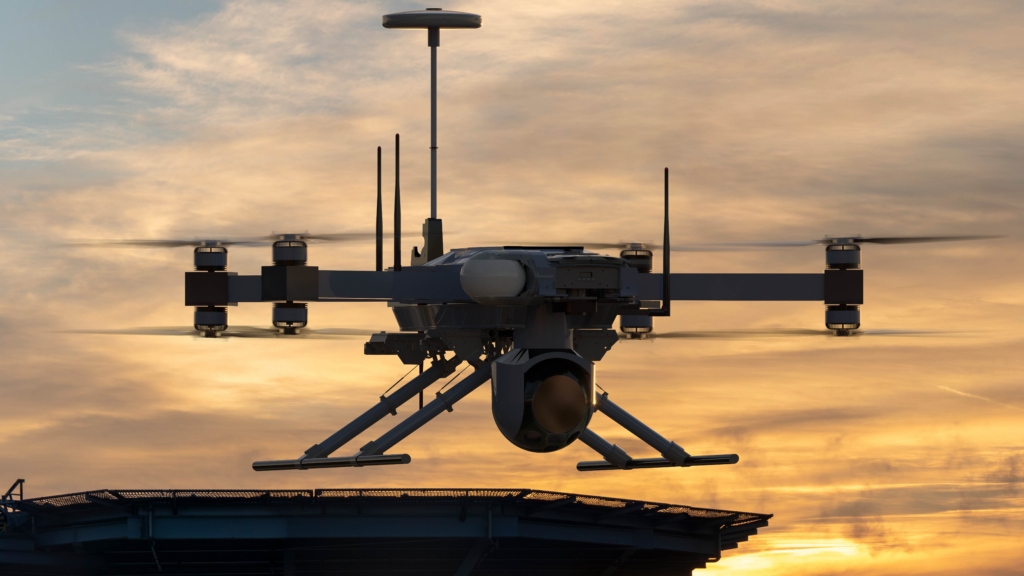
For defence specifically, the Government is considering measures including procurement-led stockpiling and requirements to avoid sourcing critical minerals from a single country.
China has increasingly demonstrated its willingness to place controls on strategically important exports. In June it banned exports of dual-use goods to ten US entities, including defence and drone companies, while previous controls have targeted battery-related materials and technologies including graphite.
Andersson believes these sorts of issues could ultimately impact a vast array of UK businesses.
“We’re not only seeing all this in the West now blocking China as a supplier,” he said. “We’re also seeing the Chinese government starting to block supply to companies in the West who are deemed to be involved in defence. This may become a problem for dual-use companies. You will probably see this in the aerospace industry, where many of the companies have one commercial arm and one defence arm.”
A deadline is approaching
For UK manufacturers hoping to sell into the US defence market, there is another reason to start looking beneath the battery pack.
From 1 January 2028, new US Department of Defense acquisition programmes will come under new restrictions governing advanced batteries and cells supplied by foreign entities of concern.
The FY2026 National Defense Authorization Act reaches deep into the battery supply chain. An exemption requires final assembly outside a foreign entity of concern, more than 95% of the cost of functional cell components to come from non-FEOC sources, and the battery to be produced without technology licensed from a FEOC. Standard batteries follow in 2029 and existing acquisition programmes in 2031.
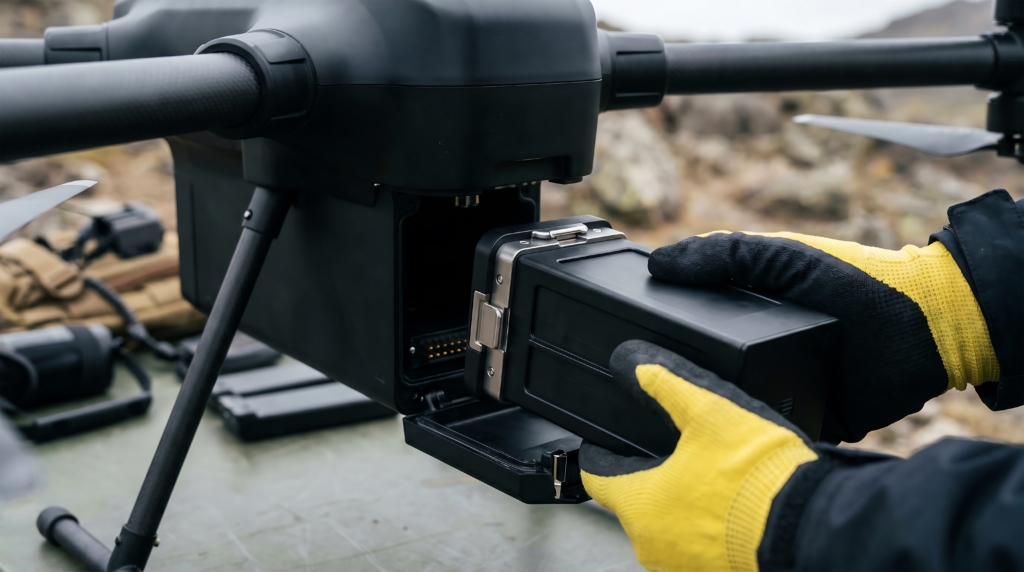
Volklec is working towards compliance from the first deadline.
“We need to complete the materials testing,” Andersson explained. “We then need to work with the relevant applications that are asking for a compliant battery cell. And there are plenty of them right now.”
While the deadline is well publicised, Andersson thinks a few manufacturers may be surprised when they become non-compliant in January 2028. Changing a battery supplier is not something a drone manufacturer can necessarily do at the last minute, and getting a new model approved can be time-consuming.
For smaller uncrewed aircraft, Andersson says cell qualification might take three to six months. If the alternative battery requires a redesign of the pack or aircraft, the process becomes considerably longer.
His advice to UK drone manufacturers is therefore simple: start looking now.
“They need to do the due diligence on their current supply chain,” he said. “The drone manufacturer is most likely not the battery pack manufacturer. They’re buying the battery pack from someone, so they need to look at that battery pack manufacturer and where they source the electronics and the cells from.”
If Chinese components emerge several tiers down, substitutes need to be identified and qualified.
“They should not wait until the second half of ’27 to do this,” Andersson warned. “The defence contracts are being signed now.”
From cell to system
Volklec is already trying to shorten that process. Andersson says some of its battery-pack partners are looking at developing standard packs around Volklec cells, giving drone companies something closer to a ready-made sovereign power solution.
“You can provide a kind of end-to-end UK battery pack to a drone manufacturer and say, ‘Hey, why develop everything from scratch? We’ve done the pre-work for you. Here it is. You design the drone around this pack rather than the other way around.’”
That approach is also appearing in the government-backed Advanced Modular Battery System (AMBERS) programme.
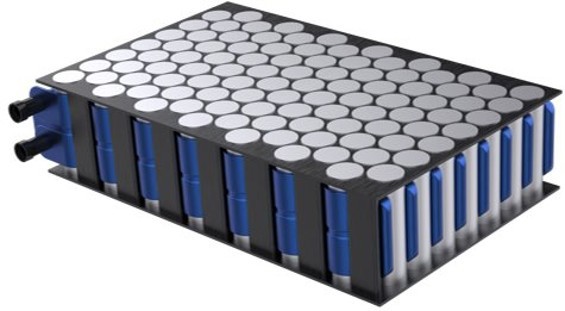
Led by Ricardo with Volklec and Hyperbat, the programme is developing a configurable UK-built battery platform for automotive, aerospace, off-highway and defence applications. Volklec is supplying high-power 21700 cylindrical cells, while Hyperbat will manufacture the packs in Coventry.
It is a useful glimpse of what a domestic battery ecosystem might eventually look like: UK cell production feeding UK pack manufacturing and system integration, rather than the pack being the first point at which the supply chain reaches the UK.
Can the UK scale it?
For now, Volklec remains at UKBIC, but Andersson bristles slightly at any suggestion that the Coventry operation is merely a test facility.
“We see it as actually a mass manufacturing capability,” he said.
The company is rebalancing the existing line for continuous production and plans to install additional production capability inside UKBIC. It expects to have room to expand there for at least the next two to three years. After that comes a bigger step.
Volklec has secured government backing for a roadmap that would take it from an initial 1GWh capability to a planned 10GWh gigafactory, and Andersson says a feasibility and site-selection study for its standalone plant is now underway.
“It may be in Coventry. I don’t know. It could be somewhere else,” he said.
The company is deliberately trying not to repeat the model that has brought other European battery ambitions unstuck: building an enormous factory and hoping sufficient demand arrives after. Rather, Andersson wants demand and capacity to pull each other upwards.
“If [the support we’re getting] could be met by a stronger demand signal as well, saying that whatever we produce is going to be bought by those government bases that they can influence, that would be even more helpful.”
And that brings the story back to the UK’s £5 billion drone investment.
The Defence Investment Plan creates demand for autonomous systems made in the UK, but if the economic and security benefits are to extend through the whole supply chain, the UK will have to decide how far down into those systems its definition of ‘sovereign’ should reach. A Union Jack on the manufacturer’s website will not answer where the camera came from, who controls the software in the battery management system or where the cells, cathodes, anodes and electrolyte were made.
For battery cells at least, Volklec’s strategy is not to pretend that those dependencies can disappear overnight. It is to start with the manufacturing expertise that already exists, transfer it into the UK, and then steadily replace the supply chain underneath it.
As Andersson puts it, the £5 billion is an important demand signal. What comes next will decide how much of that demand the UK is capable of supplying.
Sign up for our newsletter and get our latest content in your inbox.
Similar Reads


Sign up for our newsletter. Select all sectors relevant to you.
Related