

NewOrbit gains launch slot for first VLEO commercial mission

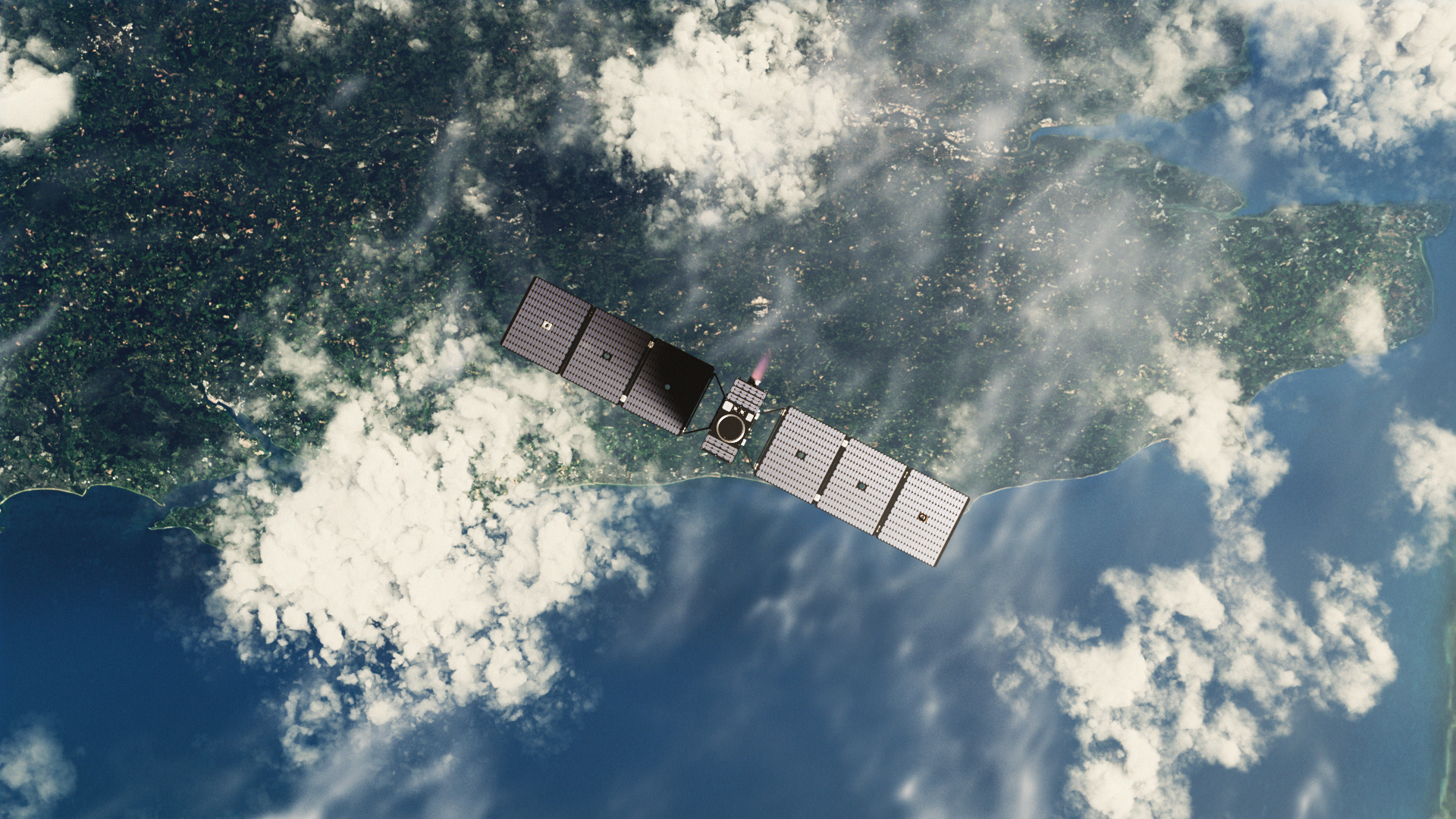
NewOrbit has secured a launch slot for its first satellite, marking a major step towards opening Very Low Earth Orbit (VLEO) to commercial missions.
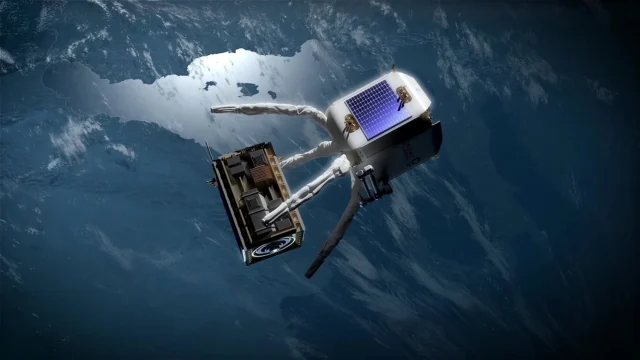
NEO-1, NewOrbit’s first satellite, will launch in Q3 2028 and the launch slot has been secured via the European launch broker RIDE!. It is the first commercial satellite built to sustain operations between 200 and 300km above Earth, which is two to three times closer to Earth than most conventional satellites.
Why conducting operations at such low altitudes is so challenging
Sustained operations at these altitudes have historically been extremely difficult because atmospheric drag pulls satellites back towards Earth, atomic oxygen erodes exposed materials and aerodynamic torques can destabilise spacecraft.
Only two missions have ever sustained operations below 300km: ESA’s GOCE, which held its orbit for more than four and a half years and JAXA’s Super Low Altitude Test Satellite ‘Tsubame’, which holds the Guinness World Record for the lowest orbital altitude by an Earth observation satellite at 167.4km.
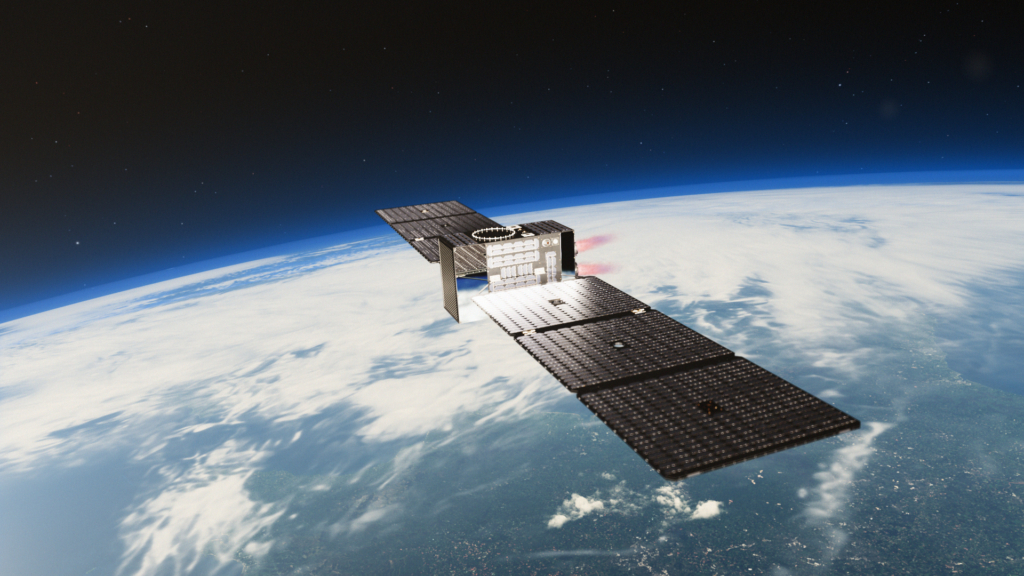
Photo: NewOrbit
NEO-1 is a rideshare mission that can carry multiple payloads to VLEO. The first customer NewOrbit is announcing is Genesia, the Japanese optics specialist that built the telescope with which Tsubame captured images from its record-low altitude of 167.4km. Two further customers have already booked slots on the mission.
What are the benefits of satellites in very low orbits?
Flying closer to Earth lets satellites capture higher-resolution imagery with smaller, cheaper systems: an instrument delivering 50cm resolution from 500km would deliver close to 25cm from NEO-1’s operating orbit, with no redesign and no additional R&D. NewOrbit’s purpose-built satellites and in-house propulsion system are designed to overcome VLEO’s conditions and operate reliably there for five years.
NEO-1 is the first VLEO mission open to external payload developers. Every previous mission at these altitudes flew only its own instruments. NEO-1 gives payload providers and operators a route to VLEO without designing and building their own spacecraft.
How the mission is set to meet growing market demands
The mission responds to growing market demand for lower-cost, high-performing space assets, from sharper imagery and faster revisit to direct-to-device communications from smaller satellites.
The launch announcement follows NewOrbit’s oversubscribed $18.5 million Series A, led by Voyager Ventures.
Norihide Takeyama, CEO, Genesia Corporation, said: “Genesia has long been interested in the commercial potential of VLEO observation technology, building on our heritage from JAXA’s SLATS mission. The NEO-1 satellite is an advanced initiative of the utmost importance to us. Payloads carried by satellites such as NEO-1 can deliver better performance than larger payloads operating at standard altitudes. We are deeply honoured to walk this path alongside NewOrbit, a pioneer and innovative platform provider.”
Valentin Benoit, CEO of RIDE!, said: “More than ever, RIDE!’s mission is to enable access to space for critical payloads, in Europe and all around the world. NewOrbit is definitely one of the most ambitious SpaceTech companies I have met, pioneering a unique VLEO technology. We are very proud and honoured to count NewOrbit as one of our most valued customers.”
Enhancing the technical expertise supporting new VLEO missions
NewOrbit is also announcing that four senior figures from ESA’s GOCE mission have joined its technical advisory board: Dr Mark Drinkwater, the mission’s scientist, Dr Michael Fehringer, its propulsion manager, Alex Popescu, its systems engineer and Paolo Ferri, who directed GOCE’s flight operations at ESA.
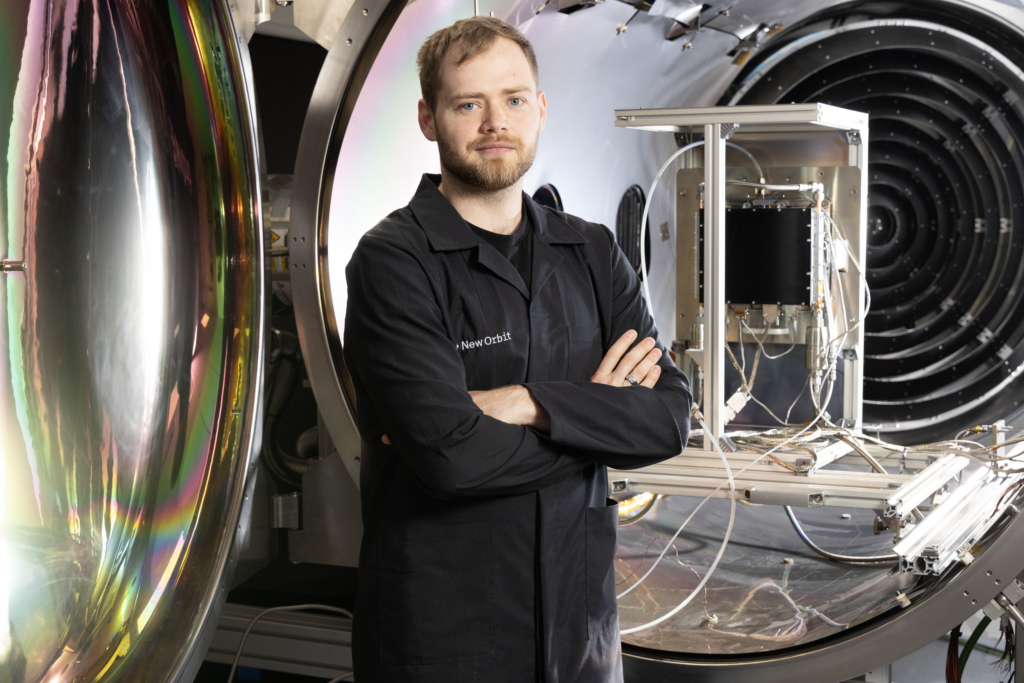
Anatolii Papulov (above), CEO and co-founder of NewOrbit, said: “Only two missions in history have stayed in VLEO. Today, the people behind both come together on one mission: the engineers who built and flew GOCE sit on our technical board and Genesia, whose telescope imaged Earth from Tsubame’s record altitude, joins NEO-1 as our first announced payload partner.
“That brings an extraordinary concentration of VLEO experience onto one commercial mission and for the first time it is open for anyone in the industry to fly with.”
Sign up for our newsletter and get our latest content in your inbox.
Similar Reads

Sign up for our newsletter. Select all sectors relevant to you.
Related