British Army riflemen test new anti-drone tactics

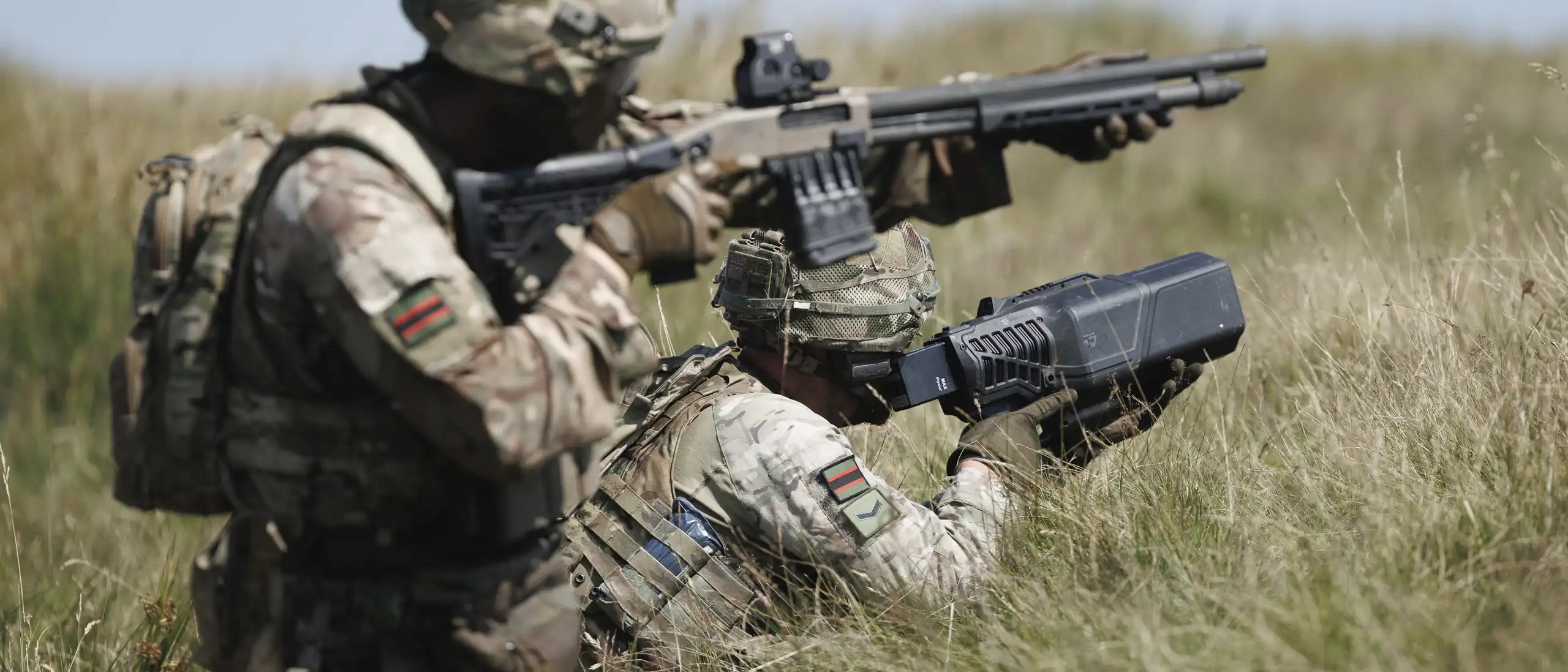
British Army soldiers have trialled a new anti-drone tactic that brings together acoustic and radio-frequency sensors, electronic countermeasures and precision firepower in a bid to tackle one of the fastest-growing threats on today’s battlefield.
The exercise took place on Sennybridge and tested the full range of the identification, tracking and jamming of attacking drones, as well as precision shooting against Intelligence, Surveillance and Reconnaissance drones at range.
There was also close-range engagement of First-Person View drones using the Mossberg 590M shotgun on targets at 25-metre distances.
This was the first whole package approach of its kind, testing a layered system with a view to devising an annual test for Counter-Unmanned Aerial System (C-UAS) marksmanship.
How new technologies complement traditional weapon systems
Major Alex Aitken, Officer Commanding B Company, said: “As we see in current conflicts around the world, drones now proliferate on the battlefield and developing the skills to counter them is very important.
“The way we’ve set this training up is by building a layered system, starting with acoustic sensors, then remote radio frequency sensors before moving onto sections weapons and, finally, shotguns. This is the first time we’ve brought it all together in one package and using several systems.
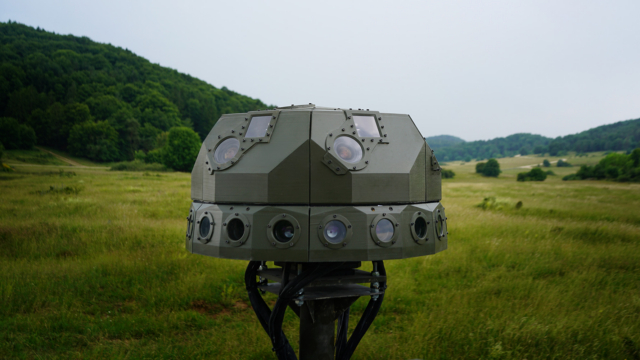
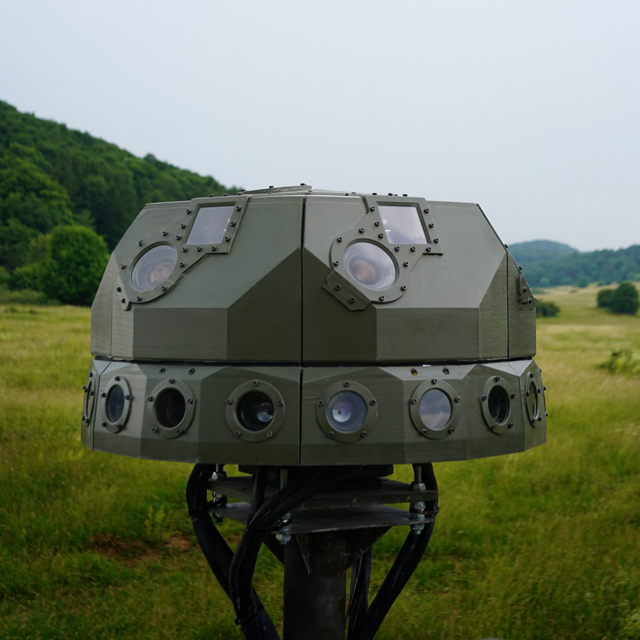
“We have some acoustic sensors that come from the Defence School of Electronic and Mechanical Engineering, which have been homemade by the team there and which are doing some really good work in developing new technologies. We’re then using the drone shield, the drone gun and then the Mossberg shotgun, as well as our normal section suite of weapons.
“The British Army is constantly innovating and being ready to deal with new and emerging threats.”
Conversion to mechanised infantry role as part of the Future Soldier Programme
The British Army’s 1 Rifles is based at Beachley Barracks in Chepstow and recently returned from a two-year tour of Cyprus, with responsibility as the resident infantry battalion, as well as being on high readiness to respond to emergencies in the Middle East and North Africa.
The battalion has since converted to the mechanised infantry role within 7 Light Mechanised Brigade Combat Team as part of the Future Soldier Programme and will soon deploy to Kosovo on an operational rehearsal as part of a role as the Strategic Reserve Force for the region.
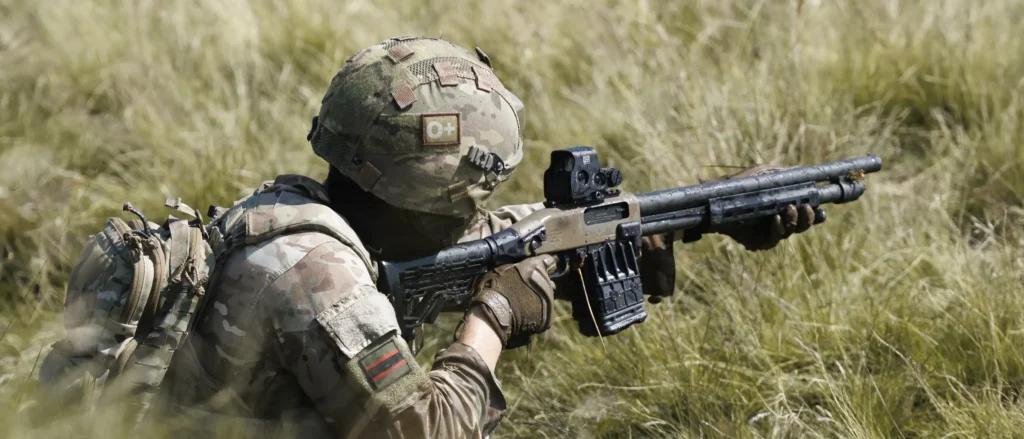
Photo: British Army / Crown Copyright
Experimentation and training to increase lethality on the modern battlefield
The British Army’s 1 Rifles has focused on mastering the traditional basics of soldiering whilst training to increase its lethality on the modern battlefield and has led experimentation in Cyber, Electromagnetic Spectrum and C-UAS activities in 7 Brigade.
Corporal Luke O’Neill, from Birmingham and serving with B Company 1 Rifles, was recently named Soldier of the Year and was one of the troops firing the Mossberg 590M shotgun. He said: “We had to do a whole progression of initially firing at static targets, then moving onto clays and now drones.
“It’s about using all the tools at your disposal to effectively take out the threat. Modern warfare is all about both deploying and also dealing with drones because it’s quite clear how much of effect they can have. Developing the skills to be able to take them out is pretty key for us and this is what being in Sennybridge and adopting a complete approach is all about.
“The speed and rapid directional changes of a drone can be quite hard to follow with a weapon system, but that’s how we’ve developed the training in terms of the hard kill, beyond the cyber, soft kill approach. It’s been great to be tested through all these elements in one package.”
Sign up for our newsletter and get our latest content in your inbox.
Similar Reads



Sign up for our newsletter. Select all sectors relevant to you.
Related