


Two NATS failures in 13 days raise questions about resilience of UK’s air traffic control network



A second failure within 13 days has raised fresh questions about the resilience of the systems underpinning UK airspace, despite NATS insisting that the two incidents were unrelated.
The latest fault occurred at NATS’ Prestwick centre and affected its Flight Data Processing System. Controllers reduced the number of aircraft entering the affected airspace while engineers investigated, disrupting flights across Scotland, Northern Ireland and northern England.
“Early this morning (Monday 21 September), we experienced a technical issue at our Prestwick centre in Scotland,” NATS said. “To maintain safety, air traffic restrictions were applied to manage traffic demand while our engineers investigated.”
NATS said the fault had subsequently been fixed and that it was working with airlines and airports to restore normal operations. However, delays and cancellations can continue long after air traffic restrictions are lifted as airlines attempt to reposition aircraft and crews.
The immediate disruption is only part of the concern. Two technically distinct failures in less than two weeks raise questions around redundancy within the national air traffic control network and its ability to recover quickly when individual systems fail.
NATS failure disrupts northern UK airspace
According to aviation analytics company Cirium, the impact remained relatively contained during the morning but was expected to worsen as disruption moved through airline schedules.
At 10:30 BST, 1.15% of scheduled departures had been cancelled or severely delayed, alongside 1.21% of arrivals. A normal full-day cancellation rate would be around 1–2%, but the data was recorded comparatively early in Monday’s operation.
“As it’s early in the day, we anticipate that operational performance will degrade quickly,” Cirium told Aerospace Global News.
The immediate disruption was concentrated across:
- Scotland, particularly Edinburgh and Glasgow
- Northern Ireland, including Belfast
- Manchester and parts of northern England
- Some North Atlantic traffic using Prestwick-controlled airspace
Glasgow and Belfast were experiencing particularly high cancellation rates, while airports serving London were operating largely normally.
| Departure airport | Flights | Cancelled or no-fly | Cancelled or no-fly % |
|---|---|---|---|
| Glasgow Airport | 107 | 5 | 4.67% |
| Edinburgh Airport | 199 | 5 | 2.51% |
| Manchester Airport | 308 | 4 | 1.30% |
| London Heathrow Airport | 665 | 4 | 0.60% |
| George Best Belfast City Airport | 46 | 4 | 8.70% |
| London City Airport | 82 | 3 | 3.66% |
| Belfast International Airport | 72 | 3 | 4.17% |
| Leeds Bradford Airport | 60 | 2 | 3.33% |
| Tiree Airport | 3 | 1 | 33.33% |
Data courtesy of Cirium, correct as of 10:30 BST.
easyJet was the most affected airline, with 29 services, more than 4% of its scheduled operations, cancelled. Loganair also suffered cancellations, while British Airways, Ryanair and KLM experienced disruption.
NATS says failures are unrelated
NATS has said categorically that the Prestwick fault was not linked to the air traffic control failure on 8 September, which affected airports across the country and caused disruption for hundreds of thousands of passengers.
“This was a connectivity issue with part of our systems network, specific to the operation in Scotland. It is nothing to do with the problem we had earlier this month,” NATS said.
The 8 September failure originated at Swanwick and affected the National Airspace System used to manage flight information across the UK. NATS traced that incident to a software defect triggered during a manual aircraft squawk-code request.
A higher-priority message interrupted the request and, when processing resumed, the software failed to do so correctly. The resulting corrupted information affected subsequent flight-data updates. NATS restricted traffic and restarted the system, with restrictions remaining in place for around six hours.
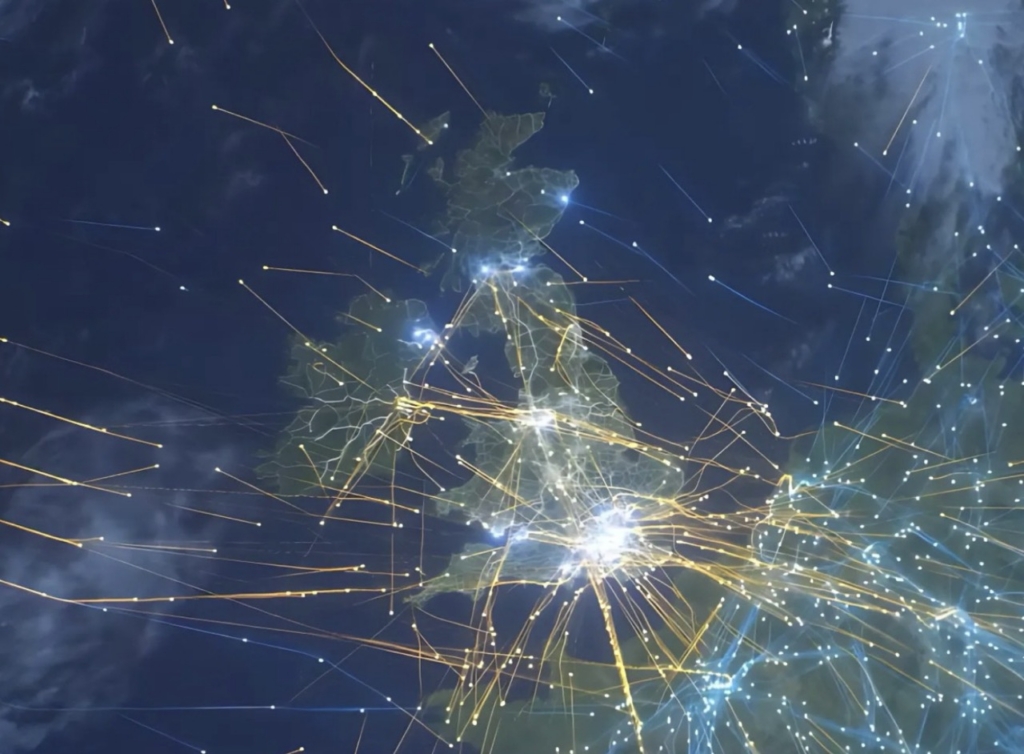
The latest incident involved a connectivity problem within the systems supporting the Prestwick operation. Its separate cause may rule out a repeat of the same software defect, but it does not settle the wider resilience question.
Indeed, two unrelated failures may invite greater scrutiny of the overall architecture supporting UK air traffic management. Investigators will need to establish whether sufficient backup systems were available, why a connectivity problem required restrictions across such a large area and how quickly Prestwick could move to degraded or alternative operating arrangements.
Two outages put UK resilience under scrutiny
The timing is particularly difficult for NATS. Chief executive Martin Rolfe has already been called before the UK Government to explain the earlier September failure, while the Civil Aviation Authority has been asked to conduct an independent review.
NATS published its preliminary report into the first incident on 18 September, identifying the software defect and saying mitigation had been introduced while a permanent fix underwent safety testing.
Three days later, a different part of the air traffic control network failed.
The recurrence strengthens the case for the review to look beyond the coding error behind the first outage. It will need to consider the resilience of the wider network, the separation and independence of backup capabilities, recovery times and whether investment has kept pace with the UK’s dependence on increasingly interconnected air traffic systems.
NATS has established that the two September incidents had different immediate causes. It must now demonstrate that they are not symptoms of a wider resilience problem.
Sign up for our newsletter and get our latest content in your inbox.
Similar Reads