British companies get access to Ukraine battlefield data to develop AI drone swarms


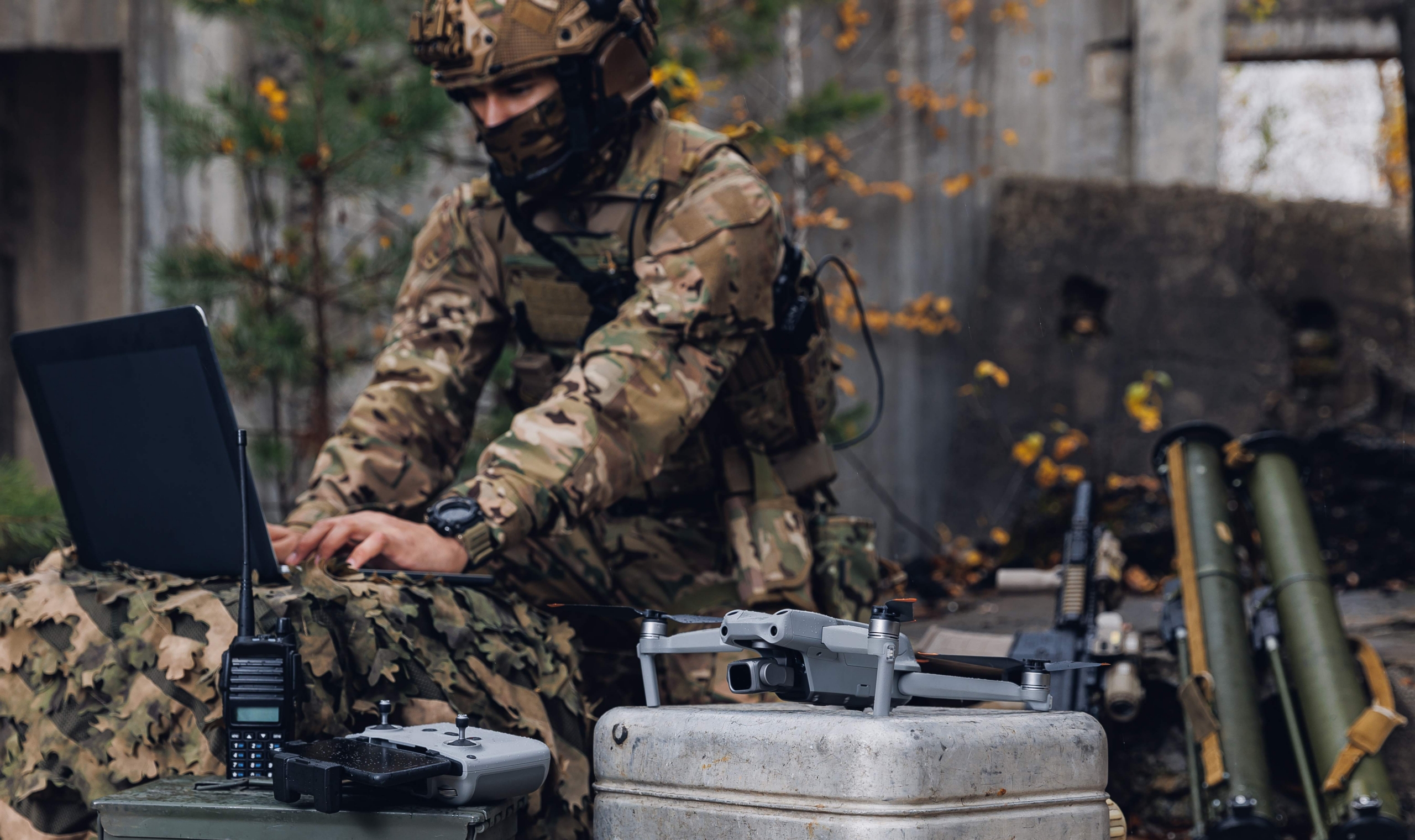
UK defence companies are being given access to Ukraine’s battlefield data for the first time to develop artificial intelligence for drone swarms that can continue operating when communications are disrupted or satellite navigation is unavailable.
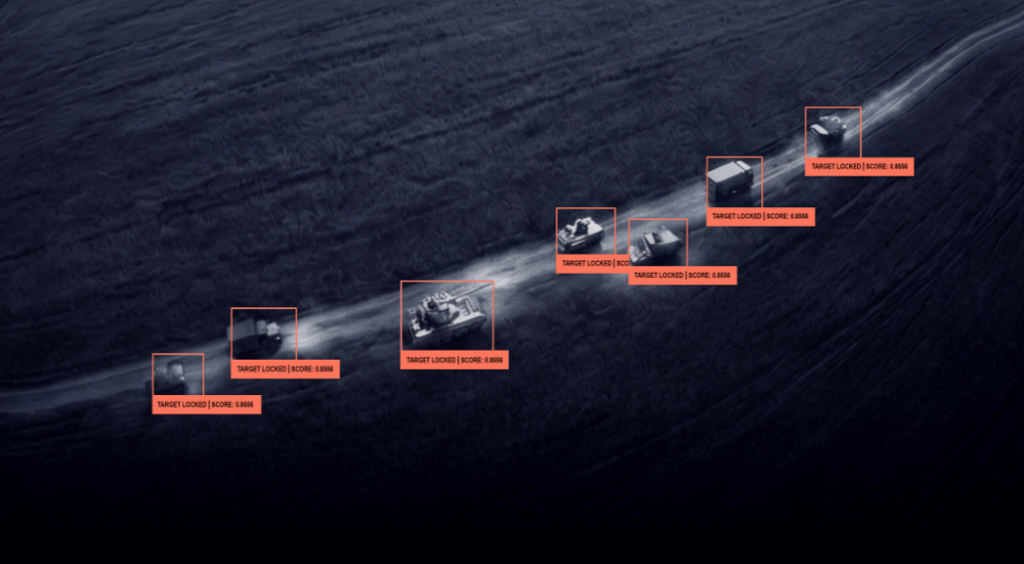
The Ministry of Defence has opened a competition for up to 12 UK companies to work with data held by Ukraine’s Avengers AI Labs. Britain is the first international partner to be given access to the database, which contains imagery and video collected by Ukrainian uncrewed aerial systems using daylight and thermal sensors.
The database includes sensor information from more than six million detections covering tanks, artillery, air defence systems, infantry and aerial targets, including Shahed attack drones and reconnaissance UAVs. The selected British companies will use the material to train and evaluate AI models intended for future uncrewed systems.
The programme is the first competition under the UK-Ukraine AI Partnership and follows an agreement between London and Kyiv. The MOD said proposals must have applications for both UK and Ukrainian defence requirements, with companies due to be selected within weeks and work on the data expected to begin soon afterwards.
The immediate focus is not simply on flying larger numbers of drones together. The MOD wants industry to develop systems capable of recognising and tracking targets, sharing information between platforms and allowing groups of autonomous systems to adjust their behaviour when battlefield conditions change.
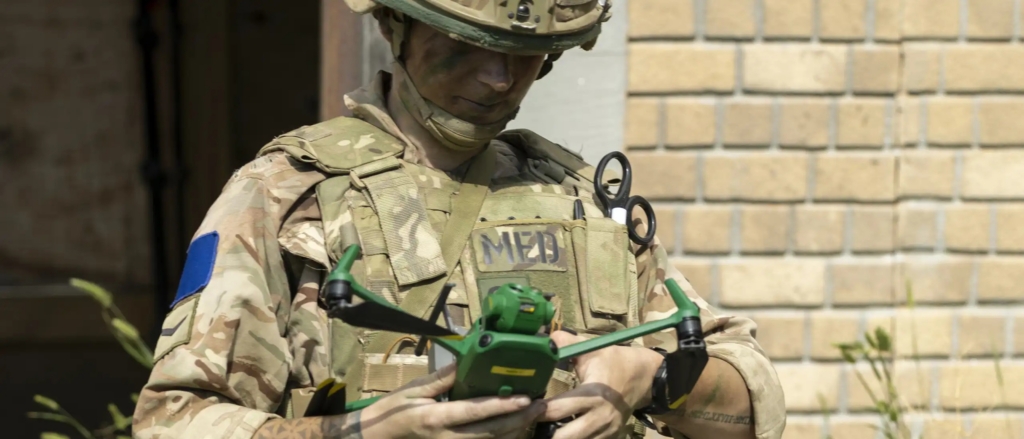
That includes distributed decision-making, where individual systems can change routes and priorities without depending on a single control point, and adaptive mission execution, allowing several platforms to coordinate when communications are constrained. The competition also covers autonomous target recognition and the fusion of information collected by different sensors and platforms.
For the UK, access to Ukraine’s data offers something difficult to reproduce through conventional trials: information collected during sustained operations in a heavily contested battlefield.
Ukraine data will train UK AI
Ukraine has become a test bed for rapid changes in drone warfare since Russia’s full-scale invasion in 2022. Uncrewed aircraft are being used for reconnaissance, targeting, strike missions and logistics, while electronic warfare and the loss of satellite navigation have forced operators and manufacturers to adapt systems quickly.
The British programme is intended to use that operational experience to improve the ability of autonomous systems to work together even when their normal links are disrupted.
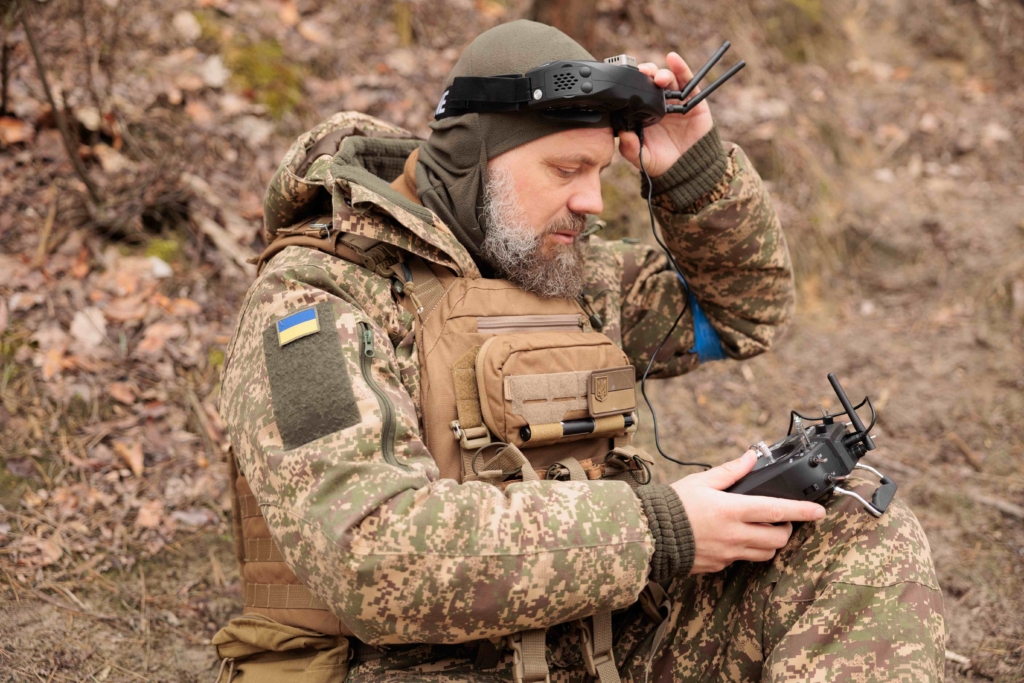
According to the MOD, AI-enabled swarms could eventually allow relatively small numbers of soldiers, sailors or aircrew to control large groups of uncrewed systems. Potential missions identified by the department range from battlefield resupply and targeting to anti-submarine operations in the North Atlantic.
The MOD said humans would remain appropriately involved in decisions made by autonomous systems. Defence Secretary Wes Streeting said the agreement would give British companies access to “real battlefield data” and allow them to push the development of defence technology more quickly.
“This world-first access to real battlefield data will allow British companies to continue pushing the frontier of defence innovation, deterring our enemies and making us safer at home as well as further strengthening Ukraine,” Streeting said.
AI Minister Kanishka Narayan said the programme brought together “Ukraine’s hard-won battlefield experience with Britain’s best AI companies to develop and deploy capabilities faster”.
“It is exactly the kind of practical partnership the Taskforce was set up to drive, supporting our ally Ukraine while strengthening sovereign capability here in Britain,” he said.
Taskforce RAID takes the lead
The competition is being led by the MOD’s Taskforce RAID, or Rapid AI Delivery, which was established to accelerate the introduction of artificial intelligence into the armed forces.
Its role is to move AI technologies more quickly from development into military use, including systems intended to improve decision-making and reduce the exposure of personnel to dangerous tasks.
The Ukraine project also sits within a wider British effort to increase the use of autonomy and uncrewed systems across the armed forces.
The British Army is already replacing its Watchkeeper WK450 surveillance fleet with TEKEVER’s AR5, an aircraft that has been used operationally by Ukraine. An initial six AR5s are being acquired under a contract worth up to £400 million, with the fleet potentially increasing to 24 by 2029.
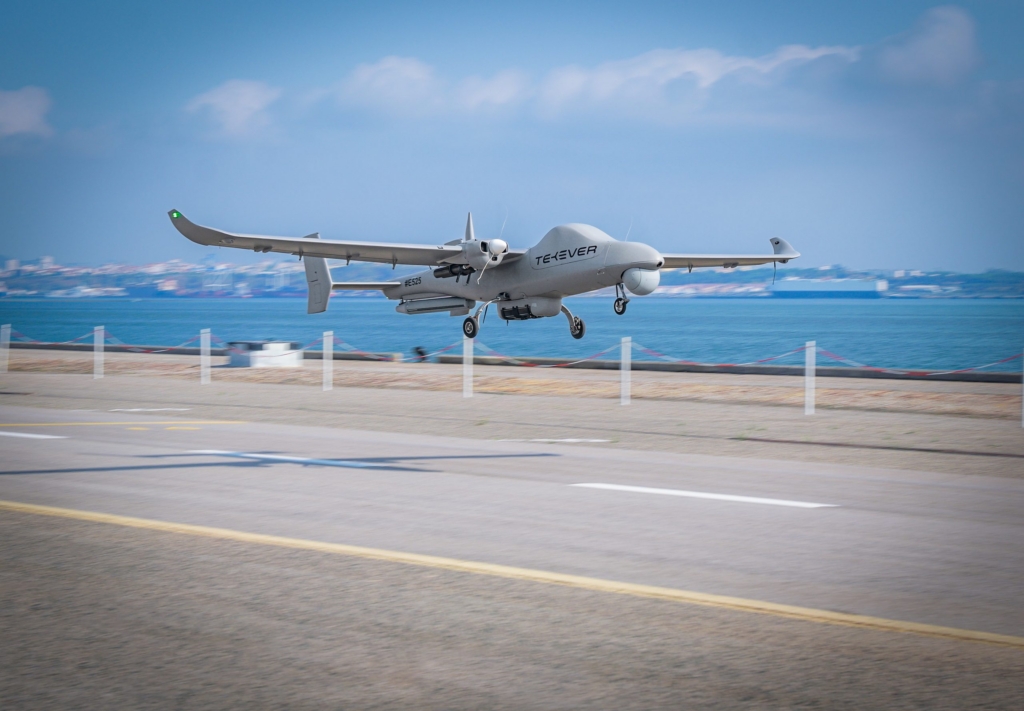
At the same time, the Army is taking delivery of more than 1,000 smaller drones, spreading uncrewed capability more widely through the force rather than relying mainly on a smaller number of larger remotely piloted aircraft.
That approach reflects one of the clearest lessons to emerge from Ukraine: drones are no longer a specialist capability operating separately from conventional forces. Surveillance aircraft, small quadcopters, loitering munitions and electronic sensors increasingly operate as part of the same battlefield network.
UK industry, however, still faces problems turning promising drone technology into equipment available at scale. Recent analysis in ADS Advance identified fragmented procurement, limited production capacity, regulatory friction and vulnerable supply chains among the obstacles facing the domestic sector.
From individual drones to coordinated groups
The emphasis on swarming also reflects how quickly autonomous technology is developing outside the UK.
Turkey’s Baykar demonstrated five K2 Kamikaze UAVs flying together in March using what the company described as AI-assisted swarm technology. The aircraft used onboard AI, sensors and software to determine their positions relative to one another while flying in different formations. However, the demonstration involved only five aircraft and did not establish that the system could conduct full autonomous swarming in a contested battlefield environment.
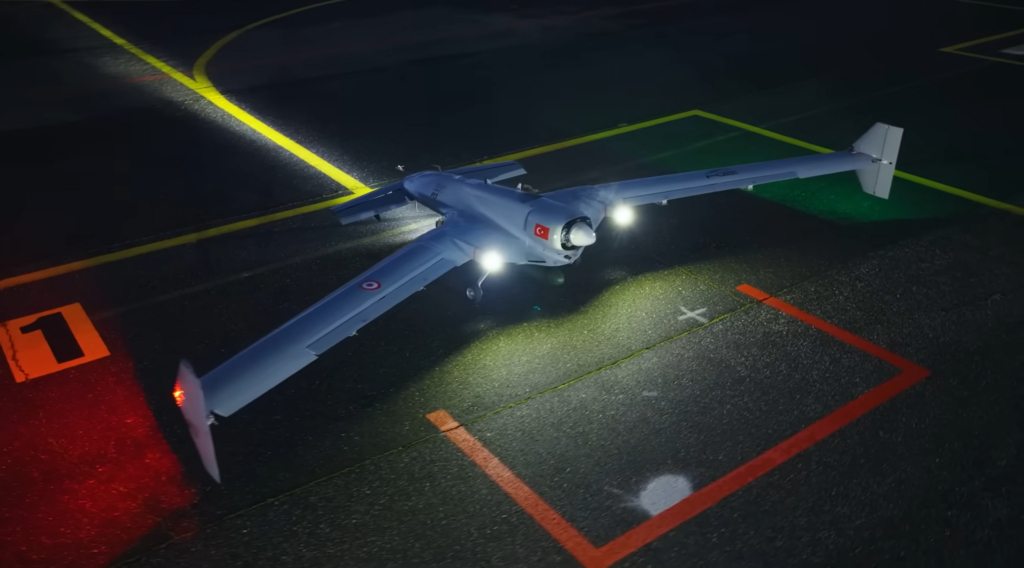
That distinction is important for the British programme. Coordinated formation flight is considerably different from multiple autonomous systems independently sharing sensor information, responding to threats and reallocating tasks when communications or navigation are degraded.
The data from Ukraine is intended to help British developers address those more difficult problems.
The competition specifically seeks AI for autonomous target recognition, distributed decision-making, adaptive mission execution and collaborative sensing. Together, those technologies could allow groups of drones to continue a mission without every aircraft depending continuously on instructions from a central operator.
Britain is also working on the other side of the drone problem: how to defeat large numbers of relatively inexpensive uncrewed aircraft.
BAE Systems this year test-fired the Advanced Precision Kill Weapon System from an RAF Eurofighter Typhoon at its Warton facility in Lancashire. The laser-guided 70mm rocket is being evaluated as a lower-cost option for countering drones without using more expensive air-to-air missiles. The next phase of testing is expected to examine APKWS against uncrewed aircraft in the air-to-air role.
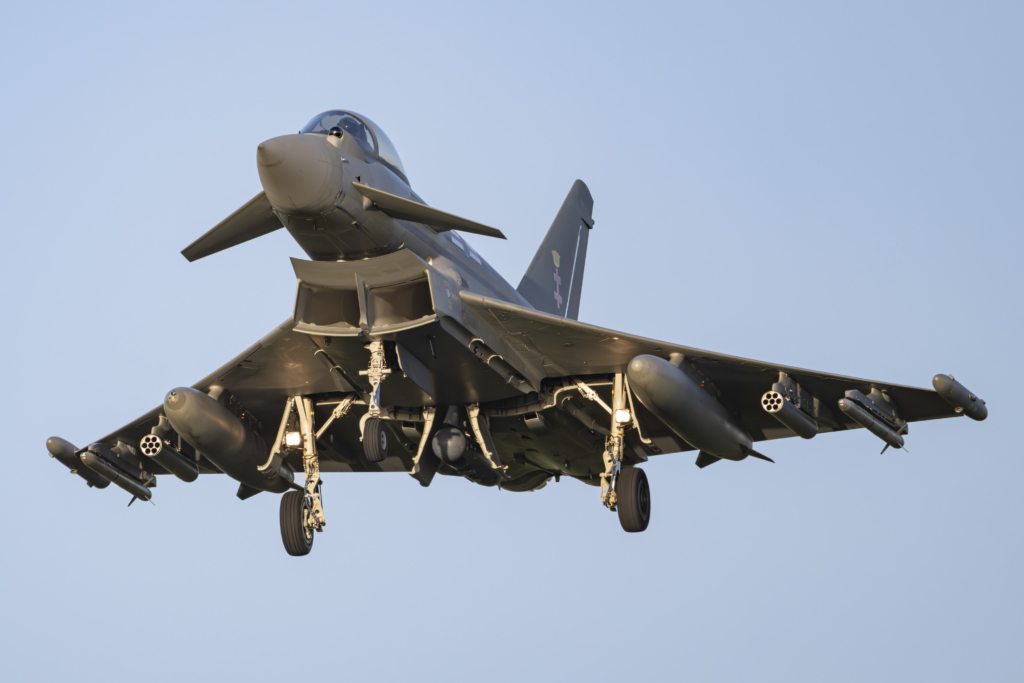
The latest UK-Ukraine initiative addresses the opposite requirement: making British uncrewed systems harder to disrupt and capable of operating together with greater autonomy.
For the companies selected, the significant element is access to the Ukrainian database itself. Rather than developing AI primarily from simulated scenarios or controlled exercises, they will be able to train models against millions of detections gathered from an active war.
The MOD expects the first companies to begin exploiting the data shortly after selection. What follows will be the more difficult step of taking AI trained on Ukraine’s battlefield experience and proving that it can deliver a reliable capability for both Ukrainian and British forces.
Sign up for our newsletter and get our latest content in your inbox.
Similar Reads