
General Atomics

Royal Navy demonstrates ship-busting firepower with Naval Strike Missile and Sea Venom

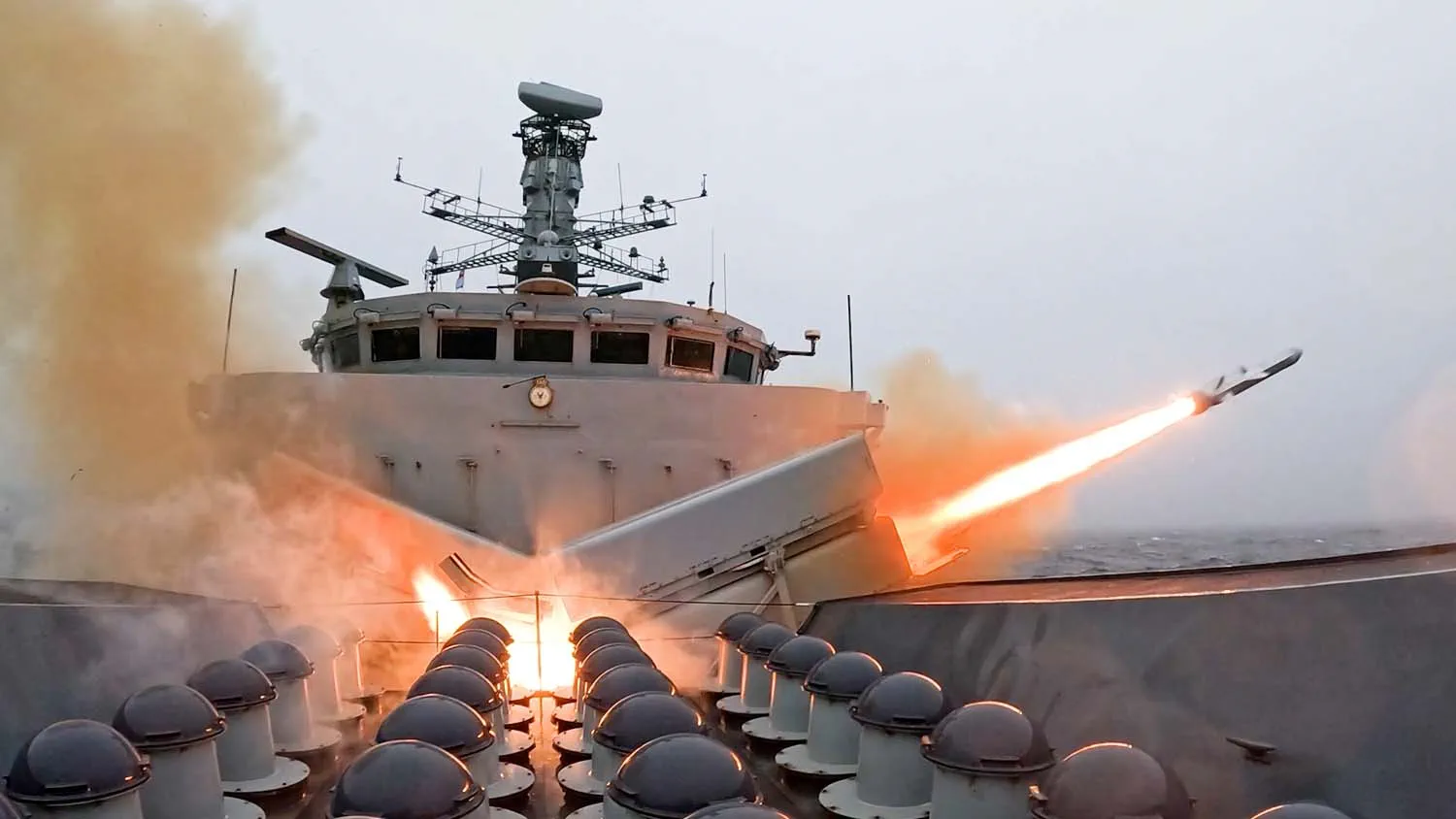
HMS Portland and her embarked Wildcat HMA2 demonstrated the Royal Navy’s evolving maritime strike capabilities during the sinking of the former-USS Krakring off the coast of Scotland as part of Exercise Atlantic Thunder 2026.

Image: MOD Crown Copyright/Royal Navy

The Royal Navy has demonstrated its developing maritime strike capability with two of its newest anti-ship missiles, combining the destructive power of the ship-launched Naval Strike Missile (NSM) and air-launched Sea Venom against a warship-sized target.

The Type 23 frigate HMS Portland conducted the Navy’s first operational NSM firing against a target of this size, while its embarked Wildcat helicopter demonstrated the complete sequence of detecting, identifying and engaging a maritime target with an operational Sea Venom missile.

Both weapons struck the decommissioned US Navy frigate Klakring during Exercise Atlantic Thunder 2026, held at the MOD Hebrides Range off the north-west coast of Scotland from 17–21 September. The sinking exercise provided an opportunity to test the weapons and their crews in a realistic warfighting environment.

HMS Portland puts Naval Strike Missile through its destructive paces

The Kongsberg-developed NSM is designed to provide a long-range precision maritime strike capability. The ship-launched missile uses a sea-skimming flight profile and advanced guidance systems to locate and engage maritime targets at ranges exceeding 100nm (185km).

During the exercise, Portland fired an operational NSM at the former Oliver Hazard Perry-class frigate, testing the weapon against a representative warship target.

Video footage of the former USS Klakring (FFG-42) being struck by multiple weapons during the SINKEX that took place during Exercise Atlantic Thunder 2026. Video: US Navy

Lt Cmdr Louise Kirkaldy, the Principal Warfare Officer aboard HMS Portland, said the firing represented an important milestone for the Royal Navy, adding that it demonstrated “our ability to deliver credible, modern maritime strike capability.”

The firing followed more than a year of preparation and training by Portland’s sailors and provided an opportunity to test the weapon and associated procedures under demanding operational conditions.

Cmdr Dafydd Bryden, the commander of HMS Portland, added: “The opportunity to fire anti-ship missiles against a decommissioned warship is an important test of our warfighting capability. This engagement proved the effectiveness of these systems as well as the sailors and aircrew who operate them. We remain ready to fight and win at sea.”

Wildcat demonstrates Sea Venom’s airborne strike capability

Alongside Portland’s NSM firing, the frigate’s embarked Wildcat HMA2 conducted a live Sea Venom anti-ship missile firing.

Operated by the Royal Navy Fleet Air Arm’s 815 Naval Air Squadron, the multi-mission maritime helicopter demonstrated the complete maritime strike sequence, from detecting and identifying the target through to engaging it with Sea Venom.

The missile is carried on the helicopter’s Leonardo Weapon Wing, which can accommodate up to 20 Martlet Lightweight Multirole Missiles or four Sea Venom anti-ship missiles.

Video: MOD Crown Copyright/LPhot Henry Parks

Developed by MBDA, Sea Venom provides the Royal Navy with a complementary airborne strike capability. It is designed to defeat corvette-sized warships and disable larger vessels, including frigates and destroyers, taking them out of the maritime fight.

Lt Cmdr Rhydian Edwards, Test and Evaluation Commander for the Royal Navy’s Maritime Aviation Strike Operational Advantage Group, described the firing as a “landmark moment” for the Wildcat fleet.

“For the first time, we demonstrated the live firing of an operational Sea Venom missile against a representative maritime target. More importantly, we proved our ability to execute the full maritime strike kill chain under realistic operational conditions,” Edwards said.

“This was about giving commanders confidence that Wildcat can find, fix and strike maritime targets using Sea Venom as part of a wider task group. The lessons learned from this activity will directly inform future tactics, training and operational capability development, ensuring Maritime Aviation Strike remains ready to fight and win when called upon,” he added.

The combination of NSM-equipped surface ships and Wildcat-launched Sea Venom missiles provides the Royal Navy with multiple options for engaging hostile vessels at different ranges and from different platforms. Atlantic Thunder allowed sailors and aircrew to put both weapons, and the procedures needed to employ them, to the test.

Related

Why skilled returners can help meet defence job targets
Natalie Destry
Why skilled returners can help meet defence job targets
A new white paper published by STEM Returners and backed by Vice Admiral (Retd) Sir Martin Connell KCB CBE, is urging the UK Government to help bring experienced professionals back into the workforce and meet defence recruitment targets.
Bristol Airport funds three new projects to cut aviation emissions
Bristol Airport
Bristol Airport funds three new projects to cut aviation emissions
Chosen from a record number of applications, the projects target some of aviation's toughest decarbonisation challenges, from energy generation to alternative fuels.
Aerospace

30 Sep 2026

UK invests £2.25m in national drone testing centre as BVLOS push gathers pace
Beyond Visual Line of Sight (BVLOS) drone operations
UK invests £2.25m in national drone testing centre as BVLOS push gathers pace
A new national centre at Westcott will test drones under controlled conditions, including disrupted navigation, communications and wind.
Aerospace

29 Sep 2026

Why skilled returners can help meet defence job targets
Natalie Destry
Why skilled returners can help meet defence job targets
A new white paper published by STEM Returners and backed by Vice Admiral (Retd) Sir Martin Connell KCB CBE, is urging the UK Government to help bring experienced professionals back into the workforce and meet defence recruitment targets.
RAF Fairford: Trump questions bail decision as five suspects released
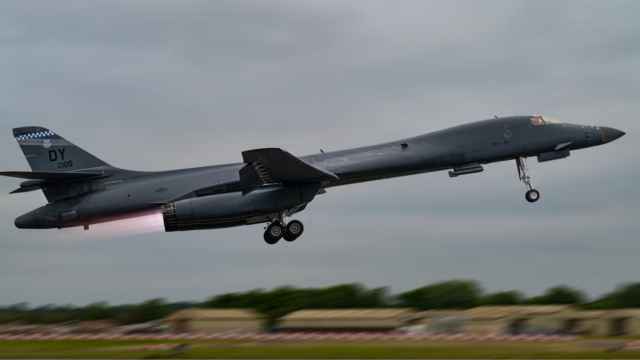
A USAF-operated B-1B Lancer takes off from RAF Fairford, Gloucestershire, on 5 June 2023. Image: USAF/Senior Airman Josiah Brown
RAF Fairford: Trump questions bail decision as five suspects released
British counter-terrorism police have released the five RAF Fairford suspects on bail as investigators continue to probe the incident.
Defence Security

30 Sep 2026

BAE Systems’ IFF solution receives AIMS certification
BAES' IFF CIT
BAE Systems’ IFF solution receives AIMS certification
With the AIMS certification of its new Identification Friend or Foe (IFF) solution, BAE Systems ensures its open-system architecture can add enhanced security and real-time information across existing and emerging platforms for US and allied forces.
Defence Member News

30 Sep 2026

Why skilled returners can help meet defence job targets
Natalie Destry
Why skilled returners can help meet defence job targets
A new white paper published by STEM Returners and backed by Vice Admiral (Retd) Sir Martin Connell KCB CBE, is urging the UK Government to help bring experienced professionals back into the workforce and meet defence recruitment targets.
Skyrora completes hot-fire test of scaled-down orbital vehicle systems
Skyrora-hot-fire test of scaled-down orbital vehicle systems
Skyrora completes hot-fire test of scaled-down orbital vehicle systems
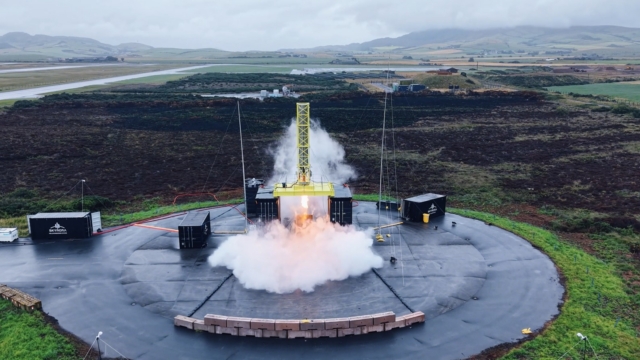
With its static hot-fire testing of a smaller scale version of its orbital launch vehicle, Skyrora is addressing engineering challenges and reducing technical risk, before scaling up the development of its Skyrora XL rocket programme.
Member News Space

30 Sep 2026

How Astroscale plans to remove a dead satellite from orbit
ELSA-M satellite removal spacecraft
How Astroscale plans to remove a dead satellite from orbit
Astroscale UK's ELSA-M mission will capture a retired Eutelsat OneWeb satellite and pull it towards atmospheric re-entry.
Space

30 Sep 2026

Why skilled returners can help meet defence job targets
Natalie Destry
Why skilled returners can help meet defence job targets
A new white paper published by STEM Returners and backed by Vice Admiral (Retd) Sir Martin Connell KCB CBE, is urging the UK Government to help bring experienced professionals back into the workforce and meet defence recruitment targets.
RAF Fairford: Trump questions bail decision as five suspects released
A USAF-operated B-1B Lancer takes off from RAF Fairford, Gloucestershire, on 5 June 2023. Image: USAF/Senior Airman Josiah Brown
RAF Fairford: Trump questions bail decision as five suspects released
British counter-terrorism police have released the five RAF Fairford suspects on bail as investigators continue to probe the incident.
Defence Security

30 Sep 2026

Royal Solomon Islands Police Force join UK leadership programme
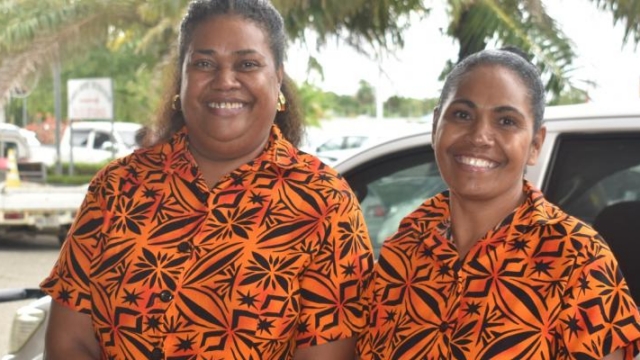
Back in September 2022, the Assistant Commissioner of Police (ACP) Crime and Intelligence Patricia Leta and Assistant Commissioner of Police (ACP) National Operations Evelyn Thugea, RSIPF, flew from Honiara International Airport to attend the UK College of Policing ILP course in Manchester. Photo: RSIPF
Royal Solomon Islands Police Force join UK leadership programme
The programme forms part of the UK-supported Pacific Policing Leadership Programme (PPLP), which has reached almost 400 police officers across the Pacific region.
Security

30 Sep 2026