HMS Venturer delivery slips to 2028 as Royal Navy faces frigate shortage

Babcock’s revised timetable puts HMS Venturer’s delivery in 2028, with workforce capacity and operational readiness central to the Type 31 programme.

Type 31 frigate
Image: Babcock International

Babcock has confirmed that the Royal Navy’s first Type 31 frigate, HMS Venturer, is now expected to be delivered in 2028, around two years later than originally anticipated. The admission highlights mounting challenges for Britain’s warship-building industry, prompting renewed consideration of whether production can be accelerated to address the Navy’s growing shortage of operational frigates.

According to Navy Lookout, Babcock’s marine chief executive, Sir Nick Hine, has acknowledged delays across the five-ship programme, citing inflation, rising labour and energy costs, supply-chain pressures and disruption caused by the COVID-19 pandemic and war in Ukraine. Construction difficulties affecting the first two vessels have added to the pressure, with Babcock absorbing significant additional costs under its fixed-price contract.

The company is attempting to limit the impact on subsequent ships, but the revised timetable raises questions about the government’s ability to deliver new warships quickly enough to maintain the Royal Navy’s operational capabilities.

Could Rosyth accelerate Type 31 frigate construction?

The Royal Navy is considering options to increase the pace of Type 31 construction at Babcock’s Rosyth shipyard in Scotland. Potential measures include recruiting additional workers and introducing longer or additional shifts, including weekend working, to increase output.

Such changes would require further investment and sufficient skilled labour but could help recover some lost time. The urgency reflects growing concern about the availability of the Navy’s ageing Type 23 frigates, which the Type 31 programme is intended to help replace.

Type 31 Frigate
Photo: Babcock International

The delays are particularly concerning because the Type 31 vessels are designed to provide general-purpose capabilities, including maritime security patrols, escort duties and anti-piracy operations. Their introduction is intended to ease pressure on a fleet facing increasingly demanding commitments.

However, accelerating construction will not necessarily translate directly into earlier operational availability.

Why HMS Venturer’s delivery date is not its service-entry date

Although HMS Venturer is expected to be handed over in 2028, the ship must still complete acceptance procedures, certification, trials and preparation for operational deployment. Any shortage of suitably qualified personnel within the Ministry of Defence and Royal Navy could further complicate the process.

Navy Lookout has highlighted concerns that limited technical-assurance expertise and demanding certification procedures could delay the introduction of completed ships into service. Ensuring sufficient personnel are available to inspect, approve and commission the vessels will therefore be as important as increasing production at Rosyth.

Type 31
Image: Babcock International

The programme has also faced substantial financial difficulties. In May 2026, Babcock announced an expected £140 million charge associated with higher-than-anticipated rework costs, taking its cumulative losses on the Type 31 contract beyond £300 million, according to Reuters.

Type 31 delays put UK shipbuilding capacity in focus

The Type 31 programme is important not only for naval capability but also for the future of British shipbuilding. Construction at Rosyth supports thousands of skilled jobs, apprenticeships and businesses across the domestic supply chain.

Delays and cost overruns risk undermining confidence in the programme, while uncertainty over future workloads could threaten the retention of skilled workers and specialist expertise. Conversely, successfully accelerating production could strengthen industrial capacity and demonstrate that Britain can deliver complex warships more efficiently.

The challenge is to increase output without compromising quality, safety or financial sustainability. For the Royal Navy, the priority is clear: getting new frigates into service sooner. Whether additional shipyard shifts and recruitment can deliver that outcome will depend on funding, workforce availability and the Ministry of Defence’s ability to bring completed ships into operational service without unnecessary delays.

Related

Jersey Airport seeks UK counter-drone support after two nights of flight disruption
Control Tower at Jersey Airport
Jersey Airport seeks UK counter-drone support after two nights of flight disruption
Multiple flight diversions and cancellations sparked a police investigation and prompted fresh efforts to strengthen drone detection around Jersey Airport.
Aerospace

2 Nov 2026

“Ill-judged and short-sighted”: Virgin Atlantic slams London Heathrow terminal shakeup
Virgin Atlantic Airbus A350 landing at Heathrow Airport
“Ill-judged and short-sighted”: Virgin Atlantic slams London Heathrow terminal shakeup
The changes will increase the required transit time for passengers connecting between Virgin Atlantic and Delta Air Lines.
Aerospace

1 Nov 2026

AI and automation in aviation: which UK jobs are most at risk?
Aircraft landing at Heathrow Airport
AI and automation in aviation: which UK jobs are most at risk?
Automation is changing the way airlines and airports operate, and some traditional roles are becoming less common. Which aviation jobs are most at risk, and what does this mean for the people who keep the industry moving?
Aerospace

1 Nov 2026

BAE Systems assumes Chair of Yorkshire defence cluster
James Needham
BAE Systems assumes Chair of Yorkshire defence cluster
Having taken over the Chair of the Yorkshire Regional Defence & Security Cluster (YRDSC), BAE Systems is looking to connect regional capabilities with national defence priorities.
Defence Member News

2 Nov 2026

RAF deploys Protector drone over English Channel to monitor Russian naval activity
Royal Air Forces (RAF) newest aircraft, Protector RG Mk1
RAF deploys Protector drone over English Channel to monitor Russian naval activity
How the Protector is now helping secure the British Isles from Russian naval threats in addition to their extensive 2026 deployments to the Middle East.
Defence

2 Nov 2026

Galvion awarded Latvian helmet framework contract
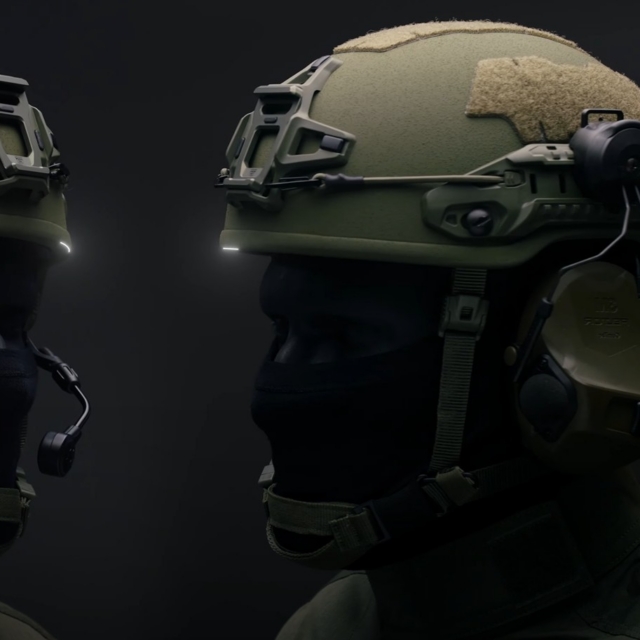
Galvion Hellbender helmet
Galvion awarded Latvian helmet framework contract
Under the European Union’s Security Action for Europe (SAFE) programme, Galvion has received a Hellbender helmet systems contract for the Latvian armed forces.
Defence Member News

2 Nov 2026

Space cybersecurity starts on the ground: The hidden risks in satellite supply chains
headshot for Benny Czarny Opswat CEO
Space cybersecurity starts on the ground: The hidden risks in satellite supply chains
Compromised suppliers, unchecked files and insecure updates can threaten satellites before they reach orbit. OPSWAT founder and CEO Benny Czarny explains why prevention must start on the ground
Insights Security Space

31 Oct 2026

Plextek receives King’s Award for Enterprise in Innovation
King’s Award for Enterprise in Innovation from His Royal Highness the Duke of Gloucester.
Plextek receives King’s Award for Enterprise in Innovation
HRH The Duke of Gloucester has presented Plextek with the King’s Award for Enterprise in Innovation for its PLX-T60 sensing platform.
UK sets out plans for quantum technology in space, with secure satellites and navigation as priorities
Quantum Growth Alliance
UK sets out plans for quantum technology in space, with secure satellites and navigation as priorities
The UK Space Agency has released a roadmap to deploy quantum sensors, secure communications, and GPS-independent navigation aboard satellites by 2035.
Security Space

30 Oct 2026

Space cybersecurity starts on the ground: The hidden risks in satellite supply chains
headshot for Benny Czarny Opswat CEO
Space cybersecurity starts on the ground: The hidden risks in satellite supply chains
Compromised suppliers, unchecked files and insecure updates can threaten satellites before they reach orbit. OPSWAT founder and CEO Benny Czarny explains why prevention must start on the ground
Insights Security Space

31 Oct 2026

Overseas defence firms face UK offset norms on contracts worth £50m or more
Former Defence Secretary John Healey MP is given a tour of the UK's Storm Shadow production line at MBDA's facility in Stevenage on 31 May 2025. Image: MOD Crown Copyright/Rosie Hallam
Overseas defence firms face UK offset norms on contracts worth £50m or more
The UK government has launched a new offsets policy requiring foreign defence suppliers to invest in UK jobs, factories, and local supply chains starting April 2027.
Defence Security

30 Oct 2026

Cambridge Pixel expands radar options with Garmin integration
Cambridge Pixel radar tracker for Garmin radars
Cambridge Pixel expands radar options with Garmin integration
Support for Garmin's Fantom and GMR xHD marine radars gives maritime developers and systems integrators greater flexibility when selecting sensors for new projects.