MOD seeks industry input on next-generation medical evacuation system

The MOD is looking to modernise the specialist systems used to transport patients with dangerous infectious diseases back to the UK.

Imagery of the Atlas A400M, seen here operated by crews of LXX & 30 Squadron overseen by an XXIV Squadron instructor, carrying on beach landings over on Pembrey Sands. This was facilitated by Tactical Air Traffic Controllers and Tactical Fire who ensure the beach and activity is completed as intended. Along with conducting touch and go's alongside full stop landings, the aicraft also despatched a pair of RWMIK's driven by 16 Air Assault Brigade as part of an Engine Running Operation or ERO.
Photo: Royal Air Force

The UK Ministry of Defence (MOD) is exploring options for a new Air Transportable Isolator (ATI), a specialist system used to move patients with highly infectious diseases by air while protecting medical staff, aircrew and the public.

The department has launched a request for information (RFI) to understand what products and technologies are available before deciding whether to launch a future competition.

The work is being carried out through UK Defence Innovation and follows an earlier market engagement exercise carried out in 2021. The aim is to identify companies with existing ATI products or designs that could be developed further.

What is an Air Transportable Isolator?

An ATI is a sealed isolation system that allows patients with serious infectious diseases to be transported safely over long distances. It is operated by the Deployable Air Isolator Team (DAIT), a joint MOD and Department of Health and Social Care team.

The UK has maintained this type of capability for more than 40 years. In that time, DAIT has been used to transport patients with High Consequence Infectious Disease (HCID) – including Ebola – back to specialist treatment facilities in the UK.

What does the MOD want from a new system?

The MOD says the future ATI must be able to transport patients with HCID, including “Level 4 biological threats… requiring full isolation.”

It also needs to be a “current Royal Air Force strategic fixed wing aircraft (with potential for future airframes and NATO partner platforms) with onward ground transfer via specialist ambulatory systems.”

The RFI states, “Defence requires a resilient, assured and interoperable next-generation Strategic ATI to maintain interoperability with NHS, improve and update military equipment and to enhance supply chain resilience.” 

Other requirements include:

  • Able to deal with Level 4 biological threats.
  • Able to contain Level 4 pathogens at all times.
  • Allow the use of ventilators, patient monitors and other medical equipment during transport.
  • Allow patients to be transferred directly from aircraft into NHS High Level Isolation Units.
  • Be able to operate for a minimum of 48 hours.

What it means for SMEs

The opportunity is likely to be relevant to SMEs working in medical technology, infection control, aerospace engineering, patient transport, life-support equipment and specialist healthcare systems.

While it’s not yet a procurement, it offers early visibility of a future requirement and gives suppliers a chance to help shape the MOD’s understanding of the market.

Responses to the RFI must be submitted by 14 December 2026.

Related

Jersey Airport seeks UK counter-drone support after two nights of flight disruption
Control Tower at Jersey Airport
Jersey Airport seeks UK counter-drone support after two nights of flight disruption
Multiple flight diversions and cancellations sparked a police investigation and prompted fresh efforts to strengthen drone detection around Jersey Airport.
Aerospace

2 Nov 2026

“Ill-judged and short-sighted”: Virgin Atlantic slams London Heathrow terminal shakeup
Virgin Atlantic Airbus A350 landing at Heathrow Airport
“Ill-judged and short-sighted”: Virgin Atlantic slams London Heathrow terminal shakeup
The changes will increase the required transit time for passengers connecting between Virgin Atlantic and Delta Air Lines.
Aerospace

1 Nov 2026

AI and automation in aviation: which UK jobs are most at risk?
Aircraft landing at Heathrow Airport
AI and automation in aviation: which UK jobs are most at risk?
Automation is changing the way airlines and airports operate, and some traditional roles are becoming less common. Which aviation jobs are most at risk, and what does this mean for the people who keep the industry moving?
Aerospace

1 Nov 2026

Filtronic awarded UK Defence Innovation Contract to advance connectivity technologies
Advanced connectivity technologies
Filtronic awarded UK Defence Innovation Contract to advance connectivity technologies
As part of plans to develop the UK's high-capacity network capabilities, Filtronic has been awarded a UK Defence Innovation Contract to advance next-generation connectivity technologies.
Defence Member News

2 Nov 2026

New Belfast fabrication hall to support construction of Fleet Solid Support ships
Harland-Wolff Belfast
New Belfast fabrication hall to support construction of Fleet Solid Support ships
A new fabrication hall at Navantia UK’s Harland & Wolff site in Belfast will be the centrepiece of a £157 million investment programme across their four UK shipyards.
Defence Member News

2 Nov 2026

Wescom Defence expands POMBS production
POMBS Training
Wescom Defence expands POMBS production
Following a recent surge in demand for its Portable Obstacle Minefield Breaching System (POMBS), Wescom Defence has expanded its manufacturing facilities and increased production of its obstacle clearance solution.
Defence Member News

2 Nov 2026

Space cybersecurity starts on the ground: The hidden risks in satellite supply chains
headshot for Benny Czarny Opswat CEO
Space cybersecurity starts on the ground: The hidden risks in satellite supply chains
Compromised suppliers, unchecked files and insecure updates can threaten satellites before they reach orbit. OPSWAT founder and CEO Benny Czarny explains why prevention must start on the ground
Insights Security Space

31 Oct 2026

Plextek receives King’s Award for Enterprise in Innovation
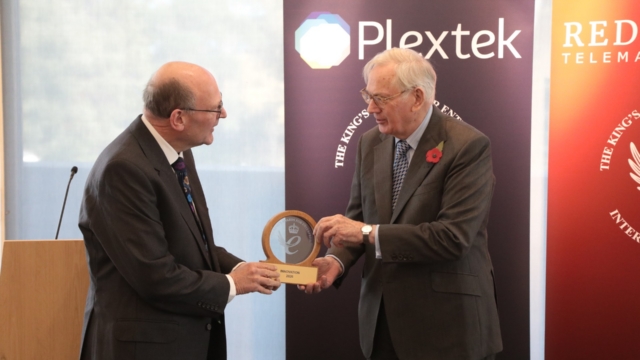
King’s Award for Enterprise in Innovation from His Royal Highness the Duke of Gloucester.
Plextek receives King’s Award for Enterprise in Innovation
HRH The Duke of Gloucester has presented Plextek with the King’s Award for Enterprise in Innovation for its PLX-T60 sensing platform.
UK sets out plans for quantum technology in space, with secure satellites and navigation as priorities
Quantum Growth Alliance
UK sets out plans for quantum technology in space, with secure satellites and navigation as priorities
The UK Space Agency has released a roadmap to deploy quantum sensors, secure communications, and GPS-independent navigation aboard satellites by 2035.
Security Space

30 Oct 2026

Space cybersecurity starts on the ground: The hidden risks in satellite supply chains
headshot for Benny Czarny Opswat CEO
Space cybersecurity starts on the ground: The hidden risks in satellite supply chains
Compromised suppliers, unchecked files and insecure updates can threaten satellites before they reach orbit. OPSWAT founder and CEO Benny Czarny explains why prevention must start on the ground
Insights Security Space

31 Oct 2026

Overseas defence firms face UK offset norms on contracts worth £50m or more
Former Defence Secretary John Healey MP is given a tour of the UK's Storm Shadow production line at MBDA's facility in Stevenage on 31 May 2025. Image: MOD Crown Copyright/Rosie Hallam
Overseas defence firms face UK offset norms on contracts worth £50m or more
The UK government has launched a new offsets policy requiring foreign defence suppliers to invest in UK jobs, factories, and local supply chains starting April 2027.
Defence Security

30 Oct 2026

Cambridge Pixel expands radar options with Garmin integration
Cambridge Pixel radar tracker for Garmin radars
Cambridge Pixel expands radar options with Garmin integration
Support for Garmin's Fantom and GMR xHD marine radars gives maritime developers and systems integrators greater flexibility when selecting sensors for new projects.