Arctic Hunter: Kongsberg offers new UK-built sub-hunting USV to Royal Navy

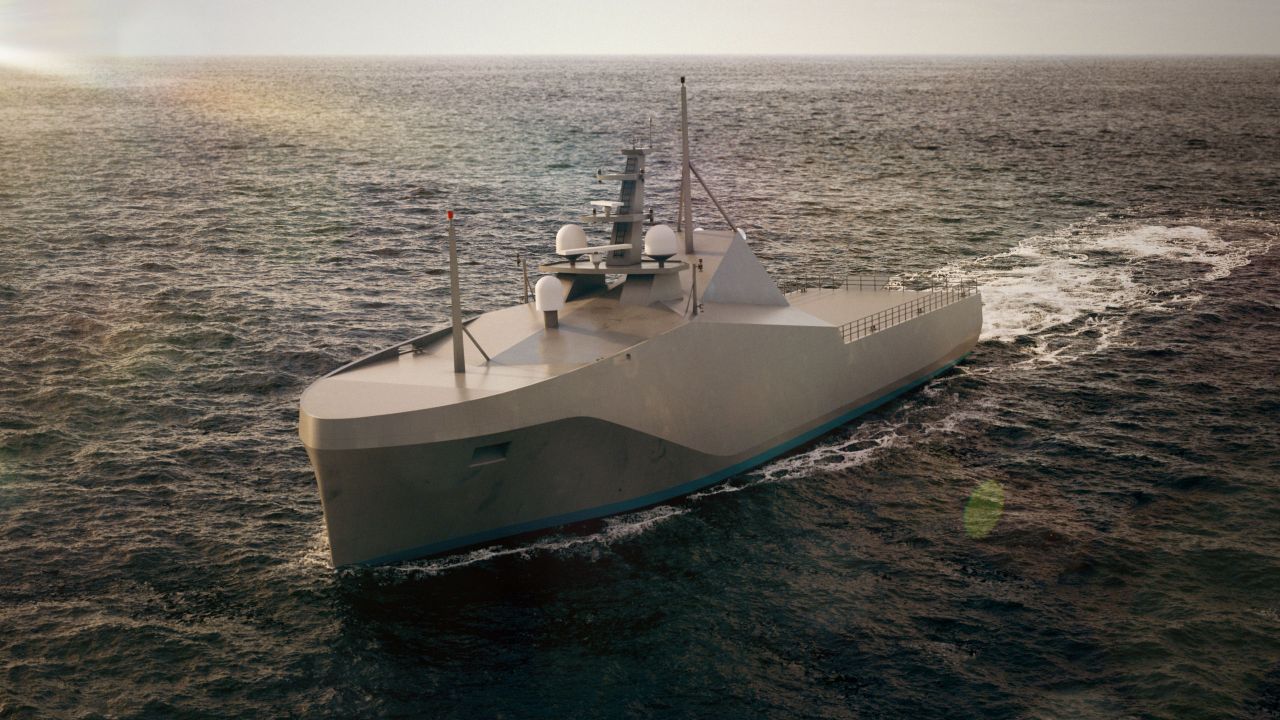
Kongsberg Maritime has unveiled the Arctic Hunter, a new uncrewed surface vessel (USV) that is designed to deliver persistent anti-submarine warfare (ASW) capabilities in the High North, with the Norwegian maritime technology firm positioning the platform as a potential solution for the Royal Navy’s Type 92 Large USV requirement.
Announced on 9 November ahead of the Atlantic Future Forum in Oslo, the Arctic Hunter combines an established commercial Arctic vessel design with Kongsberg’s remote-control and autonomous technologies, alongside specialist military systems supplied by UK-based defence firm, Thales.
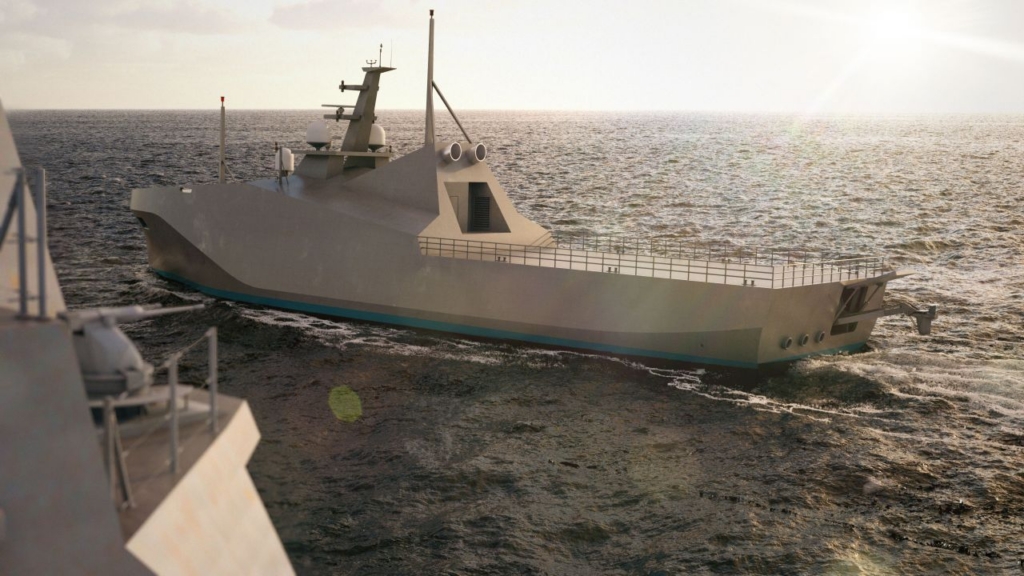
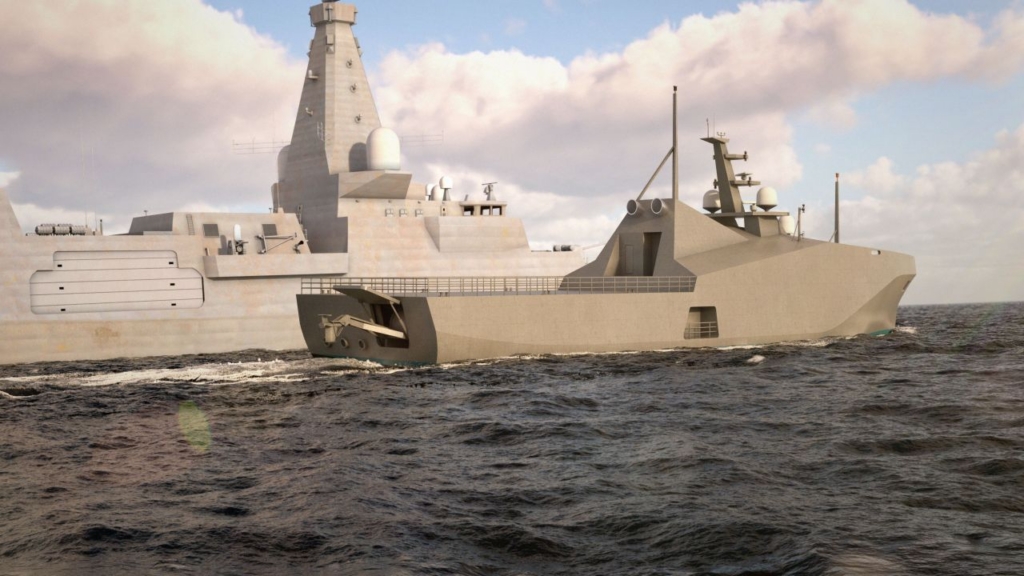
The 56m (183.7ft) vessel is intended to operate for extended periods without personnel onboard, supporting crewed warships and other ASW assets in detecting and tracking hostile submarines across strategically important waters in the North Atlantic and Arctic regions.
Kongsberg’s proposal forms part of the Royal Navy’s emerging ‘Hybrid Navy’ concept. First announced in September 2025, the new concept envisages an integrated force of uncrewed platforms and conventional crewed warships to expand operational reach, bolster combat capability and increase surveillance capacity.
Turning a proven commercial vessel into an uncrewed submarine hunter
The Arctic Hunter is based on an existing commercial fishing trawler design that was selected for its proven performance in the harsh, challenging conditions of the High North, in addition to its overall endurance qualities and high payload capacity.
Kongsberg has adapted the vessel with dynamic positioning, remote-control capabilities and autonomous systems. According to the firm, the Arctic Hunter will incorporate Thales UK’s “sovereign submarine-hunting sonar and secure military communication systems” to provide a “resilient, high-performing remote sensing platform” that is capable of supporting persistent ASW operations.
The substantial deck space and payload capacity offered by the Arctic Hunter will also allow additional or alternative mission systems to be integrated onto the vessel as operational requirements evolve throughout its service life, the firm added.
According to Navy Lookout, the Arctic Hunter has been designed to undertake missions lasting up to 60 days while operating from a forward support base located within the Arctic Circle.
Rather than being entirely autonomous, the proposed vessel will be supervised by trained personnel operating from a shore-based Remote Operations Centre. As a result, human operators will retain control of the Arctic Hunter’s key functions and military effects.
Kongsberg Maritime’s underlying USV technology has already received flag-state approval from the Norway-based global maritime classification society, DNV, and the Norwegian Maritime Authority, although the complete military configuration will still require further development and systems integration.
A UK-built future for the Royal Navy’s uncrewed ASW operations?
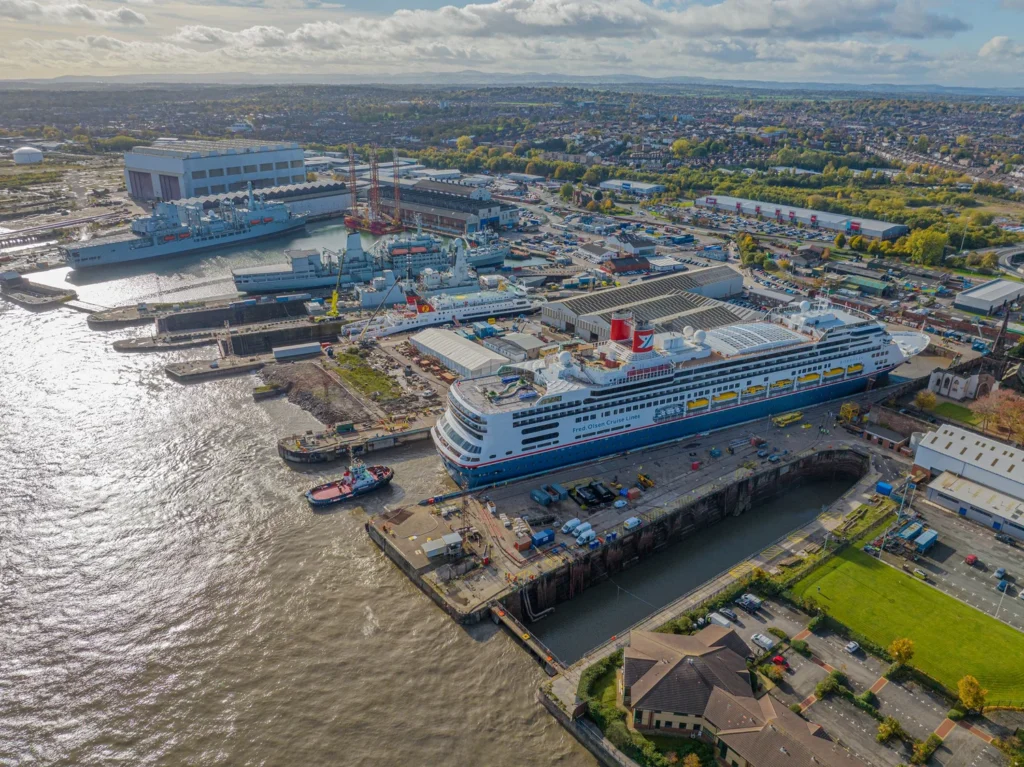
As per the Royal Navy proposal, Kongsberg is working with UK-based shipbuilding partner, Balaena Maritime, to establish a domestic construction arrangement, with the proposed vessels set to be built at the firm’s shipyard in Birkenhead, Merseyside.
Under this proposed industrial model, commercial shipyards would undertake the initial ship construction work, with defence industry partners subsequently integrating relevant military infrastructure and equipment afterwards. The partners are targeting an accelerated delivery approach for the Arctic Hunter, with initial vessels slated for military fit-out work and operational deployment by 2030.
Lisa Edvardsen Haugan, CEO of Kongsberg Maritime, said “Atlantic security is an absolute priority, and we believe that the Arctic Hunter USV offers a robust and practical response to the growing need for additional submarine detection capability.”
She added that the firm’s more than 50-year experience in designed vessels for operations in demanding Arctic conditions, combined with its remote and autonomous technologies, provided the foundation for the Royal Navy’s Type 92 Large USV proposal.
The programme also supports the UK-Norway Lunna House agreement, which includes cooperation on NATO’s wider adoption of autonomous systems in the High North. Kongsberg plans to sign technology collaboration agreements with Thales UK and Balaena Maritime during the Atlantic Future Forum.
While the Arctic Hunter has been developed with the Royal Navy’s Type 92 Large USV requirement in mind, its design could also offer a potential solution for other NATO and Joint Expeditionary Force (JEF) nations that are also seeking additional uncrewed ASW capabilities.
The proposal represents another step towards a hybrid maritime force in which persistent uncrewed surveillance complements, rather than replaces, conventional crewed naval platforms, allowing the Royal Navy (and other allied navies) to strengthen overall combat capabilities, operational reach and force mass.
Sign up for our newsletter and get our latest content in your inbox.
Similar Reads



Sign up for our newsletter. Select all sectors relevant to you.
Related