General Atomics

Astroscale secures US Patent for space debris removal

As low Earth orbit becomes increasingly congested with aging satellites and fragmented debris and new satellites are launched at an accelerating pace, Astroscale has secured issuance of US Patent No. 12,234,043 B2 for its 'Method and System for Multi-Object Space Debris Removal'.


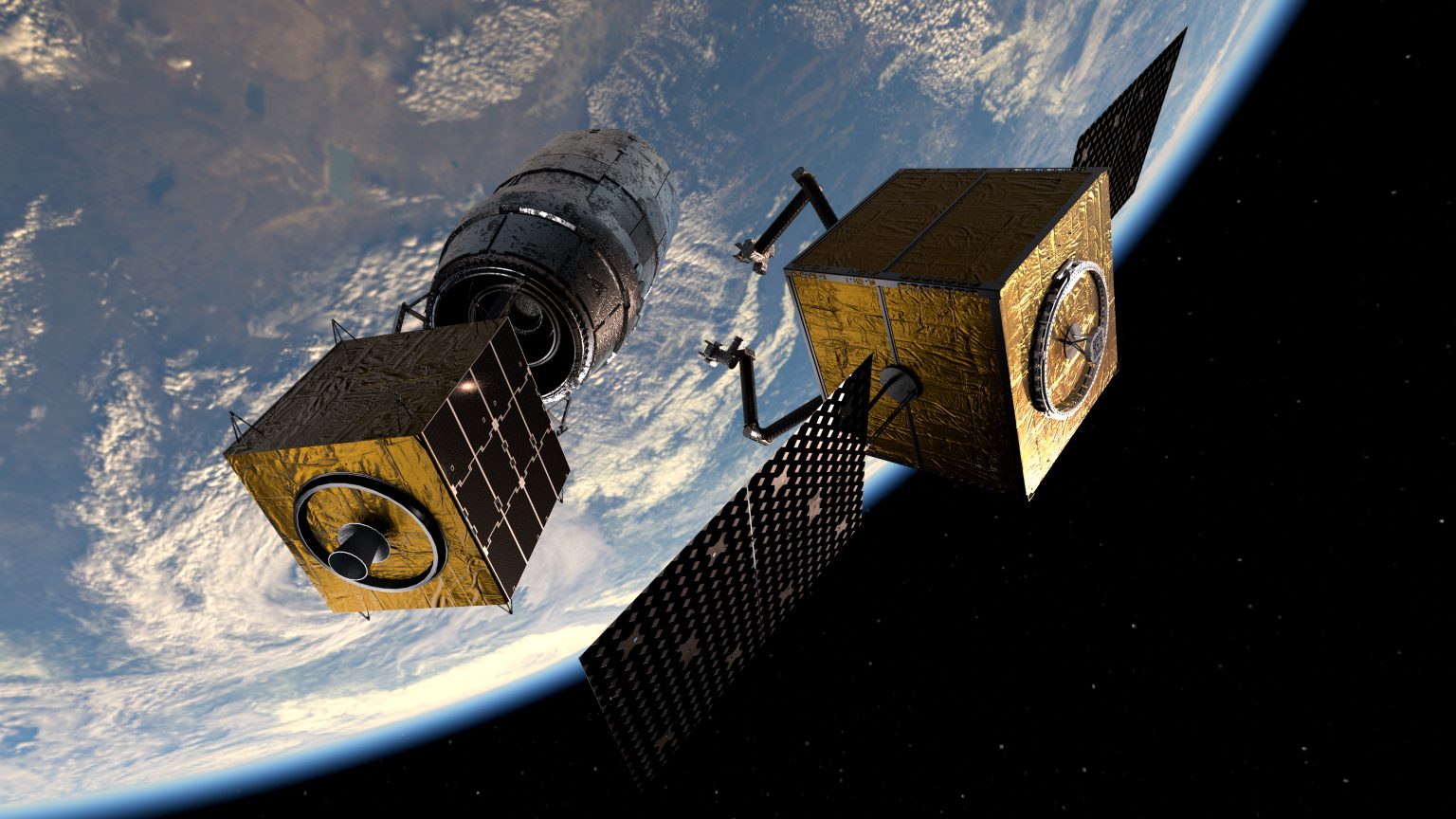
Image courtesy Astroscale

This patented innovation offers a sustainable and efficient distributed architecture approach to active debris removal (ADR), allowing for scalable, repeatable ADR operations and controlled reentry of multiple debris objects.

When safely reentering a multiton debris object from orbit, traditional ADR methods face significant limitations — they are expensive, not sufficiently agile and unable to carry enough fuel for multiclient missions. Astroscale’s distributed, reusable system overcomes these barriers while uniquely enabling the optionality of controlled reentry, ensuring that any surviving fragments from larger debris objects do not pose risks to populated areas or critical infrastructure on the ground, addressing a growing public safety concern and aligning with international best practices. 

Under this new patented method, the servicer docks with a debris object (the client) and transfers it to a reentry shepherd vehicle in a lower orbit. 

Once the client is docked with the shepherd, the servicer separates and proceeds to engage a new client, while the shepherd safely guides the initial client into Earth’s atmosphere for reentry. This process repeats, allowing the servicer to remove multiple large debris objects over the course of its mission.

Astroscale’s architecture also supports flexible mission profiles: the shepherd can remain docked through reentry, undocked after performing reentry insertion and returned to orbit, or in some cases, missions can proceed without a shepherd vehicle at all. This adaptability is essential in addressing the diverse size and risk profile of objects in orbit.

“Our distributed architecture solves a key challenge in orbital debris removal by enabling the deorbit and reentry of multiple large debris objects sustainably and economically,” said Mike Lindsay, CTO at Astroscale. “This approach allows us to reuse our advanced servicers, capable of capturing and detumbling multi-ton objects, instead of burning them up with the debris upon reentry. This not only saves cost but also reduces the amount of potentially harmful material released into the Earth’s upper atmosphere.”

This new patent builds on Astroscale’s multi-removal approach for debris. Astroscale’s ELSA-M, set to launch in 2026, is capable of removing several ‘prepared’ inactive satellites in a single mission, meaning satellites designed with technologies such as an interface that will enable docking and removal. By contrast, the newly patented method is designed for large, unprepared objects such as rocket bodies and legacy satellites that were not built to be serviced and require a safe, guided descent through the Earth’s atmosphere.

This new patent further strengthens Astroscale’s intellectual property portfolio and reinforces its role in developing practical and innovative on-orbit servicing solutions that support the secure and sustainable use of space for future generations.

Related

Airport chiefs urge government to tackle business rates
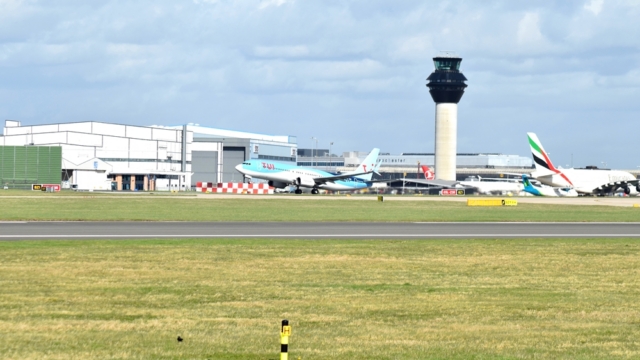
Manchester Airport
Airport chiefs urge government to tackle business rates
AirportsUK chair Baroness Ruby McGregor-Smith has warned rising costs risk holding back future investment.
Aerospace

15 Oct 2026

Unions oppose £5.7bn easyJet takeover by Apollo over job security concerns
easyJet A320
Unions oppose £5.7bn easyJet takeover by Apollo over job security concerns
European employee representatives have opposed Apollo’s £5.7bn easyJet takeover, citing concerns over job security and long-term employment protections.
Aerospace

15 Oct 2026

UK airport drop-off charges face government review after sharp increases
A passenger with luggage walks next to a travelator in a London Heathrow Airport Central Terminal Area.
UK airport drop-off charges face government review after sharp increases
The UK Government will review airport drop-off fees after sharp increases, with some airports now charging £10 for short stops.
Aerospace

15 Oct 2026

Viasat orders ALL.​SPACE Hydra MAX Terminals for Ka-band networks
ALL.SPACE Hydra
Viasat orders ALL.​SPACE Hydra MAX Terminals for Ka-band networks
Viasat has placed an order for multiple ALL.​SPACE Hydra MAX terminals approved to operate on Viasat's global NextGen Ka-band network, providing resilient SATCOM connectivity for defence and government users.
Defence Member News Space

15 Oct 2026

MoD extends Leidos LCST contract to transform UK defence logistics support
Military convoy
MoD extends Leidos LCST contract to transform UK defence logistics support
Continuing its support of UK national security, defence and logistics programmes, Leidos is modernising supply chain resilience and defence logistics by heightening inventory visibility and extending integrated data access.
Defence Member News

15 Oct 2026

Royal Navy adds suspected counter-drone launchers to HMS Dauntless
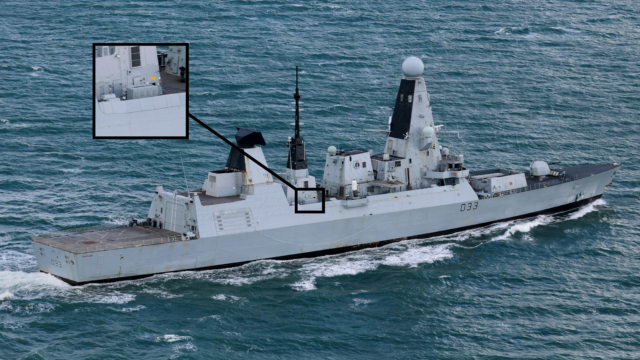
HMS Dauntless (D33) conducts a PASSEX with Ukrainian minehunters off the Isle of Wight on 10 October 2026. The inset image offers a closer look at the warship's new suspected C-UAS launcher. Image: MOD Crown Copyright/PO Phot Belinda Alker
Royal Navy adds suspected counter-drone launchers to HMS Dauntless
HMS Dauntless has received two unidentified launchers potentially designed for drone interception, amid the Royal Navy’s efforts to strengthen shipborne C-UAS defences.
Defence

15 Oct 2026

Viasat orders ALL.​SPACE Hydra MAX Terminals for Ka-band networks
ALL.SPACE Hydra
Viasat orders ALL.​SPACE Hydra MAX Terminals for Ka-band networks
Viasat has placed an order for multiple ALL.​SPACE Hydra MAX terminals approved to operate on Viasat's global NextGen Ka-band network, providing resilient SATCOM connectivity for defence and government users.
Defence Member News Space

15 Oct 2026

Cornwall Space Cluster launches £15k legal support programme for space SMEs
Goonhilly satellite near Cornwall Space Cluster
Cornwall Space Cluster launches £15k legal support programme for space SMEs
Cornwall Space Cluster has partnered with Stephens Scown to offer specialist legal advice to space businesses, helping them protect intellectual property, prepare for investment and support future growth.
Space

15 Oct 2026

ClearSpace selected to deliver UK’s first active debris removal mission
ClearSpace removing space debris
ClearSpace selected to deliver UK’s first active debris removal mission
The UK-led programme will remove two defunct satellites while creating specialist jobs, supporting supply chains and building capability in the growing in-orbit services sector.
Space

15 Oct 2026

NAD and CDS want accelerated capability as DSEI UK 27 launched
NAD and CDS launch DSEI UK 27
NAD and CDS want accelerated capability as DSEI UK 27 launched
As the National Armaments Director (NAD) and the Chief of the Defence Staff (CDS) launched DSEI UK 2027 yesterday, they said faster capability delivery, greater innovation and improved readiness are required to ensure the UK and its allies are suitably prepared for any future conflict.
Warwickshire Police turns to AI to review the quality of investigations
Chat with AI or Artificial Intelligence technology. Man touching chatting virtual with an intelligent artificial intelligence asks for the answers he wants. Smart assistant futuristic, Chatbot,
Warwickshire Police turns to AI to review the quality of investigations
An eight-agent system checks investigation records against policing standards, with officers retaining responsibility for decisions.
Security

14 Oct 2026

UK Connect Defence launches Rapid Broadband Kit
UK Connect Defence's RBK
UK Connect Defence launches Rapid Broadband Kit
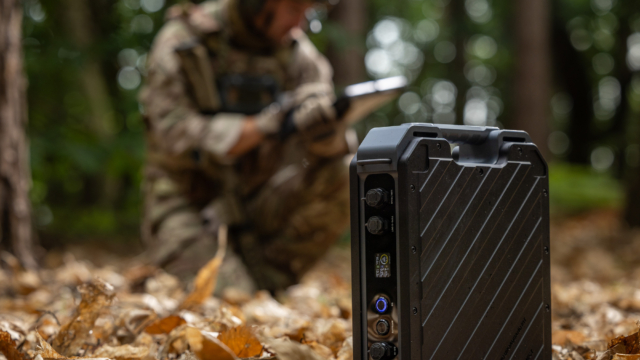
A new solution designed and manufactured in the UK, is set to deliver resilient integrated 5G and LEO satellite services broadband connectivity via a single rugged unit, connecting people, systems and services for defence, humanitarian and remote operations, with no external supporting infrastructure.