Belfast company launches UK and Ireland’s first Cyber Battle competition
Cyberspark has announced the launch of the UK and Ireland’s first Cyber Battle competition, an initiative aimed at positioning Northern Ireland as a global leader in cyber security, education and workforce development.
Above: (left to right) George Bathurst, Head of Cyber Education / Business Consultancy at Cyberspark, Richard Coates, Chief Executive Officer of Cyberspark, Minister Paul Givan, Department of Education and Denny Vitty, Director of Cyberspark. Courtesy Cyberspark / NAKEDPR
The launch of the Cyber Battle marks the first phase in Cyberspark’s larger strategy to establish the region as a cyber hub and drive significant economic expansion. According to a 2023 report issued by Queen’s University, Belfast, the sector already contributes over £237 million to the local economy, signalling rapid growth potential.
Currently welcoming registrations, the Cyber Battle competition will run a series of bootcamps over the next six to eight months, culminating in an exciting live final in the autumn. Open to school pupils, students, apprentices or anyone aged between 14 and 24-years-old with an interest in learning about cybersecurity, teams will be challenged to defend against simulated cyber-attacks, with 10 teams progressing to the final.
“This initiative is all about showcasing Northern Ireland’s capabilities in cyber security while providing young people with the skills they need to succeed in the modern world,” explained Richard Coates, Chief Executive Officer at Cyberspark.
“Our aim is to highlight what Northern Ireland can achieve on a global stage, building on the strong foundation of our excellent education system. By enhancing and expanding opportunities, we can better prepare young people for careers in one of the world’s fastest-growing industries. Cyber security is constantly evolving, and by investing in skills development now, we can ensure Northern Ireland remains at the forefront of the sector.”
Education Minister Paul Givan said: “Ensuring our children and young people are digitally literate and equipped to succeed in a digital world is important for both our present and future. In an era dominated by technological advancements, equipping students with digital proficiency is imperative for their success in education, the workplace and in life."
The Minister Paul Givan recognises the importance of education to achieve both academic and economic growth. He recently announced TransformED NI – a comprehensive strategy for Educational Excellence through the transformation of teaching and learning in Northern Ireland. This seeks to meet the educational needs of all children and young people in an ever-changing world – in which digital skills and resources for our pupils and our teachers can play an important part.
Richard concluded: “We’re very excited to be launching the UK and Ireland’s first Cyber Battle and I have no doubt that the talent on display will be immense. This competition is more than just a test of skills, it’s a practical training ground for the next generation of cyber security professionals, ensuring they are equipped to manage the challenges of a digital era.”
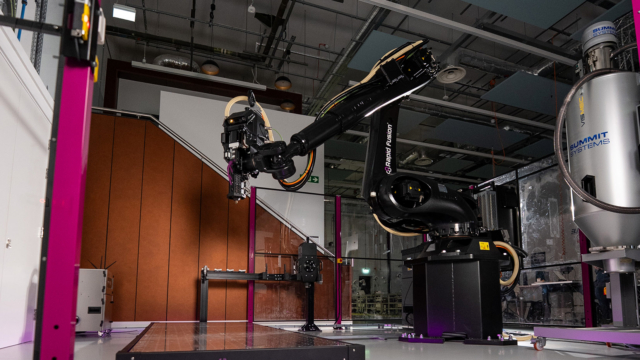
With its installation of a Zeus Robotic Cell into the Faculty of Engineering, Computing and the Environment at Kingston University, Rapid Fusion has enabled staff and students to print, scan and mill in one solution, teaching students the latest additive manufacturing solutions and helping tackle the real skills gap in the UK for robotics and 3D printing experts.
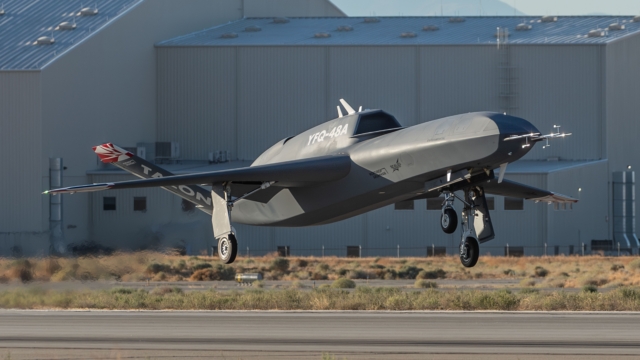
Northrop Grumman’s YFQ-48A Talon Blue will demonstrate autonomous carrier-based air operations aboard a Queen Elizabeth-class ‘flattop’ as part of trials planned for 2027 under Project Vanquish.
Building on a long-standing collaboration, Eaton is to provide hydraulic and fuel system technologies for Dassault’s next-generation Falcon 10X business jet, supporting its fuel-efficiency and performance objectives.
A House of Lords inquiry warns that spending pledges will not deliver military readiness without faster procurement, sustained production and skilled workers. Speaking to Advance, Baroness Hayter says government and industry must change how they work together.
With its installation of a Zeus Robotic Cell into the Faculty of Engineering, Computing and the Environment at Kingston University, Rapid Fusion has enabled staff and students to print, scan and mill in one solution, teaching students the latest additive manufacturing solutions and helping tackle the real skills gap in the UK for robotics and 3D printing experts.
The UK's second ISTARI military satellite, Titania, reaches orbit as trials launch for a three-site sensor network to monitor potential threats to spacecraft.
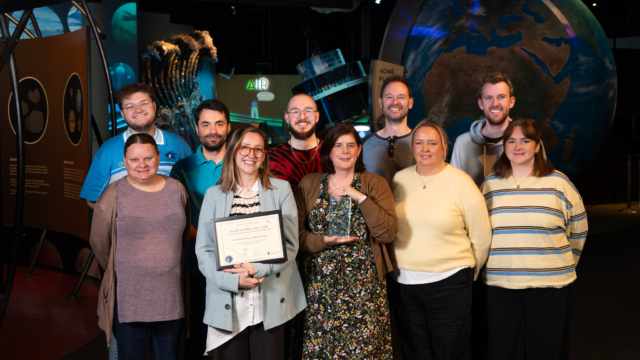
Following delivery of its education and outreach initiatives across the UK to inspire the next generation of scientists, engineers and space explorers, the National Space Centre's Discovery Team has gained national recognition by winning a prestigious Sir Arthur Clarke Award.
Following ratification of the Kensington Treaty in October, Astroscale and OHB have signed an MoU to enhance cooperation between the UK, Germany and Japan towards protecting critical infrastructure in space, whilst supporting the safe, sustainable and responsible use of the orbital environment.
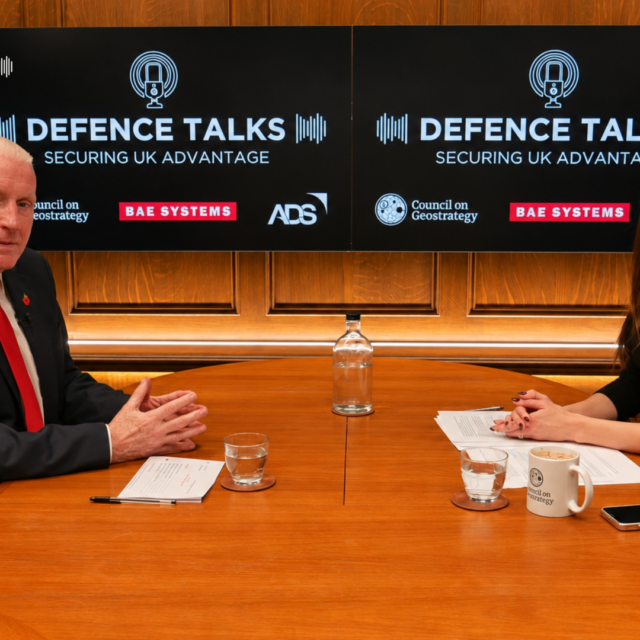
Speaking in a special Remembrance Day podcast, Lord Coaker paid tribute to those who serve while highlighting the need to strengthen UK preparedness against growing security threats.
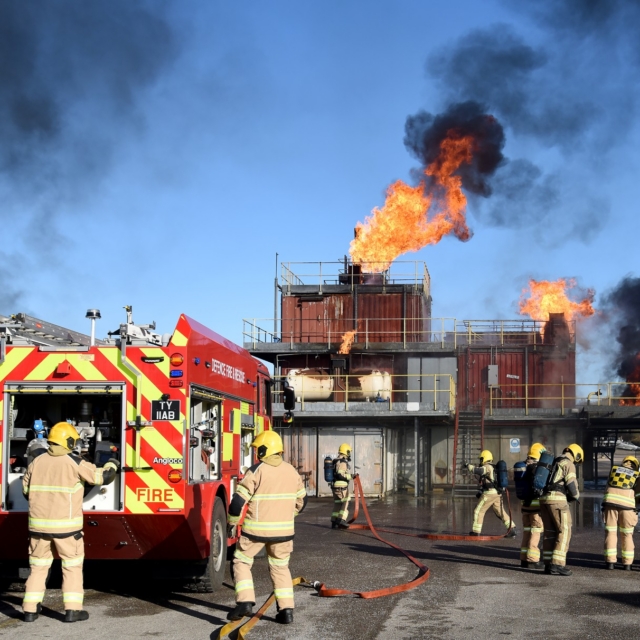
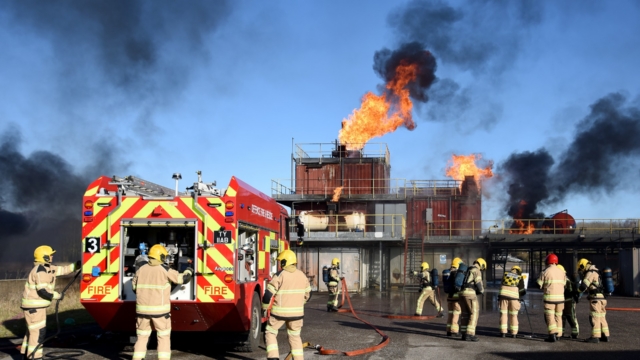
The historic Fire Service College training facility in Gloucestershire recently demonstrated how it combines immersive virtual reality, realistic incident scenarios and specialist expertise to prepare British and allied emergency responders, to support UK resilience.
A £90m investment in autonomous maritime technology will bolster the Royal Navy’s surveillance capabilities while deterring Russian submarines and safeguarding critical seabed infrastructure in the North Atlantic.