General Atomics

Tiberius Aerospace’s Invictus enters testing and evaluation

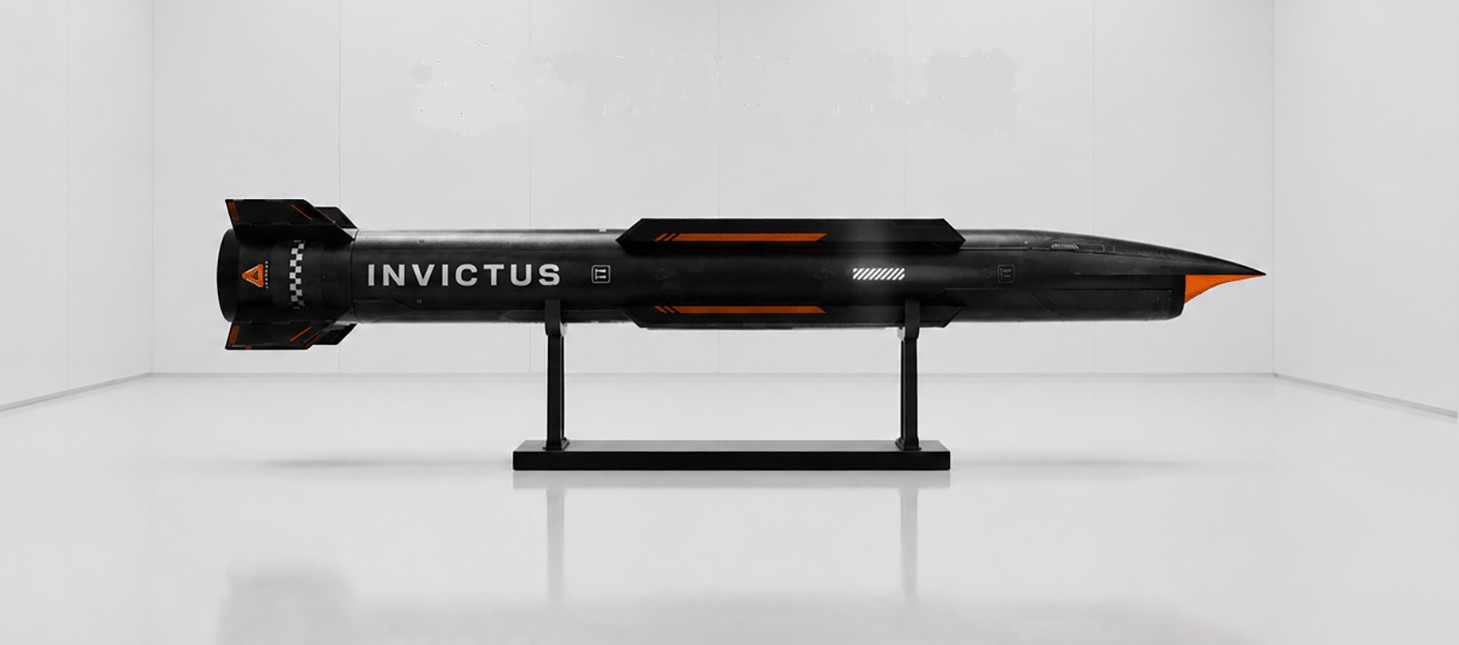
The Invictus ramjet has now moved into formal engineering testing and evaluation, as Tiberius Aerospace develops this multi-mission tube-launched system for integration across multiple platforms and domains.

Invictus
Photo: copyright Tiberius Aerospace

Tiberius Aerospace has announced that its ramjet-powered Mach 3 Invictus missile is moving from early laboratory investigation to prove the concept into formal engineering Test & Evaluation (T&E) development, marking a major step towards fielding its next-generation long-range precision strike system.

Invictus is a tube-launched, multi-mission system designed for integration across multiple platforms and domains. Its architecture is intended to support launch from vertical launch systems and autonomous vehicles operating across land and sea, giving war fighters greater flexibility in how long-range precision effects are delivered.

Tiberius Aerospace launched its first ramjet munition, Sceptre, in May 2025 and recently announced successful ramjet ignition during live firing in the US. This rapid development and learning has facilitated the accelerated transition of the Invictus programme from exploratory laboratory development into a proven engineering programme focused on validating propulsion, flight performance, guidance, platform integration and manufacturability through formal testing.

Direct-connect testing of the Invictus ramjet engine is already underway at Purdue’s Zucrow Laboratories, where the engine has demonstrated operability using Jet-A across all conditions tested to date.

Why rebuilding precision strike capabilities at pace is so important

The programme is advancing against an increasingly urgent strategic challenge: the need for the US and its allies to rebuild long-range precision strike capacity faster than traditional defence production can replenish it. The US Army used virtually all of its stockpile of ATACMS and Precision Strike Missiles during the five-month conflict with Iran, intensifying concerns about readiness for future contingencies. Across Europe, Western missile inventories have also come under growing pressure, driving NATO governments and manufacturers to accelerate production and rebuild stockpiles.
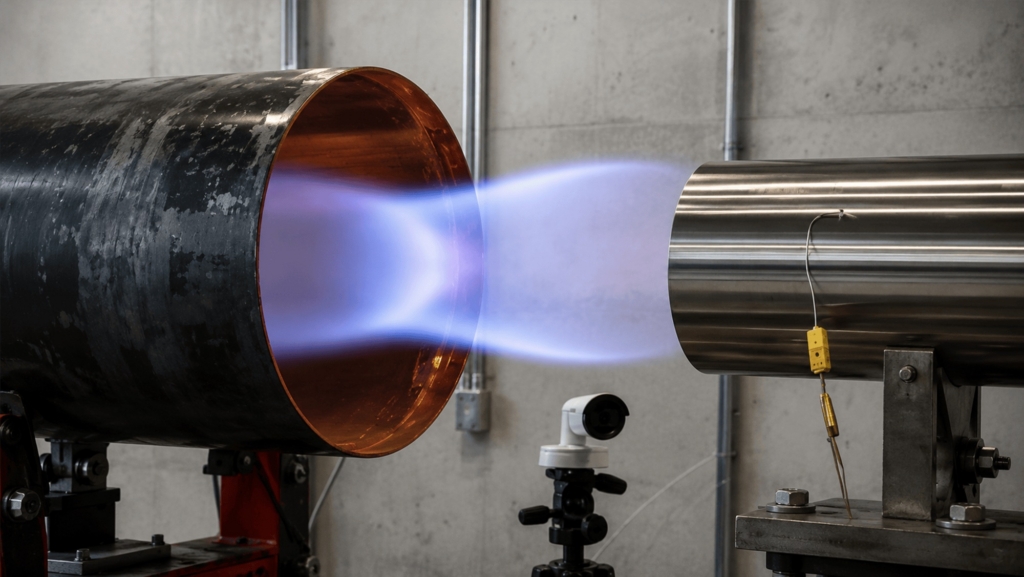
Above: Invictus being tested at Purdue’s Zucrow Laboratories. Photo: copyright Tiberius Aerospace.


Invictus is being designed to address both capability and capacity, combining long-range precision with an architecture built for adaptability and scale. The Invictus-200 will pair a ramjet with an integral booster to deliver speeds up to Mach 3 and precision strike at ranges of up to 200 kilometres, with targeting precision of 5.5-metre CEP depending on guidance configuration. Its 10–15 kilogramme payload capacity and modular, open architecture will allow the system to be configured for different missions and evolve as operational requirements change.

Driving long-range precision technology towards deployment

Chad Steelberg, Founder and CEO of Tiberius Aerospace, said: “The move into formal engineering, testing and evaluation is a major step toward turning Invictus from a promising technology into a deployable capability. Invictus and Sceptre have been designed from first principles to deliver cost-effective lethality from the outset, using our AI powered platform GRAIL to maximise the combat effect delivered for every dollar spent by simplifying the weapon, engineering it for high-volume production and building in an open architecture that can evolve without replacing the entire system.

“We have used GRAIL to enable a Silicon Valley approach to product development, connecting programme requirements with domestic and allied suppliers capable of producing components and systems and therefore supporting a broader and more resilient industrial base. Invictus will bring together long-range precision, multi-domain flexibility, cost-effective lethality and scalable production in a weapon designed not only for today’s operational requirements but for continuous adaptation throughout its service life.”

Related

Flarebright builds UK production capability for GPS-free drone navigation
Flarebright GPS free drone navigation
Flarebright builds UK production capability for GPS-free drone navigation
The UK SME is building its export business from a Buckinghamshire manufacturing base, with maritime applications next on its development agenda.
RAF roundels explained: Why Royal Air Force aircraft use different markings
RAF Red Arrows and Typhoon open Farnborough International Airshow 2022
RAF roundels explained: Why Royal Air Force aircraft use different markings
RAF roundels have identified British military aircraft for more than a century. Here's why Royal Air Force aircraft carry different markings, from Spitfires to today's stealthy F-35 fleet.
Aerospace Defence

3 Oct 2026

UK Government opens scheme to slash manufacturers’ electricity bills
Jonathan Reynolds
UK Government opens scheme to slash manufacturers’ electricity bills
Applications for the British Industrial Competitiveness Scheme (BICS) are now open to over 10,000 manufacturing businesses.
Aerospace Defence

2 Oct 2026

Flarebright builds UK production capability for GPS-free drone navigation
Flarebright GPS free drone navigation
Flarebright builds UK production capability for GPS-free drone navigation
The UK SME is building its export business from a Buckinghamshire manufacturing base, with maritime applications next on its development agenda.
RAF roundels explained: Why Royal Air Force aircraft use different markings
RAF Red Arrows and Typhoon open Farnborough International Airshow 2022
RAF roundels explained: Why Royal Air Force aircraft use different markings
RAF roundels have identified British military aircraft for more than a century. Here's why Royal Air Force aircraft carry different markings, from Spitfires to today's stealthy F-35 fleet.
Aerospace Defence

3 Oct 2026

Royal Navy tests autonomous systems against threats to critical underwater infrastructure
Exercise Repmus 2026 in Portugal
Royal Navy tests autonomous systems against threats to critical underwater infrastructure
The Royal Navy used NATO's REPMUS exercise in Portugal to evaluate autonomous vessels, underwater gliders and other emerging capabilities designed to detect underwater threats and protect critical infrastructure.
Defence

2 Oct 2026

Serco’s NadirEO to provide operational insights from Earth Observation data
The new NadirEO platform turns Earth Observation data into operational insight, bringing together multiple data sources, analytics and specialist partners to help organisations assess risk, monitor assets and make evidence-based decisions.
Member News Space

4 Oct 2026

SatVu’s HotSat-3 launches on SpaceX mission to double thermal satellite capacity
SAtVu HotSat
SatVu’s HotSat-3 launches on SpaceX mission to double thermal satellite capacity
SatVu has launched HotSat-3 aboard SpaceX’s Transporter-18 rideshare mission, adding capacity for high-resolution thermal intelligence from space.
Member News Space

2 Oct 2026

Orbex’s UK manufacturing assets and IP acquired by Omnidea
Omnidea engineering testing platform
Orbex’s UK manufacturing assets and IP acquired by Omnidea
Portugal's Omnidea has purchased the manufacturing assets and intellectual property (IP) of British rocket manufacturer Orbex UK, which ceased operations in February this year and went into administration.
Member News Space

2 Oct 2026

Cohort appoints Richard Mills as Group Strategy Director
Richard Mills
Cohort appoints Richard Mills as Group Strategy Director
Former Boeing executive Richard Mills will lead the growth strategy of Cohort and its seven subsidiaries which specialise in defence and security technology across the UK, Germany, Portugal and Australia.
BAE Systems proves complete counter-drone kill chain in Scotland trials
Container and Sensor
BAE Systems proves complete counter-drone kill chain in Scotland trials
BAE Systems has demonstrated its complete BATS counter-drone chain in Scotland, integrating sensors, electronic warfare and a gun system.
Security

1 Oct 2026

Doncaster Sheffield Airport takes another step towards reopening with new firefighting fleet
Doncaster Sheffield Airport fire appliance
Doncaster Sheffield Airport takes another step towards reopening with new firefighting fleet
Doncaster Sheffield Airport has ordered three specialist aviation firefighting vehicles as preparations continue for its planned reopening.