General Atomics

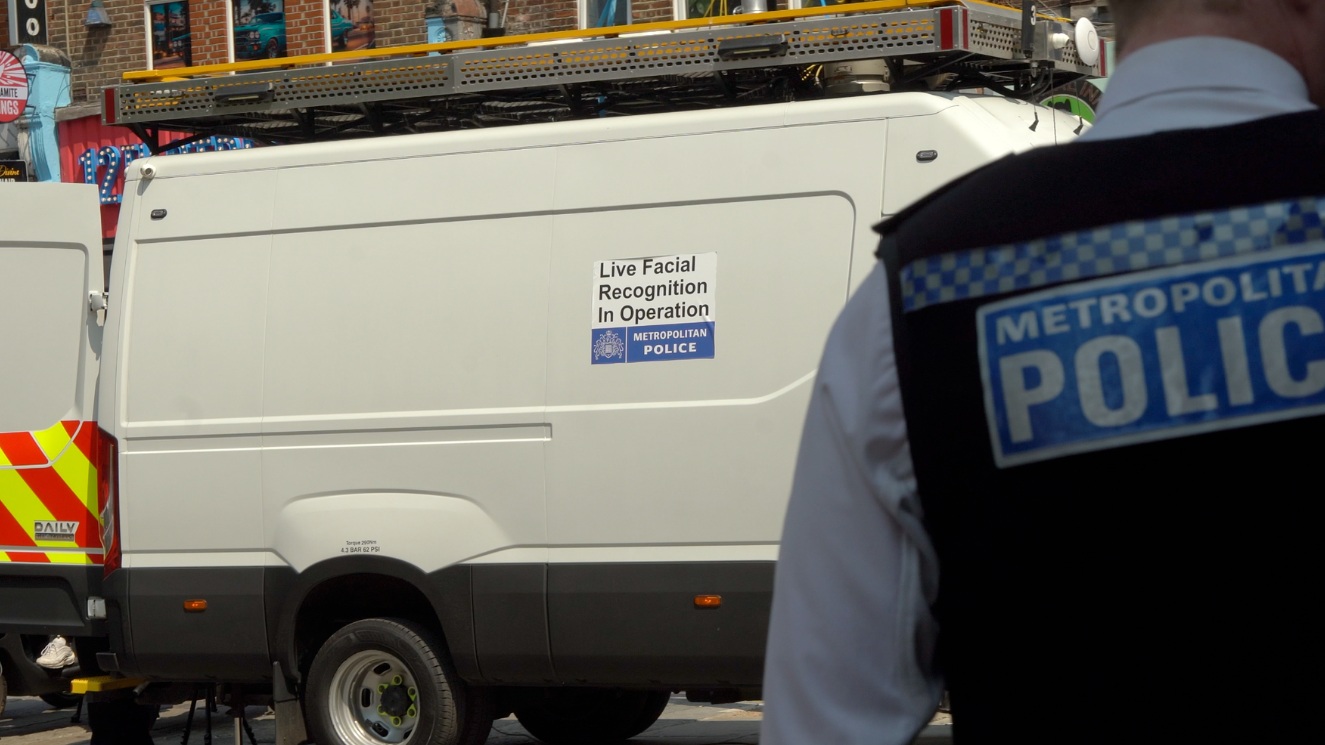
Met report reveals LFR making capital safer

The Metropolitan Police Service’s use of Live Facial Recognition (LFR) technology is making London safer, according to a new annual report published by the force.


Image courtesy the Met

The report includes in-depth analysis about the Met’s use of the tool between September 2024 and September 2025, when LFR deployments led to 962 arrests. Over a quarter of these arrests were for individuals involved in violence against women and girls, including those suspected of rape, strangulation and domestic abuse.

This brings the total number of LFR arrests to over 1400 – of which more than 1,000 people have been charged or cautioned.

These are criminals who were wanted by police or the courts, as well as offenders who were in breach of court-imposed conditions, such as sex offenders or stalkers.

These people may otherwise have remained unlawfully at large, posing a continued threat to the public and taking up much more officer time to try and locate them.

The report also demonstrates how the Met is using LFR to focus resourcing to areas where there are higher rates of crime. This is helping make those communities safe and pursue the criminals who pose the greatest risk.

Public support also remains strong, with 85% of Londoners backing the use of LFR to keep them safe.

Not only is the tool helping to reduce crime in the capital but it’s also helping to drive trust of the force within the communities it serves – with 74% of Londoners now trusting the Met.

Lindsey Chiswick, the lead for LFR at the Met and nationally, said:v“We are proud of the results achieved with LFR. Our goal has always been to keep Londoners safe and improve the trust of our communities. Using this technology is helping us do exactly that.

“This is a powerful and game-changing tool, which is helping us to remove dangerous offenders from our streets and deliver justice for victims.

“We remain committed to being transparent and engaging with communities about our use of LFR, to demonstrate we are using it fairly and without bias.”

With an exceptionally low false alert rate of just 0.0003% from more than three million faces scanned, the technology has proven both effective and accurate.

Nobody has been arrested on the back of a false alert, with four out of the 10 people falsely alerted by the system not stopped at all. The remaining six people were all spoken to by officers for under five minutes.

Independent testing has also continued to show that the tool performs consistently across different demographic groups, with the Met also emphasising the robust safeguards in place to protect people’s rights and privacy. For example, if a member of the public walks past an LFR camera and is not wanted by the police, their biometrics are immediately and permanently deleted.

Case studies
In May 2024, 27-year-old Oghenekaro Adeda (10.05.1998) of Lee High Road, Lewisham, was given a suspended sentence for harassment and stalking by the courts. He was also given a Sexual Harm Prevention Order (SHPO), which prevented him from using any software to hide his internet browsing history.

This court order meant Adeda formed part of the LFR watchlist, enabling officers to check whether the registered sex offender was adhering to these conditions.

Fourteen months later on Tuesday 15th July, the Met deployed LFR in Lewisham. Cameras alerted officers to Adeda, who was found to be using a private browsing application which hid his search history.

Thanks to this action, Adeda was sent to prison and is currently serving a 20-month sentence.

LFR was also used successfully at this year’s Notting Hill Carnival, helping to make this year’s event safer for all. The deployments saw suspects wanted for serious and violent offences on their way to a cell before they had the chance to join Carnival and potentially cause harm.

Across the two days, 61 people were arrested and 30 registered sex offenders were stopped – with three found to be in breach of their conditions.

One of the arrests made at Carnival was for an offender who had been wanted by the courts for nearly ten years for harassing a woman.

On Carnival Monday (25th August), the cameras were alerted to Tabsart Abderahmen, 58 (01.04.1967) of no fixed address. Abderahmen had been wanted since October 2015 and subsequently arrested by officers.

Building on this success, the Met will be scaling up its use of the technology in the coming months. The force will be increasing deployments each week, with additional support from officers and staff. 

Related

GE Aerospace to create 150 jobs with £30m Prestwick expansion
GE9X engine
GE Aerospace to create 150 jobs with £30m Prestwick expansion
As part of a £57 million partnership with the Ayrshire Growth Deal, GE Aerospace is making a £30 million investment in its Maintenance, Repair and Overhaul (MRO) facility in Prestwick, Scotland.
Aerospace Member News

13 Oct 2026

Riyadh Air suspends flagship London and Manchester flights following airport attacks
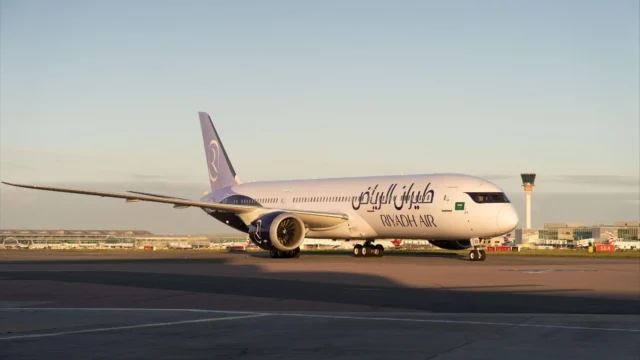
Riyadh Air Boeing 787 at London Heathrow Airport in the sun
Riyadh Air suspends flagship London and Manchester flights following airport attacks
The closure of Riyadh’s main airport has disrupted the Saudi carrier’s UK connections, just weeks after it added Manchester to its growing network.
Aerospace

12 Oct 2026

Quieter drones could still face noise backlash as UK prepares for BVLOS expansion
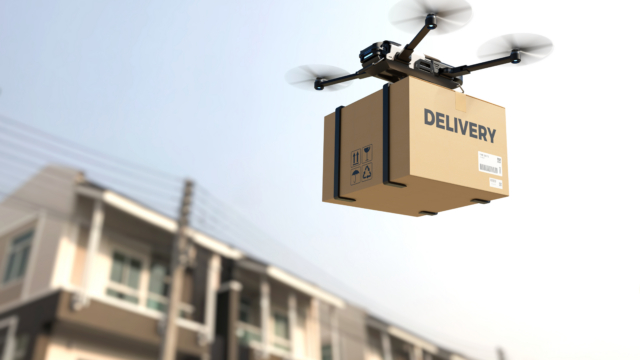
A drone flies with a package on delivery past residential houses.
Quieter drones could still face noise backlash as UK prepares for BVLOS expansion
The CAA wants early action on flight patterns, community engagement and noise assessment to help emerging aviation services grow without creating avoidable disturbance.
Aerospace

12 Oct 2026

Royal Navy seeks suppliers for Type 93 uncrewed submarine under AUKUS programme
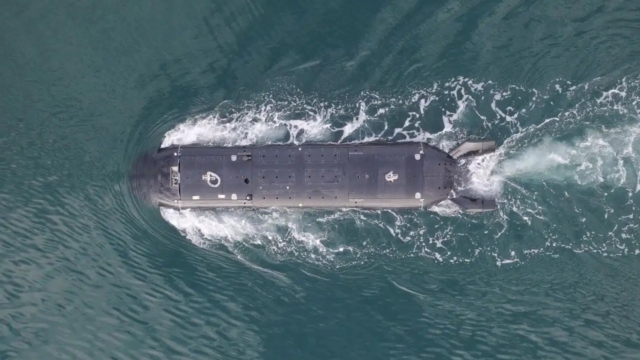
The Royal Navy's experimental XLUUV, XV Excalibur, conducts a trial at sea. Image: MSubs Ltd via LinkedIn
Royal Navy seeks suppliers for Type 93 uncrewed submarine under AUKUS programme
With the XV Excalibur uncrewed submarine now in service, the Royal Navy is seeking industry partners for its Type 93 XLUUV programme, supporting future AUKUS capabilities.
Defence

13 Oct 2026

ITURRI unveils GRITSTONE for British Army Light Mobility Vehicle programme
ITURRI GRITSTONE for the british army LMV programme
ITURRI unveils GRITSTONE for British Army Light Mobility Vehicle programme
The proposal has been developed specifically to meet the future mobility requirements of the British Armed Forces for an LMV to replace its existing Land Rovers.
Defence

12 Oct 2026

BAE Systems to produce new ACV variant for US Marine Corps
ACV
BAE Systems to produce new ACV variant for US Marine Corps
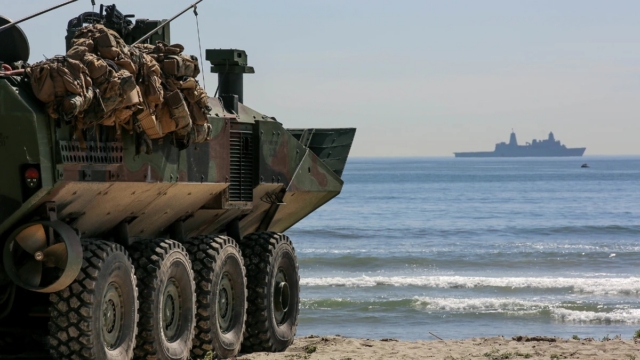
Under a $230 million contract, BAE Systems will adapt its modular Amphibious Combat Vehicle (ACV) design to produce a new variant that will complement the US Marine Corps’ advanced amphibious capabilities.
Defence Member News

12 Oct 2026

UK and Germany back SaxaVord in new European space launch deal
SaxaVord Spaceport, Shetland
UK and Germany back SaxaVord in new European space launch deal
The UK and Germany have agreed to deepen space launch cooperation, with Scotland's SaxaVord Spaceport securing European access to orbit.
Aerospace Defence Space

9 Oct 2026

Excelerate Technology to build UK CNI robotic security solution
Satellite in Earth orbit
Excelerate Technology to build UK CNI robotic security solution
In a project co-funded by the European Space Agency Business Applications and Space Solutions (ESA BASS) and supported by the UK Space Agency, Excelerate Technology will build and demonstrate how space-enabled assets can provide innovative safety and security solutions, including protection of Critical National Infrastructure (CNI) at a site in the UK.
World Space Week: How British technology will help ESA return to the Moon
ESA Argonaut
World Space Week: How British technology will help ESA return to the Moon
As Europe prepares to return to the Moon, British-developed LEIA LiDAR technology will help ESA's Argonaut lander autonomously identify safe touchdown zones on the lunar surface.
Space

5 Oct 2026

UK steps up AI cyber defences as minister warns dependence is a national security risk
Engineering team implements digital guardrails on autonomous AI agent to limit risk, Teamworking tech startup colleagues apply artificial intelligence safety constraints, brainstorming, camera A.
UK steps up AI cyber defences as minister warns dependence is a national security risk
The UK plans to expand AI-powered cyber protection and prepare for incidents involving autonomous systems, while calling for stronger UK technology capabilities.
Security

12 Oct 2026

UK opens weapons test ranges to SMEs as hypersonic testing investment advances
Project Safari hypersonics testing opens at QinetiQ MOD Hebridies for UK defence SMEs
UK opens weapons test ranges to SMEs as hypersonic testing investment advances
The MoD is easing SME access to UK weapons test ranges through Project Safari while advancing hypersonic missile testing plans at MOD Hebrides.
Defence Security

12 Oct 2026

Avon Protection secures US military order for MITR System
Avon Protection’s MITR System
Avon Protection secures US military order for MITR System
The United States Department of War (DoW) has placed an order for Avon Protection’s MITR System for its Special Operations Forces, becoming the second Five Eyes (FVEY) nation to adopt the system.