
General Atomics

Pulsar Fusion demos its nuclear fusion rocket’s first plasma

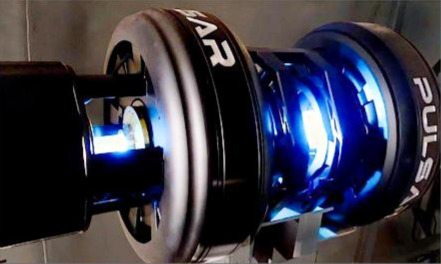
UK based space propulsion company developing advanced propulsion technologies for satellite and deep-space markets, Pulsar Fusion, today announced it has achieved 'first plasma' in its Sunbird nuclear fusion exhaust test system.


Image courtesy Pulsar Fusion 

The milestone represents the first glimpse of the physical architecture of a nuclear fusion exhaust system for space travel and was demonstrated live during a dedicated technical session at Amazon’s prestigious MARS Conference, hosted by Jeff Bezos, in Ojai California.

The Sunbird demo was presented live by Pulsar Fusion CEO Richard Dinan to an esteemed group of machine learning and robotics academics/entrepreneurs, Nobel laureates and astronauts. The test was performed by Pulsar Scientists in Bletchley, UK and live streamed to the stage in California during Richard Dinan’s presentation.

This test marks an early step in development, demonstrating plasma confinement within the exhaust architecture of the Sunbird system. The experiment uses a combination of electric and magnetic fields to guide and accelerate charged particles through the exhaust channel. 

The next phase of development will see Pulsar gather detailed performance data, including thrust and exhaust velocity, using a thrust balance, E×B probes and RPA measurements. This data will enable Pulsar to plan the first Sunbird mission.

To maximise the mission lifetime of Sunbird, Pulsar has developed a research programme in collaboration with the UK Atomic Energy Authority. The programme will study the effects of neutron radiation on the reactor walls and magnets, a primary cause of wear within the reactor.

For this initial test series, krypton was used as the propellant, selected for its relatively high ionization efficiency and inert characteristics at the mass flow rates required for early testing. Upcoming experiments will incorporate rotating magnetic field heating, RF heating systems and a dedicated thrust balance to enable more detailed performance measurements.

"The Sunbird programme showcased this milestone live in California at the MARS Conference, hosted by Jeff Bezos, which was an exceptional moment and a genuine privilege," said Richard Dinan, CEO of Pulsar Fusion. “There is no greater platform to share this first test than here, surrounded by an esteemed group of world leading machine learning and robotics academics/entrepreneurs, Nobel laureates, astronauts. I am grateful to the MARS Conference and Jeff Bezos.”

Looking ahead, Pulsar Fusion plans to upgrade the magnetic system to rare-earth, high-temperature superconducting magnets, enabling stronger magnetic fields and the exploration of higher plasma density and pressure conditions. This programme ultimately aims to begin experimental work with aneutronic fusion fuel cycles as part of the continued development of the Sunbird propulsion system.

Today’s spacecraft rely primarily on two very different propulsion systems, each with fundamental limitations. Chemical rockets generate extremely high thrust, essential for launch and rapid maneuvers, but their relatively low exhaust velocities limit how fast spacecraft can ultimately travel through space.

Electric propulsion systems, such as ion or Hall thrusters, achieve very high exhaust velocities, making them highly efficient. However, they produce very low thrust, requiring spacecraft to accelerate gradually over long periods.

Fusion propulsion has the potential to deliver both high thrust and extremely high exhaust velocities. This combination could dramatically shorten travel times across the solar system.

For example, if a space station were being constructed around Mars, faster propulsion would allow components to be transported more quickly, enabling the station to be completed and operational much sooner. In space, transport speed is directly tied to economic growth: the faster people, materials and infrastructure can move, the sooner those assets can begin generating value. Higher exhaust velocities therefore translate into a faster-growing space economy.

The global space industry is rapidly transitioning from a speculative venture into a core pillar of the world economy. According to the World Economic Forum and McKinsey, the space economy is projected to triple within the next decade, surpassing $1.8 trillion by 2035.

Related

CAA launches consultation on UK aviation information-sharing system
CAA Aviation House, Crawley, Gatwick.
CAA launches consultation on UK aviation information-sharing system
The UK Civil Aviation Authority has launched a consultation on a new information management system to enable secure data exchange between crewed and uncrewed aircraft.
Aerospace

8 Oct 2026

UK and Germany launch industrial tech corridor to strengthen manufacturing and defence supply chains
Britain and Germany have launched an industrial tech corridor to strengthen manufacturing partnerships, with defence and aerospace among the sectors set to benefit.
Aerospace

8 Oct 2026

UK aviation gender pay gap hits 53% as women miss out on highest-paid roles
Annual WiAA Charter Dinner, November 2025, in Glasgow
UK aviation gender pay gap hits 53% as women miss out on highest-paid roles
A new industry report finds aviation has one of the UK's widest gender pay gaps, with women still underrepresented in the technical, operational and leadership roles that drive career progression.
Aerospace

8 Oct 2026

Serco secures £147m US Navy ship modernisation contract
US Navy at sea.
Serco secures £147m US Navy ship modernisation contract
Serco will provide in-service support across 10 core mission functions for the US Navy surface fleet, which will include technology integration for the duration of their ships service lives.
Defence Member News

9 Oct 2026

GKN Aerospace and Saab expand Gripen E/F engine collaboration
Gripen fighter.
GKN Aerospace and Saab expand Gripen E/F engine collaboration
The agreement establishes a foundation for deeper cooperation between Saab and GKN Aerospace to strengthen the propulsion capabilities of the Gripen E/F engine.
Defence Member News

8 Oct 2026

BMT submarine course set to support Canada’s underwater capability
BMT's Wyvern submarine
BMT submarine course set to support Canada’s underwater capability
A new submarine course conducted by BMT specialists, aims to build awareness, knowledge, skills and interest across Canada's growing submarine enterprise.
Defence Member News

8 Oct 2026

Excelerate Technology to build UK CNI robotic security solution
Satellite in Earth orbit
Excelerate Technology to build UK CNI robotic security solution
In a project co-funded by the European Space Agency Business Applications and Space Solutions (ESA BASS) and supported by the UK Space Agency, Excelerate Technology will build and demonstrate how space-enabled assets can provide innovative safety and security solutions, including protection of Critical National Infrastructure (CNI) at a site in the UK.
World Space Week: How British technology will help ESA return to the Moon
ESA Argonaut
World Space Week: How British technology will help ESA return to the Moon
As Europe prepares to return to the Moon, British-developed LEIA LiDAR technology will help ESA's Argonaut lander autonomously identify safe touchdown zones on the lunar surface.
Space

5 Oct 2026

Airbus delivers first next-generation satellites for OneWeb constellation
OneWeb satellites in transport container at Airbus
Airbus delivers first next-generation satellites for OneWeb constellation
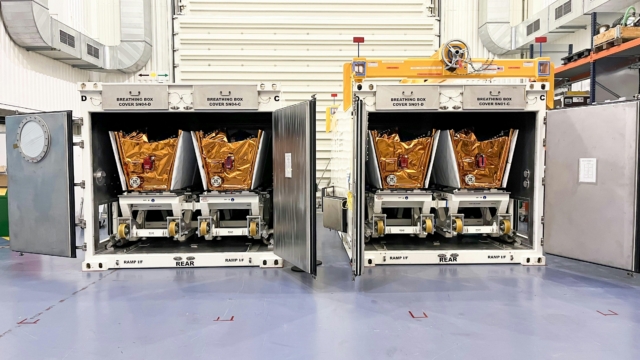
A new generation of OneWeb spacecraft is heading for launch, helping Eutelsat sustain and expand its low Earth orbit connectivity network for governments, businesses and institutions worldwide.
Member News Space

5 Oct 2026

UK Government and UKRI invest £54m to prevent future disease outbreaks
Poultry facility
UK Government and UKRI invest £54m to prevent future disease outbreaks
The UK Government and UKRI are investing £54 million in biosecurity research to tackle antimicrobial resistance, improve disease outbreak preparedness, develop next-generation vaccines and strengthen protection against emerging biological threats.
Security

8 Oct 2026

London Fire Brigade Cadets gain practical skills at firefighting weekend
Capita Fire Service College, Moreton-in-Marsh, firefighting weekend.
London Fire Brigade Cadets gain practical skills at firefighting weekend
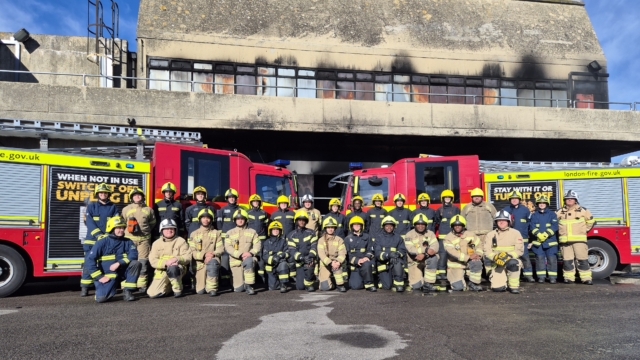
Continuing its longstanding support for London Fire Brigade’s Fire Cadets, Securitas UK has given 16 young people practical training at its ninth annual firefighting weekend, held at the Capita Fire Service College in Moreton-in-Marsh.
Member News Security

7 Oct 2026

Cyacomb launches counter-terrorism platform to identify terrorist content on digital devices
Digital security.
Cyacomb launches counter-terrorism platform to identify terrorist content on digital devices
A new counter-terrorism capability developed by Edinburgh-based Cyacomb can help investigators rapidly identify known terrorist material on digital devices, as online radicalisation creates new challenges for law enforcement services.
Member News Security

7 Oct 2026