

RAF Hawk T2 crashes shortly after take-off in North Wales


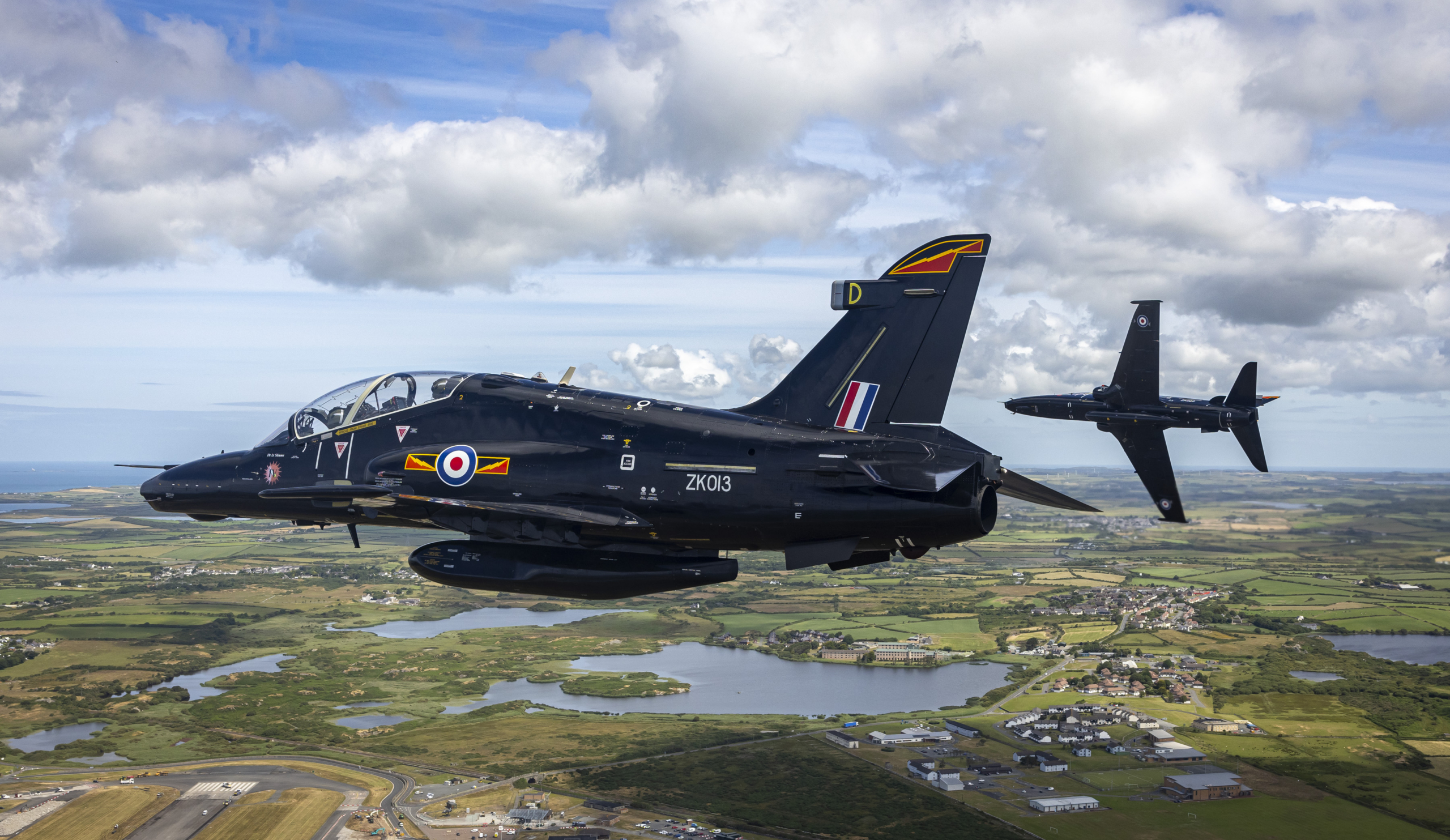
A Royal Air Force (RAF)-operated Hawk T2 advanced jet trainer has reportedly crashed in Anglesey, North Wales, shortly after taking off from its home base at RAF Valley on 23 September.
Initial reports from the scene suggest the training aircraft came down within the vicinity of the Anglesey base, with emergency services now responding to the incident.
Images and video footage circulating on social media platforms like X appear to show the aircraft violently pitching up and down before rolling and crashing into some vegetation. Both occupants – likely to be an RAF instructor pilot and their student – ejected from the stricken platform before impact.
RAF JET Crashed in Anglesey! Rhos Neigr, North Wales! @SkyNews @GBNEWS pic.twitter.com/tEvMSjSDli
— X (@X0824497343468) September 23, 2026
While reports of the crash have quickly engulfed social media, the RAF has yet to confirm the incident. Thus, details surrounding the aircraft involved, the circumstances of the incident and the condition of the two reported aircrew remain subject to verification.
Any investigation into this reported crash is expected to examine the circumstances leading to the crash and the performance of the aircraft and its systems. Updates will be provided as this developing story unfolds…
Hawk T2: The backbone of British fast-jet training operations
RAF Valley is home to the RAF’s No 4 Flying Training School (FTS), which operates the Hawk T2 for advanced fast-jet training. The fleet prepares RAF and Royal Navy student pilots for operational conversion to frontline combat aircraft, namely the Lockheed Martin F-35B Lightning II and Eurofighter Typhoon FGR4.
Manufactured by BAE Systems, the Hawk T2 is a dual-seat, transonic advanced jet trainer fitted with a glass cockpit and modern, digital avionics. It is also equipped with a datalink that provides pilots with synthetic radar and electronic warfare (EW) and surface-to-air missile (SAM) defence simulation suite is designed to replicate the tactical environment faced by modern combat aircraft.
The Hawk T2 entered operational service with the RAF in July 2009 and replaced the legacy Hawk T1 fleet in the advanced fast-jet training role. A limited number of T1s have been retained in use for the RAF Red Arrows aerobatic team at RAF Waddington in Lincolnshire.
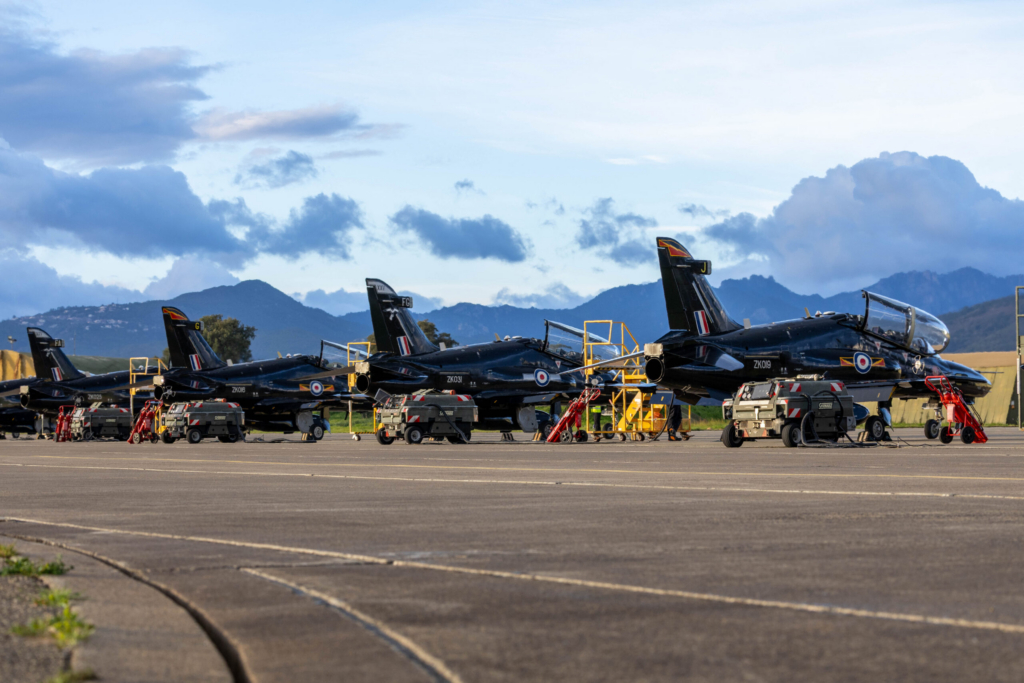
Driven by a single Rolls-Royce/Turbomeca Adour Mk 951 turbofan engine, the Hawk T2 boasts a maximum speed of 555kt (638mph) and an operating ceiling of 42,000ft. The type is currently operated by Nos IV Squadron and XXV(F) Squadron – both of which form part of No 4 FTS – at Valley.
Official fleet figures published by the UK Ministry of Defence (MOD) in 2024 confirmed the RAF’s Hawk T2 fleet stood at 28 aircraft. However, at that time, engine-related serviceability concerns limited the number of aircraft that were available for operations, leading to a temporary fleet-wide grounding and a severe disruption to the UK’s fast-jet pilot training pipeline.
Published in June 2025, the UK’s Strategic Defence Review (SDR) confirmed that the Hawk T2 would remain in operational service until 2030, with its older T1 predecessors set to be withdrawn from use by 2030. In July 2026, the MOD said it had allocated £860m to maintaining the safe operation of the Hawk T1/T2 fleets until their replacement – which is being sought through the UK’s fledgling Jet Training System (JTS) programme – enters service.
Sign up for our newsletter and get our latest content in your inbox.
Similar Reads