Research conducted on ethical development of UK spaceports

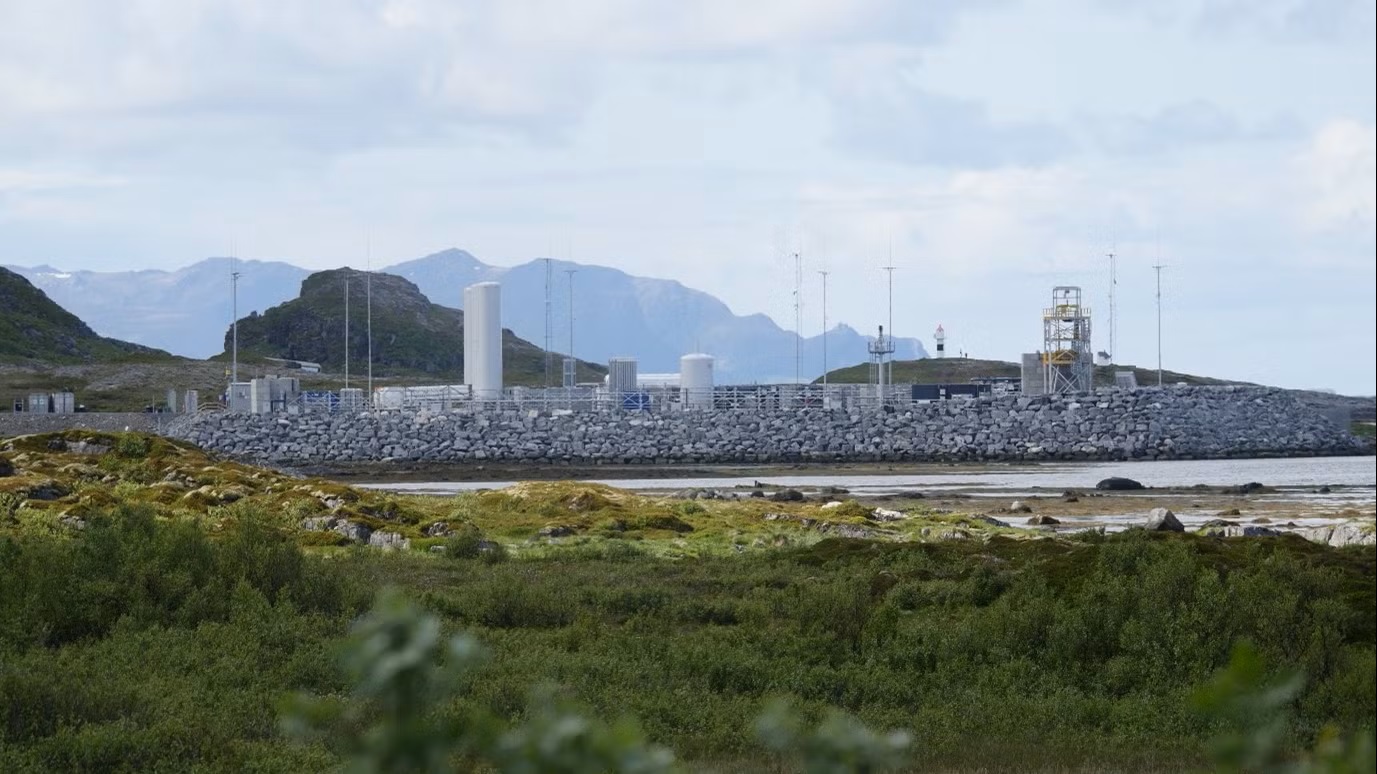
Above: Isar Aerospace’s Spectrum rocket launch complex, Andøya, Norway, which Dr Pete Howson visited as part of his research.
Courtesy Pete Howson / Northumbria University
The government’s National Space Strategy, published in 2021, sets out plans to unlock growth in the space sector by supporting UK businesses, researchers and innovators.
One key element of the plan is the development of spaceports – sites licensed for launching spacecraft – with plans for the UK to become a leading provider of small satellite commercial launches by 2030.
The UK’s long coastline and island location make it suitable for both horizontally launched spaceplanes and vertically launched rockets, with sites already being developed in Cornwall, Wales and Scotland.
The Scottish Highlands, Outer Hebrides and Shetland Islands have been identified as sites of particular interest.
The SaxaVord UK Spaceport is currently being constructed on the island of Unst, in Shetland – and is one of the first fully licensed vertical launch spaceports in Europe.
Work has also begun on Spaceport 1, on North Uist in the Outer Hebrides, while orbital launch services company Orbex is planning to develop a spaceport at Sutherland in the Highlands in future.
As part of its community engagement process Sutherland Spaceport Community Liaison Group , has worked with Northumbia University’s Dr Pete Howson to understand more about the impact of Spaceports on people, wildlife and the environment.
Dr Howson has carried out extensive research into the development of spaceports by the emerging commercial space industry – known as NewSpace.
Often funded by entrepreneurs and private companies rather than government agencies such as NASA or the European Space Agency, NewSpace focusses on developing products for commercial markets, such as Earth observation, satellite communication and space tourism.
Dr Howson has travelled around the world, exploring the impact of spaceports such as the SpaceX Starbase in South Texas, the Andøya Space rocket launch site on Andøya island in Northern Norway, and the site of a proposed spaceport on Biak Island, in Indonesia.
This research has involved speaking with indigenous and marginalised communities directly impacted by spaceport development and activity, including the Sámi reindeer herders of Norway, Finland, Sweden and parts of Russia and crofters of Northern Scotland.
Describing the impact such developments can have on the local area, Dr Howson said: “Many of these spaceports are built in what seems like sparsely populated areas, but for the people who do live and work nearby, they can have a massive impact, not to mention the effect on wildlife.
“In Kiruna, Sweden, Sámi herders are often stopped from migrating with their reindeer. Esrange spaceport, in the far north of the country, have established a 5,600 km-squared ‘impact zone’ where rocket parts might fall following a launch. Sámi are given only a few days warning of planned launches over the radio to move their reindeer, and themselves out of harm’s way. Several herders told me of their narrow escapes.
“There is often much excitement surrounding these spaceports and the economic potential they can bring to an area and more widely, but we mustn’t let the commercial possibilities distract us from the very real impact to nearby communities.”
As a leading expert in this field, Dr Howson was recently invited to speak at a meeting of the Sutherland Spaceport Community Liaison Group about his experience internationally, which will feed into the development of Sutherland Spaceport in future.
Part of Dr Howson’s aim is to ensure the UK is able to meet its target of becoming a world leader in space science and technology, while following ethical principles.
He said: “It is possible for the UK to lead on the development of technology in this field while maintaining a reputation for being equitable and environmentally sustainable – and that will set us apart from other places and make the UK a more attractive option for investment by businesses which share our values.
Dr Howson now hopes to carry out one of the world’s first in-depth analysis of NewSpace industries. By working with artists, activists, indigenous groups and other stakeholders in the UK, Scandinavia and the US, he aims to make major contributions to debates concerning the appropriateness of NewSpace developments.
He said: “This research will help ensure that NewSpace projects heed concerns for social justice and sound environmental management on Earth, whilst facilitating equitable and empowering development futures in space.”
Space research at Northumbria University covers a wide variety of specialist areas, from space physiology and solar and space physics to satellite communications and space law and policy.
Northumbria’s Professor Eamon Scullion is currently leading the Autonomous Laser Intersatellite Gigabit Network project (ALIGN), in collaboration with Durham University, Telespazio, SMS Electronics Limited and global aerospace company Lockheed Martin UK Space.
ALIGN will be the first university-led multi-satellite space mission, having received more than £6 million from the UK Space Agency over the last five years to develop small satellites, known as CubeSats, which will orbit the earth, communicating with each other via lasers and transmitting data 100 times faster than it is currently possible to do through radio frequencies.
Having been successfully tested in the lab, the hope is to launch the first CubeSats into orbit by the end of 2025, with a full commercial launch expected in 2027 – most likely from the SaxaVord UK Spaceport.
ALIGN is just one of the projects which will be based within Northumbria University’s new North East Space Skills and Technology Centre (NESST), which is expected to open in 2026.
Described as a ‘game-changer’ for the UK space economy, NESST is the result of a £50 million investment with partners including the UK Space Agency and Lockheed Martin UK Space. The Centre will bring together industry and academia to collaborate on internationally significant space research and technological developments, creating over 350 jobs and injecting over £260 million into the North East economy over the next 30 years.
Sign up for our newsletter and get our latest content in your inbox.
Similar Reads


Sign up for our newsletter. Select all sectors relevant to you.
Related