
General Atomics

Rolls-Royce mtu engines cleared to power autonomous US Navy vessels

Two Rolls-Royce mtu engines have passed stringent 720-hour durability tests and are now certified to power US autonomous naval vessel operations.

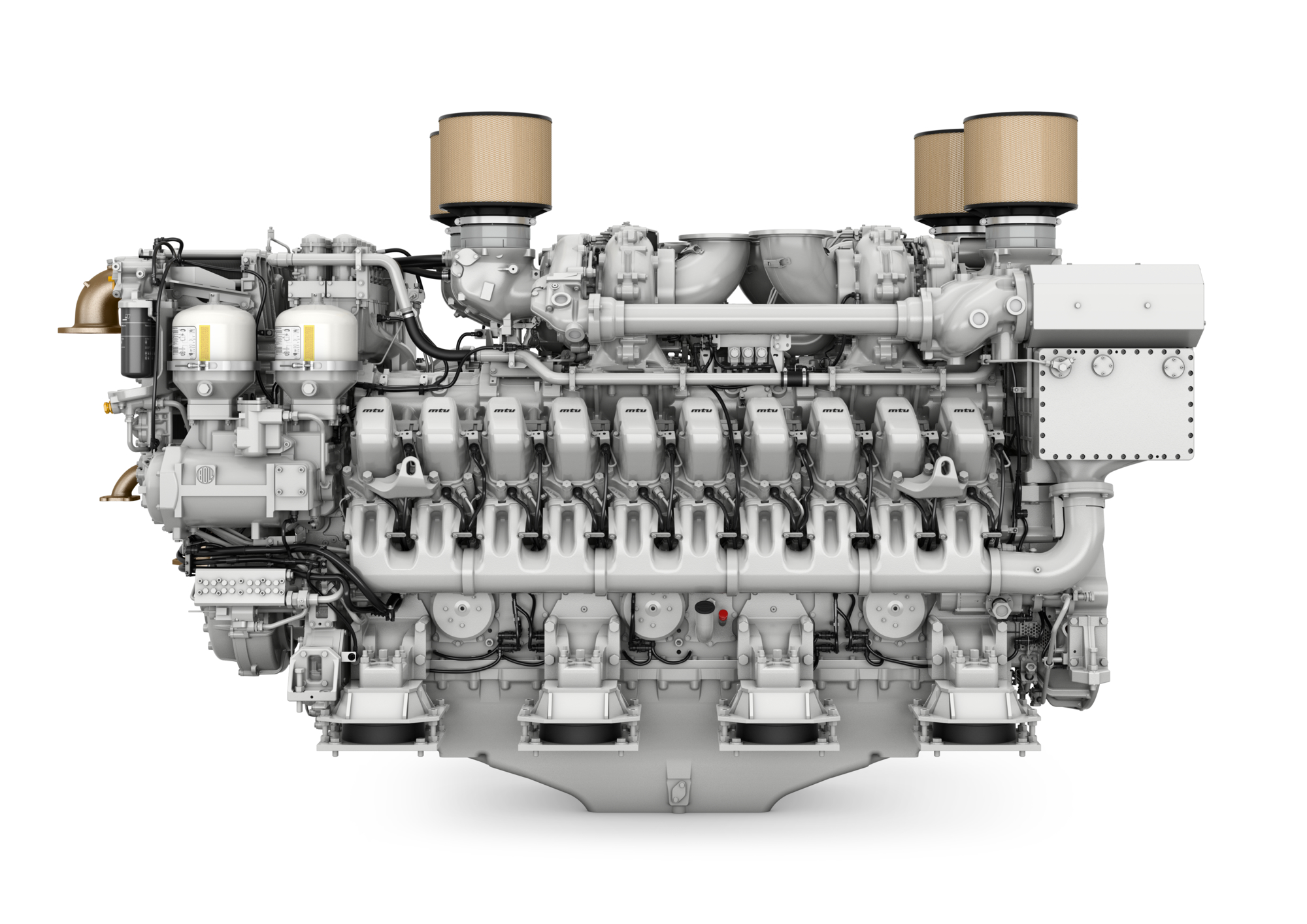
mtu 4000
Above: The mtu 4000 engine. Photo: Rolls-Royce

Rolls-Royce’s mtu Series 4000 and Series 2000 marine engines have received certification from the US Navy for use in autonomous naval vessel operations, marking a significant milestone in the advancement of unmanned maritime capabilities.

After passing two 720-hour durability tests, mtu Series 4000 engines were certified for use in autonomous applications for up to 4300kW of propulsion power and 3000kWe of power generation. The Series 4000 is available in V-configurations of 8, 12, 16 and 20 cylinders.

The mtu Series 2000 platform was also certified based on the results of rigorous engine component testing along with thousands of hours of reliable field operation. The Series 2000 is available for propulsion applications up to 1939kW in V-configurations of 10, 12 and 16 cylinders.

Why such rigorous tests are required for unmanned vessels

The certifications align with the requirements outlined in the 2021/2026 National Defence Authorisation Act for unmanned systems, which require engines to pass demanding operational and reliability tests without human intervention or preventive/corrective maintenance or repairs to the main propulsion, fuel and oil systems.

Successful testing qualifies propulsion systems to power an unmanned ship for 30-day deployments at sea without requiring maintenance.

Scott Hanson, Vice President, Governmental Sales at Rolls-Royce Power Systems in North America said: “The certification of our engines for unmanned operations further demonstrates the reliability and advanced technology of our mtu Series 4000 and 2000 marine propulsion systems.

“For decades, mtu engines have been trusted to provide reliable, mission-ready power for our crews at sea.”

“As autonomous missions become increasingly important to naval strategy, we are proving that we can deliver the power systems, long-endurance capability and technology required for the new operational demands of unmanned vessels.”

The mtu Series 2000 was certified through rigorous component testing and thousands of hours of field operation, supporting up to 1,939 kW in V10, V12 and V16 configurations.

Robust propulsion systems required for an expanding numbers of unmanned platforms

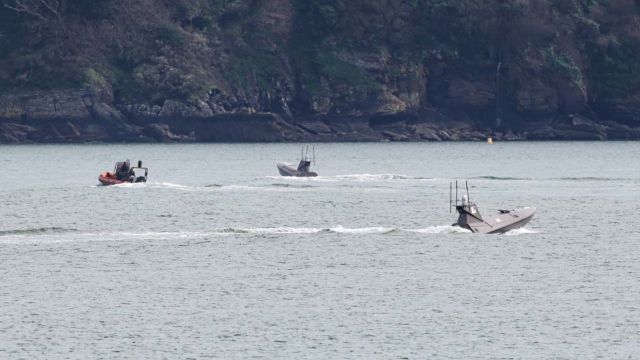
Autonomous unmanned surface vessels (USVs) represent a rapidly growing priority for the US government as it seeks to expand fleet capacity and enhance operational flexibility.

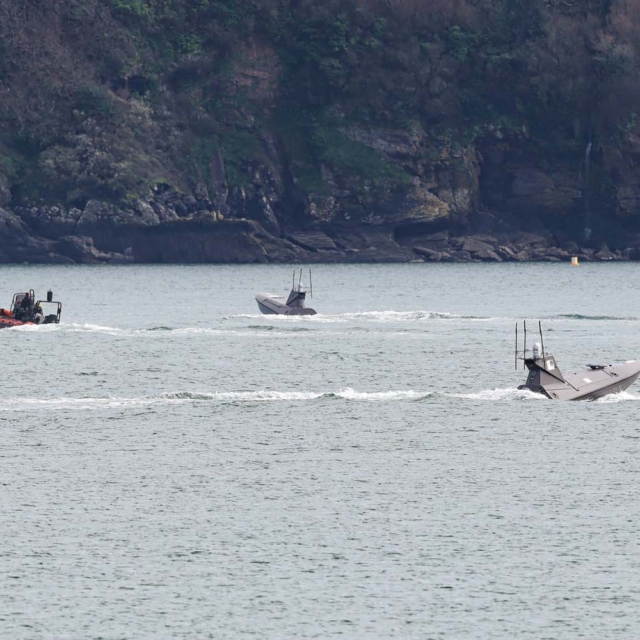
One of the Navy’s first autonomous unmanned surface vessels, the Sea Hunter, was operationally deployed earlier this year along with Seahawk by the US Navy as the first division of unmanned surface vessels. Sea Hunter is powered by twin mtu 12V 2000 engines and has logged tens of thousands of operational hours since its christening in 2016.

USVs enable extended missions, deliver high reliability and improve safety by removing personnel from hazardous environments. To ensure they meet these objectives, USVs are subject to robust certification frameworks, emphasising rigorous validation of control systems, cybersecurity and safety-critical functions.

These US Navy processes are essential to ensuring the safe and reliable deployment of unmanned technologies across maritime, aerial and subsea domains.

Rolls-Royce also provides propulsion systems for unmanned aircraft, powering current unmanned platforms for the US Air Force (RQ-4 Global Hawk) and US Navy (MQ-4C Triton). 

Most recently, Rolls-Royce supported successful test flights for the Navy’s new MQ-25A Stingray – an unmanned refuelling aircraft powered by the AE 3007N engine from the Rolls-Royce AE engine family. The aircraft autonomously executed a full mission profile, including taxi, take-off, flight manoeuvres and landing.

Related

IndiGo suspends Manchester flights as airspace restrictions push up costs
MAG Manchester Mumbai IndiGo
IndiGo suspends Manchester flights as airspace restrictions push up costs
IndiGo has temporarily suspended flights from Manchester to Delhi and Mumbai, blaming longer flight times, airspace restrictions and rising operating costs.
Aerospace

2 Sep 2026

RAF Air Command becomes Air and Space Command as Britain elevates military space operations
An RAF-operated Typhoon FGR4 is displayed alongside two Storm Shadow ALCMs during an event at RAF Marham, Norfolk, on 1 September 2019. Image: MOD Crown Copyright/SAC Simon Armstrong
RAF Air Command becomes Air and Space Command as Britain elevates military space operations
With the growing importance of military space operations, the new name reflects the widening remit of the RAF’s primary operational division.
Aerospace Defence

1 Sep 2026

TEKEVER acquires Edinburgh-based Flowcopter
FIA 2026
TEKEVER acquires Edinburgh-based Flowcopter
The move is designed to expand TEKEVER's autonomous capabilities with advanced propulsion technology.
Ireland opens talks to join UK-led JEF+ to bolster maritime security
Irish Navy Irish EEZ, L.E. SAMUEL BECKETT (P61)
Ireland opens talks to join UK-led JEF+ to bolster maritime security
Ireland is exploring an observer role in JEF+ as it seeks closer security cooperation, improved intelligence sharing and protection against emerging maritime threats.
Defence

2 Sep 2026

RAF delivers NATO Submarine Rescue System to Exercise Flying Fish
NSRS being loaded
RAF delivers NATO Submarine Rescue System to Exercise Flying Fish
The ability of the Royal Air Force (RAF) to deliver the NATO Submarine Rescue System (NSRS) worldwide has been proven with its mobilisation for a major NATO exercise.
UK pushes Navantia to accelerate delivery of Royal Navy support ships
Three Fleet Solid Support vessels being delivered for the Royal Fleet Auxiliary through a partnership between Navantia UK, BMT and Harland & Wolff.
UK pushes Navantia to accelerate delivery of Royal Navy support ships
The UK Ministry of Defence is pushing Navantia for earlier delivery of three Fleet Solid Support ships as construction of the first vessel advances at Appledore.
Defence Security

1 Sep 2026

Teledyne passes 1,000 sensors in orbit with NASA Roman Telescope launch
The infrared focal plane with H4RG-10 detector
Teledyne passes 1,000 sensors in orbit with NASA Roman Telescope launch
The launch of NASA's Nancy Grace Roman Space Telescope marks a major milestone for Teledyne, whose detector technology will enable the mission to investigate dark energy, hunt for exoplanets and survey billions of galaxies.
Member News Space

1 Sep 2026

ADS cyclists battle crashes, climbs and forest fires to raise over £5,000
ADS Charity Cycle
ADS cyclists battle crashes, climbs and forest fires to raise over £5,000
Industry riders covered 334 miles from Belfast to Bristol in support of Combat Stress, O2e and Air Ambulance Northern Ireland.
Scottish space tech to power self-consuming rocket engine
Alpha Impulsion
Scottish space tech to power self-consuming rocket engine
Aurora Avionics is to supply crucial electronic systems that will deliver key electrical power functions for a pioneering new rocket engine, that aims to cut propulsion costs and support next-generation spacecraft.
Space

27 Aug 2026

UK pushes Navantia to accelerate delivery of Royal Navy support ships
Three Fleet Solid Support vessels being delivered for the Royal Fleet Auxiliary through a partnership between Navantia UK, BMT and Harland & Wolff.
UK pushes Navantia to accelerate delivery of Royal Navy support ships
The UK Ministry of Defence is pushing Navantia for earlier delivery of three Fleet Solid Support ships as construction of the first vessel advances at Appledore.
Defence Security

1 Sep 2026

TEKEVER acquires Edinburgh-based Flowcopter
FIA 2026
TEKEVER acquires Edinburgh-based Flowcopter
The move is designed to expand TEKEVER's autonomous capabilities with advanced propulsion technology.
Metropolitan Police Force expands its fleet of crime-fighting e-bikes
Met Sur-Ron eBikes at New Scotland Yard
Metropolitan Police Force expands its fleet of crime-fighting e-bikes
As it continues to address the challenge posed by criminals using e-bikes and mopeds to commit crime and evade the law, the Metropolitan Police Force has substantially increased its own fleet of Sur-Ron e-bikes, to tackle the perpetrators.
Security

31 Aug 2026