Royal Navy deploys Merlin HM2 helicopters to protect UK nuclear deterrent


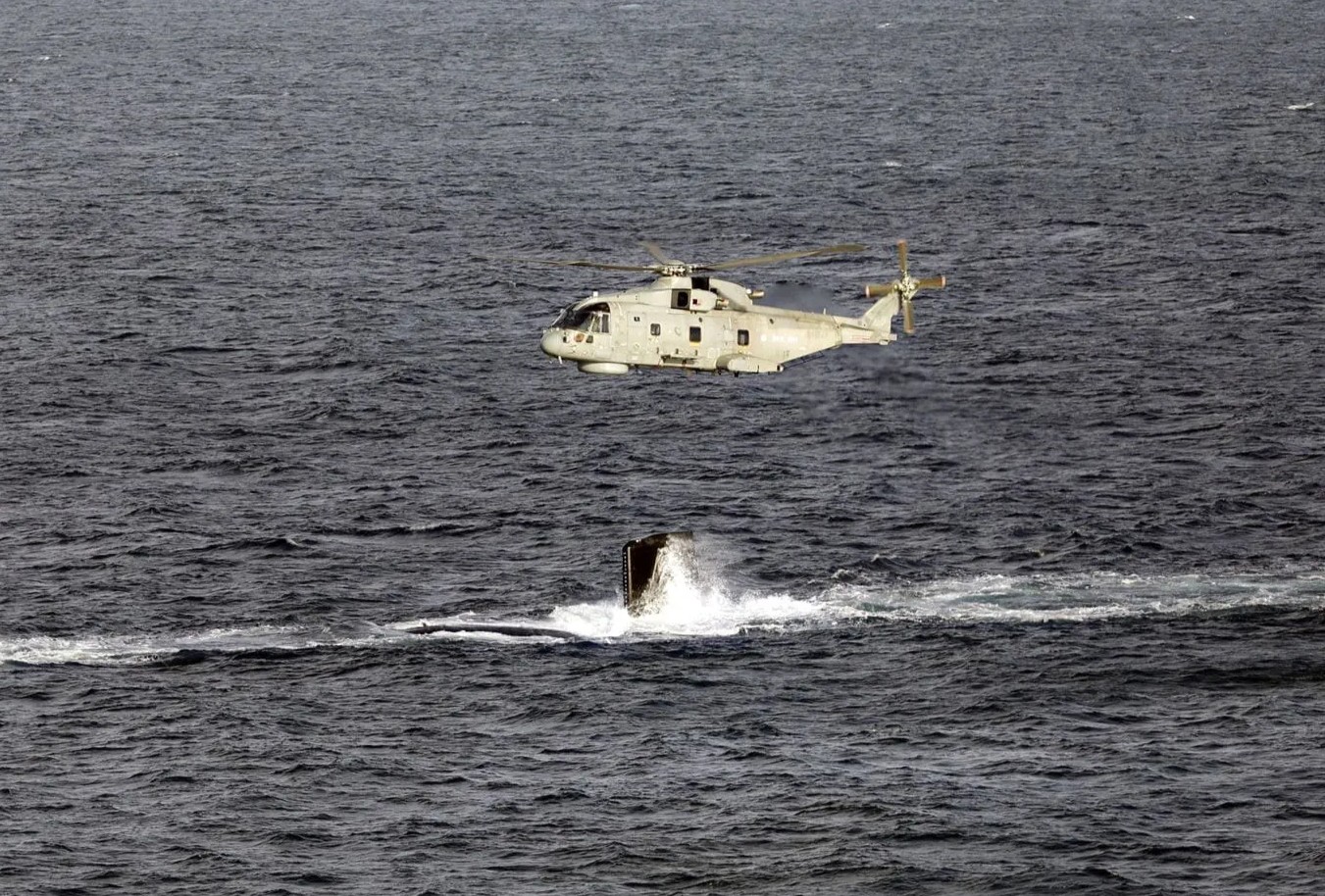
The Royal Navy has deployed four Merlin HM2 anti-submarine warfare (ASW) helicopters and roughly 90 personnel to Scotland at short notice as part of Operation Iceblast, testing its ability to rapidly reinforce protection around the UK’s submarine-based nuclear deterrent.
The detachment and its personnel – drawn from 814 and 824 Naval Air Squadron (NAS) at RNAS Culdrose in Cornwall – established a forward operating presence at HMS Gannet, Prestwick, for a series of operations designed to strengthen readiness and rehearse the defence of strategically important waters around HMNB Clyde in western Scotland, where the UK’s nuclear deterrent is based.
During the deployment, the helicopters monitored the arrival of HMS Agamemnon (S124) – the Royal Navy’s sixth and latest Astute-class nuclear attack submarine – at HMNB Clyde. Using their dipping sonar, the Merlin HM2 crews tracked the submarine during its dive trials, demonstrating their ability to detect and follow submerged contacts in support of maritime security operations.
The aircraft deployed to Scotland under Operation Iceblast also operated alongside NATO allies, including German and Norwegian forces, during Exercise Strike Warrior 2026, which was held from 28 September to 9 October.
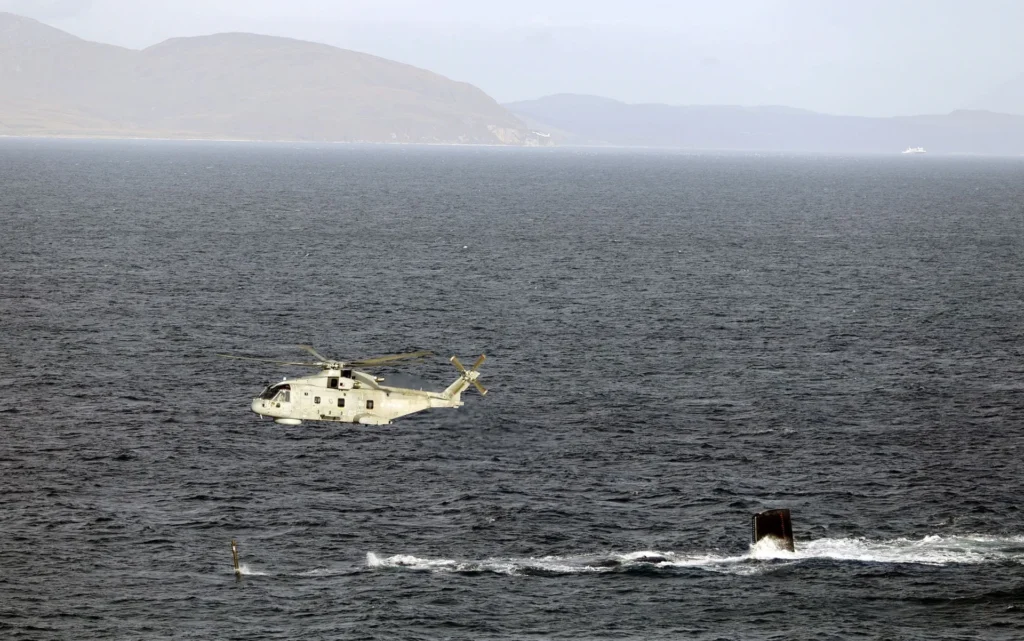
The helicopters provided search-and-rescue (SAR) cover for Royal Marines practising boarding operations with the German Navy’s first-in-class replenishment ship, FGS Berlin (A1411), while further sorties focused on maintaining surveillance of strategic areas of the North Atlantic.
Capt James Hall, the officer commanding RNAS Culdrose, said: “Operation Iceblast demonstrated exactly what Culdrose and Merlin Helicopter Force are designed to do. That is to deploy at short notice and deliver warfighting readiness from a forward location with a world-class [ASW] capability – whenever and wherever it is required.”
The deployment also involved personnel from 700X NAS, whose drone team provided additional security around the Clyde. Together, the crewed helicopters and uncrewed systems supported a layered approach to protecting the UK’s nuclear deterrent.
Merlin HM2: The helicopter built to hunt down hostile submarines
The Merlin HM2 is a central component of the Royal Navy Fleet Air Arm’s (FAA’s) ASW capability. Developed from AgustaWestland’s (now Leonardo Helicopters’) AW101 family, the rotorcraft combines advanced acoustic sensors, radar, tactical mission systems and the ability to deploy up to four lightweight Sting Ray torpedoes.
Its Thales-made Folding Light Acoustic System for Helicopters (FLASH) dipping sonar is particularly valuable during ASW operations. Lowered into the sea on a cable while the helicopter hovers, the sonar emits acoustic signals and analyses returning echoes to help identify and track submerged contacts. This enables crews to investigate suspected submarine activity and refine a contact’s general position.
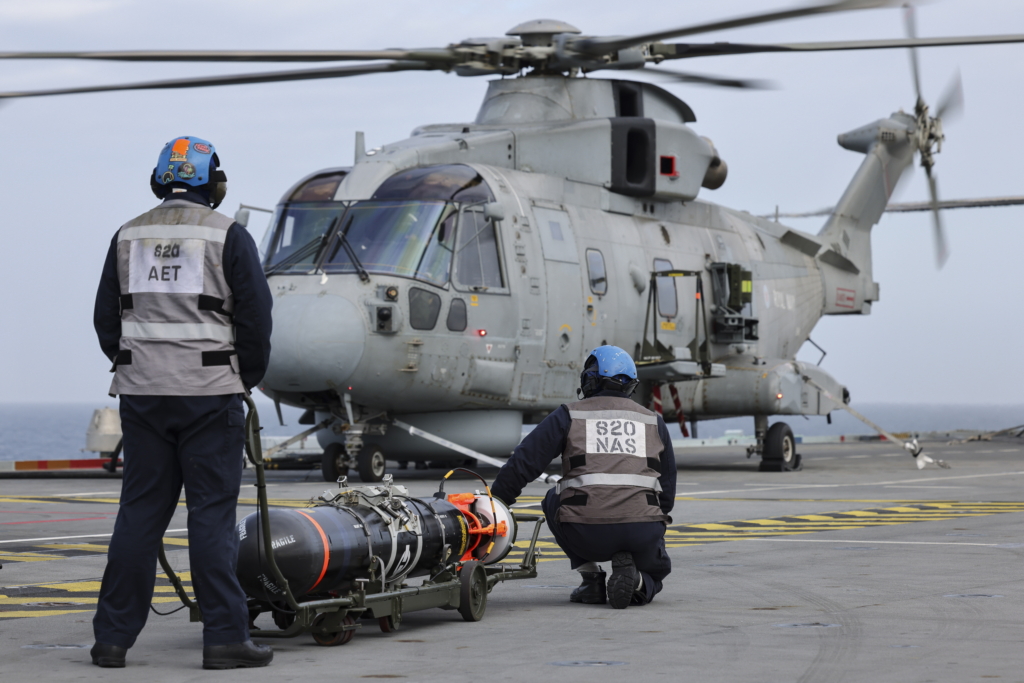
The helicopter can also deploy up to 30 sonobuoys, which are expendable acoustic sensors that are placed in the sea to detect and monitor underwater sound. Used in tandem with the dipping sonar and the helicopter’s Blue Kestrel 5000 maritime surveillance radar, these systems allow crews to build a broader picture of activity beneath and on the surface of the water.
If an underwater threat must be engaged, the Merlin can carry four Sting Ray torpedoes. Its ability to search, localise and, if required, attack a hostile submarine makes the Merlin HM2 a potent complement to surface warships and other British maritime surveillance assets, like the Royal Air Force’s (RAF’s) new P-8A Poseidon MRA1 force.
From Culdrose to the Clyde: Testing the UK’s rapid-response readiness
The Merlin HM2’s value lies not only in its sensor suite, but also in its ability to deploy rapidly from shore bases or operate from Royal Navy warships. Its forward deployment to HMS Gannet tested the personnel, maintenance, logistics and command-and-control (C2) arrangements required to sustain operations while forward-deployed.
That flexibility is significant around the Clyde, which is home to the Royal Navy’s submarine force and the UK’s nuclear deterrent. Protecting the approaches to HMNB Clyde and monitoring surrounding waters form part of the wider security framework supporting the UK’s continuous at-sea nuclear deterrent.
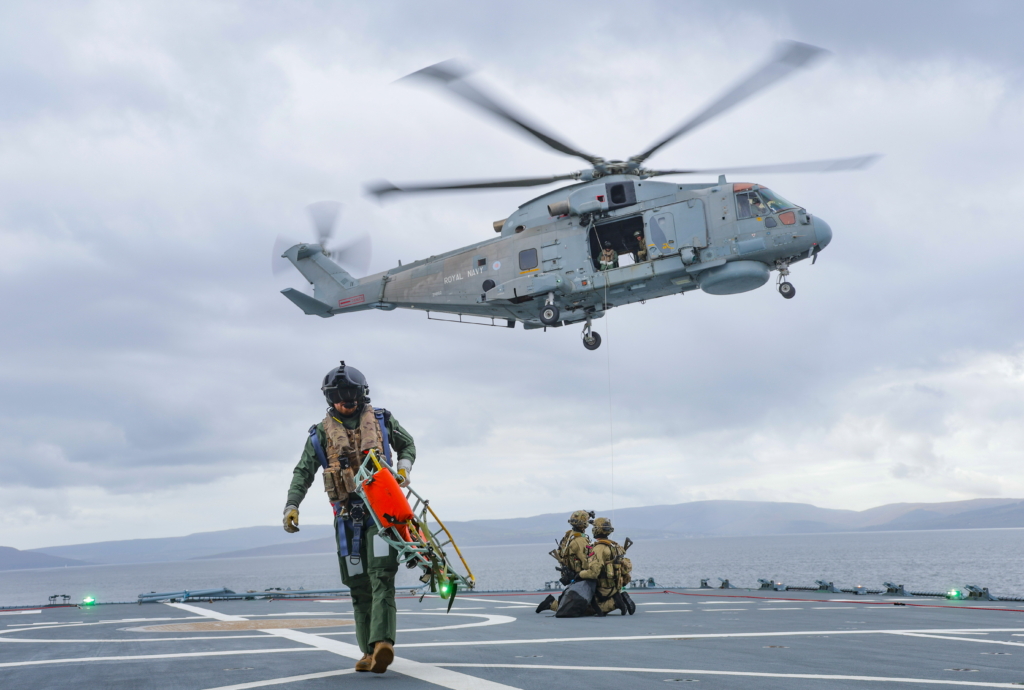
Capt Hall said the drill tested Culdrose’s ability to operate across multiple sites and sustain ASW activity in demanding conditions. The lessons learned during this deployment will inform future procedures and training activities.
As underwater threats and the importance of maritime security in both the North Atlantic continue to shape NATO planning, Operation Iceblast demonstrated how crewed maritime helicopters and uncrewed surveillance systems can work together to reinforce deterrent protection and maintain operational readiness.
Sign up for our newsletter and get our latest content in your inbox.
Similar Reads




Sign up for our newsletter. Select all sectors relevant to you.
Related