General Atomics

SatVu releases first light imagery from HotSat-2

Today SatVu, the British thermal intelligence company, releases first light imagery from HotSat-2, the second satellite in its commercial high resolution thermal imaging constellation.


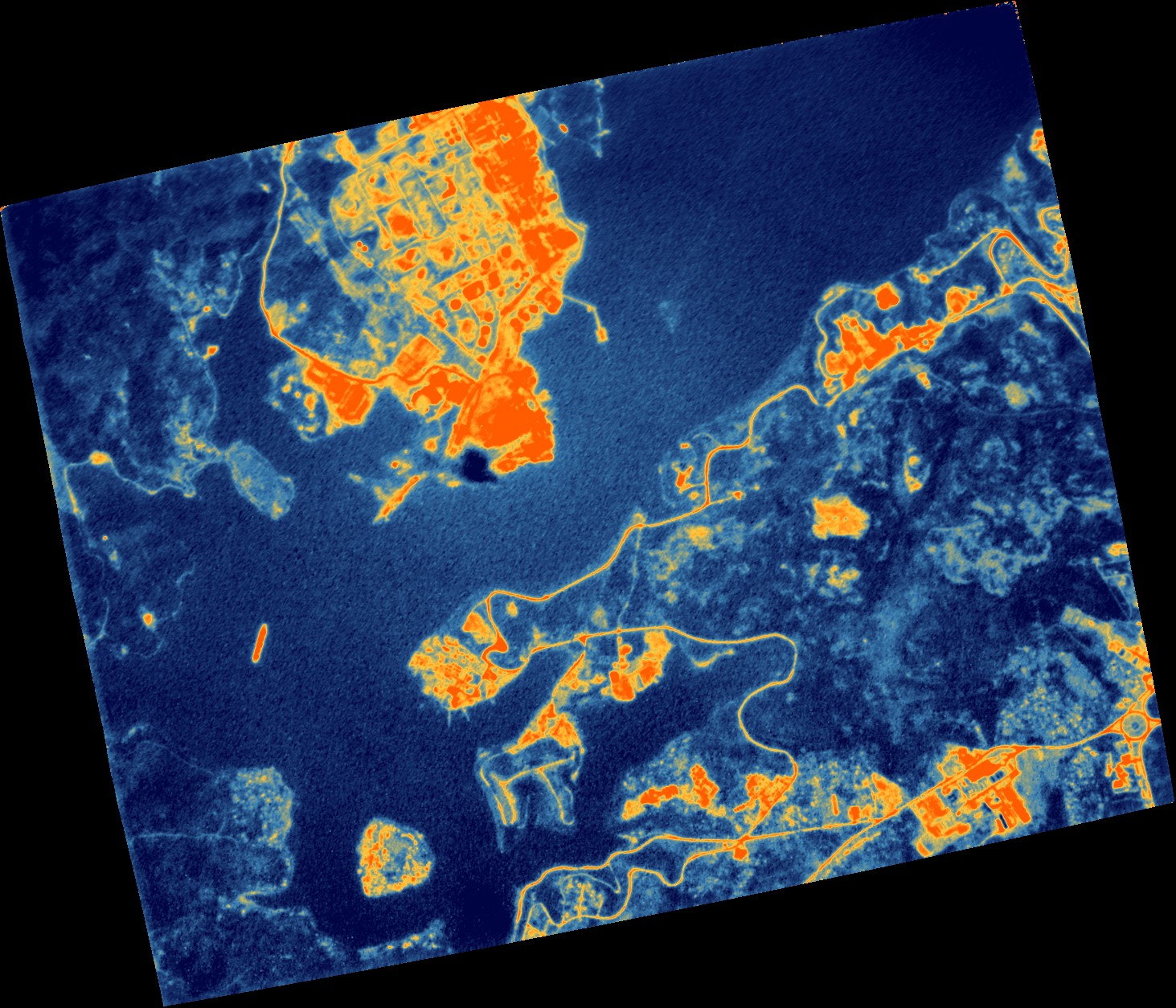
Above: HotSat-2 imaged the Hermanos Díaz refinery on 25 April 2026, two days before the Cuban government publicly announced its first refined products from domestic crude. 
Courtesy SatVu 


As energy assets in remote and politically sensitive jurisdictions are increasingly difficult for any market participant – government, trader or operator – to monitor independently, the imagery delivers a new layer of information, capturing operational insights about three of the world’s most strategically significant energy sites: 

  • Cuba’s experimental refining of domestic crude under sanctions
  • Reduced capacity at the world’s largest refinery during the current energy crisis
  • The production cadence of one of the world’s largest LNG (Liquefied Natural Gas) projects

Where HotSat-1 demonstrated what high-resolution thermal imagery from space could do, HotSat-2 delivers it operationally – at a resolution, frequency and reliability that commercial customers can act on, in markets where electro-optical and synthetic aperture radar cannot deliver the answer.
 
These images provide independent verification of activity in jurisdictions that are logistically or politically difficult to monitor through conventional means.  
 
The Cuba example illustrates this clearly, with thermal evidence captured 48 hours before public acknowledgment. This establishes thermal data not just as supplementary insight but as an early, objective signal in environments where ground truth is limited or delayed. 

Crucially, this data captures heat signatures that remain invisible to electro-optical and synthetic aperture radar systems. Where the key question is capacity utilisation, operational status, or 24-hour activity cycles, thermal intelligence is the only data layer that can deliver a definitive answer. It is the in-situ, time-based activity layer that has always been missing from every analyst’s stack. 

Anthony Baker, CEO and Co-Founder of SatVu commented on the newly released intelligence: "SatVu was founded to give governments and customers access to intelligence they cannot get elsewhere.  
 
“With HotSat-2 in orbit, that capability is operational. These images show what independent thermal data delivers in the markets that need it most – sanctions monitoring, energy security, and the operational state of the assets moving global commodities.  
 
“The appetite across national security, economic and environmental monitoring is a powerful validation of what we are building."
 
Scott Herman, Chief Technology Officer, SatVu added, "Thermal infrared shows what other sensors miss. SatVu changes the game for Global Monitoring missions – daytime and nighttime high-resolution thermal imagery from space delivers unprecedented insight into operational activities at facilities anywhere in the world.
 
“The Cuba image – captured before public acknowledgment of the refinery’s restart – illustrates exactly what thermal intelligence makes possible: independent verification of activity in places that are otherwise difficult to monitor. 

“This new data layer enables a higher level of operational understanding and validation: confirming what is running, when and at what intensity. On or off, Hot or not. For commodity traders, energy operators, intelligence agencies and environmental regulators, this highly valuable operational understanding directly informs commercial positioning, risk assessment and strategic decision-making.  

"Against the current backdrop of sustained disruption and expanding sanctions, access to timely, independent intelligence is no longer optional – it is critical for governments, markets and operators to understand real-world activity and make decisions in an uncertain global environment.” 

Related

Open Cosmos plans 192-satellite ConnectedCosmos LEO constellation by 2030
Open Cosmos will build a core constellation of 192 low Earth orbit satellites by 2030
Open Cosmos plans 192-satellite ConnectedCosmos LEO constellation by 2030
Open Cosmos will build a core network of 192 ConnectedCosmos satellites by 2030, as it expands its secure low Earth orbit (LEO) communications network following a €300 million funding round.
British Army trials tactical drone warfare skills in first “Drone Wars” competition
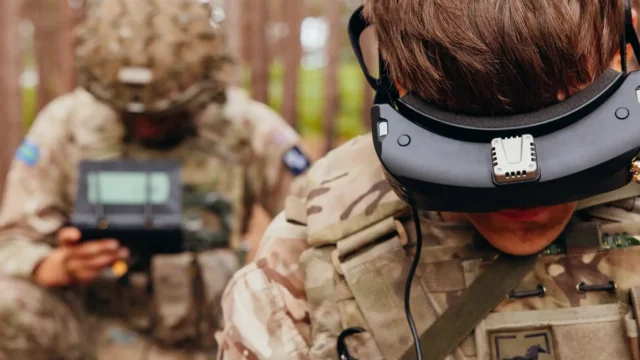
Tpr Harvey Chilman, Queen's Royal Hussars, flew his FPV drone to strike an enemy position during 'Drone Wars' competition. Image: MOD Crown Copyright/British Army
British Army trials tactical drone warfare skills in first “Drone Wars” competition
Held at Sandhurst, the competition showcased how drones are being integrated into reconnaissance, targeting and support roles as the Army adapts to emerging battlefield technologies.
Aerospace Defence

6 Oct 2026

Ontic opens dedicated MRO facility in Tewkesbury
As part of its Maintenance, Repair and Overhaul (MRO) expansion plans, Ontic has opened a new 72,000sq ft facility in Tewkesbury, Gloucestershire.
Aerospace Member News

6 Oct 2026

SubSea Craft appoints Chris White as Managing Director of SubSea Craft Australia
SubSea Craft Australia's facility
SubSea Craft appoints Chris White as Managing Director of SubSea Craft Australia
In a move set to strengthen its Australian presence and its capability to support programmes such as AUKUS, SubSea Craft has appointed Chris White as Managing Director of SubSea Craft Australia.
Defence Member News

7 Oct 2026

“Putin Tax” report warns Russian activity costs UK up to £2.5bn a year
Cyber security being held in the hands of the user
“Putin Tax” report warns Russian activity costs UK up to £2.5bn a year
Researchers estimate cyber attacks, infrastructure threats and other Russian hostile activity are costing the UK up to £2.5bn annually.
Defence

7 Oct 2026

Open Cosmos plans 192-satellite ConnectedCosmos LEO constellation by 2030
Open Cosmos will build a core constellation of 192 low Earth orbit satellites by 2030
Open Cosmos plans 192-satellite ConnectedCosmos LEO constellation by 2030
Open Cosmos will build a core network of 192 ConnectedCosmos satellites by 2030, as it expands its secure low Earth orbit (LEO) communications network following a €300 million funding round.
Excelerate Technology to build UK CNI robotic security solution
Satellite in Earth orbit
Excelerate Technology to build UK CNI robotic security solution
In a project co-funded by the European Space Agency Business Applications and Space Solutions (ESA BASS) and supported by the UK Space Agency, Excelerate Technology will build and demonstrate how space-enabled assets can provide innovative safety and security solutions, including protection of Critical National Infrastructure (CNI) at a site in the UK.
World Space Week: How British technology will help ESA return to the Moon
ESA Argonaut
World Space Week: How British technology will help ESA return to the Moon
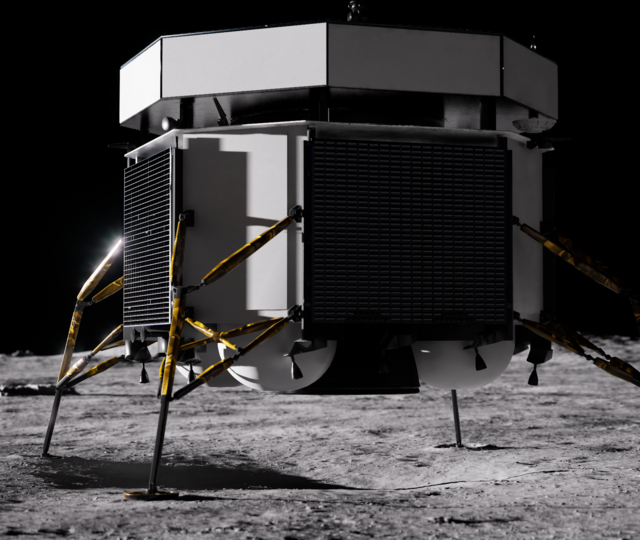
As Europe prepares to return to the Moon, British-developed LEIA LiDAR technology will help ESA's Argonaut lander autonomously identify safe touchdown zones on the lunar surface.
Space

5 Oct 2026

Airbus delivers first next-generation satellites for OneWeb constellation
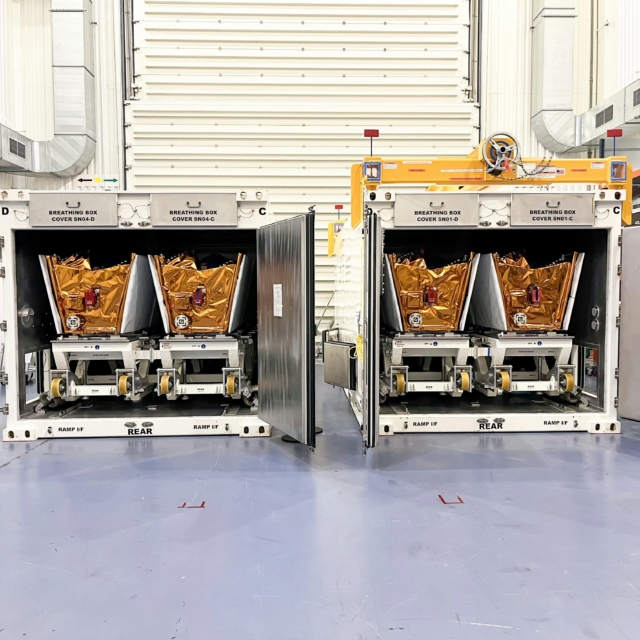
OneWeb satellites in transport container at Airbus
Airbus delivers first next-generation satellites for OneWeb constellation
A new generation of OneWeb spacecraft is heading for launch, helping Eutelsat sustain and expand its low Earth orbit connectivity network for governments, businesses and institutions worldwide.
Member News Space

5 Oct 2026

Cyacomb launches counter-terrorism platform to identify terrorist content on digital devices
Digital security.
Cyacomb launches counter-terrorism platform to identify terrorist content on digital devices
A new counter-terrorism capability developed by Edinburgh-based Cyacomb can help investigators rapidly identify known terrorist material on digital devices, as online radicalisation creates new challenges for law enforcement services.
Member News Security

7 Oct 2026

RAF Barnham future uncertain as police seek to retain training facility
RAF Barnham
RAF Barnham future uncertain as police seek to retain training facility
Norfolk and Suffolk Police are fighting to retain former RAF Barnham after the government marked the MoD-owned site to accommodate asylum seekers.
Defence Security

7 Oct 2026

Excelerate Technology to build UK CNI robotic security solution
Satellite in Earth orbit
Excelerate Technology to build UK CNI robotic security solution
In a project co-funded by the European Space Agency Business Applications and Space Solutions (ESA BASS) and supported by the UK Space Agency, Excelerate Technology will build and demonstrate how space-enabled assets can provide innovative safety and security solutions, including protection of Critical National Infrastructure (CNI) at a site in the UK.