British battery breakthrough could give heavy-lift drones a new role in tackling wildfires


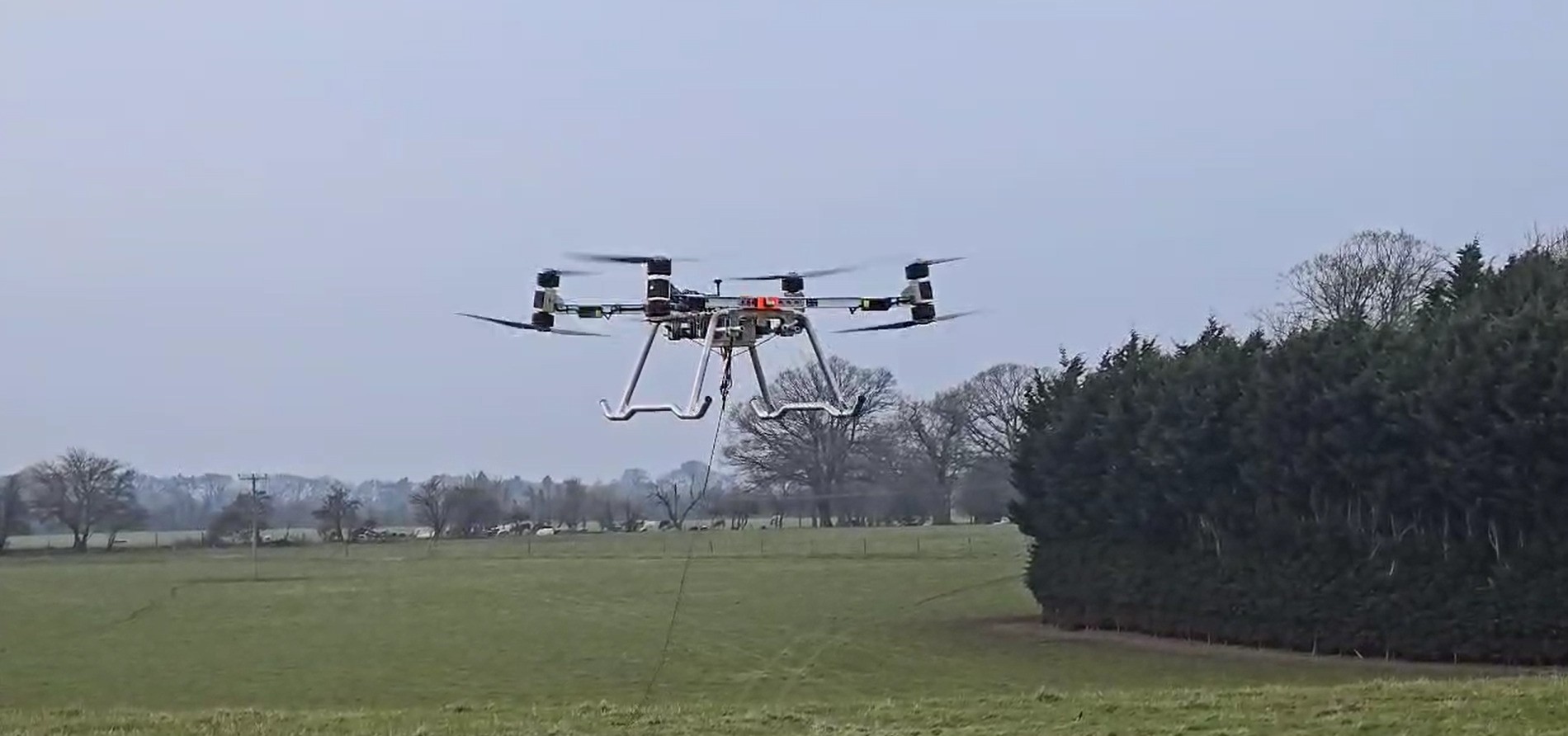
As wildfires continue to stretch firefighting resources across Spain, France, Canada and parts of the UK, a British engineering company says it has found a way to help heavy-lift drones fly farther and carry more payload.
The Structural Battery Company (SB Co) has developed Drone Spine, a structural battery system that replaces a conventional drone battery pack with a load-bearing part of the aircraft itself. Instead of simply supplying power, the battery also becomes part of the drone’s main structure, reducing weight and freeing up space for additional payload or equipment.
The company says the technology could increase the range and payload of heavy-lift drones by up to 50%, opening new possibilities for emergency medicine, defence, agriculture and wildfire response.
Turning the battery into the aircraft
For decades, drone designers have faced the same challenge. Batteries provide the energy to keep an aircraft flying but also add considerable weight without contributing to the aircraft’s structure. Drone Spine takes a different approach.
Its high-voltage battery is built directly into the drone’s backbone. Structural crossbeams that would normally support the airframe also store electrical energy, allowing a single component to perform two functions.
Removing the need for a separate battery enclosure cuts weight and creates additional internal space. Designers can use those savings to carry larger payloads, increase endurance or improve overall aircraft performance without increasing the drone’s size.
The result is a system intended for heavy-lift unmanned aircraft rather than smaller commercial drones.
Government-backed trials demonstrated the concept
The technology has already moved beyond the drawing board.
In February last year, The SB Co. worked with ISS Aerospace and Marshall Aerospace on a government-funded project supported by the UK’s Defence and Security Accelerator (DASA).
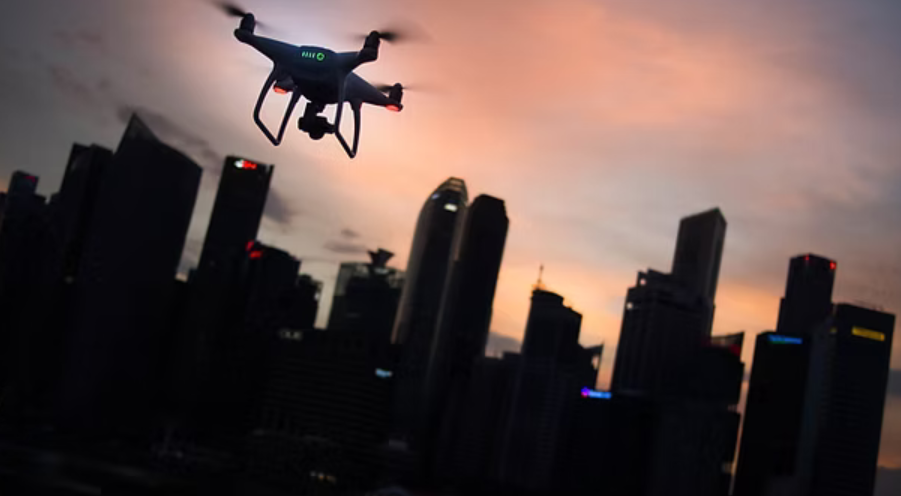
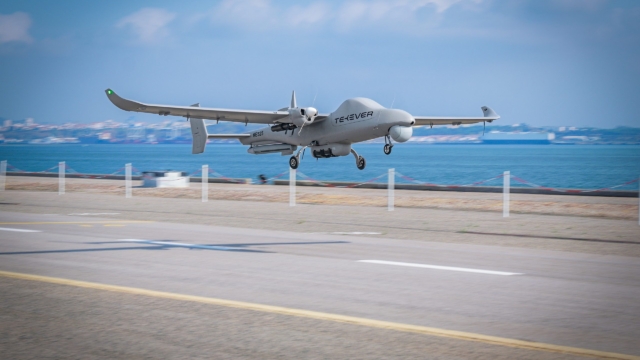
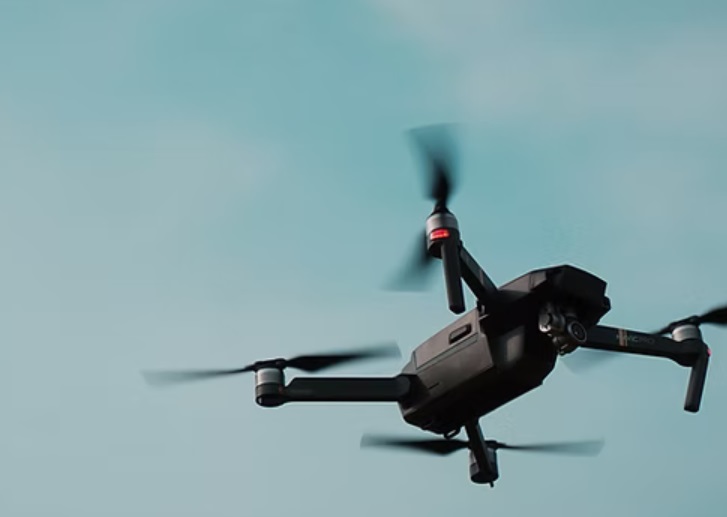
During the demonstration, engineers integrated a 400-volt Drone Spine battery into a 600kg heavy-lift drone.
According to the company, the aircraft’s overall mass was reduced by 45%, enabling it to carry an additional 220kg payload over a distance of more than 100 kilometres.
Those figures place the aircraft in a category well beyond consumer drones, targeting industrial, emergency response and defence missions where payload and endurance are often more important than speed.
Wildfire response could become an early application
The technology arrives as many countries are looking at new ways to strengthen aerial firefighting.
Large fires are becoming more frequent and more intense, while demand for specialist firefighting aircraft often exceeds availability during peak fire seasons.
Heavy-lift drones cannot replace water bombers or helicopters. However, they could provide a rapid first response by carrying fire retardant or suppressant to remote areas before a blaze spreads beyond control.
John Moffat, founder and chief executive of The Structural Battery Company, said the technology could make a practical difference.
“The real-life benefits of this are transformative, not least in fighting the kind of wildfires we’re seeing ravaging France, Spain and Canada, as well as some now here in the UK.”
A drone capable of carrying larger loads over longer distances could also reduce the number of return flights needed for battery charging, allowing more sustained operations during the critical early stages of a fire.
Beyond firefighting and defence
Although wildfire response is one of the most immediate applications, the company sees opportunities across several sectors.
Emergency medical services could use heavy-lift drones to transport blood, defibrillators, medicines or surgical equipment to remote communities or accident scenes where road access is slow or impossible.
Agricultural operators could cover larger areas during spraying, seeding or crop monitoring missions without returning frequently for recharging.
The technology could also support humanitarian relief by delivering food, medical supplies and equipment into disaster zones where conventional transport has been disrupted.
For defence users, improved endurance and payload would allow heavy-lift drones to transport supplies, equipment and other cargo over greater distances. Recent conflicts, particularly in Ukraine, have highlighted the growing importance of unmanned aircraft for logistics as well as reconnaissance and strike missions.
Designed to simplify future drone development
Rather than asking manufacturers to redesign an aircraft around a new battery, Drone Spine has been developed as an integrated structural system that could simplify future heavy-lift drone programmes.
The company says the architecture is suitable for quadcopter UAVs with a maximum take-off weight of up to 600kg and a 4:1 payload-to-drone ratio, placing it firmly in the heavy-lift category used by defence, industrial and emergency service operators.
As drone manufacturers continue searching for greater range without increasing aircraft size, integrating energy storage directly into the airframe could become an alternative to simply fitting larger batteries.
The development also highlights the growing role of smaller engineering companies in advancing aerospace technologies with applications across civil aviation, defence and emergency services.
Sign up for our newsletter and get our latest content in your inbox.
Similar Reads


Sign up for our newsletter. Select all sectors relevant to you.
Related