UK-built camera systems pack a PUNCH on NASA’s Sun mission

RAL Space, operated by the Science and Technology Facilities Council (STFC), has played a crucial role in a pioneering NASA mission launching this week, set to transform our understanding of the Sun’s atmosphere and space weather.


Image courtesy NASA

While space weather is usually harmless, producing the beautiful displays of the Northern and Southern Lights, severe solar storms can interfere with aspects of everyday life.

They can interfere with GPS systems, power grids and vital global communications on Earth. It is critical that scientists continue to develop understanding of solar phenomena so we can enhance our resilience to their potential impacts.

A new NASA mission featuring UK built technology is targeted to launch no earlier than today at 3:09am UK time. The mission will explore how the Sun’s outer atmosphere, the solar wind, evolves as it expands outwards from the corona into the heliosphere, a vast bubble of charged particles that stretches far beyond Pluto’s orbit.

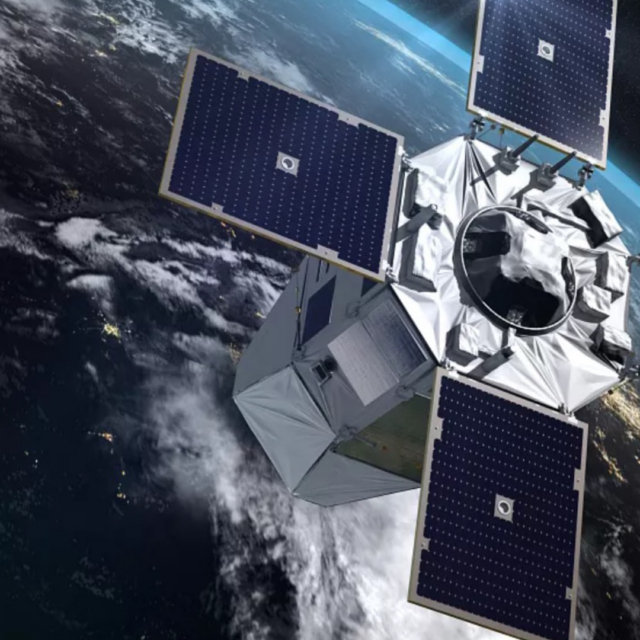
Selected by NASA from five proposals in 2019, the Polarimeter to Unify the Corona and Heliosphere (PUNCH) mission will use four spacecraft to build 3D maps of the solar wind structure. The mission will contribute to efforts improving space weather forecasting.

Led by the Southwest Research Institute (SwRI) in the US, the PUNCH consortium brings together world-leading expertise, including from UK-based teams at the Science and Technology Facilities Council (STFC).

UK camera systems packing a punch
Scientists, engineers and technicians at STFC’s RAL Space have been instrumental in the development of the four suitcase-sized PUNCH satellites.

As well as contributing to the mission’s scientific goals, RAL Space teams have designed, developed and manufactured the systems for four visible-light cameras that will capture a new perspective of the evolving solar wind.

Once the spacecraft are in orbit, the team at RAL Space will also enact their role as the mission’s in-flight calibration lead. Maximum science return from the mission relies on the combination of data from its four satellites, so ensuring accurate calibration is paramount.

Dr Jackie Davies, UK Science Lead for PUNCH at STFC RAL Space, said: "The PUNCH design builds on RAL Space’s extensive heritage in leading, and contributing to, solar and solar wind imaging instruments, including our contributions to NASA’s Solar Terrestrial Relations Observatory (STEREO) mission. We’re thrilled to be working alongside SwRI, NASA and the US Naval Research Laboratory on this pioneering project and can’t wait to see what new insights our technological and scientific input will reveal in the coming months.


Above: One of the camera electronics engineering models being finalised at RAL Space.
Courtesy STFC RAL Space


Cutting edge technology to track solar wind
Three of the four spacecraft will carry wide field imagers to track the solar wind as it moves away from the sun, while the fourth will feature a narrow field imager to continuously image the corona. Each imager will be equipped with a camera with electronics systems developed by RAL Space.

This technique will allow scientists to make a 3D map of features throughout the inner solar system, enabling them to determine the trajectory and speed of coronal mass ejections, bursts of solar plasma that can disrupt technology on Earth.


Above: Close up of one of the camera electronics boxes.
Courtesy STFC


Radiation-resistant technology
PUNCH’s imaging systems also incorporate specialised radiation-resistant chips designed by STFC’s Technology Department. Based on chips originally developed for STEREO, these components represent a major advance in space technology.

Unlike commercial off-the-shelf electronics, the structure of these chips is designed for the harsh conditions of space, immunising them against the typical electronic faults caused by cosmic radiation. This resistance to radiation will extend the mission’s lifespan and improve data quality.

Countdown to launch
Polarimeter to Unify the Corona and Heliosphere (PUNCH) is scheduled to launch no earlier than today (3rd March 2025) at 3:09am UK time, from Vandenberg Space Force Base, California, on a SpaceX Falcon 9 rocket. It will share its ride to space with the Spectro-Photometer for the History of the Universe, Epoch of Reionisation and Ices Explorer (SPHEREx), another new NASA observatory.


Above: Crews conduct a solar array deployment test on the spacecraft of NASA’s PUNCH satellites at Astrotech Space Operations on Vandenberg Space Force Base, California, 21st January 2025.
Courtesy USSF 30th Space Wing, Alex Vadez


Dr Nick Waltham, Technology Research and Innovation Theme Lead at RAL Space said: "Developing and testing the PUNCH camera systems has been an exciting endeavour for our team, made even more meaningful by the additional challenges we overcame during the COVID pandemic.

"This achievement is the result of years of dedication – building on a much longer heritage in similar missions – and the whole team should be incredibly proud as we prepare for launch. Their work will play a key role in advancing our understanding of this crucial area of space science."

Related

Global commercial aircraft orders surge 88% in Q3 2026, says new ADS report
British Airways A319 taxis at London Heathrow, UK, 17 November 2010
Global commercial aircraft orders surge 88% in Q3 2026, says new ADS report
Global commercial aircraft orders surge as record demand creates major opportunities and production challenges for UK aerospace manufacturers.
Aerospace

17 Nov 2026

Farnborough Airshow 2028 reaches 93% capacity as earliest-ever sell-out looms
Farnborough International Airshow
Farnborough Airshow 2028 reaches 93% capacity as earliest-ever sell-out looms
With 93% of exhibition and chalet space already secured, the Farnborough International Airshow 2028 is heading towards a historic early sell-out.
Aerospace Defence Events

17 Nov 2026

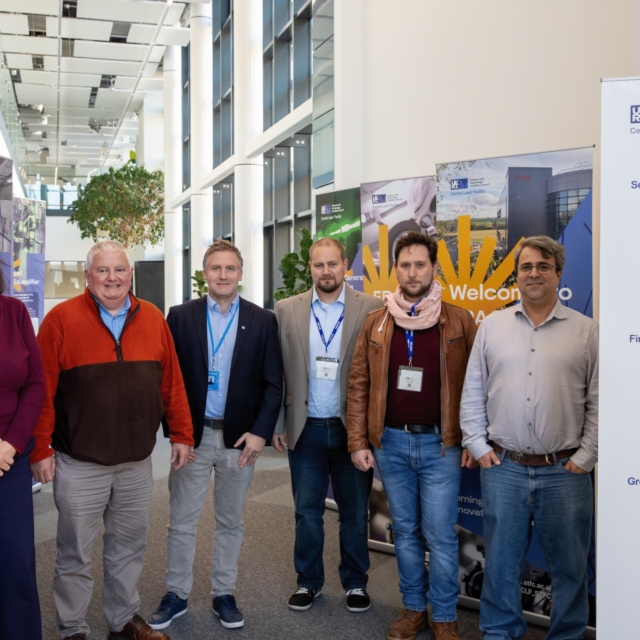
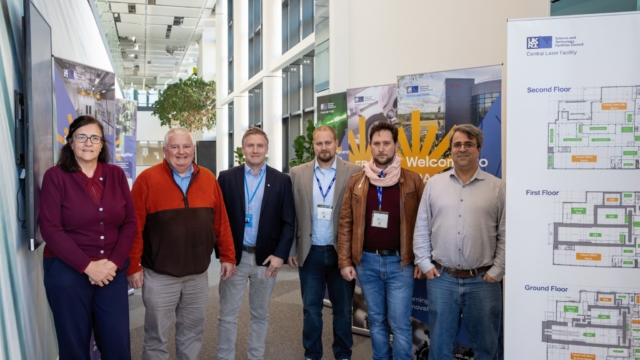
First Light Fusion and STFC’s CLF partner on FLARE fast ignition
First Light Fusion team at STFC’s Central Laser Facility (CLF)
First Light Fusion and STFC’s CLF partner on FLARE fast ignition
A new collaboration between First Light Fusion and STFC’s Central Laser Facility (CLF) will develop the rapid heating stage of FLARE, advancing its progress towards low cost, high gain inertial fusion.
HM King Charles opens new National Cyber Force HQ
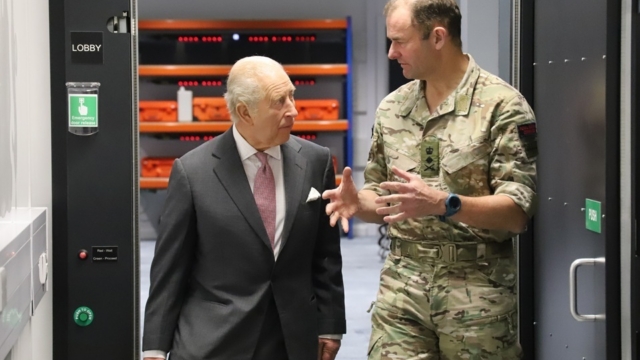
HM King Charles III opens new NCF HQ at Ribble House, Samlesbury, Lancashire.
HM King Charles opens new National Cyber Force HQ
The new headquarters of the National Cyber Force (NCF) at Ribble House in Lancashire has been officially opened by HM King Charles III, where he gained insights into the vital role of the NCF in strengthening the UK’s cyber capability.
Defence Security

17 Nov 2026

Tiberius Aerospace secures Series A funding to expand manufacturing partner network
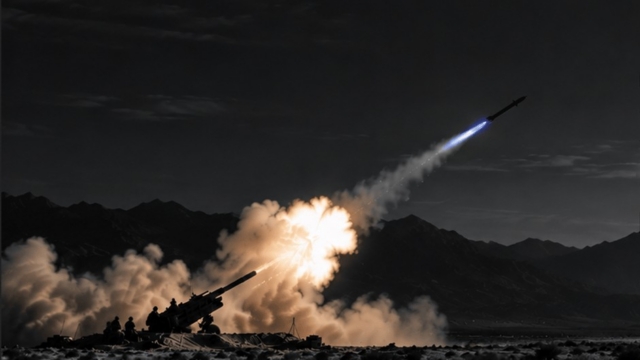
Ramjet-powered artillery
Tiberius Aerospace secures Series A funding to expand manufacturing partner network
By securing $85 million financing, Tiberius Aerospace has become the latest defence technology unicorn and will use the investment to accelerate production of its long-range precision munitions and expand allied sovereign manufacturing capacity.
Defence Member News

17 Nov 2026

Farnborough Airshow 2028 reaches 93% capacity as earliest-ever sell-out looms
Farnborough International Airshow
Farnborough Airshow 2028 reaches 93% capacity as earliest-ever sell-out looms
With 93% of exhibition and chalet space already secured, the Farnborough International Airshow 2028 is heading towards a historic early sell-out.
Aerospace Defence Events

17 Nov 2026

First Light Fusion and STFC’s CLF partner on FLARE fast ignition
First Light Fusion team at STFC’s Central Laser Facility (CLF)
First Light Fusion and STFC’s CLF partner on FLARE fast ignition
A new collaboration between First Light Fusion and STFC’s Central Laser Facility (CLF) will develop the rapid heating stage of FLARE, advancing its progress towards low cost, high gain inertial fusion.
Airbus and Thales win €1.5bn IRIS military Earth observation satellites contract
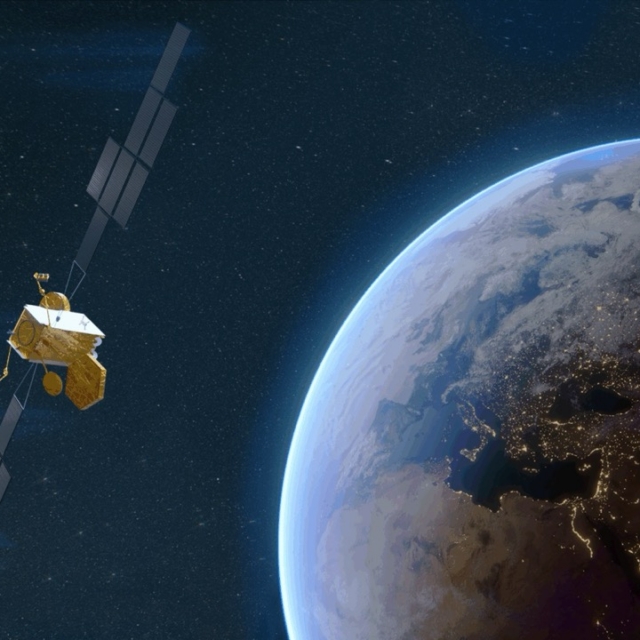
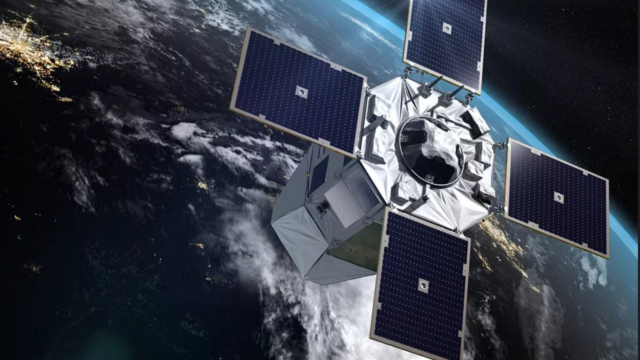
The two IRIS optical Earth observation satellites are intended to progressively replace the three CSO satellites currently operating within the MUSIS system.
Airbus and Thales win €1.5bn IRIS military Earth observation satellites contract
France has selected Airbus and Thales Alenia Space to deliver its next-generation IRIS military satellites, with the programme remaining open to allies.
Defence Member News Space

16 Nov 2026

Construction begins on giant DUNE
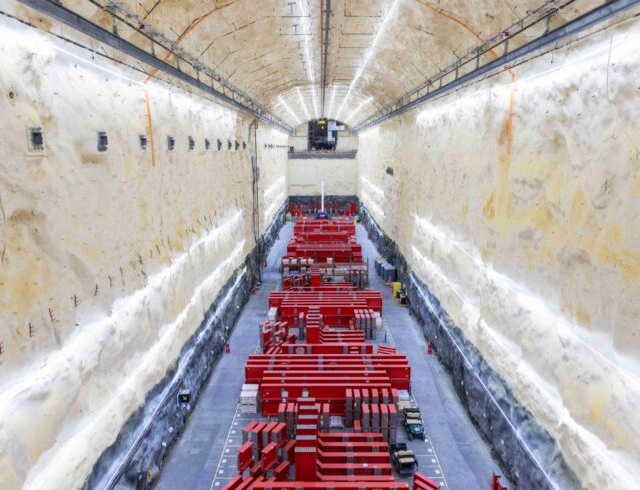
A portion of the 2,600 steel beams destined for DUNE's cryostats were transported nearly a mile underground and staged in the South Detector Cavern ahead of the installation.
Construction begins on giant DUNE
UK researchers are playing a pivotal role in the Deep Underground Neutrino Experiment (DUNE), which will investigate some of the mysteries of the Universe, including how the Universe evolved after the big bang and why it contains so much more matter than antimatter.
Space

16 Nov 2026

HM King Charles opens new National Cyber Force HQ
HM King Charles III opens new NCF HQ at Ribble House, Samlesbury, Lancashire.
HM King Charles opens new National Cyber Force HQ
The new headquarters of the National Cyber Force (NCF) at Ribble House in Lancashire has been officially opened by HM King Charles III, where he gained insights into the vital role of the NCF in strengthening the UK’s cyber capability.
Defence Security

17 Nov 2026

Getlink plans drive-through biometric border checks at Eurotunnel terminals
Image: Getlink Group
Getlink plans drive-through biometric border checks at Eurotunnel terminals
Getlink plans camera-supervised biometric passport and fingerprint checks at Folkestone and Calais to prevent disruption as the EU’s new border system arrives.
Security

17 Nov 2026

UK power outage: How businesses can prepare for 72 hours without electricity
Electricity pylons near the River Great Ouse
UK power outage: How businesses can prepare for 72 hours without electricity
Government contingency planning warns that a prolonged UK power outage could disrupt card payments, communications, transport, fuel supplies and essential services. Here's how businesses can prepare for a 72-hour blackout and maintain operations.
Security

17 Nov 2026