UK defence and national security sectors poised for growth

Investments in the UK and European defence and national security sectors have surged in recent years, with both government funding and private capital investments increasing.

Image courtesy Heligan
 
Investment funding, primarily driven by venture capital for European defence, security, and resilience startups, reached an all-time high of $5.2 billion in 2024, nearly a fivefold increase over six years. According to a new UK defence investment report from Heligan Group, this boom has been driven by geopolitical tensions and conflict, primarily the Russian war against Ukraine, which has increased demand for defence technology.
 
Between 2014 and 2024, the UK defence sector experienced a significant rise in turnover, increasing by 64%. Furthermore, combined, the UK’s aerospace, defence, security & space sectors employed 443,000 people in 2024 and have turned over £100 billion.
 
The UK and Germany have emerged as the top destinations for this investment, with the UK consistently attracting the most VC funding in the defence sector since 2019, with Germany pulling ahead in 2024 and France close behind. Notably, Europe launched the NATO Innovation Fund in 2023, a €1 billion multination venture fund backed by 24 NATO allies, to invest in dual-use, deep-tech startups that bolster defence capabilities. In parallel, the European Union’s European Defence Fund has begun co-financing collaborative R&D projects (worth €8 billion over 2021–2027).
 
Post Brexit, the UK is pursuing its own innovation programmes via the National Security Strategic Investment Fund (NSSIF) and accelerators such as the Defence and Security Accelerator (DASA), with innovation centrally coordinated by the newly established UK Defence Innovation organisation.
 
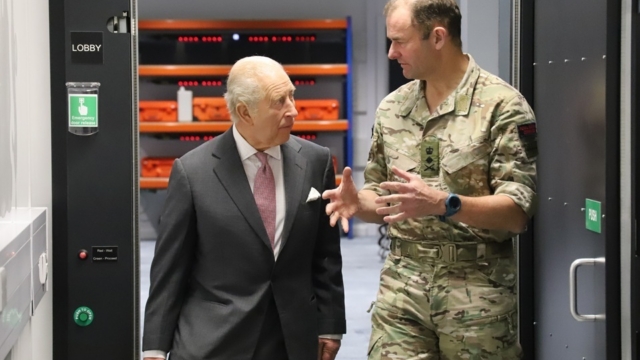
Matt Croker (above), Partner, Corporate Finance at Heligan Group, said: “Public-private collaborations fundamentally reduce investment risk for private investors and provide long-term growth prospects, while fostering innovation and building the critical links and understanding between those with the need and those with the solutions. A new UK-EU post-Brexit agreement also paves the way for UK-based firms’ access to the EU’s new Security Action for Europe (SAFE) – a €150 billion fund providing loans for defence projects. Subsequently, I believe that the long-term stability and resilience of investments in defence are improved due to a sector strongly influenced by geopolitical necessity and one that is financially backed with governmental support.
 
“Private Equity (PE) and corporate investors are also playing a significant role. Large defence contractors are reinvesting profits into R&D, and we are seeing more acquisition plays of innovative firms, such as the 2024 acquisition of SixWorksby IBM for $150 million from Chiltern Capital, while PE firms have made headline acquisitions of UK defence companies.”
 
Mainstream investors have historically shied away from pure ‘kinetic’ investments, such as weapon systems, due to ethical and ESG concerns. There is, however, a blurring of those traditional lines with a greater focus on dual-use tech such as AI, cybersecurity, autonomous systems and quantum, which have both strong enterprise value as well as significant opportunities for the defence and national security sector. There is also a tangible realignment of ethical and ESG lines, with many seeing a momentum shift, with attitudes to defence and security investing now framed as essential for societal security and stability in the context of war in Eastern Europe. This has resulted in a growing pool of capital for defence startups, scale-ups and proto-primes.
 
Croker said: “With heightened threat levels, institutional investors would appear to be loosening restrictions and recognising defence as a critical and necessary aspect of the overall investment landscape, as well as a potentially untapped and lucrative addition to their investment portfolios.”
 
“Public investment is rising too. On top of the UK Government’s commitment to raise defence spending to 2.5% of GDP by 2027, the UK Ministry of Defence also plans to dedicate at least 7% of its budget to R&D by 2030 (up from 4% today), nearly doubling annual defence science spending to around £4 billion. Together, these trends indicate robust confidence in defence tech, with government funding, NATO and EU initiatives and private VC and PE money all converging to drive innovation. It should also be noted that turnover in the UK defence sector has grown 31% over the last ten years, with a large part of that growth occurring in the last three years.”
 

Related

Dowty to open UK Innovation Centre in Gloucester
Next-gen propeller systems
Dowty to open UK Innovation Centre in Gloucester
A £19 million investment from GE Aerospace will enable Dowty to open an Innovation Centre in the UK that will advance the development and pre-production of next-generation propeller systems and other innovative aerospace technologies.
Aerospace Member News

18 Nov 2026

Gatwick awards slots to GOL as airline eyes international growth
GOL Linhas Aéreas Airplane
Gatwick awards slots to GOL as airline eyes international growth
Brazil's largest low-cost carrier has secured coveted Gatwick slots for summer 2027, strengthening its long-haul ambitions and signalling potential growth in UK-Brazil connectivity.
Aerospace

18 Nov 2026

Engineering and defence jobseekers lower career ambitions, survey finds
Engineer male advance robotic machine designer team talking with electronic component part supplier business consulting in heavy machinery industry concept.
Engineering and defence jobseekers lower career ambitions, survey finds
Research from Tribepad finds that more than half of rejected jobseekers in engineering, manufacturing, aerospace and defence have lowered their ambitions.
Aerospace Defence

18 Nov 2026

92% of UK defence firms surveyed plan to use more domestic suppliers as procurement concerns persist
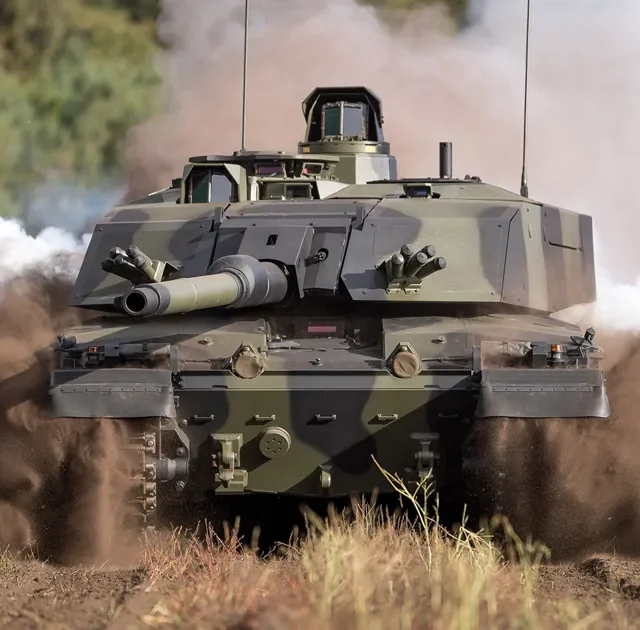
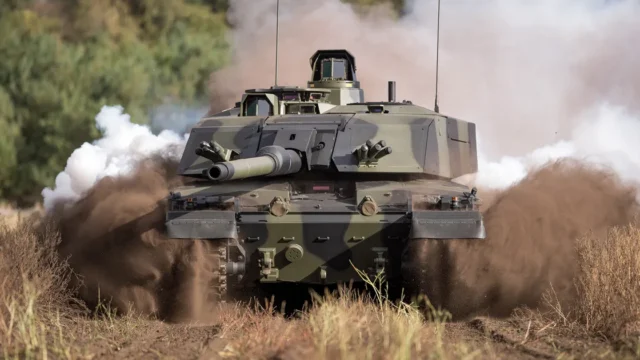
British-Army-Challenger-3-tank
92% of UK defence firms surveyed plan to use more domestic suppliers as procurement concerns persist
UK defence firms plan to work with more domestic suppliers over the next year, but changing contract requirements and lengthy decisions remain concerns.
Defence Security

18 Nov 2026

Four UK SMEs bring AI, aircraft and recycled materials to Leonardo’s drone swarm trials
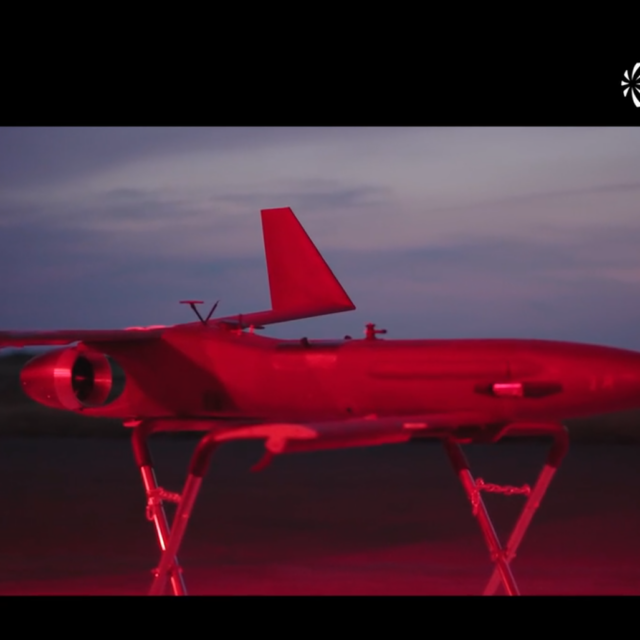
Sovereign Hunter Leonardo UK
Four UK SMEs bring AI, aircraft and recycled materials to Leonardo’s drone swarm trials
Volander, Faculty, Uplift360 and Applied AGI supplied the aircraft and software behind Sovereign Hunter, which went from contract to flight trials in six months.
Defence Member News

18 Nov 2026

Engineering and defence jobseekers lower career ambitions, survey finds
Engineer male advance robotic machine designer team talking with electronic component part supplier business consulting in heavy machinery industry concept.
Engineering and defence jobseekers lower career ambitions, survey finds
Research from Tribepad finds that more than half of rejected jobseekers in engineering, manufacturing, aerospace and defence have lowered their ambitions.
Aerospace Defence

18 Nov 2026

University of Surrey develops electronic eye to monitor solar storms
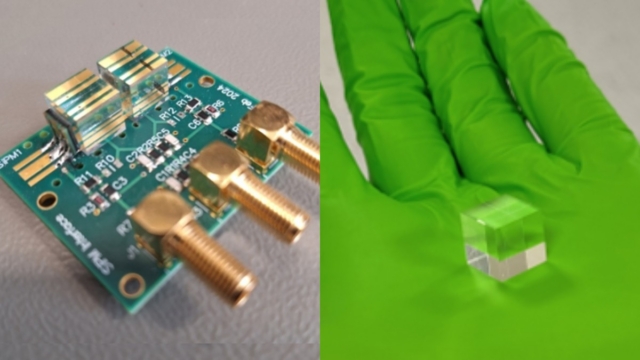
HEPI prototype ‘electronic eye’ sensor
University of Surrey develops electronic eye to monitor solar storms
Under a £400,000 contract with the European Space Agency (ESA) and the UK Space Agency (UKSA), a team of researchers at the University of Surrey will develop an ultra-compact monitor to reveal the effects of radiation from solar storms on space infrastructure, aircraft and terrestrial systems like satellites.
Aerospace Space

18 Nov 2026

BAE Systems selected as NASA PRIMA partner
NASA’s PRIMA far-infrared space observatory, built on BAE Systems’ Evolve+ platform.
BAE Systems selected as NASA PRIMA partner
Alongside a number of international space industry providers, BAE Systems will support NASA’s PRIMA mission to survey the history and evolution of the universe and bridge current scientific gaps.
Member News Space

18 Nov 2026

First Light Fusion and STFC’s CLF partner on FLARE fast ignition
First Light Fusion team at STFC’s Central Laser Facility (CLF)
First Light Fusion and STFC’s CLF partner on FLARE fast ignition
A new collaboration between First Light Fusion and STFC’s Central Laser Facility (CLF) will develop the rapid heating stage of FLARE, advancing its progress towards low cost, high gain inertial fusion.
92% of UK defence firms surveyed plan to use more domestic suppliers as procurement concerns persist
British-Army-Challenger-3-tank
92% of UK defence firms surveyed plan to use more domestic suppliers as procurement concerns persist
UK defence firms plan to work with more domestic suppliers over the next year, but changing contract requirements and lengthy decisions remain concerns.
Defence Security

18 Nov 2026

Your business has been hacked: What should happen in the first 24 hours?
Cyber security operations
Your business has been hacked: What should happen in the first 24 hours?
A cyber attack can stop operations within minutes. New NCSC guidance explains the critical decisions businesses must make in the first 24 hours.
Security

18 Nov 2026

HM King Charles opens new National Cyber Force HQ
HM King Charles III opens new NCF HQ at Ribble House, Samlesbury, Lancashire.
HM King Charles opens new National Cyber Force HQ
The new headquarters of the National Cyber Force (NCF) at Ribble House in Lancashire has been officially opened by HM King Charles III, where he gained insights into the vital role of the NCF in strengthening the UK’s cyber capability.
Defence Security

17 Nov 2026