
General Atomics

Royal Navy drone fleet could triple missile capacity in North Atlantic war

A former senior Royal Navy officer says war games testing Britain’s Hybrid Navy concept produced roughly three times the missile capacity for a North Atlantic conflict.

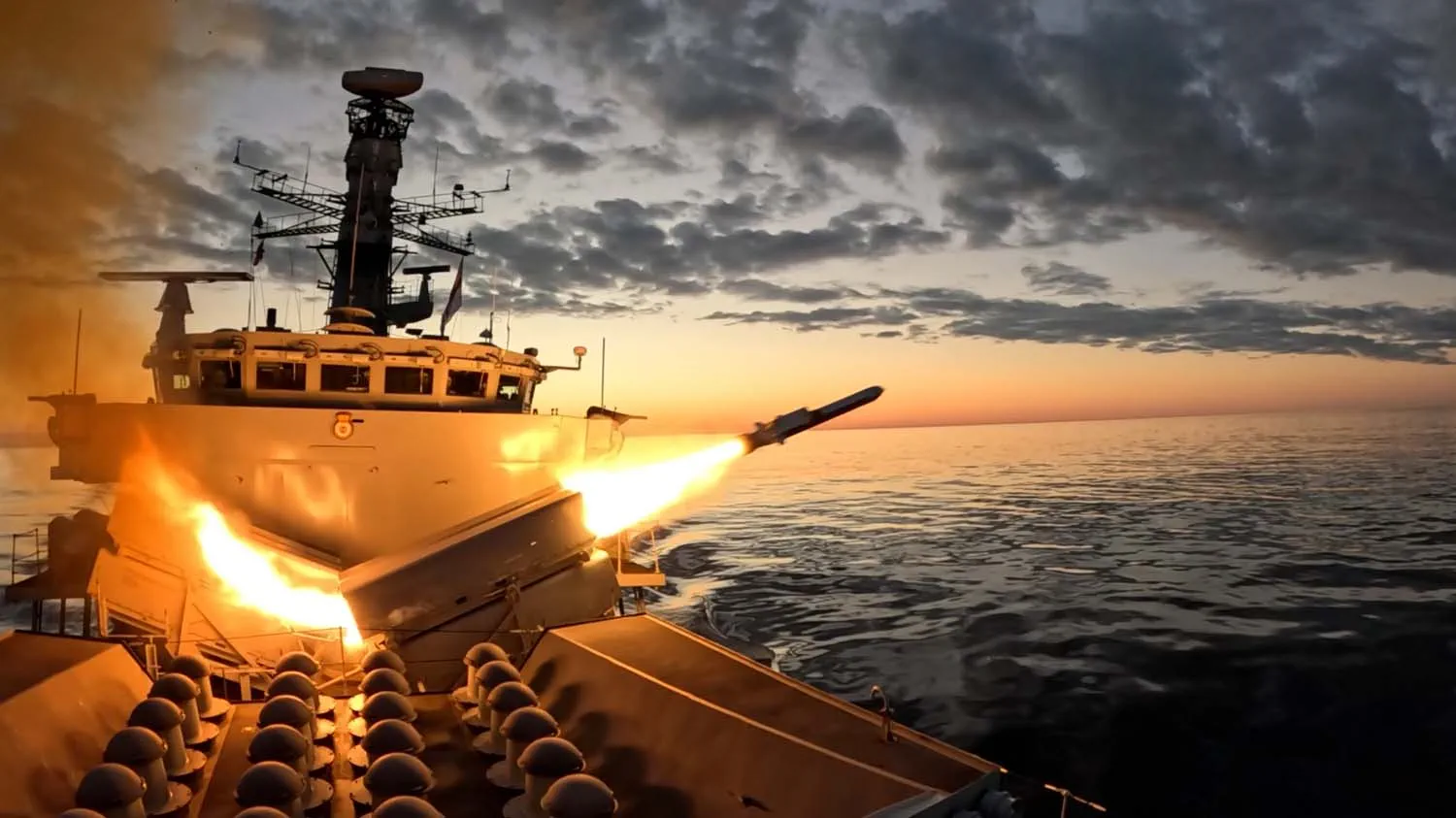
A Royal Navy warship has completed the first firing of new ship-busting missiles capable of taking out enemy vessels at ranges of more than 100 miles.
Photo: Royal Navy

The Royal Navy could potentially put three times as many missiles into a North Atlantic fight by combining its existing warships with a much larger force of uncrewed vessels and aircraft, according to a former senior Royal Navy officer.

The striking figure comes from Rear Admiral (retired) James Parkin, the Royal Navy’s former Director of Development, who says testing of the concept produced a “substantial uplift in combat mass” and roughly threefold missile capacity in a North Atlantic scenario.
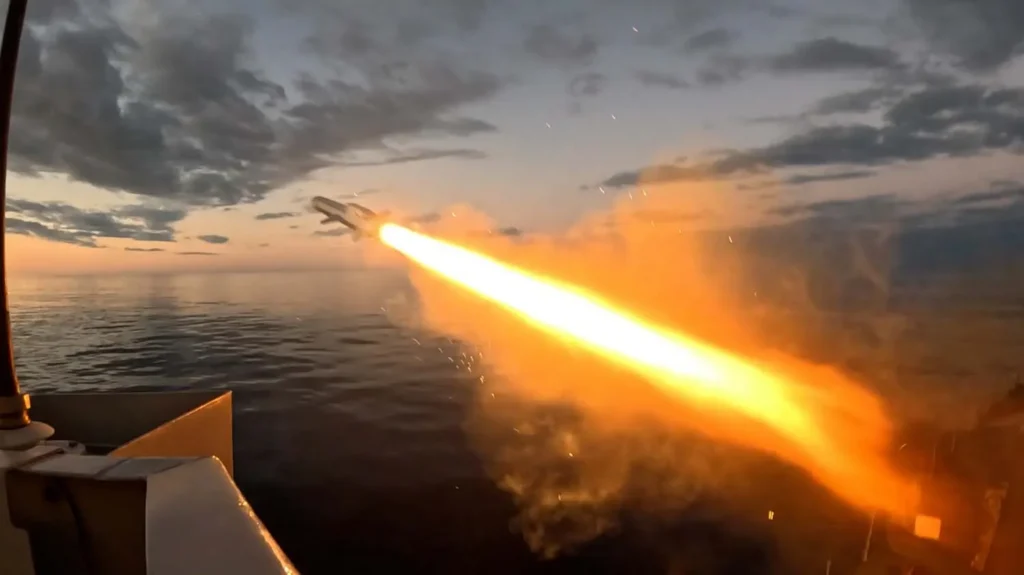
A Royal Navy warship has completed the first firing of new ship-busting missiles capable of taking out enemy vessels at ranges of more than 100 miles.
Photo: Royal Navy

The assessment was published in the Council on Geostrategy’s Britain’s World magazine and subsequently reported by the UK Defence Journal. It is important, however, to keep the figure in context. This is the outcome claimed from war gaming, not evidence that the Royal Navy already possesses three times its present missile firepower.
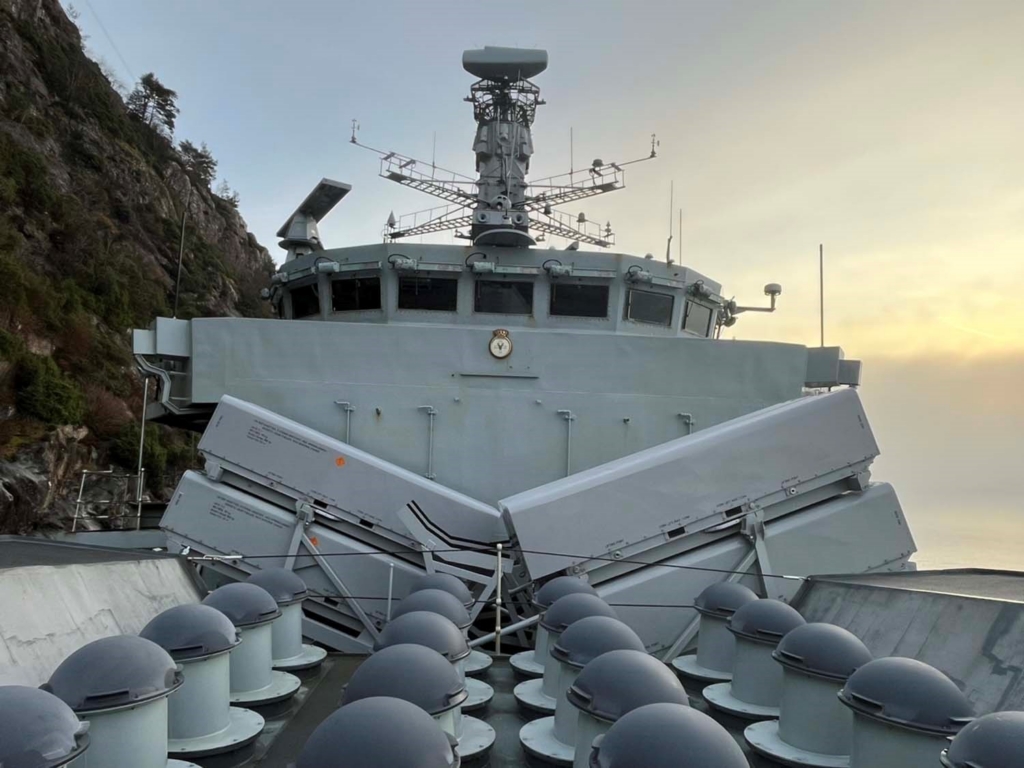
HMS Portland has become the second Royal Navy warship to be fitted with new missiles capable of taking out enemy ships at ranges of more than 100 miles away.
Photo: Royal Navy

What it does offer is a glimpse of the thinking behind one of the biggest changes being contemplated for the Royal Navy in decades: stop trying to place every sensor, weapon and crew aboard a small number of increasingly expensive ships. Instead, spread some of those capabilities across many more platforms.

Britain wants more fighting power without simply building more £2 billion warships


The problem driving the change is straightforward. Britain needs more naval presence, particularly in the North Atlantic, but modern warships are becoming increasingly expensive.

A Royal Navy warship has completed the first firing of new ship-busting missiles capable of taking out enemy vessels at ranges of more than 100 miles.
Photo: Royal Navy

Parkin estimates that large, complex European warships now cost about £2 billion to £2.5 billion each. Specialised maritime aircraft can approach £100 million an airframe. At the same time, the Royal Navy has to protect trade routes, contribute to NATO operations, secure critical seabed infrastructure and protect the UK’s continuous at-sea nuclear deterrent.

Simply buying substantially more conventional ships, aircraft and submarines is therefore an expensive answer.

The alternative being pursued is the Hybrid Navy.

Formally set out in the 2025 Strategic Defence Review, the concept keeps highly capable crewed ships, submarines and aircraft at the heart of the fleet but surrounds them with greater numbers of autonomous and remotely operated systems.
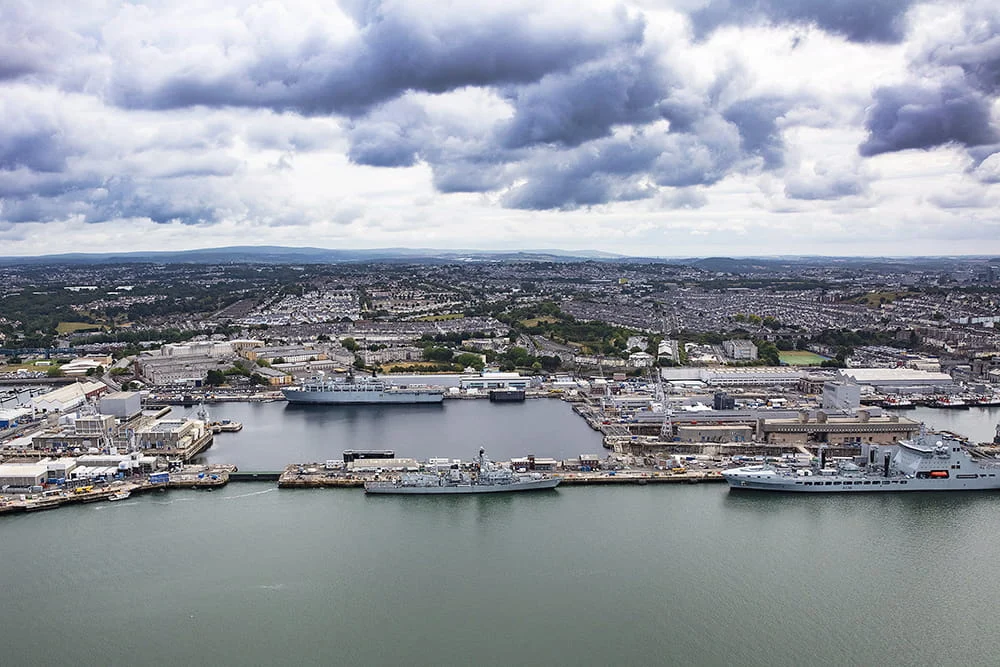
HMNB Devonport
Photo: Royal Navy

The Defence Investment Plan published in June went further. It envisaged crewed ships connected with uncrewed surface and underwater vessels through a secure, high-speed “Maritime Fighting Web”.

Plans include at least six lower-cost Common Combat Vessels, while Projects VANQUISH and PANTHEON are intended to introduce fixed-wing and rotary-wing autonomous collaborative aircraft. At least £1.5 billion has been profiled over four years for the Hybrid Navy as part of £5 billion allocated for advanced uncrewed systems across defence.

The attraction is not simply having more drones. It is about breaking apart functions that traditionally sit together aboard one expensive warship. Detection might come from one platform, targeting information from another and weapons from another. Network them together, and the fleet potentially gains more sensors, more weapons and more places from which to operate without requiring a crew for every platform.

That is the logic behind the claimed increase in missile capacity.

Drones will support warships, not make them disappear

There is an important qualification to the Hybrid Navy vision.

Parkin cautions against assuming that Ukraine’s success with relatively inexpensive uncrewed vessels in the Black Sea means Britain can simply substitute drones for frigates and destroyers.

The missions are different.

Ukraine has demonstrated how small, expendable craft can deny an adversary freedom of movement in a relatively enclosed sea. Britain and NATO face the much larger task of controlling parts of the North Atlantic, protecting oceanic shipping routes, supporting NATO strike groups and safeguarding ballistic-missile submarine operations far from friendly ports.
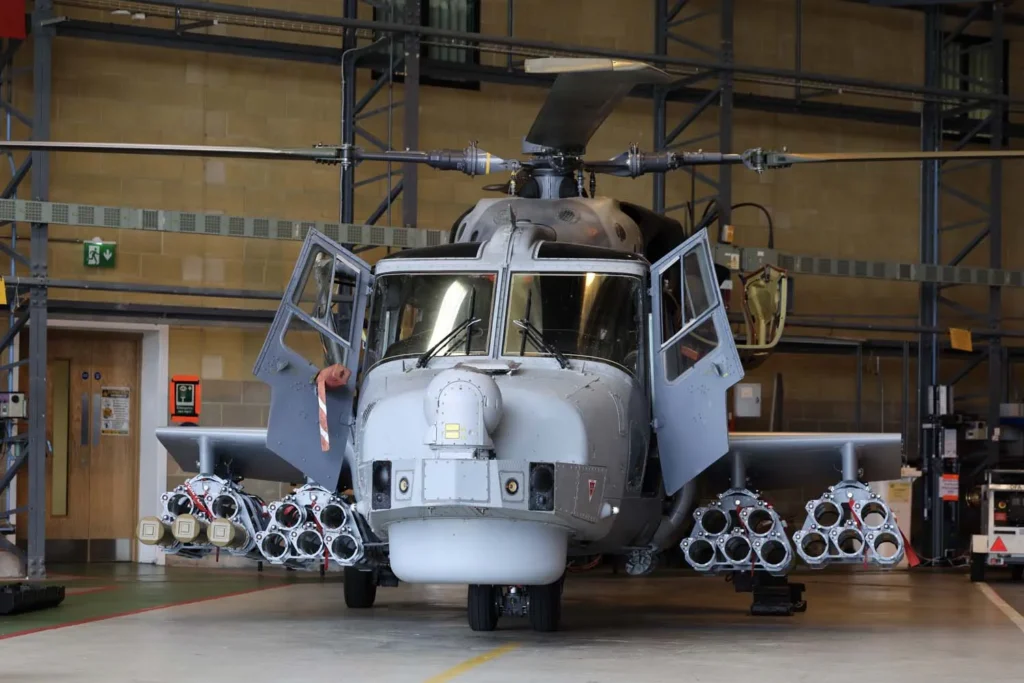
Royal Navy Wildcat helicopter fitted with additional sensors inside a hangar.
Royal Navy Wildcat helicopter fitted with additional sensors inside a hangar/ Photo: Royal Navy

For that reason, Parkin argues that the future fleet must remain centred on high-end crewed platforms. Uncrewed aircraft and vessels would extend their reach, sensing, firepower and presence rather than replace them.

The Royal Navy is already beginning to explore how that relationship could work outside a computer simulation.

During the recent Dragon Rider trials, a specially modified Wildcat helicopter worked with multiple uncrewed systems across more than 200 miles of southern England. A sensor-equipped Wildcat relayed information from drones to a hub at RNAS Yeovilton, allowing operators to receive real-time video, identify targets, exchange secure messages and remotely take control of drones over considerable distances.

Modified Wildcat helicopter operating with uncrewed drone systems during Royal Navy trials.
Photo: Royal Navy

The Navy said the work expanded the distance at which drones could operate ahead of a ship or task group beyond the normal limits of their radio links. The next step is to introduce satellite communications, with the longer-term aim of allowing drone fleets to be controlled securely over much greater distances.

The biggest obstacles may be ashore rather than at sea

Turning those experiments into an operational fleet presents another problem: Britain’s rules and acquisition machinery were largely designed around conventional ships.

Parkin points to a particularly striking example. The safety, regulatory and policy framework required routinely to operate uncrewed surface vessels larger than 24 metres in British waters does not yet exist.

According to his assessment, no uncrewed vessel above that size has received operating clearance from either the Maritime and Coastguard Agency or Defence Maritime Regulator, while neither civilian classification societies nor the Naval Authority and Technical Group have approved such a design.

Technology is also moving much faster than conventional defence procurement.

Here Parkin believes there is a lesson Britain can take from Ukraine: the “rule of six”. The model aims to get operational feedback to manufacturers within six hours, software changes into the field within six days, hardware modifications within six weeks and, if necessary, replace an entire system within six months.

Related

Royal Edinburgh Military Tattoo 2026: What to expect as RAF takes centre stage
Pictured here is the Royal Air Force's Red Arrows Aerobatic Display Team flying over Edinburgh City and Castle for the grand opening of The Royal Edinburgh Military Tattoo on Saturday 12th August 2023 The Royal Edinburgh Military Tattoo (REMT) is the largest military engagement event in Scotland and one of the largest in the UK, which is held over several nights during the month of August on the Esplanade of Edinburgh Castle. Bringing together stories through music, dance, poetry, spoken word and imagery, a cast of over 800 UK and international performers will present ‘Stories’ through vivid and eclectic range of expression. The Tattoo will host performers from Norway, The United States, Australia, Trinidad and Tobago and Switzerland alongside acts from across the Uk and Ireland. The military will take a prominent role in the show with the Royal Air Force being the lead service this year.
Royal Edinburgh Military Tattoo 2026: What to expect as RAF takes centre stage
The Royal Edinburgh Military Tattoo is underway at Edinburgh Castle, with more than 800 performers and RAF flypasts featuring in the 2026 show.
Aerospace Defence

17 Aug 2026

Rolls-Royce and partners achieve hydrogen-powered aviation first
Rolls-Royce engine
Rolls-Royce and partners achieve hydrogen-powered aviation first
Rolls-Royce have completed operation of a modern aero gas turbine on 100% hydrogen across a full flight cycle - including take-off, cruise and landing - working alongside Tata Consultancy Services (TCS), easyJet, NASA, the UK Health and Safety Executive (HSE) and other industry partners to advance hydrogen-powered flight.
Aerospace Member News

17 Aug 2026

NPAS provides aerial support for emergency responses in West Midlands and Sussex
West Midlands wildfires
NPAS provides aerial support for emergency responses in West Midlands and Sussex
As part of multi-agency responses to wildfires in the West Midlands and a train derailment in East Sussex last week, the National Police Air Service (NPAS) delivered aerial oversights and intelligence to help coordinate the efforts of the emergency services on the ground.
Aerospace Security

17 Aug 2026

Royal Edinburgh Military Tattoo 2026: What to expect as RAF takes centre stage
Pictured here is the Royal Air Force's Red Arrows Aerobatic Display Team flying over Edinburgh City and Castle for the grand opening of The Royal Edinburgh Military Tattoo on Saturday 12th August 2023 The Royal Edinburgh Military Tattoo (REMT) is the largest military engagement event in Scotland and one of the largest in the UK, which is held over several nights during the month of August on the Esplanade of Edinburgh Castle. Bringing together stories through music, dance, poetry, spoken word and imagery, a cast of over 800 UK and international performers will present ‘Stories’ through vivid and eclectic range of expression. The Tattoo will host performers from Norway, The United States, Australia, Trinidad and Tobago and Switzerland alongside acts from across the Uk and Ireland. The military will take a prominent role in the show with the Royal Air Force being the lead service this year.
Royal Edinburgh Military Tattoo 2026: What to expect as RAF takes centre stage
The Royal Edinburgh Military Tattoo is underway at Edinburgh Castle, with more than 800 performers and RAF flypasts featuring in the 2026 show.
Aerospace Defence

17 Aug 2026

British Army delivers blood by drone
British Army medic with drone
British Army delivers blood by drone
British Army medics are using the latest drone technology to improve how they respond to tending the wounded and treating casualties on the battlefield.
Defence

17 Aug 2026

Apex Europe: Delivering defence innovation at the speed of the frontline
Headshot for Nick Waite, Clarion Defence
Apex Europe: Delivering defence innovation at the speed of the frontline
As technology reshapes the battlefield, the challenge is no longer simply developing new capabilities, but getting them into the hands of those who need them quickly enough. Nick Waite, Product Director for Apex Europe, considers what Ukraine is teaching the UK and NATO about drones, autonomy and the pace of defence innovation.
Defence Insights

15 Aug 2026

SatVu’s space-based thermal intelligence reveals status of Texan LNG terminal
Golden Pass LNG terminal in Texas
SatVu’s space-based thermal intelligence reveals status of Texan LNG terminal
By using HotSat-2's MWIR sensor, SatVu has captured thermal data over the Golden Pass LNG terminal in Texas, with AllSource Analysis attributing thermal activity to the individual units and equipment within.
Member News Space

14 Aug 2026

MDA Space opens CHORUS Control Centre
Chorus: generated image.
MDA Space opens CHORUS Control Centre
With the opening of its new control centre, MDA Space has moved closer to operational readiness ahead of the launch of its CHORUS satellite constellation later this year.
Member News Space

13 Aug 2026

Intuitive Machines completes acquisition of Goonhilly and COMSAT
Ground station.
Intuitive Machines completes acquisition of Goonhilly and COMSAT
Intuitive Machines’ integrated ground-to-space network is set to be enhanced by the ground station assets and competencies at Goonhilly, which will remain a UK entity and gain expanded resources, technologies and global reach.
Member News Space

13 Aug 2026

UK security innovators invited to join S&P 2027 Immersive Experience
Security and policing conference call for participants for immersive experience
UK security innovators invited to join S&P 2027 Immersive Experience
UK companies and academia are being invited to showcase their technology as part of the live Immersive Experience at Security & Policing 2027.
Member News Security

17 Aug 2026

NPAS provides aerial support for emergency responses in West Midlands and Sussex
West Midlands wildfires
NPAS provides aerial support for emergency responses in West Midlands and Sussex
As part of multi-agency responses to wildfires in the West Midlands and a train derailment in East Sussex last week, the National Police Air Service (NPAS) delivered aerial oversights and intelligence to help coordinate the efforts of the emergency services on the ground.
Aerospace Security

17 Aug 2026

Turner & Townsend strengthens senior leadership team
Turner & Townsend
Turner & Townsend strengthens senior leadership team
A number of senior appointments have been made which are intended to add significantly to the company's specialist infrastructure and defence capabilities.