

The Royal Navy says its new drone network is ready for war


The Royal Navy says it is ready to field a low-cost drone network that allows helicopters, warships, Royal Marines and uncrewed systems to fight as a single connected force, marking a significant step in the service’s drive to integrate autonomous systems into frontline operations.
Following a week-long series of trials across southern England, the Navy concluded that the secure communications network linking multiple aerial and surface drones with crewed platforms is mature enough for operational use. The exercise, known as Dragon Rider, demonstrated that operators could share live intelligence, identify targets and remotely control drones over long distances through a resilient communications network.
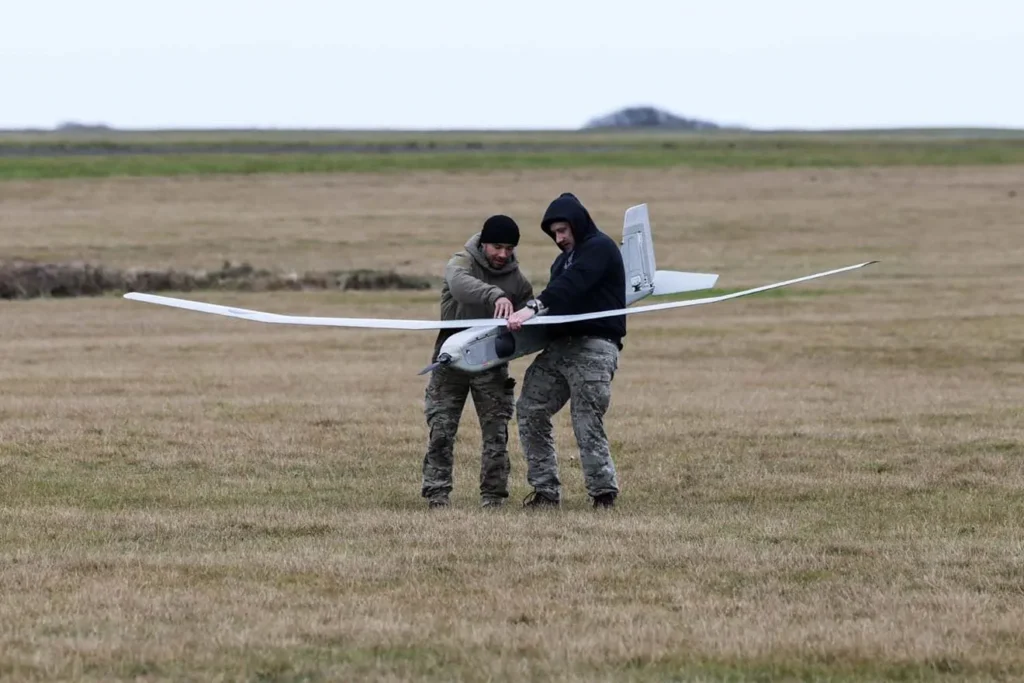
“The trial proved that this low-cost system is ready for the Royal Navy to use right now,” said Lieutenant Commander Rhydian Edwards, who has led efforts to integrate drone technology with the Wildcat force.
“This successful test is a major step forward in keeping human crews safer by letting drones handle dangerous tasks further ahead of the main military force, whilst also greatly increasing the number of units we can field at the same time.”
From proving a concept to building an operational network
Dragon Rider builds directly on the Eagles Eye trials completed earlier this year.
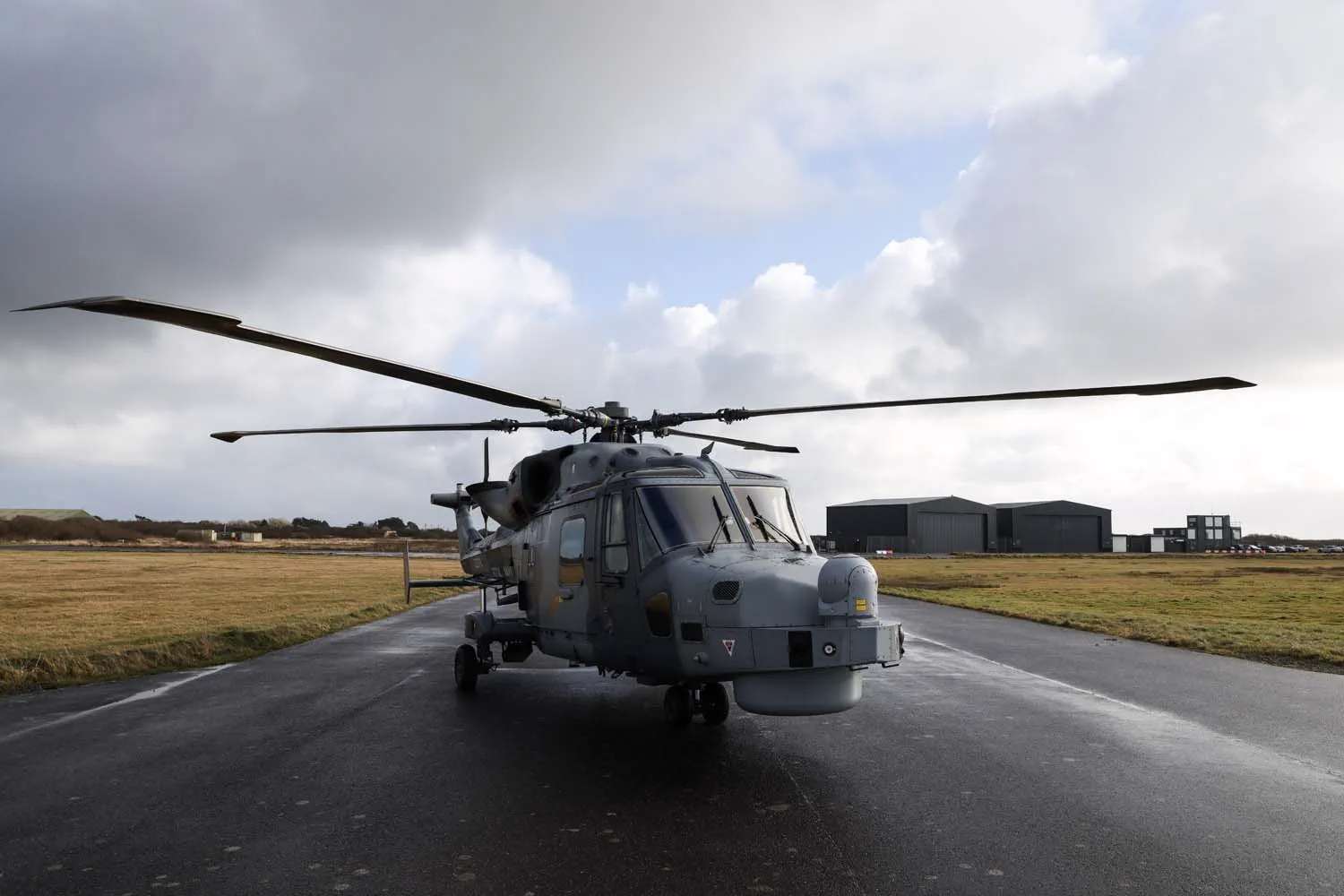
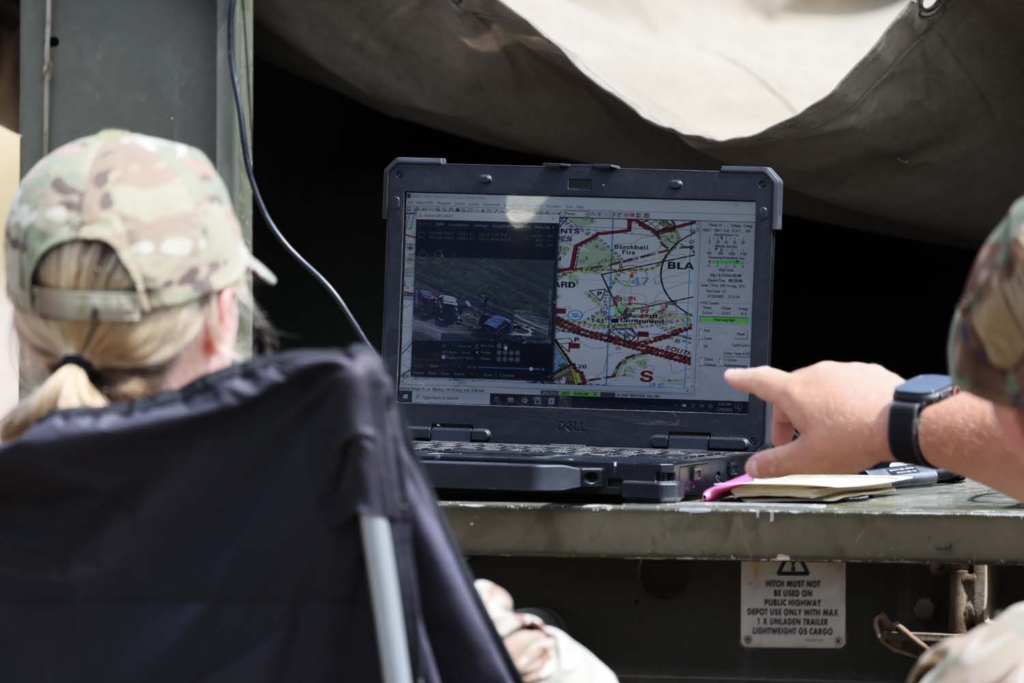
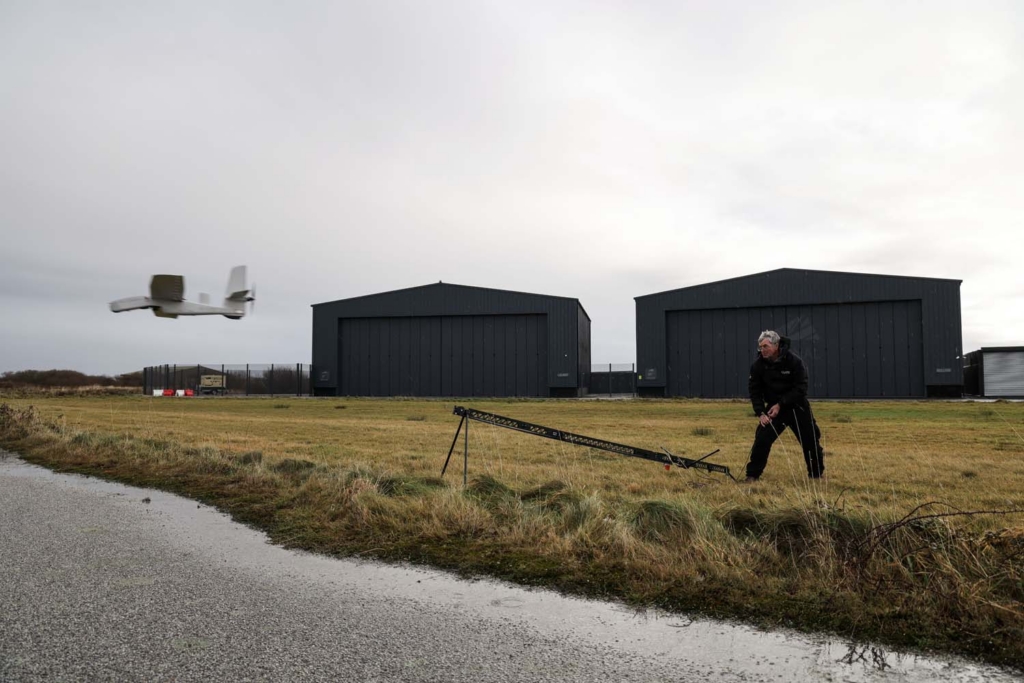
During those earlier tests, a Wildcat helicopter became the first in the Royal Navy to receive live information from multiple drones while in flight. Using data from Puma and Providence unmanned aircraft, together with other sensors, the helicopter crew successfully tracked a moving vehicle through a mesh communications network extending beyond the horizon.
The latest exercise took that concept much further.
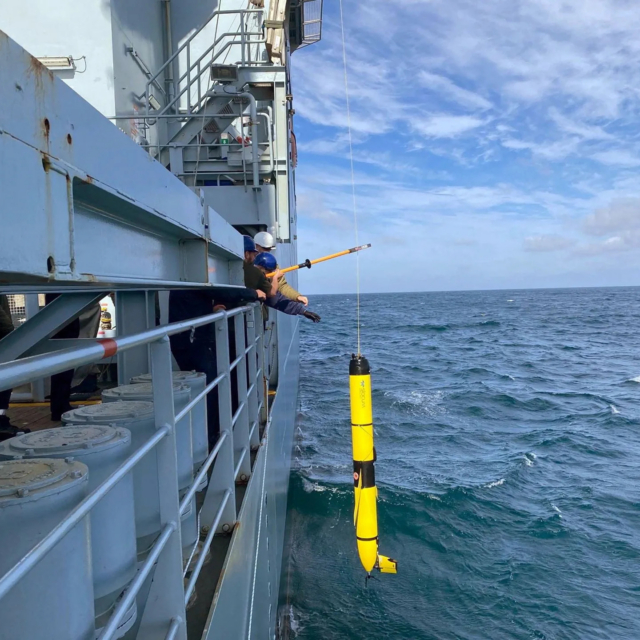
Instead of focusing on a single helicopter and a small number of drones, Dragon Rider connected Royal Marines, Wildcat crews, ship commanders and multiple uncrewed systems operating across more than 200 miles of southern England, from Cornwall to Somerset and Salisbury Plain. Information from drones was routed through a Wildcat equipped with additional sensors before being relayed to operators at a central hub at RNAS Yeovilton.
Participants viewed live video from several drones simultaneously, exchanged secure messages and, for the first time, successfully assumed remote control of drones through the network over long distances. According to the Royal Navy, that removes one of the traditional limitations on drone operations, where aircraft had to remain within the range of their direct radio links.
The network is the real breakthrough
While the aircraft attracted attention, the Navy says the real advance lies in the communications architecture connecting them.
At the centre of the system is a Mobile Ad-hoc Network (MANET), a secure mesh communications system that allows data to move automatically between different users and platforms. Instead of relying on a single communications path, the network continuously finds alternative routes if one connection is jammed or disabled, helping information continue flowing across the battlefield. The technology has already been tested extensively during the war in Ukraine.
That network also changes the role of the helicopter itself.
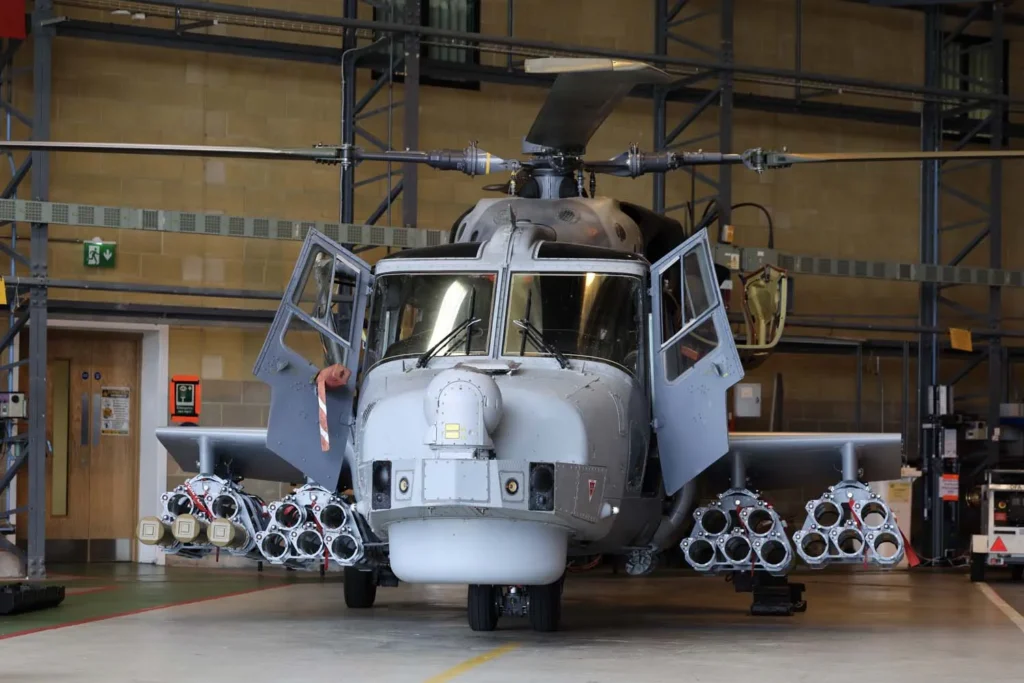
Earlier this year, Lt Cdr Edwards described the Wildcat not simply as another aircraft but as a “flying command centre”, capable of receiving information from multiple drones and laying the foundations for taking control of those systems during operations.
Connecting every sensor on the battlefield
The Royal Navy believes the same architecture can eventually link far more than helicopters and drones.
According to Lt Cdr Edwards, the mesh network acts as a “universal translator”, allowing sensors and uncrewed systems from different manufacturers to communicate across the same network instead of operating through separate proprietary interfaces.
“In the past, every new drone and sensor came with its own unique interface. This breaks that cycle,” he said.
That interoperability is central to the Navy’s vision of future operations, where crewed aircraft, autonomous systems and surface vessels share information instantly regardless of who built them.
Commander Andrew Henderson, Commanding Officer of the Wildcat Maritime Force, said the programme is about much more than introducing another drone.
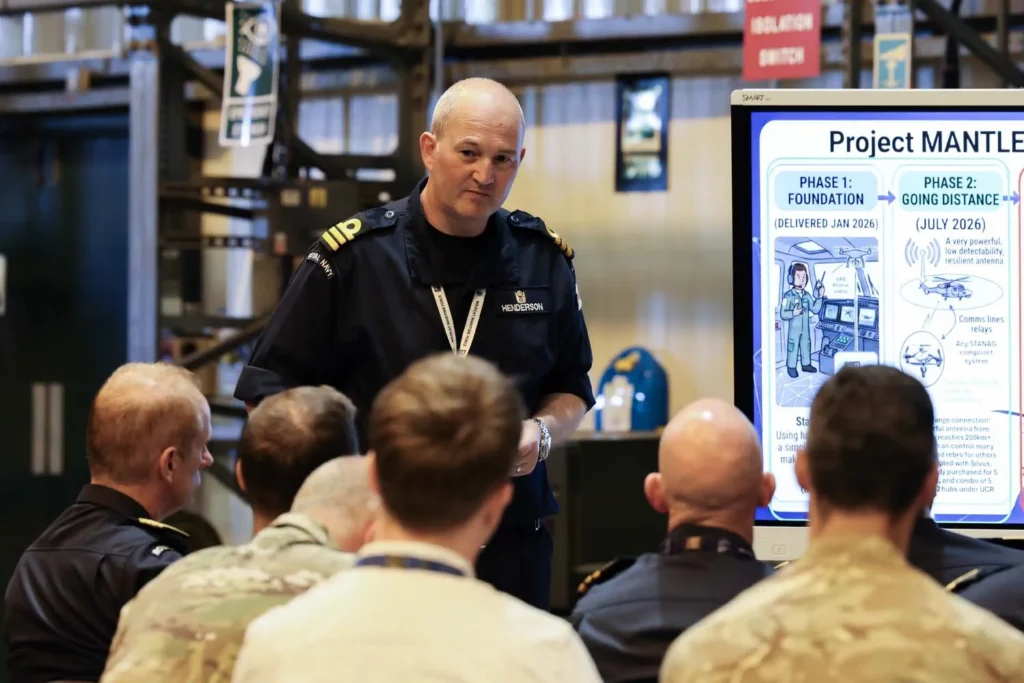
“It’s not just about the drone, it’s also about the network access. By learning lessons from the war in Ukraine we are securing these links into MESH networks, increasing interoperability and proving we can connect sensors and strike assets across the battlefield instantly.
“We are building a system that is modular and survivable – embracing the latest tech to make us deadlier and harder to defeat in a fight on the modern battlefield.”
SMEs helping shape the next generation
The programme has also highlighted the contribution of smaller technology companies to the Royal Navy’s modernisation plans.
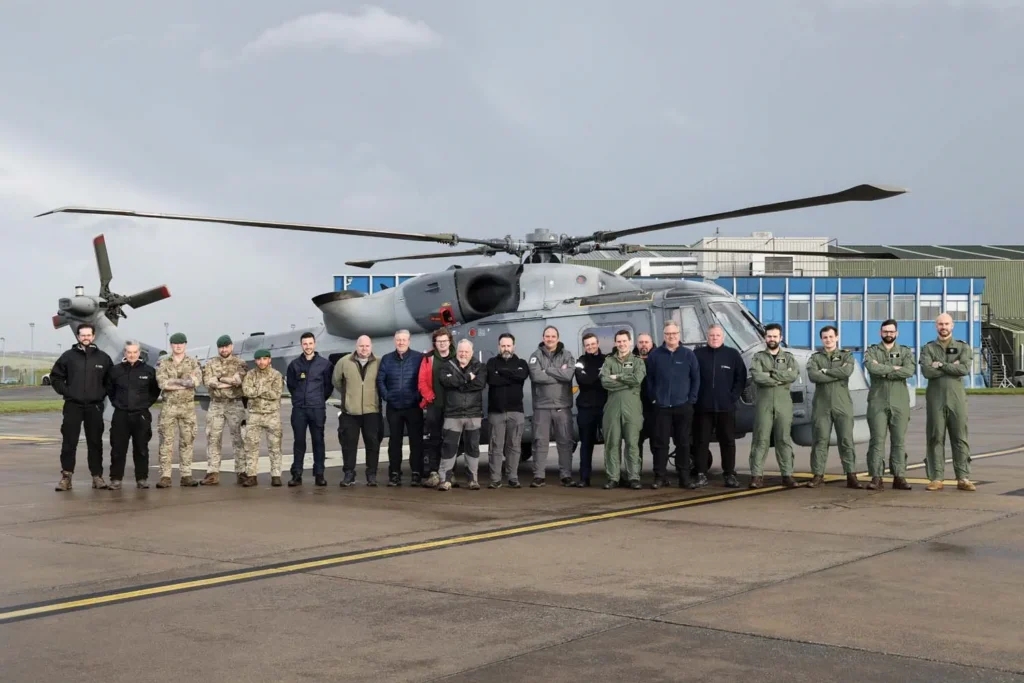
The original Eagles Eye trials brought together specialists from MarWorks, TeleplanForsberg, General Dynamics, C3IA, UAV Aerosystems and Collins Aerospace alongside Royal Navy personnel, while Dragon Rider expanded that approach by working with small and medium-sized companies from the UK, the US and Norway developing drone and network-enabled technologies.
Rather than relying solely on major defence contractors, the Navy is drawing on commercial innovation to accelerate the introduction of new autonomous capabilities into operational service.
The next step
Dragon Rider is not the end of the programme.
The next phase will introduce satellite communications, allowing commanders to control dispersed drone fleets securely over much greater distances from command centres far from the operational area.
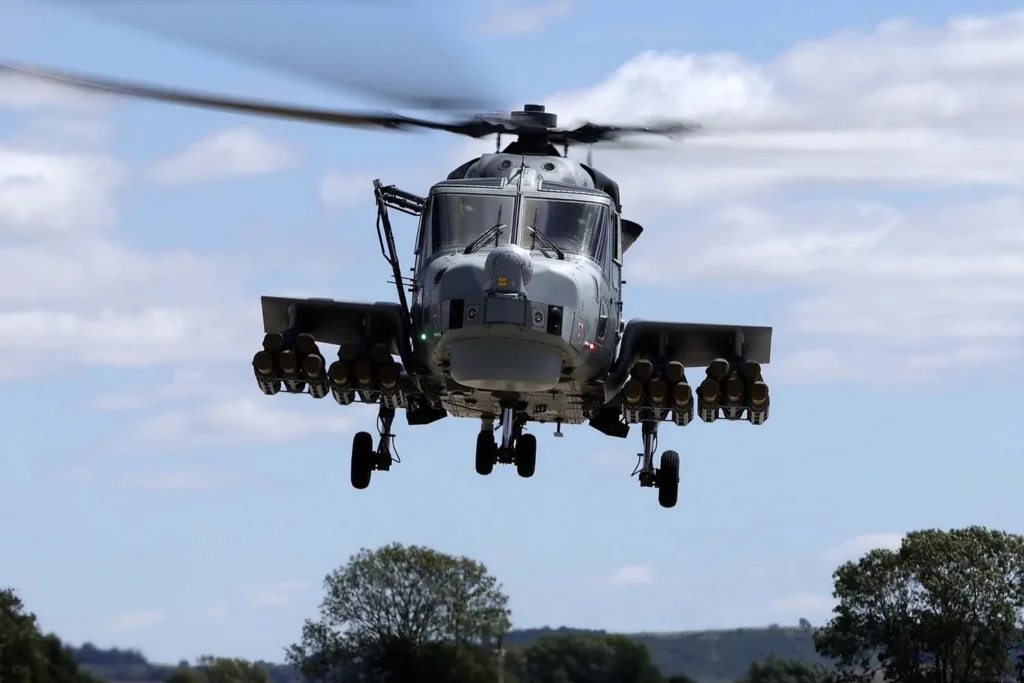
The lessons from Eagles Eye have already fed into Dragon Rider, and the latest exercise will in turn shape future deployments of the Wildcat force and the wider Fleet Air Arm as the Royal Navy continues developing crewed and uncrewed teaming concepts.
For the Royal Navy, the significance of Dragon Rider is not that another drone has taken to the air. It is that helicopters, ships, Marines and multiple uncrewed systems have now demonstrated they can operate as parts of a single, resilient network. If that capability enters service as planned, future naval task groups will be able to push autonomous systems much further ahead of the main force while keeping crews farther from danger, a concept the service now believes is ready to move from experimentation to operations.
Sign up for our newsletter and get our latest content in your inbox.
Similar Reads