

RUSI recommends prototype warfare for Royal Navy adaptability

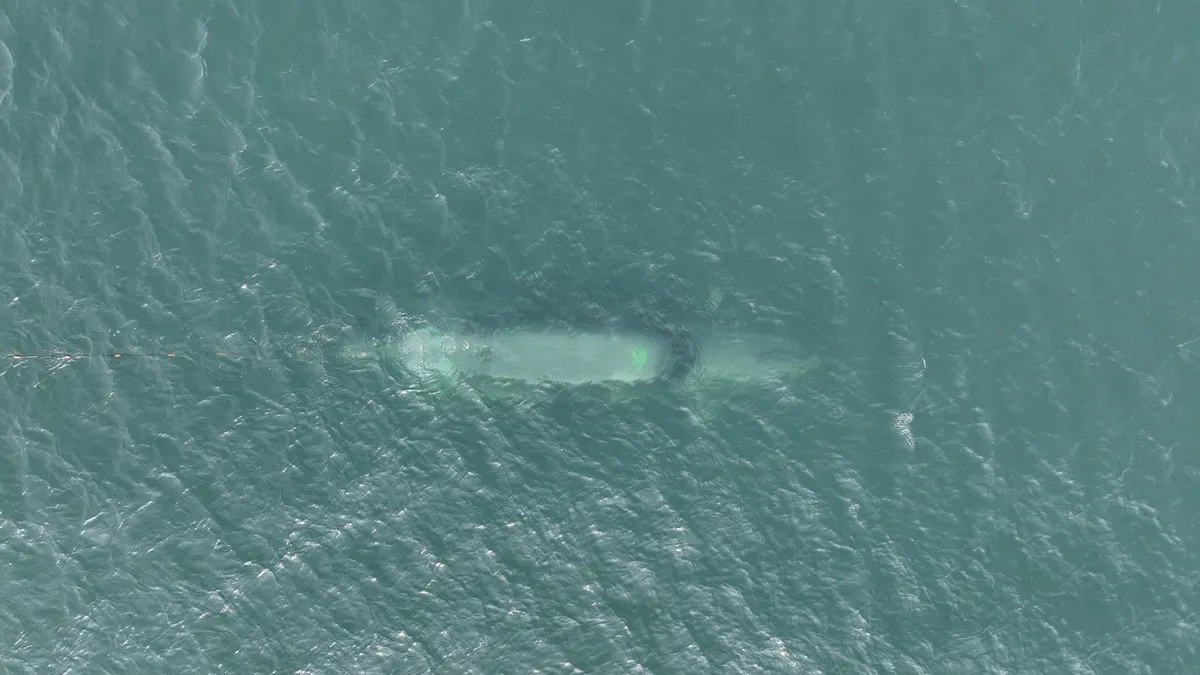
Image courtesy SSC
The Royal United Services Institute (RUSI) was supported by British advanced maritime technology company SubSea Craft (SSC) on work examining the increasing role of prototype warfare in responding to maritime threats and implications for the Royal Navy.
The report, Prototype Warfare in the Maritime Domain, sets out the case for integrating novel protype warfare approaches into traditional capability development processes, marking a departure from their historical treatment as an internal R&D function within industry.
Iterative prototyping forms a cornerstone amongst defence innovators like SubSea Craft, whose design philosophy of open architecture and interoperability allow for rapid testing and modification in collaboration with both end users and industry.
To inform its recommendations, RUSI convened of a working group – comprised of Royal Navy, UK Government and industry representatives – to examine how this approach can be harnessed to ensure emerging maritime capabilities can progress more quickly into operational usage.
The group – whose participants acted in their personal professional capacity – examined the combined role both industry and government can play to create active participation in the prototyping process, including how access to users, test infrastructure and regulatory environments can accelerate adoption.
The Ministry of Defence has identified the importance of achieving progress towards prototype warfare to deliver an operational advantage in response to ever-changing threats, including in the Indo-Pacific and GIUK gap.
Financing remains a key challenge for all stakeholders within the capability development process. While traditional procurement approaches remain lengthy and resource intensive – creating additional risk of decreased relevance once a product becomes operational – prototyping requires an availability of upfront capital to allow experimental systems to quickly mature towards production.
Australia’s approach to part-financing its recent Ghost Shark UUV capability offers a potential route forward and a more radical model might involve partial UK state ownership of hardware production, according to RUSI. This could have the benefit of making the state a direct partner in scaling a product, rather than a customer, without stifling the advantages of prototype innovation.
Following the recent UK Defence Industrial Strategy, the Ministry of Defence is working to cut cycles for prototype warfare procurement down to three months alongside ringfenced funding. This is underpinned by a broader shift to spiral development evaluation becoming the default across the work of the National Armaments Director Group.
To attain a functioning model for this approach, RUSI emphasises the importance of setting clear parameters on the transition from prototype to scaled production. Discussion between end users and industry highlighted the need for increased coordination between SMEs, defence primes and government, so that new systems can move into service within Ministry of Defence timelines.
Dan Alexander, Business Intelligence Lead at SubSea Craft, said: “It was a pleasure to contribute to a practitioner-led dialogue on accelerating operationally relevant maritime capabilities.
“There is a clear global need for the responsive development of advanced maritime platforms that can meet evolving force requirements and objectives. Maritime defence innovation will be determined not by individual technologies alone but by the ability to test, integrate and scale credible capability at pace.
“We look forward to continuing to make the case for advancing prototype warfare approaches within the UK’s defence ecosystem.”
The report draws on comparative analysis of naval modernisation efforts, doctrinal publications and defence-industrial practices, with particular emphasis on how different states integrate experimentation and prototyping into maritime force development.
The authors of the report are Dr Sidharth Kaushal is a Senior Research Fellow for Sea Power at RUSI, whose research focuses on maritime strategy, naval modernisation and the interaction between technology, doctrine and force design and Professor John Louth, an expert in defence and security research and advisory services. Prof. Louth has written extensively on defence industrial strategy, government and commercial partnering and on higher defence management. Between 2011 and 2019, he was the director of the defence, industries and society research programme at the RUSI. He is non-executive director of SubSea Craft but contributed to this report solely in his capacity as an academic.
Sign up for our newsletter and get our latest content in your inbox.
Similar Reads





Sign up for our newsletter. Select all sectors relevant to you.
Related