Astroscale awarded £5.15m contract for Orpheus mission
Astroscale Ltd has been awarded a contract worth £5.15 million by the UK’s Defence Science and Technology Laboratory (Dstl), via BAE Systems as the Dstl Serapis Framework lead.
As global reliance on space infrastructure grows, so do the threats posed by space weather, adversarial actions, and orbital congestion. As a critical step in strengthening the UK’s capabilities in space, the Orpheus mission objectives are to enhance our understanding of space weather and improve space situational awareness.
A recent Lloyd’s of London report highlights that an extreme space weather event, such as a severe solar storm, could result in global economic losses of up to $2.4 trillion, with disruptions to the ionosphere posing a significant threat to satellite communications, navigation systems, and critical defence infrastructure.
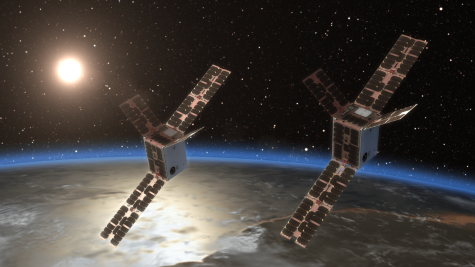
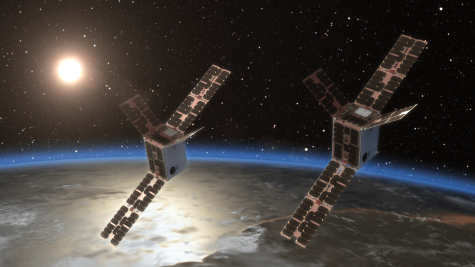
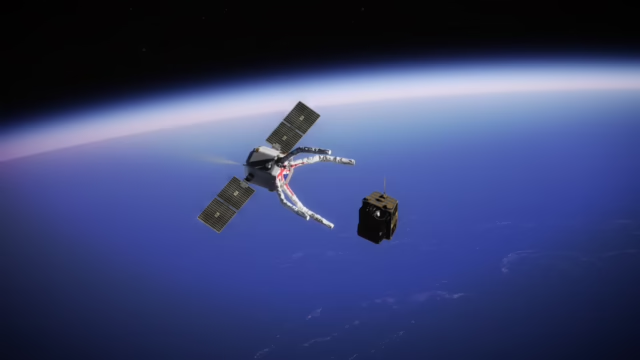
Astroscale UK is working in partnership with subcontractor Open Cosmos Limited who will design and build two near identical mini satellites, that Astroscale UK will operate for the mission. The satellites will fly in formation to observe and collect critical data using in-situ and remote sensing techniques.
As a world leader in satellite Rendezvous and Proximity Operations (RPO) technology, Astroscale UK is uniquely positioned to leverage its in-orbit heritage and experience to lead this mission and successfully manage the operations of the satellites in close flight formation.
“The Dstl Orpheus mission is an important opportunity for Astroscale to demonstrate our capability to deliver innovative missions in the Defence arena and in support of national security,” said Nick Shave, Managing Director of Astroscale UK. “We have successfully demonstrated our space mission implementation capability during our ELSA-d mission in 2021, and the ADRAS-J close proximity inspection mission in 2024.
"We are pleased to contribute our space mission design, development, integration and operations experience to ensure a successful mission which will also demonstrate the UK’s value to international partner nations.”
Dstl Chief Executive, Dr Paul Hollinshead, said: “Changes in space weather can have a critical impact on satellites which provide navigation aids, telecommunications and data transmission. Sustained investment in space research in collaboration with our international partners strengthens the security of UK interests in space.”
Orpheus is a collaborative effort to advance global initiatives toward a joint space architecture, with Astroscale working closely with Open Cosmos, who will provide advanced CubeSat solutions to enable faster space-based data acquisition. The payloads designed to characterise the ionosphere are being developed by the US Naval Research Laboratory, the University of Bath, and Surrey Satellite Technology Ltd.
“We are thrilled to partner with Astroscale on the Orpheus mission to enhance space domain awareness,” said Rafel Jordà, CEO of Open Cosmos. “Our advanced satellite solutions will provide the critical data needed to understand the ionosphere and protect vital space infrastructure. This mission exemplifies the power of collaboration in driving innovation and ensuring the security of our space assets.”
This fully funded project will run for three years, concluding in 2028, and will cover the complete lifecycle of the mission, from design to launch, and operations. The contract award from Dstl was made under the Serapis framework.
As geopolitical and environmental threats to space infrastructure rise, Orpheus will deliver crucial insights, safeguarding vital UK and allied operations against emerging challenges.
Speaking exclusively to Advance, Marshall Aerospace discusses its military aircraft contracts, manufacturing priorities and search for a new home following the takeover.
Aircraft manufacturers are under pressure to deliver faster, but supply-chain constraints continue to hold production back. What will it take to turn growing orderbooks into aircraft ready to fly?
Jack Maxton, CEO of DIGI2AL, argues that faster experimentation, closer industry collaboration and a shift in mindset can help the MOD turn AI ambitions into operational advantage.
Building on its space-hardened family of software-defined radios, BAE Systems will develop resilient ultra-compact radio-frequency (RF) terminals for the US Space Force.
Viasat has placed an order for multiple ALL.SPACE Hydra MAX terminals approved to operate on Viasat's global NextGen Ka-band network, providing resilient SATCOM connectivity for defence and government users.
Cornwall Space Cluster has partnered with Stephens Scown to offer specialist legal advice to space businesses, helping them protect intellectual property, prepare for investment and support future growth.
The UK-led programme will remove two defunct satellites while creating specialist jobs, supporting supply chains and building capability in the growing in-orbit services sector.
As the National Armaments Director (NAD) and the Chief of the Defence Staff (CDS) launched DSEI UK 2027 yesterday, they said faster capability delivery, greater innovation and improved readiness are required to ensure the UK and its allies are suitably prepared for any future conflict.