

Space facilities to be constructed in Scotland

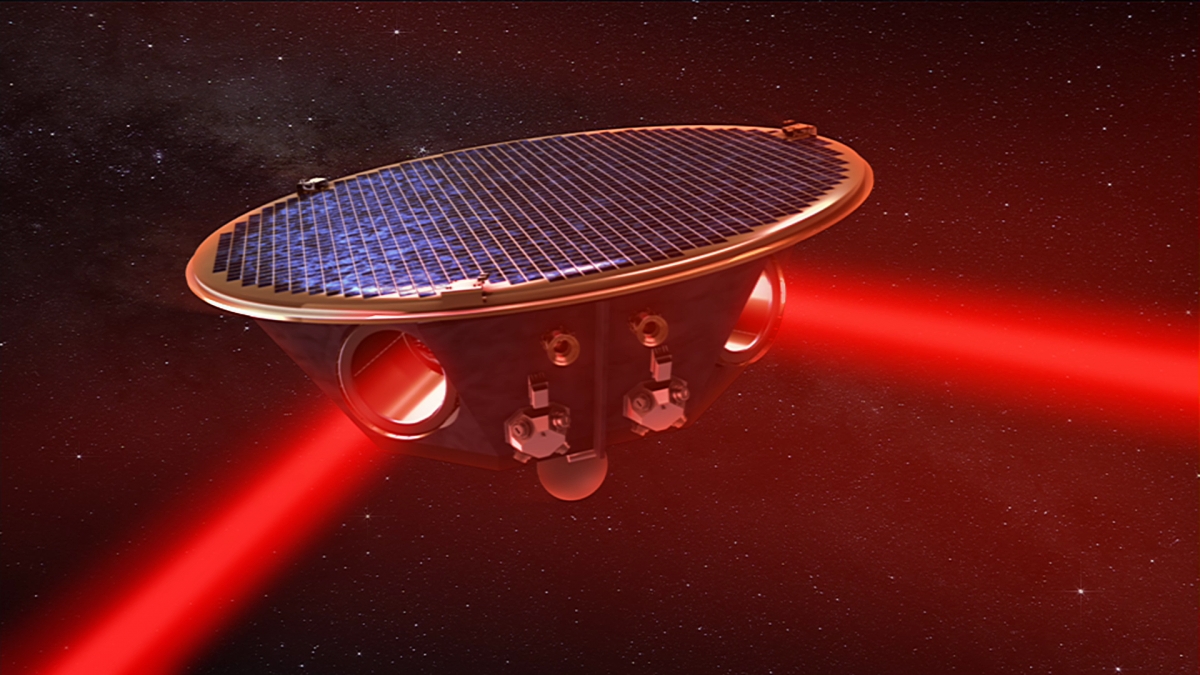
Image courtesy UK ATC
The laboratory, funded by the UK Government’s investments in ESA, will be used to assemble the optical benches for the Laser Interferometer Space Antenna (LISA) mission.
To meet mission deadlines ESA is supporting the construction of the new lab and clean rooms at the Science and Technology Facility Council’s UK ATC site in Edinburgh. This £10 million ESA contract will double UK ATC’s construction capabilities, and build on existing support from the UK Space Agency (UKSA) and its membership of ESA.
LISA is ESA’s next flagship project and will be the first ever gravitational wave observatory in space. The optical benches are a crucial component of this complex mission.
The optical benches send and receive laser beams over a 2.5 million kilometre distance between LISA’s three spacecraft, enabling measurement of distance changes between them with an accuracy of a few picometres (trillionths of a metre).
Robotically assisted bonding
Work has already begun on the optical benches at UK ATC. The assembly process utilises Robotically Assisted Bonding (RAB), developed by UK ATC and the University of Glasgow and funded by UKSA.
The RAB system was developed as the highly accurate positioning and bonding of components in the construction of the optical benches would be impossible by hand or any previously used technique.
RAB can achieve positional accuracy of just a few microns (one millionth of a metre).
Considering the exactitude required, assembling the optical benches is an incredibly complex and meticulous job. Constructing the 10 required, including prototypes and spares, will take approximately 8 years.
Precision engineering
Ewan Fitzsimons, UK Principal Investigator for LISA at UK ATC, said: “This investment in labs and staff will enable us to meet the exacting standards required for this groundbreaking project. It not only enhances our technical capabilities but also underscores the critical role of precision engineering in complex space missions such as LISA.”
Filippo Marliani, ESA’s LISA Project Manager, said: “LISA, an ESA-led mission with contributions from ESA Member States and NASA, will be the first space observatory for gravitational waves, revolutionising astrophysics and space exploration. The UK Astronomy Technology Centre, in collaboration with the University of Glasgow, contribute to this unique mission with ultra-precision optical benches that sit at the heart of the three LISA spacecraft. A new integration facility will boost production, ensuring timely completion of the spacecraft. I very much look forward to working with the UK team.”
Professor Christophe Dumas, Director at UK ATC, said: “This £10 million investment by the European Space Agency is a testament to the ability of the UK Astronomy Technology Centre to carry out cutting-edge work of the highest standards. These new facilities will enable our team to deliver LISA’s optical benches on time for a mission launch around 2035, enabling gigantic steps forward in the field of gravitational research."
Space mission
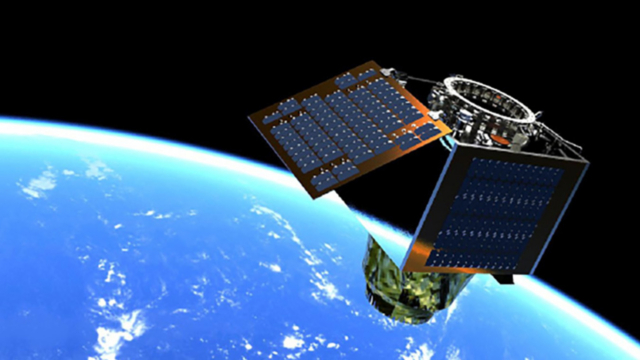
LISA will be the first gravitational wave observatory in space. Each of the three spacecraft will include two optical benches built in the labs at UK ATC in Edinburgh.
All three satellites will launch on the same rocket. During their 18-month voyage to their new home 60-70 million kilometres from Earth, the spacecraft will diverge until they reach their final positions forming an equilateral triangle 2.5 million kilometres from each other.
Using these Scottish-built optical benches, the three LISA spacecraft will relay laser beams back and forth between each other to detect the distortions of spacetime created by gravitational wave sources such as merging black holes or supernovae, providing insights on the formation of the early Universe, shortly after the Big Bang.
Innovative space science
Paul Bate, CEO of UKSA said: “With major contributions to the James Webb Space Telescope and this new investment in LISA, Scotland is at the heart of two of humanity’s most important and innovative space science missions.”
“The scale of the engineering challenge associated with LISA is staggering – it is a flagship mission for Europe and it will be made possible by expertise in Edinburgh and Glasgow. This is a great example of how our leading role in ESA is delivering jobs and discovery for UK science.”
Wider UK involvement in the mission’s development includes researchers at Queen’s University Belfast working on several key technologies, including the development of high-precision laser interferometry systems. These systems are crucial for measuring the incredibly tiny changes in distance between the spacecraft caused by passing gravitational waves.
Another Government investment, through UKSA, is supporting the development of the ground-based data processing pipeline for LISA, via a consortium led by Birmingham University.
The technology innovations from investing in space science missions like LISA translate into breakthroughs that impact people’s lives every day. For instance, the advancements in robotic assistance and accuracy developed for optical benches are now being explored for delicate surgical procedures, where micron-level precision can significantly enhance patient outcomes.
Sign up for our newsletter and get our latest content in your inbox.
Similar Reads


Sign up for our newsletter. Select all sectors relevant to you.
Related