General Atomics

SOLAR-1 becomes operational

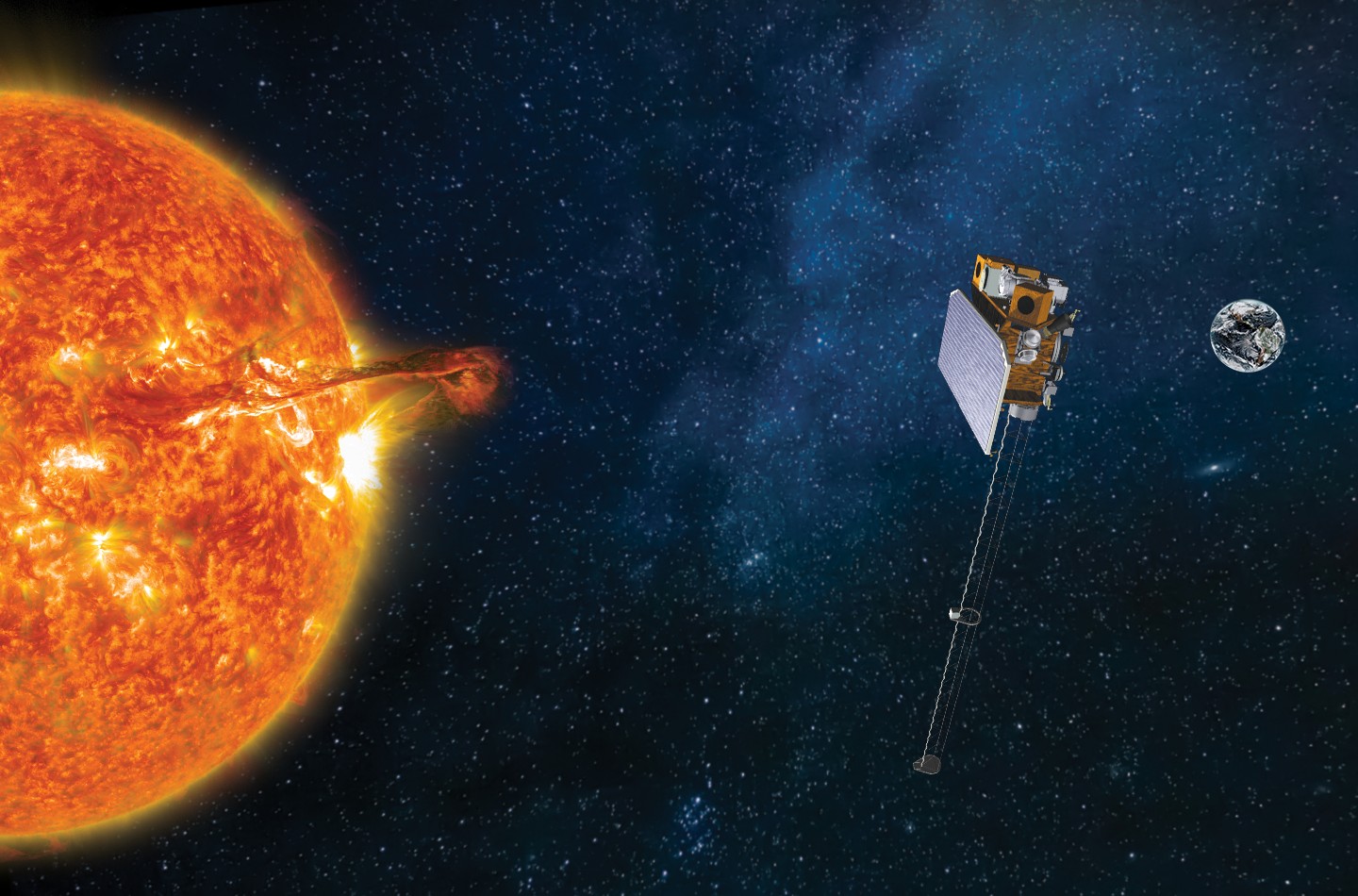
Global space weather forecasting is getting a step-change in capability as the National Oceanic and Atmospheric Administration’s (NOAA) SOLAR-1 satellite becomes operational.

Image courtesy Met Office

The satellite, which launched on 24th September 2025, will provide a 24/7 near real-time data stream giving forecasters critical lead time to generate forecasts which help protect satellites, as well as vital infrastructure on Earth.

SOLAR 1 is positioned at the L1 point, around one million miles from Earth, where its instruments continuously observe the Sun and its outer atmosphere, measuring the solar wind and imaging solar activity as it leaves the Sun.

Last week, the satellite became fully operational for the first time, providing vital detailed information to space weather forecasters around the world.

Met Office Space Weather Manager Simon Machin said: “SOLAR-1 provides a real step-change in observations of events emanating from the Sun and will vastly enhance our ability to forecast impactful space weather.

“As one of a handful of 24/7 space weather forecasting centres in the world, we’ll benefit from the improved availability of data from the satellite, with imagery from the coronagraph available around every 30 minutes, while on board data collection measuring solar wind will be available around every five minutes.”

Clinton Wallace, Director of NOAA’s Space Weather Prediction Center, said: “It means more time to act.
“It gives time for power grid operators to prepare, more time for satellite operators to protect assets, more time for aviation and national security partners to understand risk, and more time for human spaceflight teams to protect astronauts and missions.

“SOLAR-1 helps turn observations of the sun into practical decisions that protect lives, infrastructure, the economy and national security.”

Monitoring the Sun’s activity
SOLAR-1 helps provide continuity of observation data from the L1 position, vital for space weather monitoring and forecasting and building on data from missions that first launched in the 1990s and have operated well beyond their original design lifetimes.

Technology on board:

  • Coronagraph – captures images of coronal mass ejections as they leave the Sun
  • Solar Wind Plasma Sensor – measures the stream of charged particles flowing from the Sun
  • Suprathermal Ion Sensor – detects high energy particles that often precede major solar storms
  • Magnetometer – tracks changes in the magnetic field carried by the solar wind

Now providing imagery and data to space weather prediction centres around the world, including the Met Office Space Weather Operations Centre, the new information will enable enhanced forecasting capability of solar events, better informing models and providing crucial information for expert forecasters.

In addition, the landmark European Space Agency (ESA) Vigil mission, which will place a satellite with a side-on view of the Sun in the L5 position, is planned to launch early in the 2030s and will become Europe’s first operational space weather satellite.

Related

Riyadh Air suspends flagship London and Manchester flights following airport attacks
Riyadh Air Boeing 787 at London Heathrow Airport in the sun
Riyadh Air suspends flagship London and Manchester flights following airport attacks
The closure of Riyadh’s main airport has disrupted the Saudi carrier’s UK connections, just weeks after it added Manchester to its growing network.
Aerospace

12 Oct 2026

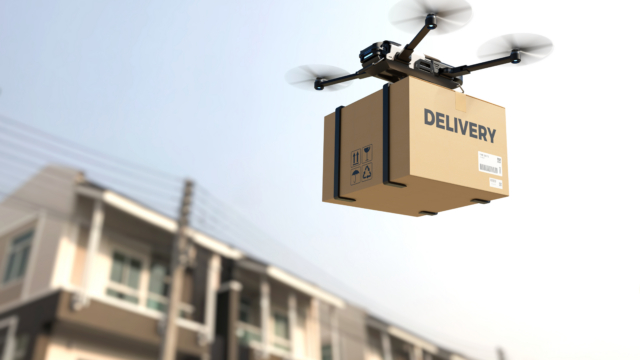
Quieter drones could still face noise backlash as UK prepares for BVLOS expansion
A drone flies with a package on delivery past residential houses.
Quieter drones could still face noise backlash as UK prepares for BVLOS expansion
The CAA wants early action on flight patterns, community engagement and noise assessment to help emerging aviation services grow without creating avoidable disturbance.
Aerospace

12 Oct 2026

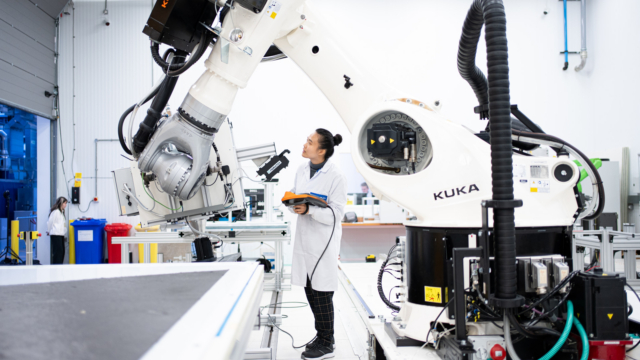
NCC to lead business support for Greater South West robotics hub
GSWRAH
NCC to lead business support for Greater South West robotics hub
The UK's National Composites Centre (NCC) is to going to help businesses across the Greater South West navigate the challenges and opportunities of robotics and automation through a new £9.8 million regional programme.
Aerospace Defence

12 Oct 2026

ITURRI unveils GRITSTONE for British Army Light Mobility Vehicle programme
ITURRI GRITSTONE for the british army LMV programme
ITURRI unveils GRITSTONE for British Army Light Mobility Vehicle programme
The proposal has been developed specifically to meet the future mobility requirements of the British Armed Forces for an LMV to replace its existing Land Rovers.
Defence

12 Oct 2026

BAE Systems to produce new ACV variant for US Marine Corps
ACV
BAE Systems to produce new ACV variant for US Marine Corps
Under a $230 million contract, BAE Systems will adapt its modular Amphibious Combat Vehicle (ACV) design to produce a new variant that will complement the US Marine Corps’ advanced amphibious capabilities.
Defence Member News

12 Oct 2026

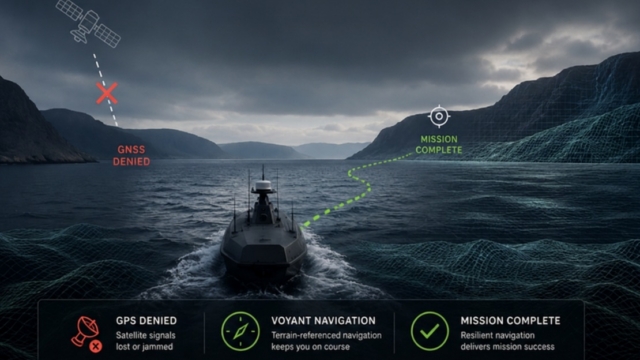
Voyant demonstrates GNSS-denied navigation in MoD maritime trial
Kraken K3 Scout
Voyant demonstrates GNSS-denied navigation in MoD maritime trial
Could autonomous vessels operate without GPS? A UK Ministry of Defence trial saw a Kraken K3 Scout navigate the Solent using Voyant's PNT software.
Defence Member News

12 Oct 2026

UK and Germany back SaxaVord in new European space launch deal
SaxaVord Spaceport, Shetland
UK and Germany back SaxaVord in new European space launch deal
The UK and Germany have agreed to deepen space launch cooperation, with Scotland's SaxaVord Spaceport securing European access to orbit.
Aerospace Defence Space

9 Oct 2026

Excelerate Technology to build UK CNI robotic security solution
Satellite in Earth orbit
Excelerate Technology to build UK CNI robotic security solution
In a project co-funded by the European Space Agency Business Applications and Space Solutions (ESA BASS) and supported by the UK Space Agency, Excelerate Technology will build and demonstrate how space-enabled assets can provide innovative safety and security solutions, including protection of Critical National Infrastructure (CNI) at a site in the UK.
World Space Week: How British technology will help ESA return to the Moon
ESA Argonaut
World Space Week: How British technology will help ESA return to the Moon
As Europe prepares to return to the Moon, British-developed LEIA LiDAR technology will help ESA's Argonaut lander autonomously identify safe touchdown zones on the lunar surface.
Space

5 Oct 2026

UK steps up AI cyber defences as minister warns dependence is a national security risk
Engineering team implements digital guardrails on autonomous AI agent to limit risk, Teamworking tech startup colleagues apply artificial intelligence safety constraints, brainstorming, camera A.
UK steps up AI cyber defences as minister warns dependence is a national security risk
The UK plans to expand AI-powered cyber protection and prepare for incidents involving autonomous systems, while calling for stronger UK technology capabilities.
Security

12 Oct 2026

UK opens weapons test ranges to SMEs as hypersonic testing investment advances
Project Safari hypersonics testing opens at QinetiQ MOD Hebridies for UK defence SMEs
UK opens weapons test ranges to SMEs as hypersonic testing investment advances
The MoD is easing SME access to UK weapons test ranges through Project Safari while advancing hypersonic missile testing plans at MOD Hebrides.
Defence Security

12 Oct 2026

Avon Protection secures US military order for MITR System
Avon Protection’s MITR System
Avon Protection secures US military order for MITR System
The United States Department of War (DoW) has placed an order for Avon Protection’s MITR System for its Special Operations Forces, becoming the second Five Eyes (FVEY) nation to adopt the system.