General Atomics

Voyant demonstrates GNSS-denied navigation in MoD maritime trial

Could autonomous vessels operate without GPS? A UK Ministry of Defence trial saw a Kraken K3 Scout navigate the Solent using Voyant's PNT software.

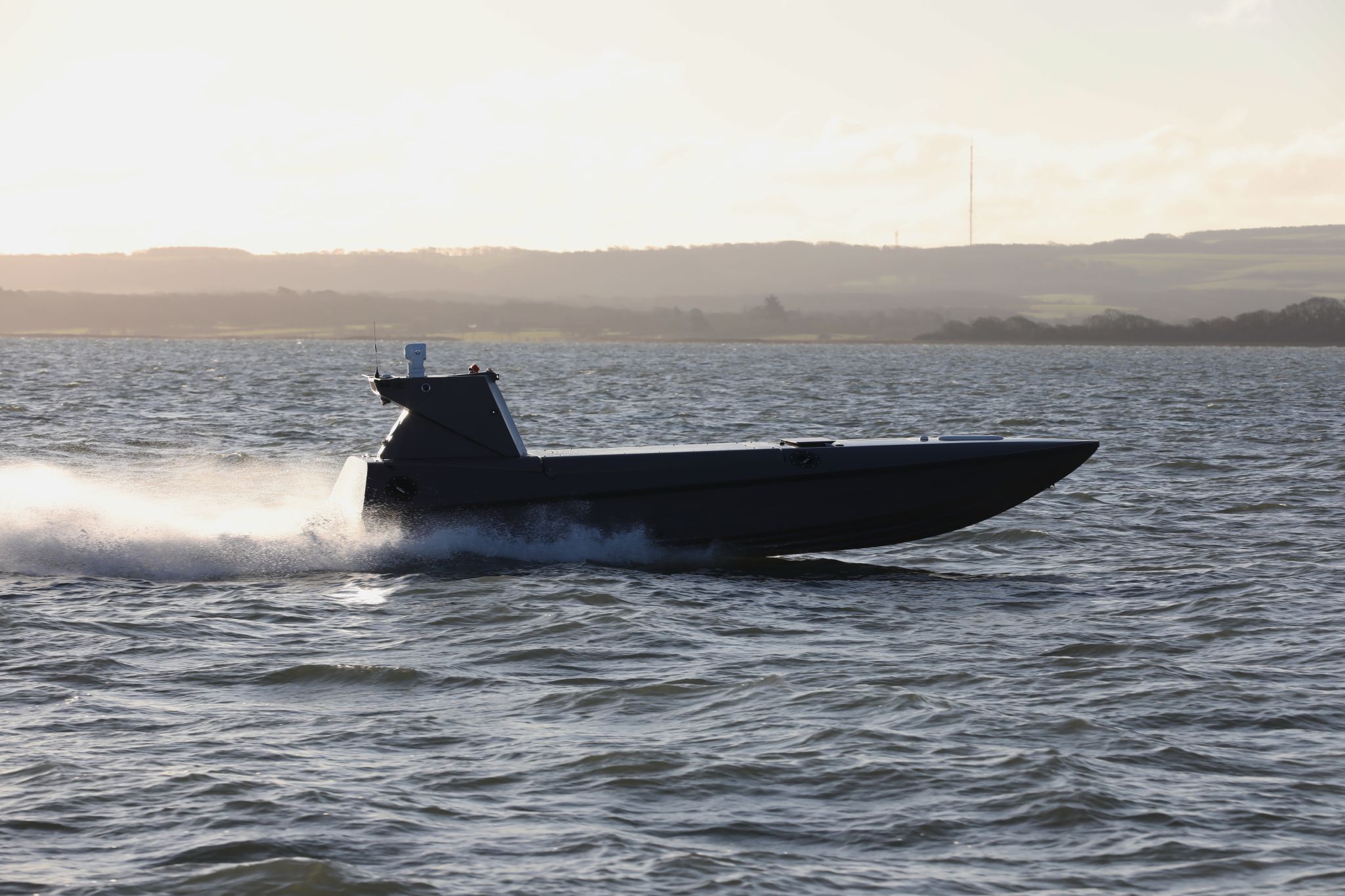
Kraken K3 Scout
Photo: Voyant

Voyant has successfully demonstrated its advanced navigation software to the UK Ministry of Defence (MoD), marking an important step in the development of resilient Position, Navigation and Timing (PNT) capabilities for autonomous maritime systems operating in contested environments.

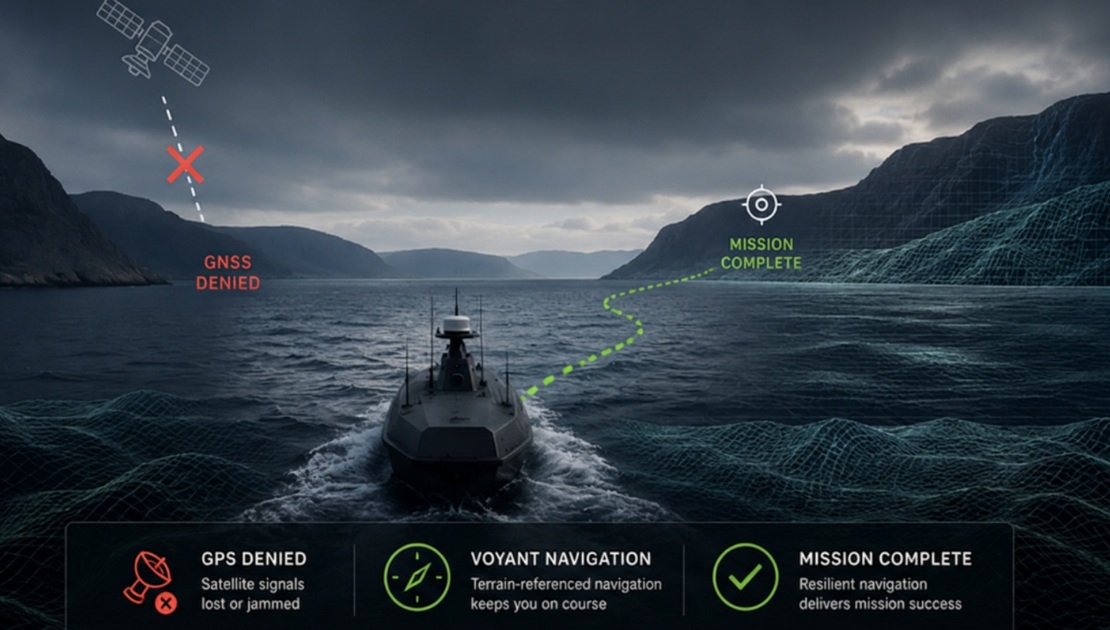
In a real-life scenario, this capability would enable autonomous systems to continue navigating when satellite navigation has been lost or deliberately denied, supporting mission completion and the safe recovery of valuable assets.

The demonstration took place aboard a Kraken K3 Scout autonomous surface vessel in the demanding littoral waters of the Solent. Operating in real time, Voyant’s software used advanced particle filter algorithms to compare live radar imagery with pre-existing reference maps of the terrain to enable the vessel to determine its position without relying on Global Navigation Satellite Systems (GNSS).

How the trial supports the safe deployment of autonomous maritime systems

The trial forms part of a wider MoD initiative to explore resilient technologies capable of supporting military operations in contested and congested GNSS-denied environments.

James Norwood, CEO of Voyant, said: “Reliable navigation is fundamental to maritime operations, yet we are entering an era where access to GNSS can no longer be assumed. Working alongside Kraken and the Ministry of Defence, we have demonstrated a practical capability that supports the safe and effective deployment of autonomous maritime systems in challenging operational conditions.

“The demonstration represents another milestone in the UK’s continued investment in sovereign technologies that strengthen resilience, enhance operational freedom and support the next generation of autonomous defence capabilities.”

Ensuring accurate navigation capabilities in contested environments

Modern military operations depend heavily on GNSS, including GPS, to provide PNT information for ships, aircraft, vehicles, missiles and autonomous platforms. However, satellite signals are increasingly vulnerable to jamming, spoofing and disruption, making resilient alternatives an increasingly important operational requirement.

The challenge is particularly acute in the littoral environment, where coastlines, changing terrain and dense infrastructure can naturally reduce satellite reception – even before adversaries actively seek to deny it. Maintaining accurate navigation in these complex environments is essential to ensuring autonomous and crewed platforms can continue to operate safely, effectively and with confidence.
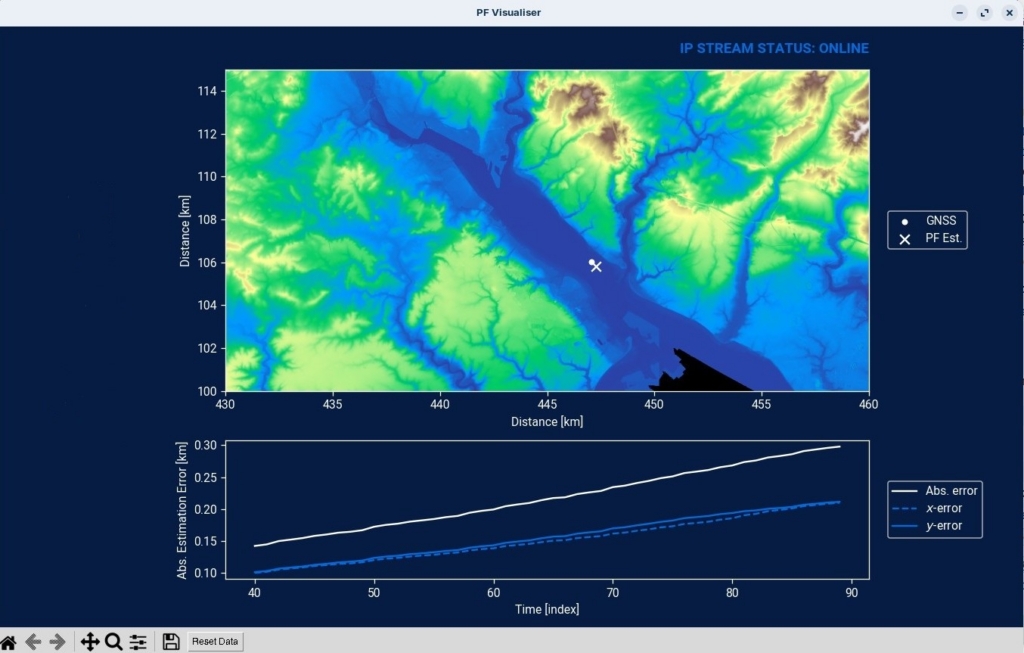
Photo: Voyant


Voyant’s software addresses this challenge by fusing radar data with advanced probabilistic algorithms to estimate a vessel’s position relative to its surroundings and provide an estimate of the uncertainty that is attributed to this estimate. Rather than relying on satellite signals, the system continually matches real-time sensor observations against known geographic features, providing trustworthy and resilient navigation even when GNSS is unavailable.

As autonomous maritime systems become increasingly important across defence and security applications, technologies that enable safe and reliable operation in contested environments will be critical.

Related

NCC to lead business support for Greater South West robotics hub
GSWRAH
NCC to lead business support for Greater South West robotics hub
The UK's National Composites Centre (NCC) is to going to help businesses across the Greater South West navigate the challenges and opportunities of robotics and automation through a new £9.8 million regional programme.
Aerospace Defence

12 Oct 2026

Edgewing opens engineering hub in Italy with UK site to follow
The GCAP fighter jet
Edgewing opens engineering hub in Italy with UK site to follow
The first of three engineering hubs designed to support the development of the future GCAP fighter has opening, with similar sites in the UK and Japan coming soon.
Aerospace Defence

9 Oct 2026

Marshall Aerospace begins new chapter as Aurelius acquisition completes
Marshall Aerospace C-130s
Marshall Aerospace begins new chapter as Aurelius acquisition completes
The completion of AURELIUS' acquisition of Marshall Aerospace marks a new chapter in the company's illustrious history, which spans more than a century of engineering excellence, innovation and service.
UK opens weapons test ranges to SMEs as hypersonic testing investment advances
Project Safari hypersonics testing opens at QinetiQ MOD Hebridies for UK defence SMEs
UK opens weapons test ranges to SMEs as hypersonic testing investment advances
The MoD is easing SME access to UK weapons test ranges through Project Safari while advancing hypersonic missile testing plans at MOD Hebrides.
Defence Security

12 Oct 2026

Avon Protection secures US military order for MITR System
Avon Protection’s MITR System
Avon Protection secures US military order for MITR System
The United States Department of War (DoW) has placed an order for Avon Protection’s MITR System for its Special Operations Forces, becoming the second Five Eyes (FVEY) nation to adopt the system.
NCC to lead business support for Greater South West robotics hub
GSWRAH
NCC to lead business support for Greater South West robotics hub
The UK's National Composites Centre (NCC) is to going to help businesses across the Greater South West navigate the challenges and opportunities of robotics and automation through a new £9.8 million regional programme.
Aerospace Defence

12 Oct 2026

UK and Germany back SaxaVord in new European space launch deal
SaxaVord Spaceport, Shetland
UK and Germany back SaxaVord in new European space launch deal
The UK and Germany have agreed to deepen space launch cooperation, with Scotland's SaxaVord Spaceport securing European access to orbit.
Aerospace Defence Space

9 Oct 2026

Excelerate Technology to build UK CNI robotic security solution
Satellite in Earth orbit
Excelerate Technology to build UK CNI robotic security solution
In a project co-funded by the European Space Agency Business Applications and Space Solutions (ESA BASS) and supported by the UK Space Agency, Excelerate Technology will build and demonstrate how space-enabled assets can provide innovative safety and security solutions, including protection of Critical National Infrastructure (CNI) at a site in the UK.
World Space Week: How British technology will help ESA return to the Moon
ESA Argonaut
World Space Week: How British technology will help ESA return to the Moon
As Europe prepares to return to the Moon, British-developed LEIA LiDAR technology will help ESA's Argonaut lander autonomously identify safe touchdown zones on the lunar surface.
Space

5 Oct 2026

UK opens weapons test ranges to SMEs as hypersonic testing investment advances
Project Safari hypersonics testing opens at QinetiQ MOD Hebridies for UK defence SMEs
UK opens weapons test ranges to SMEs as hypersonic testing investment advances
The MoD is easing SME access to UK weapons test ranges through Project Safari while advancing hypersonic missile testing plans at MOD Hebrides.
Defence Security

12 Oct 2026

Avon Protection secures US military order for MITR System
Avon Protection’s MITR System
Avon Protection secures US military order for MITR System
The United States Department of War (DoW) has placed an order for Avon Protection’s MITR System for its Special Operations Forces, becoming the second Five Eyes (FVEY) nation to adopt the system.
Sentinel Photonics brings multiple laser detection sensors into one hub
Sentinel Photonics' LASARD MAX Connect
Sentinel Photonics brings multiple laser detection sensors into one hub
With one single hub that joins up laser detection sensors, operators can now see, share and act on laser threats across a wide area in real time.