Royal Navy begins sea trials for giant submarine drone XV Excalibur

The 12 metre uncrewed submarine will begin trials in Plymouth and surrounding waters, focussed on integration of payloads and trials of the platform.

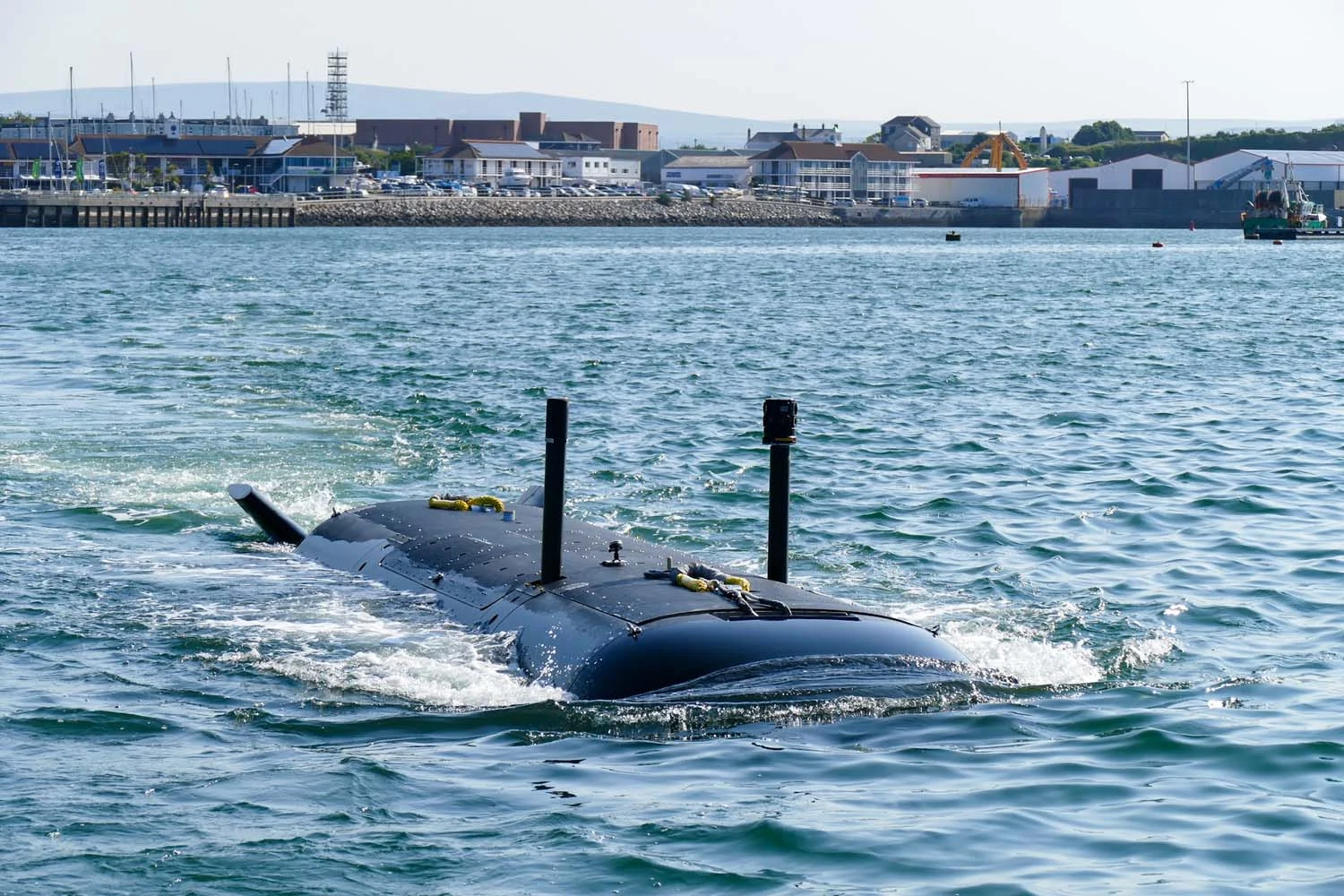
XC Excalibur uncrewed submarine for the Royal Navy
Photo: Royal Navy

The Royal Navy has entered the next phase of developing large autonomous undersea systems, awarding MSubs a new contract to begin an extended programme of sea trials for XV Excalibur, the UK’s largest uncrewed submarine. 

The programme will help determine how extra-large uncrewed underwater vehicles (XLUUVs) could support future maritime operations alongside conventional submarines and other naval assets.

The $8.8 million (£6.6 million pounds) contract, awarded by the Submarine Delivery Agency (SDA), will see the Plymouth-based company undertake platform and payload trials designed to evaluate the operational potential of large autonomous underwater systems.

As the original designer and builder of XV Excalibur under Project CETUS, MSubs will conduct the trials at its facilities in Plymouth and surrounding waters through to 2028.

“The forthcoming programme will focus on platform and payload trials, helping to further understand the role large uncrewed underwater systems can play in future maritime capability,” MSubs said.

The company added that it was proud to continue supporting the programme, noting that engineering developed in Plymouth was contributing to the future of British undersea capability.

Project CETUS enters a new phase as the Royal Navy evaluates extra-large autonomous underwater vehicles

Rather than serving as an operational combat platform, XV Excalibur has been developed as a technology demonstrator to help the Royal Navy understand how extra-large autonomous underwater vehicles could complement crewed submarines in future operations.

The vessel forms part of the Royal Navy’s Fleet Experimentation Squadron, operating under the Disruptive Capabilities and Technologies Office, alongside the experimental surface vessel XV Patrick Blackett.

At 12 metres long, two metres wide and displacing around 21 tonnes, XV Excalibur is the largest uncrewed submarine built for the Royal Navy. 
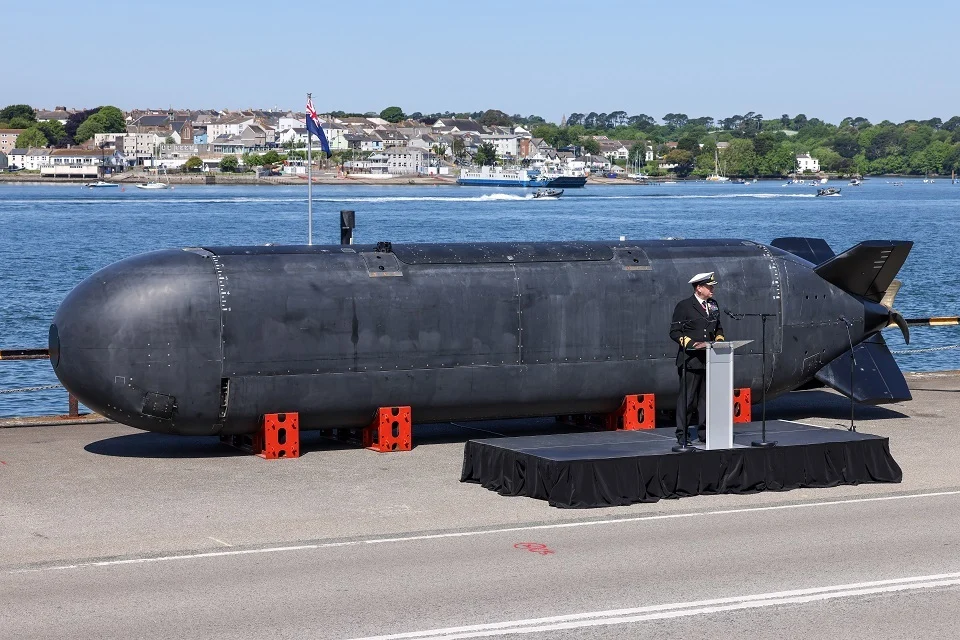
Autonomous submarine XV Excalibur for Royal Navy
Photo: UK Government

It has an endurance of up to five days, a range of around 1,000 miles and can dive deeper than any of the Navy’s current crewed submarines. Its modular design also allows additional payloads and power systems to be integrated to support different trial activities.

The latest contract follows earlier development work under Project CETUS and is expected to begin with a repeat of the S201 trials previously conducted on a smaller autonomous underwater vehicle developed under Project Manta. 

According to the SDA, MSubs was selected because of its experience as the programme’s original developer and its ability to conduct the work safely.

Sea trials will assess payload integration, endurance and the future role of autonomous undersea systems

The sea trials are expected to provide the Royal Navy with a better understanding of how large autonomous underwater vehicles perform during extended operations while evaluating different mission payloads from multiple suppliers as the programme develops. 

The SDA has described the new contract as the first stage of what is expected to become a long-term trial and experimentation programme.
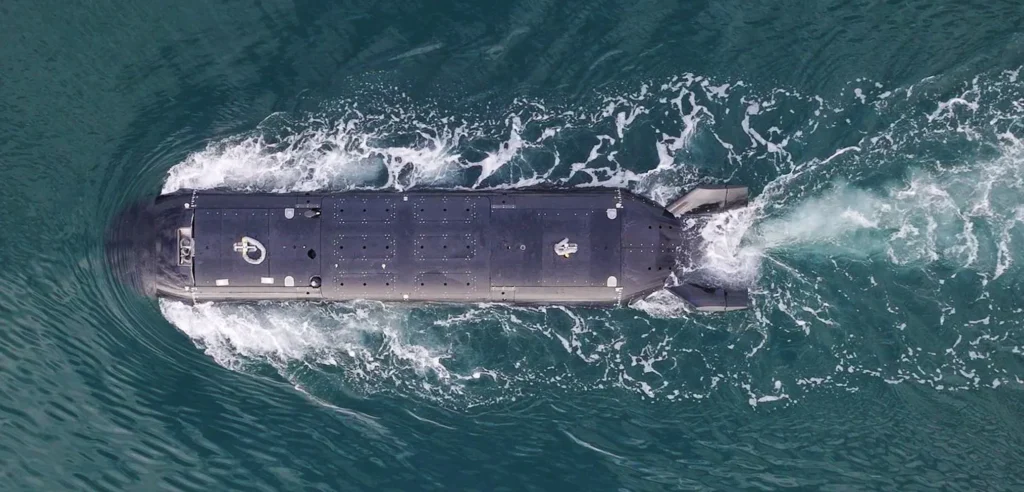
XC Excalibur uncrewed submarine for the Royal Navy
Photo: Royal Navy

XV Excalibur has already featured in multinational experimentation. During an AUKUS exercise in 2025, the vessel was remotely controlled from Australia while operating submerged in UK waters more than 10,000 miles away, demonstrating long-range command and control of autonomous underwater systems. 

At the vessel’s naming ceremony, Commodore Marcus Rose, Deputy Director of Underwater Battlespace Capability, said the programme would help the Royal Navy understand how to operate uncrewed vessels of this size beneath the sea.

Autonomous submarines are becoming a strategic priority for Western navies

For the Royal Navy, Project CETUS is about more than a single experimental platform. 

Navies around the world are investing in extra-large autonomous underwater vehicles to undertake missions that are often too persistent, too hazardous or too costly for crewed submarines. 

Potential roles include intelligence gathering, seabed surveillance, critical undersea infrastructure monitoring, mine warfare, payload delivery and long-endurance maritime reconnaissance.

The latest trial phase is expected to provide the evidence needed to shape future Royal Navy investment in autonomous undersea capability while contributing to wider AUKUS experimentation on advanced maritime technologies. 

As Western navies expand their use of uncrewed systems above and below the surface, XV Excalibur will play an important role in determining how autonomous submarines fit into future fleet operations.

Related

Rolls-Royce secures Royal Brunei Trent 1000 XE order for Boeing 787-9s
Rolls Royce Trent 1000
Rolls-Royce secures Royal Brunei Trent 1000 XE order for Boeing 787-9s
Rolls-Royce will supply eight new Trent 1000 XE engines for four Boeing 787-9 Dreamliners for Royal Brunei Airlines.
Aerospace

20 Nov 2026

Hexagon and Red Bull look beyond engineering degrees to find manufacturing’s future talent
Formula 1 car at Red Bull's MK7 campus
Hexagon and Red Bull look beyond engineering degrees to find manufacturing’s future talent
At Red Bull’s Milton Keynes campus, Hexagon brought students and employers together to explore how interests in gaming, data and problem-solving could become a route into manufacturing — and what industry needs to do to open those doors.
Birmingham’s Brandauer continues expansion following MBO
Rowan Crozier, Stuart Berry and Harry Champman
Birmingham’s Brandauer continues expansion following MBO
New contract wins across Europe and the US have seen Brandauer mark the first anniversary of its management buy-out with record £10 million sales for the first time in its 164-year history, underpinning its ambitious expansion plans.
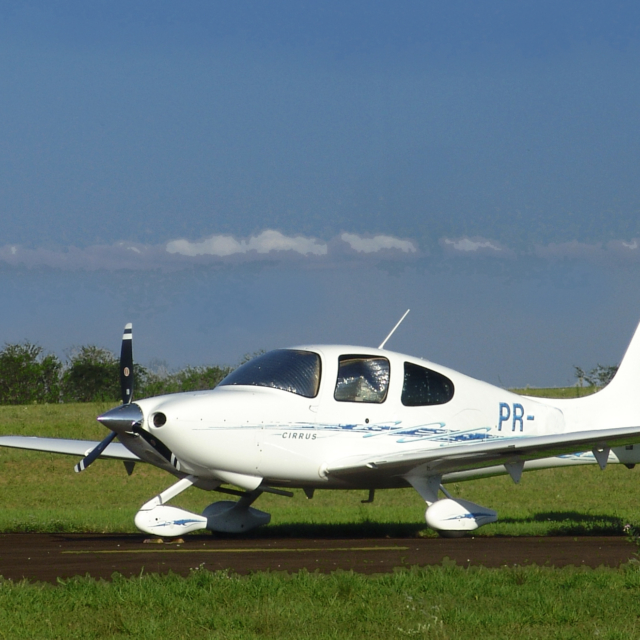
Cirrus aircraft mistaken for drones near RAF Lakenheath and in Moldova
Cirrus SR20 on the ground
Cirrus aircraft mistaken for drones near RAF Lakenheath and in Moldova
A trio of Cirrus SR20 light aircraft appear to have triggered drone warnings twice on their journey from the US to India, highlighting the high rate of false alarms.
Defence

20 Nov 2026

Roke appoints Chris Edwards as its first ever Chief Product Officer
Chris Edwards
Roke appoints Chris Edwards as its first ever Chief Product Officer
As part of its plans to drive product-led growth, Roke has appointed Chris Edwards as its first Chief Product Officer (CPO), to focus on transforming the company's intellectual property into deployable frontline capabilities at pace.
Defence Member News

19 Nov 2026

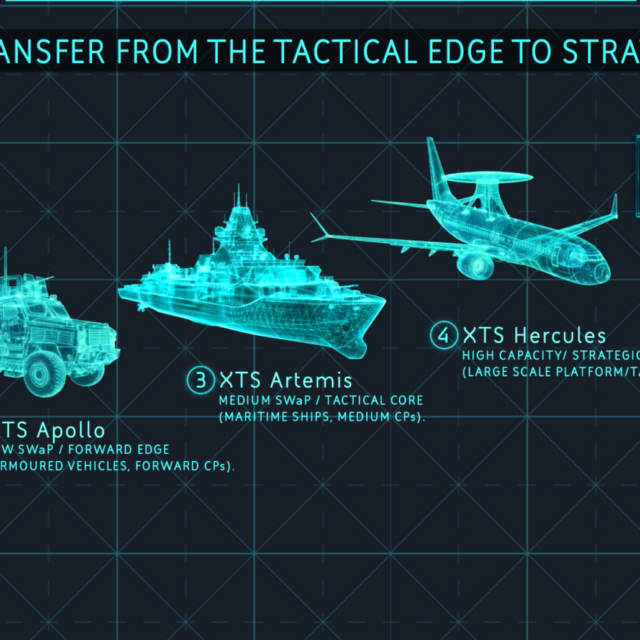
BAE Systems launches XTS Tactical solutions suite
XTS ecosystem
BAE Systems launches XTS Tactical solutions suite
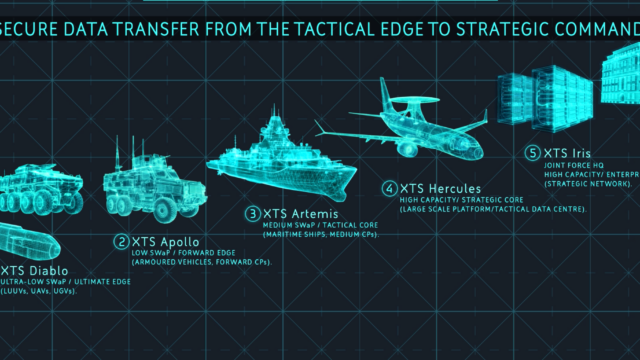
A multidomain solution has been launched by BAE Systems to protect sensitive intelligence data in high threat environments, being sent across networks operating at different security levels.
Defence Member News

19 Nov 2026

Hexagon and Red Bull look beyond engineering degrees to find manufacturing’s future talent
Formula 1 car at Red Bull's MK7 campus
Hexagon and Red Bull look beyond engineering degrees to find manufacturing’s future talent
At Red Bull’s Milton Keynes campus, Hexagon brought students and employers together to explore how interests in gaming, data and problem-solving could become a route into manufacturing — and what industry needs to do to open those doors.
University of Surrey develops electronic eye to monitor solar storms
HEPI prototype ‘electronic eye’ sensor
University of Surrey develops electronic eye to monitor solar storms
Under a £400,000 contract with the European Space Agency (ESA) and the UK Space Agency (UKSA), a team of researchers at the University of Surrey will develop an ultra-compact monitor to reveal the effects of radiation from solar storms on space infrastructure, aircraft and terrestrial systems like satellites.
Aerospace Space

18 Nov 2026

BAE Systems selected as NASA PRIMA partner
NASA’s PRIMA far-infrared space observatory, built on BAE Systems’ Evolve+ platform.
BAE Systems selected as NASA PRIMA partner
Alongside a number of international space industry providers, BAE Systems will support NASA’s PRIMA mission to survey the history and evolution of the universe and bridge current scientific gaps.
Member News Space

18 Nov 2026

Met launches handheld facial recognition pilot for frontline identity checks
New Scotland Yard sign
Met launches handheld facial recognition pilot for frontline identity checks
The Metropolitan Police have launched a six-month trial of a new handheld facial recognition tool that allows officers to verify a person's identity without their consent by comparing a photograph taken on a police-issued mobile device against the force's custody image database.
Security

20 Nov 2026

Hexagon and Red Bull look beyond engineering degrees to find manufacturing’s future talent
Formula 1 car at Red Bull's MK7 campus
Hexagon and Red Bull look beyond engineering degrees to find manufacturing’s future talent
At Red Bull’s Milton Keynes campus, Hexagon brought students and employers together to explore how interests in gaming, data and problem-solving could become a route into manufacturing — and what industry needs to do to open those doors.
Expert shares what SMEs should do in the first two hours of an energy or cyber disruption
Server racks creating data center corridor 3d
Expert shares what SMEs should do in the first two hours of an energy or cyber disruption
Cyber attacks, grid failures and rising electricity demand are creating new business risks. Dr Phil Wu explains the three actions SMEs should take in the first two hours of a disruption.
Security

19 Nov 2026