General Atomics

Autonomous submarine Excalibur delivered to Royal Navy

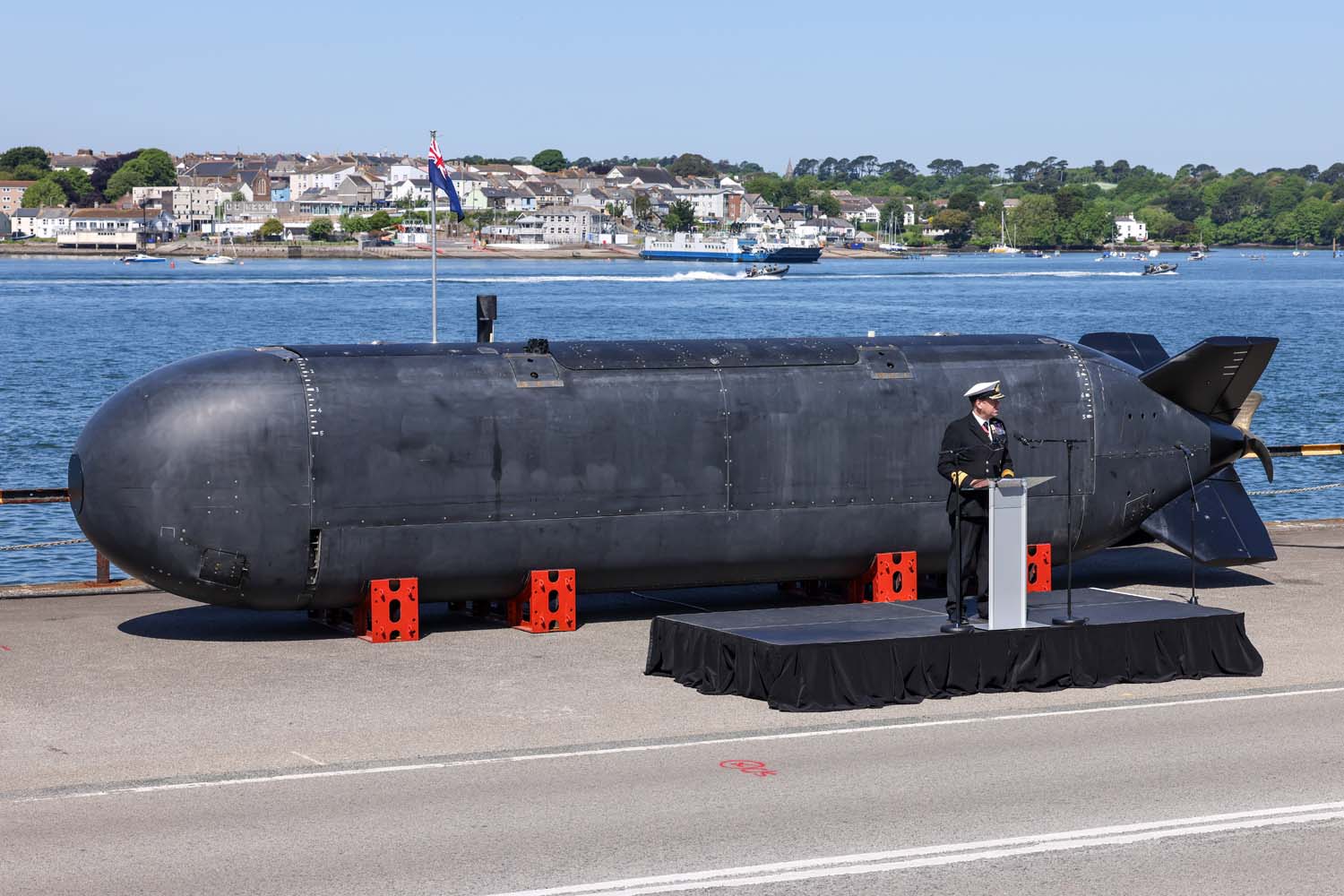
Excalibur, a 12-metre experimental uncrewed underwater vessel, has now been officially handed over to the Royal Navy.


Above: Excalibur was unveiled during a naming ceremony in May this year at HMNB Devonport.
Courtesy Royal Navy / LPhot Unaisi Luke


At a displacement of 19 tonnes, Excalibur is the largest uncrewed underwater vessel ever trialled by the Royal Navy. 

It has been a busy year for the Autonomy Unit of the Submarine Delivery Agency (SDA) who have achieved several milestones with XV Excalibur, the UK’s first uncrewed submarine. The SDA’s Autonomy Unit will continue to support the Royal Navy on Excalibur’s test and evaluation programme,

Officially classified as an Extra-Large Uncrewed Underwater Vehicle (XLUUV), Excalibur is the largest uncrewed underwater vessel ever trialled by the Royal Navy.

The culmination of Project Cetus, it has been developed in under three years by the SDA in partnership with MSubs Ltd. Sponsored by the Royal Navy, Project Cetus aims to build trust in Autonomy and be a testbed to assess military payloads and missions. 

Official naming ceremony 
In May 2025, Excalibur was named and unveiled at a ceremony in His Majesty’s Naval Base (HMNB) Devonport (above). It’ll now spend the next two years carrying out extensive sea trials, which will help understand the opportunities and challenges of operating an uncrewed vessel of this size. 

Exercise Talisman Sabre 
Excalibur’s long-distance interoperability was demonstrated just months after the ceremony, in Exercise Talisman Sabre. During the exercise in August the Royal Navy successfully controlled Excalibur in UK waters from a remote operating centre in Australia – more than 10,000 miles from the vessel’s home in Plymouth.  

Part of AUKUS Pillar 2, the ‘advanced capability’ component of the AUKUS trilateral partnership, the exercise marked the first time the UK and Australia, have demonstrated XLUUV interoperability as a single fighting force. 

Quantum optical atomic trials 

This was followed with a world-first trial, as Excalibur went to sea with a quantum optical atomic ‘Tiqker’ clock on board developed by Infleqtion, a UK company leader in Quantum Technology. This marked the first time such a device has been operated at sea in an underwater vessel. 

Unlike surface vessels, submarines cannot rely entirely on Global Positioning System (GPS) for navigation. Traditional microwave-based clocks provide stability but can drift over time, making them less accurate.  

The use of quantum technology like Tiqker enhances a submarine’s ability to maintain accurate timing and navigation and reduces the need for external signals. This allows the submarine to stay submerged and covert for longer periods. 

This trial was not only delivered successfully by the SDA’s Autonomy Unit, MSubs, Infleqtion and Royal Navy but also took place six months ahead of schedule.   

Handover to the Royal Navy 
Since launching in February 2025, Excalibur has completed many acceptance trials, surpassing several original design specifications.  

Excalibur has now officially been handed over to the Royal Navy. The SDA’s Autonomy Unit will continue to support the Navy on Excalibur’s test and evaluation programme, which aims to learn more about her capability and how we can effectively introduce autonomy to operational use. 

This year’s progress heralds an exciting future in which autonomous underwater vehicles and nuclear submarines work in unison to provide exceptional underwater capability for the Royal Navy.  

Excalibur’s capability positions the UK as a leader in underwater autonomous technology and showcases the SDA’s ability to exploit the latest technologies in the interests of national security.   

SDA’s Autonomy Unit  
SDA’s Autonomy Unit is a team of engineers who develop some of the cutting-edge technology that will support the Royal Navy’s submarine service in the future. They focus on innovation in the autonomous space, which refers to vehicles which can operate remotely and without direct human input.

Related

RAF roundels explained: Why Royal Air Force aircraft use different markings
RAF Red Arrows and Typhoon open Farnborough International Airshow 2022
RAF roundels explained: Why Royal Air Force aircraft use different markings
RAF roundels have identified British military aircraft for more than a century. Here's why Royal Air Force aircraft carry different markings, from Spitfires to today's stealthy F-35 fleet.
Aerospace Defence

3 Oct 2026

UK Government opens scheme to slash manufacturers’ electricity bills
Jonathan Reynolds
UK Government opens scheme to slash manufacturers’ electricity bills
Applications for the British Industrial Competitiveness Scheme (BICS) are now open to over 10,000 manufacturing businesses.
Aerospace Defence

2 Oct 2026

UK Government proposes airline fee reforms and tougher measures on disruptive passengers
Aircraft landing at Heathrow Airport
UK Government proposes airline fee reforms and tougher measures on disruptive passengers
New aviation proposals would end charges for seating young children with accompanying adults, restrict fees for simple booking errors and strengthen airline cooperation on repeat disruptive passengers.
Aerospace

2 Oct 2026

RAF roundels explained: Why Royal Air Force aircraft use different markings
RAF Red Arrows and Typhoon open Farnborough International Airshow 2022
RAF roundels explained: Why Royal Air Force aircraft use different markings
RAF roundels have identified British military aircraft for more than a century. Here's why Royal Air Force aircraft carry different markings, from Spitfires to today's stealthy F-35 fleet.
Aerospace Defence

3 Oct 2026

Royal Navy tests autonomous systems against threats to critical underwater infrastructure
Exercise Repmus 2026 in Portugal
Royal Navy tests autonomous systems against threats to critical underwater infrastructure
The Royal Navy used NATO's REPMUS exercise in Portugal to evaluate autonomous vessels, underwater gliders and other emerging capabilities designed to detect underwater threats and protect critical infrastructure.
Defence

2 Oct 2026

UK targets 30% rise in RAF A400M availability under £190m Airbus deal
Pictured here is an Royal Air Force A400M Atlas flying thought the machloop in Wales on the 21st November 2024.
UK targets 30% rise in RAF A400M availability under £190m Airbus deal
A £190m Airbus support deal will target a 30% increase in RAF A400M availability while sustaining more than 350 UK jobs through April 2029.
Defence

2 Oct 2026

Serco’s NadirEO to provide operational insights from Earth Observation data
The new NadirEO platform turns Earth Observation data into operational insight, bringing together multiple data sources, analytics and specialist partners to help organisations assess risk, monitor assets and make evidence-based decisions.
Member News Space

4 Oct 2026

SatVu’s HotSat-3 launches on SpaceX mission to double thermal satellite capacity
SAtVu HotSat
SatVu’s HotSat-3 launches on SpaceX mission to double thermal satellite capacity
SatVu has launched HotSat-3 aboard SpaceX’s Transporter-18 rideshare mission, adding capacity for high-resolution thermal intelligence from space.
Member News Space

2 Oct 2026

Orbex’s UK manufacturing assets and IP acquired by Omnidea
Omnidea engineering testing platform
Orbex’s UK manufacturing assets and IP acquired by Omnidea
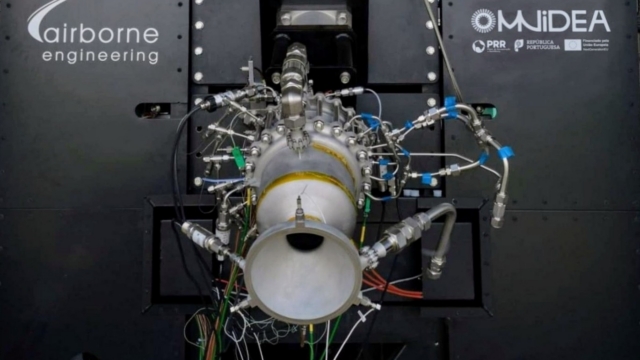
Portugal's Omnidea has purchased the manufacturing assets and intellectual property (IP) of British rocket manufacturer Orbex UK, which ceased operations in February this year and went into administration.
Member News Space

2 Oct 2026

Cohort appoints Richard Mills as Group Strategy Director
Richard Mills
Cohort appoints Richard Mills as Group Strategy Director
Former Boeing executive Richard Mills will lead the growth strategy of Cohort and its seven subsidiaries which specialise in defence and security technology across the UK, Germany, Portugal and Australia.
BAE Systems proves complete counter-drone kill chain in Scotland trials
Container and Sensor
BAE Systems proves complete counter-drone kill chain in Scotland trials
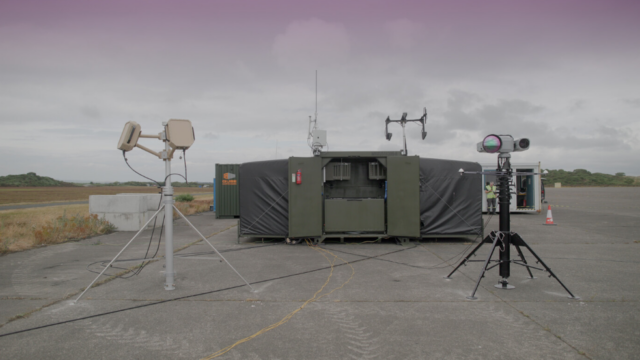
BAE Systems has demonstrated its complete BATS counter-drone chain in Scotland, integrating sensors, electronic warfare and a gun system.
Security

1 Oct 2026

Doncaster Sheffield Airport takes another step towards reopening with new firefighting fleet
Doncaster Sheffield Airport fire appliance
Doncaster Sheffield Airport takes another step towards reopening with new firefighting fleet
Doncaster Sheffield Airport has ordered three specialist aviation firefighting vehicles as preparations continue for its planned reopening.