General Atomics

British Airways parent IAG invests in exosuit startup to ease strain of baggage handling

British Airways parent IAG has invested in wearable robotics startup Verve Motion whose exosuits could reduce injuries and fatigue among baggage handlers.

Baggage Handler on Ramp
Photo: Verve Motion

International Airlines Group (IAG), the parent company of British Airways, Iberia, Aer Lingus, Vueling and LEVEL, has invested in wearable robotics startup Verve Motion as it looks to reduce the physical demands placed on baggage handlers.

The investment is part of Verve Motion’s newly forged strategic partnership with HexArmor, which specialises in personal protective equipment (PPE) and the airline group. HexArmor will provide commercialization and distribution for Verve Motion’s SafeLift exosuit.

The investment, made through the group’s corporate venture capital arm, IAGi Ventures, forms part of a funding round that brings Verve Motion’s total capital raised to more than $55 million (£41.2 million). 

IAG will evaluate the exosuit specifically for aviation ground handling to support baggage handlers’ shoulders during repetitive lifting tasks.

Exosuits designed for repetitive lifting

The SafeLift system from Verve Motion uses lightweight, soft wearable robotics packed into a backpack-llike container with a supportive harness. Sensors detect lifting movements and provide powered assistance, helping reduce muscular strain without restricting movement.

The company, co-founded and led by Spanish entrepreneur Ignacio Galiana in 2020, has deployed its technology across logistics, retail and manufacturing operations, where workers perform thousands of repetitive lifting movements every shift. 
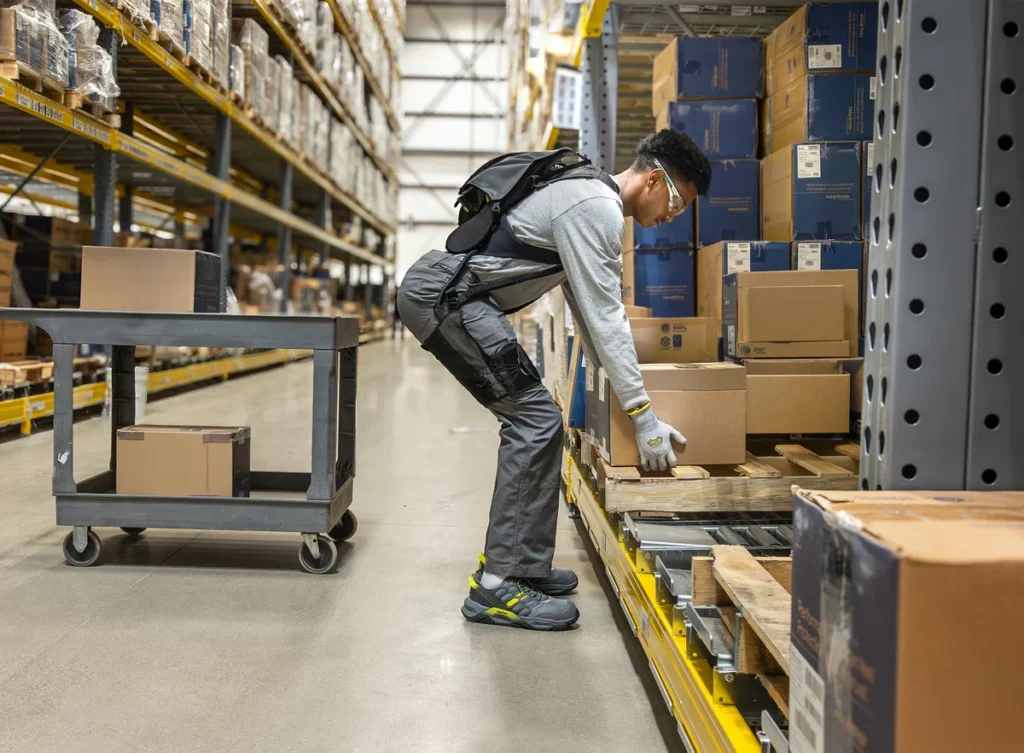
Verve Motion SafeLift system
Photo: Verve Motion

According to Verve Motion, customers have reported reductions in injuries of 60% to 85%, productivity improvements of up to 8%, and a typical return on investment within six months. 

Under the partnership with IAG, the companies will evaluate the technology’s performance in airline baggage operations and cargo-handling environments.

The pilot project will analyse how these suits can facilitate repetitive package-lifting tasks and help optimise performance in ground operations and cargo activities.

Addressing one of aviation’s most demanding jobs

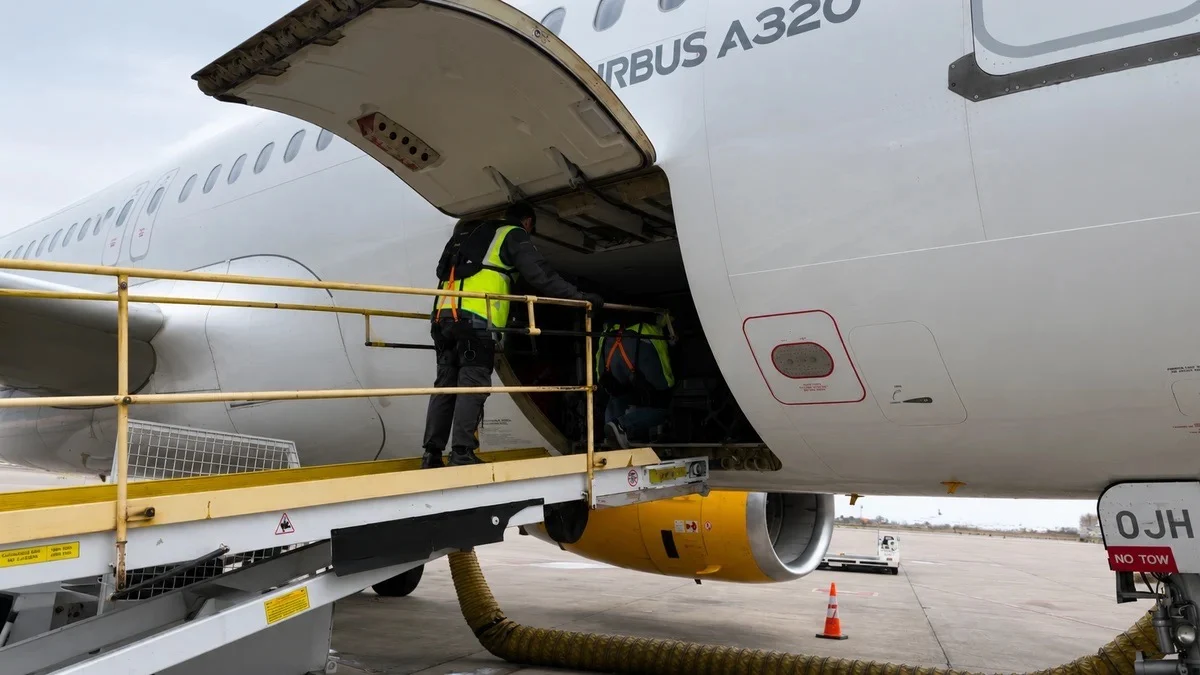
Baggage handling remains among the most physically demanding roles in commercial aviation, with employees repeatedly lifting heavy suitcases into aircraft holds, on baggage carts and onto conveyor systems throughout a shift.

“Verve Motion is exactly the type of company we want to support through IAGi Ventures: a company that applies innovative technology to solve real operational challenges,” said Nacho Tovar, IAG’s Director of Innovation.

Verve Motion co-founder and CEO Ignacio Galiana added: “IAG brings a unique perspective and deep understanding of the physically demanding nature of commercial aviation operations across its operating companies. Their commitment to deploying advanced technologies reflects the next generation of workforce innovation.”

Part of IAG’s wider innovation strategy

The investment is the latest made through IAGi, the airline accelerator programme first launched as Hangar 51 and rebranded as IAGi in 2025. The accelerator has supported more than 100 startups testing technologies across the group’s airlines. The organisation combines startup acceleration, technology deployment and venture capital investment to identify innovations that can improve operational efficiency, sustainability and customer experience across the group. 

Recent IAGi projects have included artificial intelligence tools for aircraft maintenance planning, operational software and emerging technologies designed to improve airline efficiency.

The Verve Motion investment targets one of aviation’s most labour-intensive areas, where reducing workplace injuries could improve employee wellbeing and help airlines maintain productivity amid ongoing staffing shortages.

From military research to commercial aviation

Cambridge, Massachusetts-based Verve Motion was founded in 2020 as a spin-out from Harvard University’s Biodesign Lab.

Its wearable robotics technology originated from research funded by the US Defence Advanced Research Projects Agency (DARPA), which initially sought to reduce fatigue for soldiers carrying heavy loads. The company adapted the technology for industrial applications, including warehouses, manufacturing facilities and distribution centres. 

The technology could eventually be deployed across IAG’s airlines, including British Airways, reducing fatigue and lowering the risk of musculoskeletal injuries for baggage handlers.

Related

The price of transformation: The biggest losers in the UK’s Defence Investment Plan
AAC Wildcat AH1 during Ex Khanjar Oman 2021 [MOD CC - SAC Charlotte Hopkins] (CROP)
The price of transformation: The biggest losers in the UK’s Defence Investment Plan
Britain’s 2026 Defence Investment Plan promises more money, more autonomous systems and greater military mass. But the transformation comes at a price, with established capabilities disappearing before all of their successors are ready.
Aerospace Defence Insights

24 Aug 2026

easyJet pulls out of Leeds Bradford as Ryanair and Jet2 step up
easyJet 100th neo
easyJet pulls out of Leeds Bradford as Ryanair and Jet2 step up
easyJet is pulling out of Leeds Bradford Airport after 16 years, while Ryanair and Jet2 move quickly to target passengers affected by the withdrawal.
Aerospace

24 Aug 2026

The UK wants sovereign drones, but who makes the batteries?
Woman in Camouflage Uniform Working installing batteries on Next Generation Drone.
The UK wants sovereign drones, but who makes the batteries?
The UK is putting more than £5 billion into drones and autonomous systems, with UK industry expected to benefit. But building a drone in the UK is not the same as controlling the supply chain inside it. Volklec CCO Johan Andersson tells ADS Advance why battery cells could become one of the hardest dependencies to break.
Aerospace Defence Focus Insights ...

22 Aug 2026

The price of transformation: The biggest losers in the UK’s Defence Investment Plan
AAC Wildcat AH1 during Ex Khanjar Oman 2021 [MOD CC - SAC Charlotte Hopkins] (CROP)
The price of transformation: The biggest losers in the UK’s Defence Investment Plan
Britain’s 2026 Defence Investment Plan promises more money, more autonomous systems and greater military mass. But the transformation comes at a price, with established capabilities disappearing before all of their successors are ready.
Aerospace Defence Insights

24 Aug 2026

The UK clears Storm Shadow technology release to enable missile assembly in Ukraine
RAF aircraft with Storm Shadow / SCALP missile
The UK clears Storm Shadow technology release to enable missile assembly in Ukraine
Britain has authorised MBDA to release classified technology covering UK components of Storm Shadow/SCALP, clearing the way for assembly in Ukraine.
Defence

24 Aug 2026

Navantia UK’s £26.7m Methil investment builds sovereign shipbuilding capacity
Rear Admiral Matthew Stratton tours Methil
Navantia UK’s £26.7m Methil investment builds sovereign shipbuilding capacity
Navantia UK is modernising its Methil yard for future defence work as investment, new equipment and recruitment rebuild shipbuilding capacity in Fife.
Defence

24 Aug 2026

Austrian ENPULSION moves to acquire UK space propulsion specialist Lift Me Off
Enpulsion space propulsion manufacturer buys UK company lift me off
Austrian ENPULSION moves to acquire UK space propulsion specialist Lift Me Off
Austrian spacecraft propulsion manufacturer ENPULSION has agreed to acquire British specialist Lift Me Off, bringing together electric and chemical propulsion capabilities in a deal that will require UK Government approval.
Member News Space

21 Aug 2026

Lanarkshire AI Growth Zone gains £300m investment as Dell establishes Scottish base
Lanarkshire’s AI Innovation Park
Lanarkshire AI Growth Zone gains £300m investment as Dell establishes Scottish base
A £202 million guarantee from the UK National Wealth Fund has attracted an investment of £300 million in Lanarkshire's AI Growth Zone, which with Dell Technologies establishing a base there too, is set to support over 3,400 skilled jobs.
UK satellite funding targets connectivity ‘not-spots’ for farmers and remote railways
Young farmer works with a digital tablet in a wheat field, smart farm and quality control
UK satellite funding targets connectivity ‘not-spots’ for farmers and remote railways
British farmers and passengers travelling through remote parts of Scotland could gain better connectivity through a new £13 million package backing 16 UK satellite communications projects.
Space

18 Aug 2026

UK defence jobs jump by 26,000 as MoD spending supports 274,000 workers
Ministry of Defence spending with UK industry now supports one in every 100 jobs, according to new figures.
Defence Security

21 Aug 2026

Darktrace among first cybersecurity firms selected to integrate risk signals into Microsoft Agent 365
Using laptop and mobile phone
Darktrace among first cybersecurity firms selected to integrate risk signals into Microsoft Agent 365
The integration will bring Darktrace's behavioural risk signals into Microsoft Agent 365, enabling customers to view organisation-specific insights alongside Microsoft signals in a single interface.
Security

20 Aug 2026

Lanarkshire AI Growth Zone gains £300m investment as Dell establishes Scottish base
Lanarkshire’s AI Innovation Park
Lanarkshire AI Growth Zone gains £300m investment as Dell establishes Scottish base
A £202 million guarantee from the UK National Wealth Fund has attracted an investment of £300 million in Lanarkshire's AI Growth Zone, which with Dell Technologies establishing a base there too, is set to support over 3,400 skilled jobs.