

Inside Affinity: Building UK capability for the future of military flying training


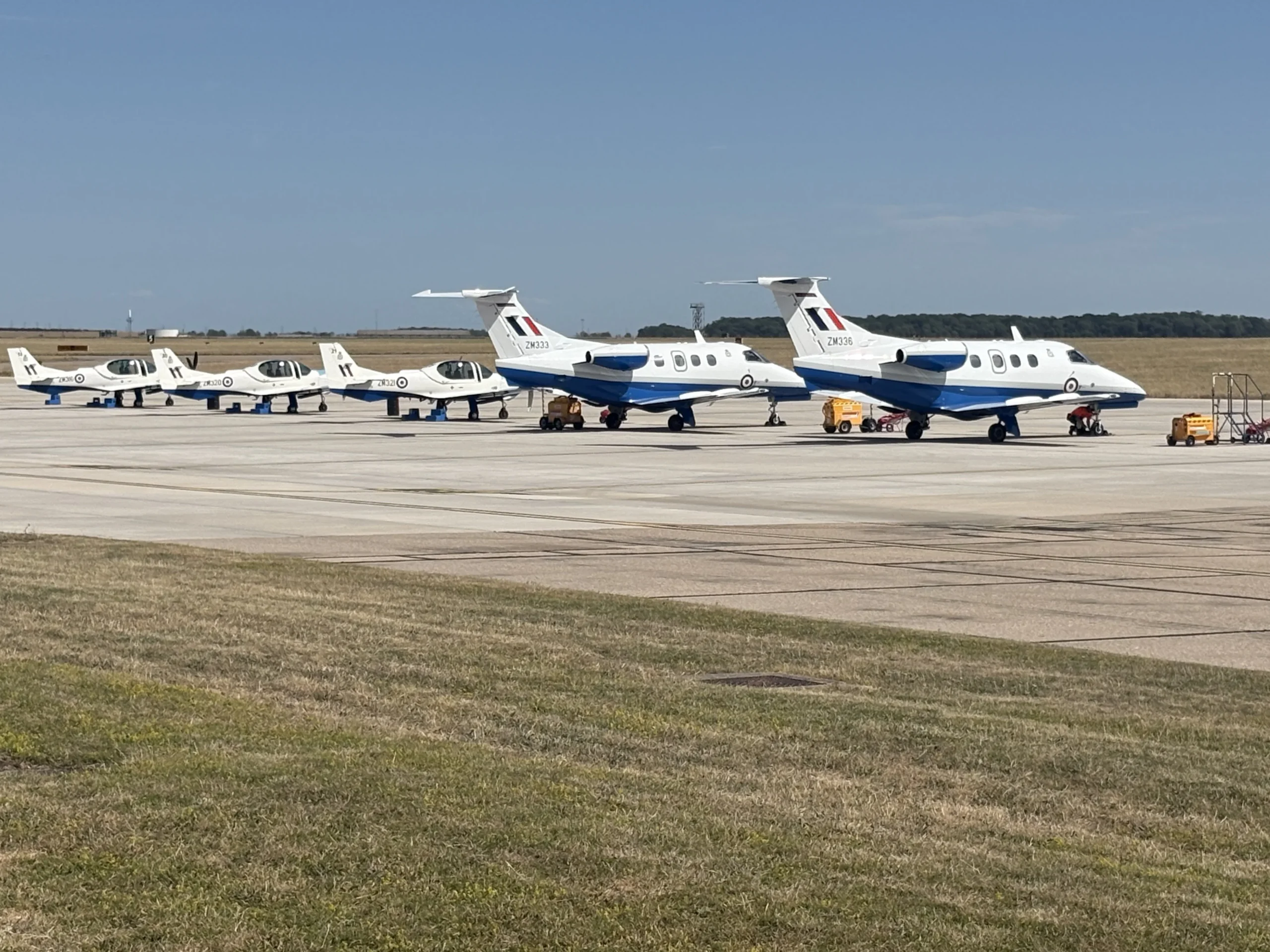
For the past decade, Affinity Flying Training Services has built a UK-based engineering and operational capability supporting the training of military pilots across the Royal Air Force, Royal Navy and Army Air Corps.
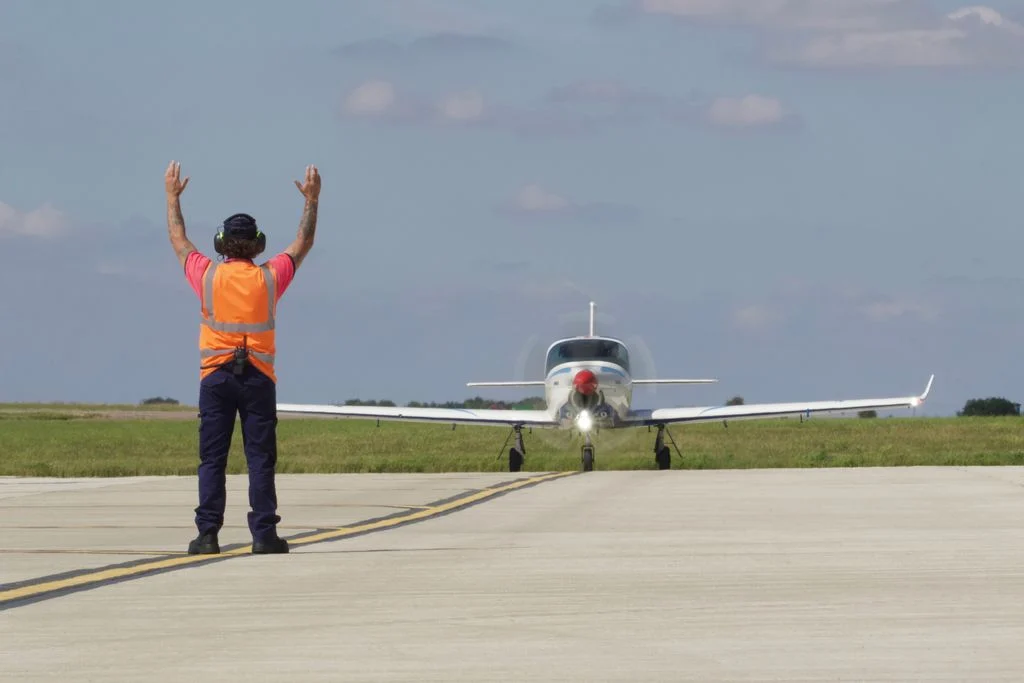
The company operates under the UK Military Flying Training System, working alongside Ascent Flight Training to provide aircraft, maintenance and operational support from RAF Cranwell, RAF Barkston Heath and RAF Valley.
As the Ministry of Defence prepares to invest £360 million in recapitalising the Jet Training System and begins considering requirements beyond the current contract, which runs to 2033, Affinity’s established workforce, infrastructure and experience are becoming increasingly relevant.
Affinity offers the UK a proven training capability
Over the past decade, Affinity has developed a substantial national capability centred on supporting military flying training across three UK bases – RAF Cranwell and RAF Barkston Heath in Lincolnshire, as well as RAF Valley in Anglesey, Wales.
Today, the company operates and supports a fleet of 42 aircraft (consisting of the Grob 120TP, Embraer Phenom 100, and Beechcraft T-6C Texan) while employing more than 200 people in engineering, maintenance and operational roles.
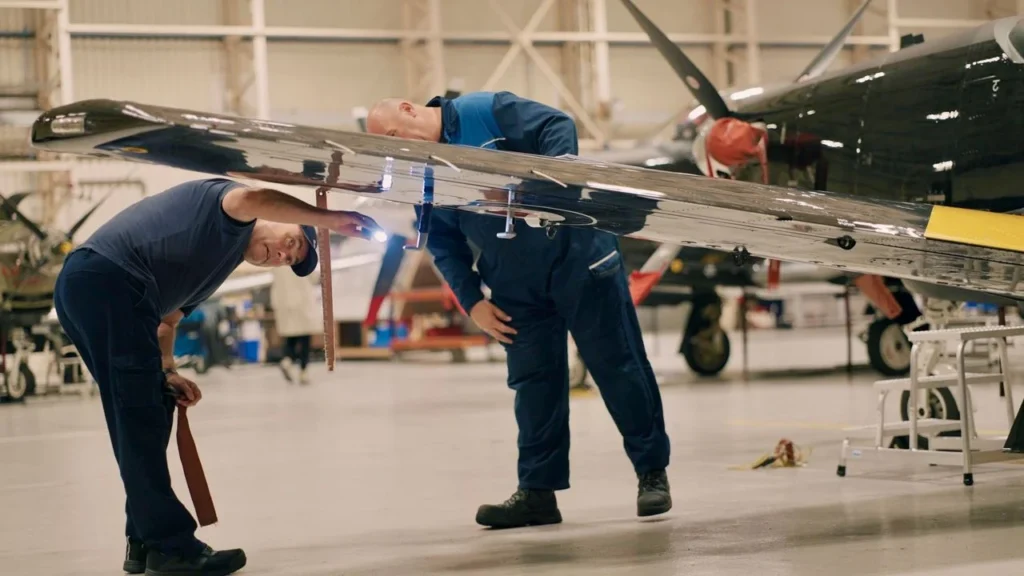
Most maintenance is carried out in-house, giving Affinity greater control over scheduling, technical standards and aircraft availability. Specialist components are sent to manufacturers or approved external providers when required, but the core engineering capability remains within the organisation.
This approach has helped Affinity achieve approximately 98% dispatch reliability across its fleet.
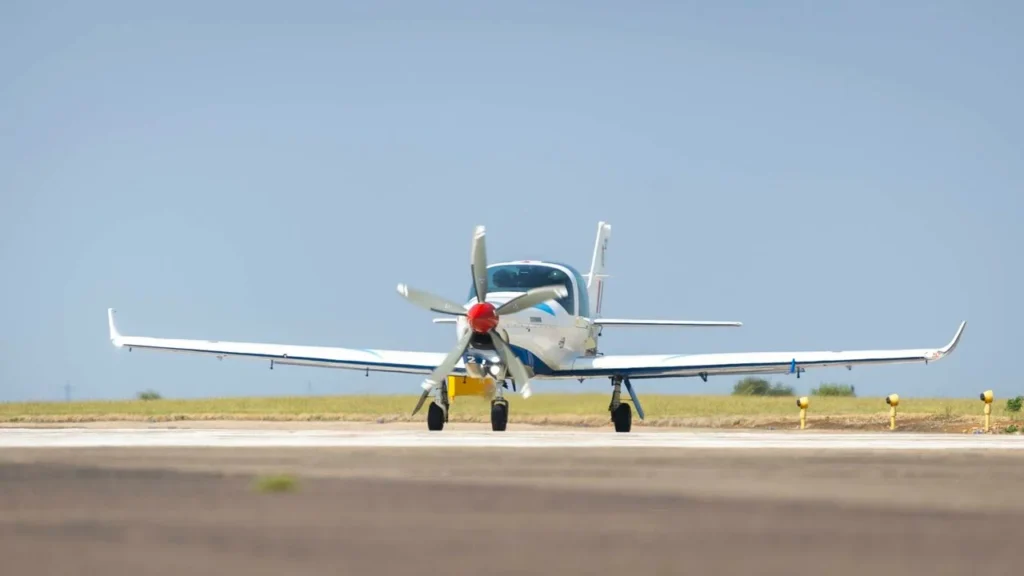
However, aircraft availability is far more than just an engineering metric. Every cancelled sortie represents a missed training opportunity that can ripple through the entire pilot training pipeline. Maintaining exceptionally high dispatch reliability helps maximise flying hours, keeps training programmes on schedule and ultimately contributes to the readiness of the UK’s future military aircrew.
The company’s integrated approach also provides resilience. By combining engineering, maintenance, logistics and operational planning within a single UK organisation, Affinity has developed the ability to respond rapidly to changing operational demands while maintaining consistently high service standards.
Investing in skills and engineering excellence in the UK
Affinity’s capability depends on a workforce combining former military personnel with engineers from civilian aviation backgrounds.
Former service personnel bring experience of defence operations and an understanding of the standards and working practices required in military aviation. Civilian engineers add different technical perspectives and provide continuity across a contract that spans several decades.
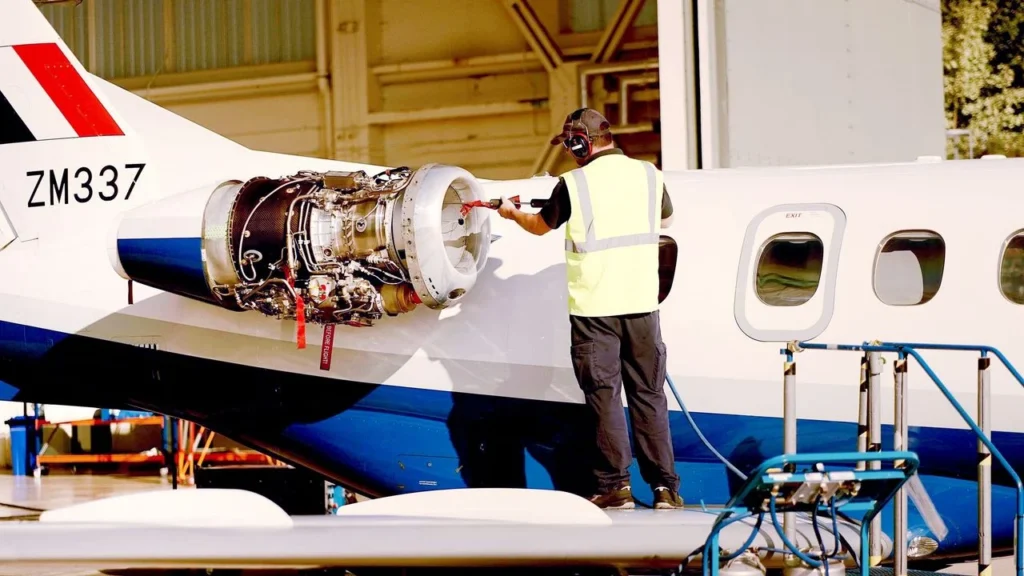
This combination creates an engineering workforce capable of supporting the unique requirements of military flying training while maintaining the highest standards of safety, compliance and technical performance.
Importantly, those skills are being sustained within the UK. At a time when many industries are experiencing shortages of experienced engineers, maintaining a domestic aerospace workforce capable of supporting military aviation represents a strategic capability in its own right.
“What we do here is important to our staff,” Iain Chalmers, managing director of Affinity Flying Training Services, told ADS Advance. “We have spent a great deal of time and effort building a culture where everyone feels part of a team and enjoys coming to work. That is important to us as a management team as we strive to deliver the best service we can to our customers.”
Preparing for the next generation of flight training
Military flying training continues to evolve alongside advances in technology, aircraft capability and instructional methods.
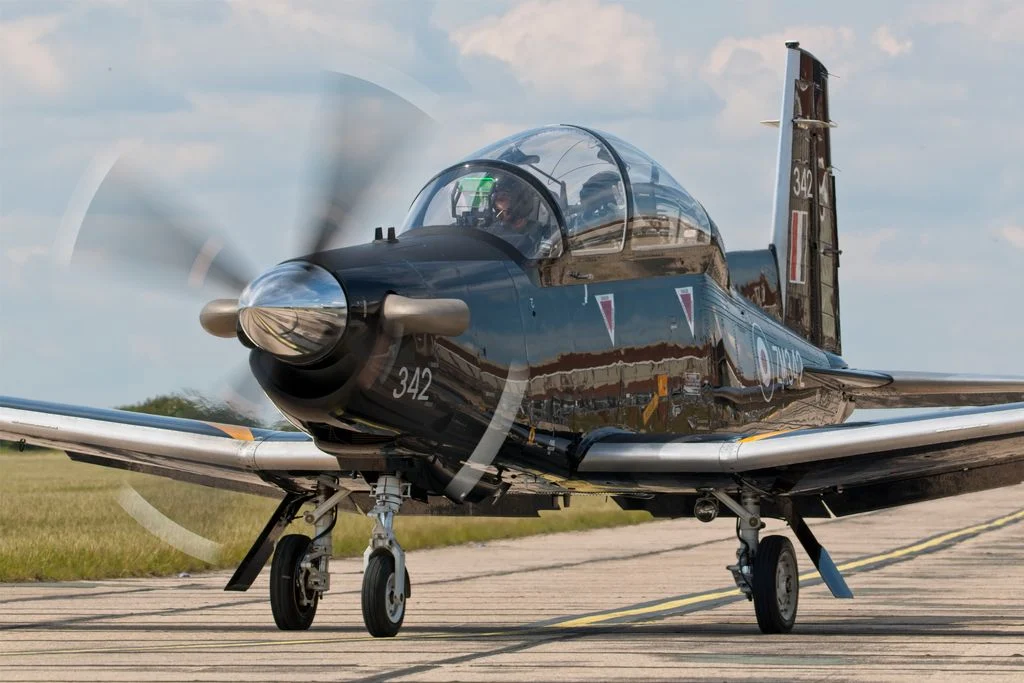
One potential near-term development is the acquisition of four additional T-6C Texans. Affinity is discussing the possibility with the Ministry of Defence, although no timetable has been agreed.
If approved, the acquisition would increase its Texan fleet from 14 to 18 aircraft and take the overall fleet to 46.
Beyond fleet growth, the nature of pilot training itself is changing. Modern military training increasingly blends live flying with synthetic training environments, advanced simulators and digitally connected learning systems. Rather than replacing aircraft, these technologies complement flying by allowing students to practise procedures, emergency scenarios and tactical decision-making in highly realistic virtual environments.
Automation is also becoming a more significant part of maintenance and operational planning. Digital diagnostics, predictive maintenance techniques and improved data analysis are helping engineering organisations identify issues earlier, improve aircraft availability and optimise maintenance scheduling.
Augmented reality represents another area with growing potential. AR-enabled maintenance systems can support engineers through complex inspection and repair tasks by overlaying digital instructions directly onto aircraft components, improving efficiency while reducing the likelihood of human error.
Having already established engineering expertise, maintenance facilities, and operational support infrastructure across its three UK bases, Affinity is well-positioned to integrate these emerging technologies as military flying training continues to modernise.
Looking beyond 2033
The current UK Military Flying Training System contract extends to 2033, but planning for the next generation of military training capability is already underway.
The Ministry of Defence’s planned £360 million investment in the Jet Training System provides an early indication of the scale of change ahead, including the introduction of new training aircraft and the replacement of ageing Hawk jets.
Future requirements are likely to consider more than the choice of aircraft alone. Workforce resilience, engineering capability, infrastructure and the ability to sustain high levels of availability will all influence how effectively the next training system can be delivered.
Affinity’s experience demonstrates the benefit of maintaining those capabilities in the UK.
Over 10 years, the company has established a workforce, maintenance network and operational structure supporting military flying training across three bases. That capability provides a platform from which additional aircraft and new training technologies could be introduced as requirements evolve.
As the UK considers the next phase of military pilot training, the central question will not simply be which aircraft it selects, but how it preserves the people, skills and infrastructure required to keep them flying.
Sign up for our newsletter and get our latest content in your inbox.
Similar Reads

Sign up for our newsletter. Select all sectors relevant to you.
Related