STFC reveals latest Ernest Rutherford Fellows


The Science and Technology Facilities Council (STFC) has awarded this year’s cohort of seven researchers the 2025 Ernest Rutherford Fellowship.
Supporting early-career researchers
The fellowship is one of the main routes by which early-career physicists in the UK are supported to lead independent research in particle physics, astronomy and nuclear physics and to develop their careers.
The 2025 cohort’s work spans:
• Planetary defence
• The search for dark matter at the Large Hadron Collider
• New X-ray technology
• The hidden oceans of icy moons
• High-frequency gravitational waves
• The earliest moments of the Universe
• The internal structure of black holes
Launching into a stratospheric career path trajectory
Now in its 16th consecutive year, the programme has supported more than 100 early-career researchers, a number of whom have gone on to take up permanent positions at UK research institutes.
Professor Grahame Blair, Executive Director of Programmes at STFC, said: “Reading through the proposals from this year’s Ernest Rutherford applicants, what stands out is the range of questions our early-career researchers are choosing to take on, from the origins of the Universe to the physics of what happens inside a black hole.
“We had a strong field of applicants this year, which made the selection process a difficult one.
“I’d like to congratulate the 2025 Ernest Rutherford Fellows and I look forward to seeing where their research takes them.”
Meet the new Ernest Rutherford Fellows
SPACEFORCE: studying planetary airbursts and Cratering: explosions and fluxes from objects resulting in catastrophic events
Dr Aleksandra Sokolowska, The University of Glasgow
Earth’s atmosphere usually protects the planet by slowing and breaking up incoming asteroids and comets, but occasionally larger objects still cause significant damage through airbursts or surface impacts.
Historic events such as Tunguska (1908), Chelyabinsk (2013) and the ancient Chicxulub impact highlight the destructive potential of these events, which are now recognised as hazards requiring monitoring and mitigation efforts.
A major challenge is the lack of reliable data: only two well-documented airbursts exist and there are no direct measurements of thermal radiation from impacts.
Current models rely heavily on outdated nuclear test data, despite clear differences in physics.
To address these gaps, the proposed work focuses on studying similar events on other planetary bodies, especially Mars and the Moon, to improve understanding of airbursts, impact flashes and associated thermal effects.
The project aims to analyse planetary datasets, improve modelling of airburst impacts and radiation and develop new computational tools that better simulate these processes.
It also proposes an international collaboration to design a Mars mission dedicated to observing airbursts and impact events.
The expected outcomes include improved risk assessment capabilities, advances in planetary defence and broader scientific insight into impact phenomena.
Additional benefits include informing policy, supporting future space missions and engaging the public through citizen science initiatives.
The research is expected to feed into planetary defence and risk assessment, as well as public engagement through citizen science.
Scouting for dark sectors with the CMS experiment
Dr Benedikt Maier, Imperial College London
Dark matter remains one of the biggest mysteries in physics and the Large Hadron Collider is a key tool for detecting it.
However, current search methods, especially in CMS, miss many possible signals.
This project aims to overcome these limitations by introducing AI-driven techniques into real-time data selection, improving sensitivity to previously undetectable dark matter scenarios.
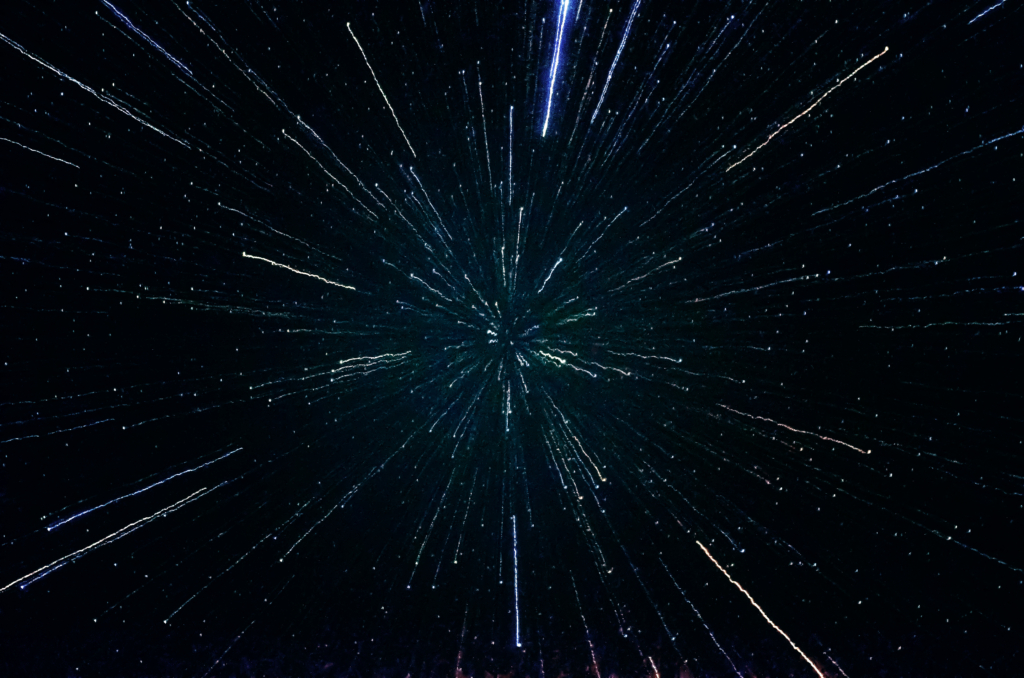
By advancing data acquisition and analysis capabilities for the LHC and its future upgrade, the work will enhance the chances of discovering dark matter.
These innovations could significantly deepen our understanding of the universe and open new frontiers in particle physics.
Next-generation ultrafast X-ray spectroscopy with laser-plasma accelerators
Dr Brendan Kettle, Imperial College London
This project develops advanced X-ray sources based on laser-plasma accelerators, which can produce extremely short and powerful X-ray pulses about 1000 times shorter than those used in conventional facilities.
These ultrafast pulses enable scientists to capture snapshots of processes happening on the timescale of electron motion.
This opens up new possibilities to study extreme conditions such as those in planetary interiors, fusion reactions and advanced materials.
The research aims to both improve the performance of these X-ray sources and demonstrate their capabilities through experiments in physics, materials science and industry.
By increasing brightness, stability and spectral quality, the project will enable first-of-their-kind measurements and make high-end X-ray technology more accessible and affordable.
This could expand scientific research globally and strengthen the UK’s leadership in this rapidly growing field.
Tidal magnetohydrodynamics of water and metallic ocean worlds
Dr Hamish Hay, University of St Andrews
This project focuses on understanding hidden oceans inside planets and moons, including both water oceans and molten metal cores, by studying how their flowing, electrically conductive fluids generate magnetic fields.
Although spacecraft can detect these magnetic signals, current theories cannot fully explain how tidal forces and electromagnetic effects interact in these environments.
The research will develop the first self-consistent models linking tidal flows and magnetic fields, enabling scientists to interpret upcoming spacecraft data from missions to Europa, Ganymede and Mercury.

It will also produce open-source tools to infer internal ocean dynamics and explore how tides may drive planetary magnetic fields.
Overall, the project aims to transform our understanding of subsurface oceans and maximise the scientific return of major space missions.
Unveiling the high frequency gravitational wave (HFGW) universe: from the lab to the stars
Dr Jamie McDonald, The University of Manchester
Gravitational waves have opened a new way to study the Universe, but research has mostly focused on low-frequency signals.
This project targets high-frequency gravitational waves, which could arise from exotic phenomena such as primordial black holes, cosmic strings, or new fundamental physics, offering a unique window into previously unexplored energy scales.
The research will both predict the strength and sources of HFGWs and develop new technologies to detect them, including advanced microwave cavities that can also search for axion dark matter.
By contributing to experiments like Manchester Axion Novel Cavity eXperiment and international collaborations, this work aims to establish high-frequency gravitational wave detection as a powerful new tool.
This will potentially lead to groundbreaking discoveries in physics.
Revealing the hidden Universe with precision cosmology
Dr Lucien Heurtier, Kings College London
The Big Bang theory explains how the Universe began and successfully accounts for its expansion, early radiation and formation of elements.
However, major mysteries remain, including what caused the Universe’s rapid early expansion, what most of it is made of and why matter dominates over antimatter.
With powerful new observatories coming online, the next few years will provide unprecedented data to test these questions.
This research programme aims to explore quantum effects in the early Universe, possible primordial black holes and new cosmic phases, linking fundamental physics to observations.
It will help interpret upcoming data and strengthen the UK’s leadership in cosmology while advancing our understanding of the Universe’s origins and laws.
Unravelling spacetime: classical, semiclassical and quantum
Dr Robie Hennigar, Durham University
Black holes are extreme cosmic objects that strongly warp space and time, making them key testing grounds for Einstein’s gravity and raising deep questions about predictability and information in physics.
This project focuses on understanding how black holes form, evolve and behave internally , especially in regions where current theories break down, such as singularities and inner horizons.
It explores whether quantum effects can resolve these issues and seeks consistent models that go beyond classical physics.
The research is timely due to rapid advances in high-precision gravitational observations and efforts to connect black holes with quantum gravity and cosmology.
By combining methods from dynamical gravity, quantum theory and holography, the project aims to improve both fundamental understanding and interpretation of experimental data.
It balances ambitious, high-impact goals with practical, lower-risk outcomes, leveraging the researcher’s expertise to advance a long-term, internationally significant research agenda.
Investment and support for research
STFC aims to deliver research and innovation capabilities and helps researchers develop new skills, enabling them to further their careers.
With campuses at Harwell, Daresbury and research centres across the UK, it facilitates collaboration and engagement to improve capabilities across the research system – within the UK and internationally – developing infrastructure and supporting an inclusive and ethical research culture in astronomy, physics, computational science and space science, towards developing advanced technologies to innovate and solve real-world challenges and unveil the secrets of the Universe.
Sign up for our newsletter and get our latest content in your inbox.
Similar Reads


Sign up for our newsletter. Select all sectors relevant to you.
Related