

British naval gun maker wins NATO order while Royal Navy buys elsewhere



Norwich-based MSI Defence Systems has won a €19.4 million (£16.6 million) contract to supply three 30mm naval gun systems to an unnamed NATO country, adding another export customer for a British manufacturer whose weapons have found considerably less favour with the Royal Navy.
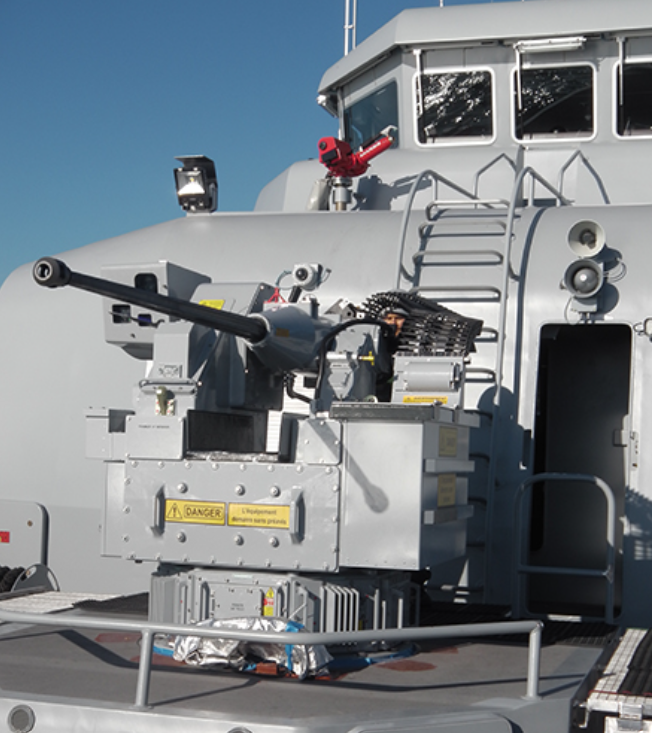
The contract, announced by parent company MS International on 24 August, covers three MSI-DS naval gun systems configured to provide both conventional naval firepower and protection against uncrewed aerial systems.
Each system will combine a 30mm gun with radar and optical detection equipment and MSI-DS’s own fire-control system, enabling it to engage aerial targets as well as surface and semi-submersible threats. Deliveries are expected to begin towards the end of 2027.
But the significance of the order stretches beyond another export success for MSI. The company was recently singled out in evidence to Parliament as an example of a British defence manufacturer winning significant business overseas while the UK itself has selected competing naval guns from elsewhere.
British guns win abroad as Royal Navy buys elsewhere
The issue surfaced directly during evidence to the House of Lords Industry and Regulators Committee in June.
Andrew Kinniburgh, director-general of Make UK Defence, used MSI as one of two examples while discussing the relationship between the Ministry of Defence and domestic manufacturers.
“We have one of the leading naval gun manufacturers in the world — MSI Defence — based in Norfolk,” Kinniburgh told the committee.
He said MSI systems were fitted to only “a handful” of Royal Navy vessels and contrasted that with the service’s adoption of Swedish-origin Bofors guns.

That comparison is particularly relevant as the Royal Navy introduces new 40mm and 57mm Bofors weapons aboard its Type 31 frigates, while MSI continues to secure orders for its own naval gun systems overseas.
The comparison is not entirely clear-cut. ADS chief executive Kevin Craven pointed out during the same evidence session that the Bofors programme also involves UK industry, meaning the procurement choice is not simply one between a British-made weapon and an entirely foreign alternative.
Nevertheless, the underlying question remains: why has a British manufacturer capable of winning repeat naval weapon orders from NATO members and the US Navy secured a relatively limited share of its domestic market?
MSI is not absent from the Royal Navy. Its lightweight automated mounts are already fitted across parts of the fleet. But its growing overseas order book makes the contrast increasingly difficult to ignore.
From naval gun to drone killer
The latest NATO order also reflects the changing role expected of relatively small-calibre naval guns.
MSI’s Seahawk family can be fitted to vessels from around 30 metres in length, serving as a primary weapon aboard smaller ships or as secondary armament on frigates and larger vessels.
The systems are modular, with 25mm, 30mm and 40mm cannon options, and can be controlled locally, through a ship’s combat management system or using MSI’s own fire-control system.
Increasingly, however, the selling point is not simply conventional naval firepower.
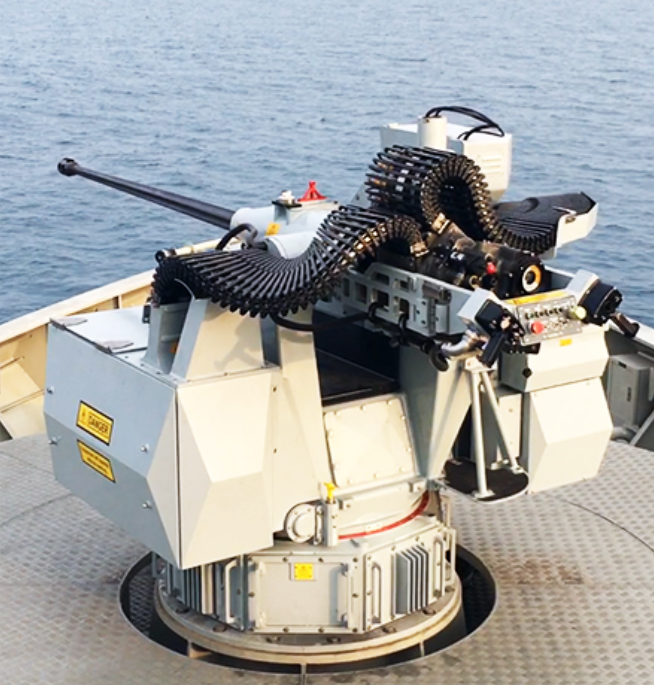
MSI has developed its Lightweight 30M system specifically for the counter-UAS role and has conducted live-fire trials using electro-optical targeting and 30mm air-burst ammunition against drone targets.
The system can also be connected to radar, optical and electronic-intelligence surveillance networks, allowing the weapon to sit within a wider layered defence architecture.
That capability has become increasingly important as navies contend with cheap drones, one-way attack systems and uncrewed surface vessels alongside traditional missile and aircraft threats.
For warships, the economics matter too. Small-calibre guns using programmable ammunition offer another layer of defence against targets that may be considerably cheaper than the missiles traditionally used to defeat them.
The new NATO customer appears to be buying precisely that integrated capability, combining the gun itself with radar, electro-optical detection and fire control rather than purchasing a standalone deck weapon.
MSI’s overseas business continues to grow
The €19.4 million contract is not an isolated success.
MS International said in its latest annual results that its US operation had performed particularly strongly, supported by continued business with the US Navy.
In October 2025, MSI secured another year of procurement of its 30mm naval weapon system for the US service, while expanding its support and maintenance presence in the country.
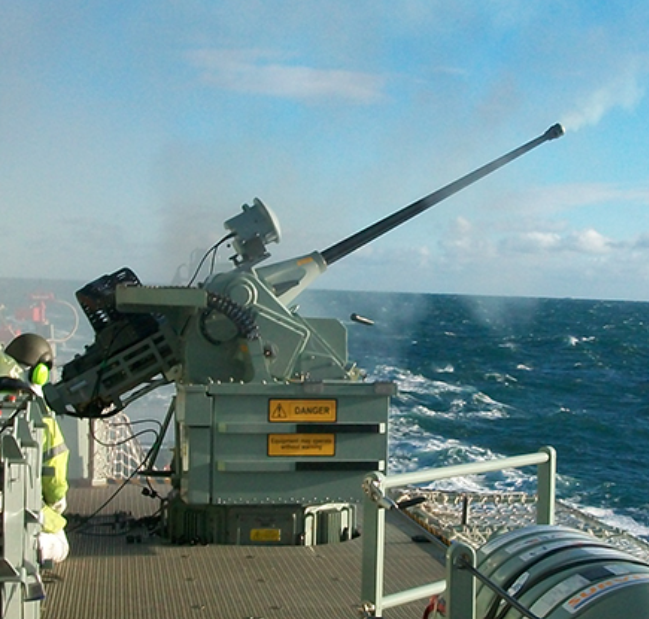
The company has also secured its first contract for its newer MSI-DS Multi Weapon Station, which is due to be delivered to a Middle Eastern customer in 2027.
Its portfolio now extends beyond shipboard systems. MSI’s Terrahawk VSHORAD is a deployable counter-UAS weapon designed to defeat close and very-close-range air and land threats from either fixed or mobile positions.
That growing overseas footprint has turned MSI into a useful test case for a wider question facing UK defence industrial policy.
Can UK procurement match its industrial ambitions?
The Government has placed increasing emphasis on sovereign capability, industrial resilience and using defence expenditure to support economic growth in the UK.
Yet industry representatives told the Lords committee in June that translating those ambitions into procurement decisions remains difficult.
Craven noted that around 40% of UK defence sector turnover comes from exports, meaning British companies must compete successfully in international markets even when domestic procurement moves more slowly.
MSI’s latest order encapsulates that tension.
A British naval gun manufacturer is winning business from NATO customers and the US Navy while expanding its counter-drone portfolio at a time when demand for precisely that capability is rising.
At home, meanwhile, the Royal Navy is introducing competing gun systems sourced from a Swedish-origin family of weapons.
The question raised by MSI’s export success is therefore no longer whether British industry can produce competitive naval weapons.
It is why overseas navies sometimes appear more willing to buy them than Britain’s own.
Sign up for our newsletter and get our latest content in your inbox.
Similar Reads



Sign up for our newsletter. Select all sectors relevant to you.
Related