

Which UK airports will actually need more capacity by 2050?

UK airports could handle almost 200 million more passengers a year by 2050, but Department for Transport data suggests serious capacity pressure will be concentrated at a relatively small number of airports.
The DfT has published its first full aviation forecast since 2017, projecting UK airport traffic will grow 68%, from 292 million passengers in 2024 to 490.6 million in 2050 under its central Current Trends scenario. Passenger numbers reach 334.5 million in 2030 and 408.4 million in 2040.
The Low Growth scenario forecasts 412.3 million passengers in 2050. The High Growth model reaches 507.8 million by 2045. After that, the available airport capacity keeps the DfT model from allocating excess demand.
Aircraft movements grow more slowly than passengers, due to larger aircraft, higher load factors and changing markets.
UK airports handled 299.2 million passengers in 2025, more than 2019’s 296.7 million. Still, aircraft movements remained below 2019 levels, at 2.04 million compared with 2.21 million in 2019.
Gatwick and Stansted face the biggest capacity squeeze
Gatwick faces one of the clearest capacity problems. Passenger numbers rise from 43.9 million in 2024 to 78.1 million in 2050.
The DfT model already incorporates the approved Northern Runway expansion, raising terminal capacity to 80 million passengers and runway capacity from 290,000 movements in 2025 to 386,000 in 2050.
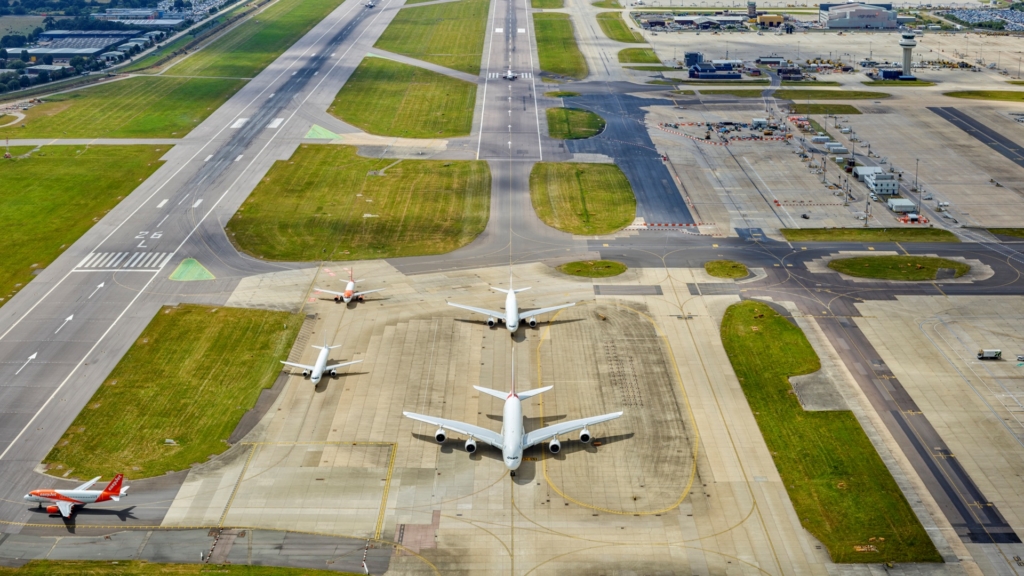
Even with that expansion, Gatwick reaches around 98% of passenger capacity and effectively 100% of runway capacity by 2050.
Stansted faces similar pressure. Traffic rises from 30.5 million passengers in 2024 to 50.6 million in 2050, against assumed terminal capacity of 51 million. Its forecast of 257,000 aircraft movements is also about 97% of the assumed runway capacity of 264,000.
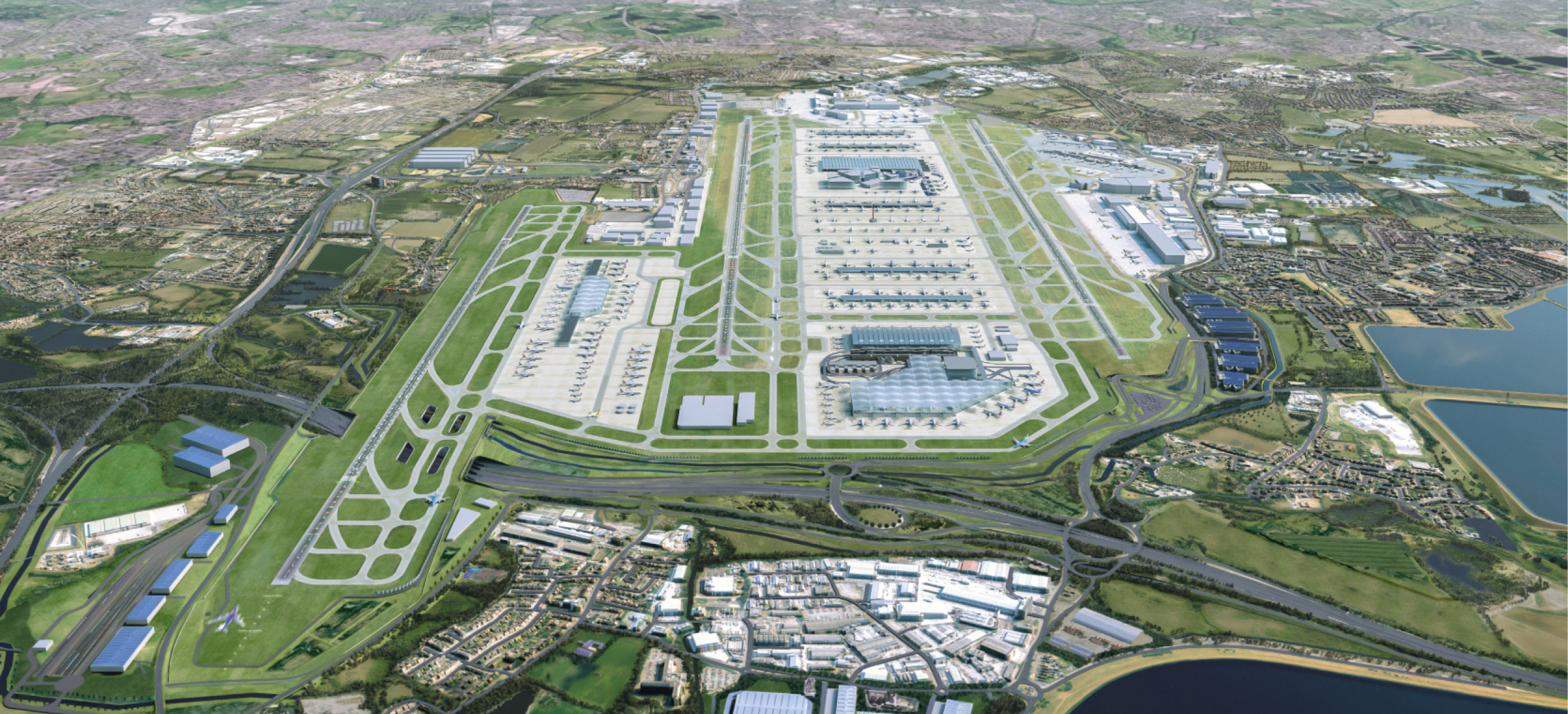
Heathrow’s growth projections assume a third runway
Heathrow‘s forecast is different because major expansion is already built into the numbers.
Passenger traffic rises from 83.7 million in 2024 to 93.6 million in 2030, 115.7 million in 2040 and 130.4 million in 2050.
The DfT assumes terminal capacity increases to 130 million passengers and runway capacity jumps from 505,000 movements in 2030 to 756,000 from 2035, incorporating the government’s planned Heathrow expansion.
The constraint for Heathrow shifts from runways to terminals and passenger infrastructure.
Heathrow reaches roughly 100% of its assumed terminal capacity by 2050, while using only around 86% of its expanded runway capacity.
Manchester and Luton will also need terminal expansions, though their runways have adequate capacity.
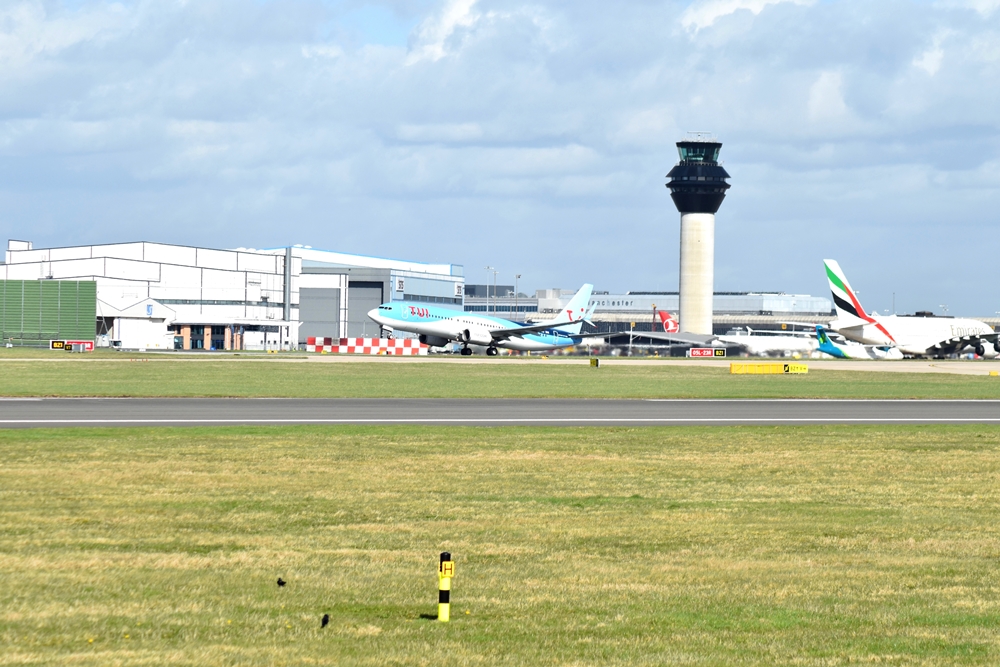
Manchester’s passenger traffic rises from 31.6 million in 2024 to 55.1 million in 2050—this more than consumes its projected 55-million-passenger terminal capacity.
Its two runways have far more headroom. Forecast movements reach only around 277,000 in 2050 against assumed capacity of 500,000 — about 55% utilisation.
At Luton, passenger traffic increases from 17 million to 31.8 million, against a terminal capacity of 32 million. That puts terminal capacity utilisation at roughly 99%. Luton’s runway reaches only around 77% of assumed capacity.
Bristol and smaller regional airports hit their ceilings
Bristol‘s traffic rises from 10.1 million passengers in 2024 to 12.5 million in 2040, then falls to 12 million in 2050 — exactly its assumed terminal capacity. Its runway remains below capacity, suggesting the flat passenger trajectory reflects the terminal constraint in the model.
Several smaller airports also effectively fill their terminals by 2050:
- East Midlands: 7.2 million passengers against 7 million capacity
- Newcastle: 9.2 million against 9 million
- Liverpool: 6.8 million against 7 million
- Leeds Bradford: 4.8 million against 5 million
None faces a serious runway constraint. Forecast runway utilisation ranges from about 19% at Liverpool to 29% at Leeds Bradford.
Belfast City has the opposite problem. It reaches only 5.3 million passengers against a terminal capacity of 8 million, but will almost completely use its 48,000-movement runway capacity by 2050.
Birmingham and Edinburgh have room to grow while London City and Southend have room to spare
Not every growing airport needs major expansion.
Birmingham more than doubles from 12.4 million passengers in 2024 to 27.5 million in 2050 but retains about 9.5 million passengers of terminal headroom. Its runway is around 71% utilised.
Edinburgh grows from 13.9 million to 24.2 million passengers against terminal capacity of 35 million, leaving utilisation at around 69%. Glasgow reaches only 11.9 million passengers against a capacity of 20 million.
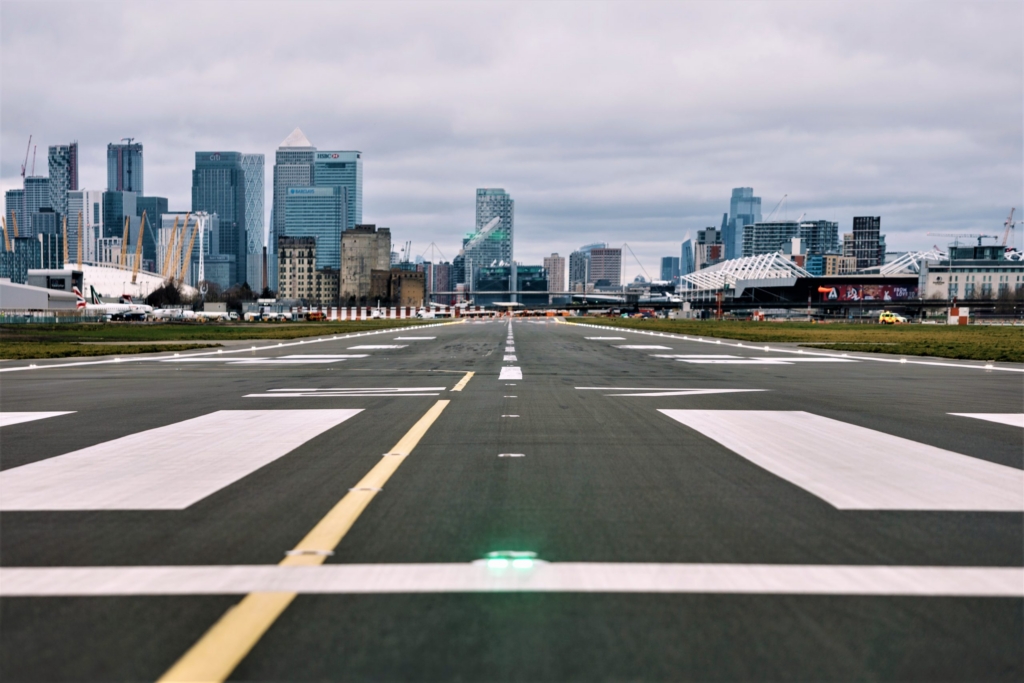
London City is forecast to use only 42% of its 9-million-passenger terminal capacity in 2050. Southend remains below 10% of its 5-million-passenger capacity.
That spare capacity does not prevent Heathrow, Gatwick, Stansted and Luton approaching their limits, proving that capacity at any one airport in a region cannot substitute for available capacity where airlines and passengers want to fly.
The Southeast still dominates growth
Southeast airports’ passenger volume grows from 179.6 million in 2024 to 297.8 million in 2050. Of the roughly 199 million additional UK passengers, around 118 million — almost 60% — are added in the Southeast.
The rest of England and Wales grows from 77.9 million to 134.6 million passengers, Scotland from 25.3 million to 42.1 million and Northern Ireland from 9.2 million to 16.1 million.
Even the DfT’s Regional scenario barely changes that geography. Southeast traffic falls by only 4.7 million passengers in 2050, while Scotland gains 2.7 million and the rest of England and Wales 2.2 million.
Can the UK cope with 68% passenger growth?
There is considerable uncertainty in the model due to economic factors that can substantially affect commercial aviation. A sustained 40% increase or decrease in long-term jet fuel prices changes national passenger demand by around 6% in either direction by 2050. A high-carbon-price scenario cuts demand by 16%, while the DfT’s low-GDP sensitivity reduces it by 26%.
The biggest difference from the 2017 forecast is that substantially more capacity is now built into the model, including approved expansion at Gatwick, Luton, Stansted and London City and planned third runway at Heathrow.
Still, the DfT’s 491-million-passenger forecast does not suggest that today’s UK airport network can cope with 68% growth. It points to a substantially expanded network doing so. Even then, several of the UK’s biggest airports are close to full by 2050.
Sign up for our newsletter and get our latest content in your inbox.
Similar Reads




Sign up for our newsletter. Select all sectors relevant to you.
Related