

Nothing now stands in the legal way of Gatwick’s £2.2bn second runway


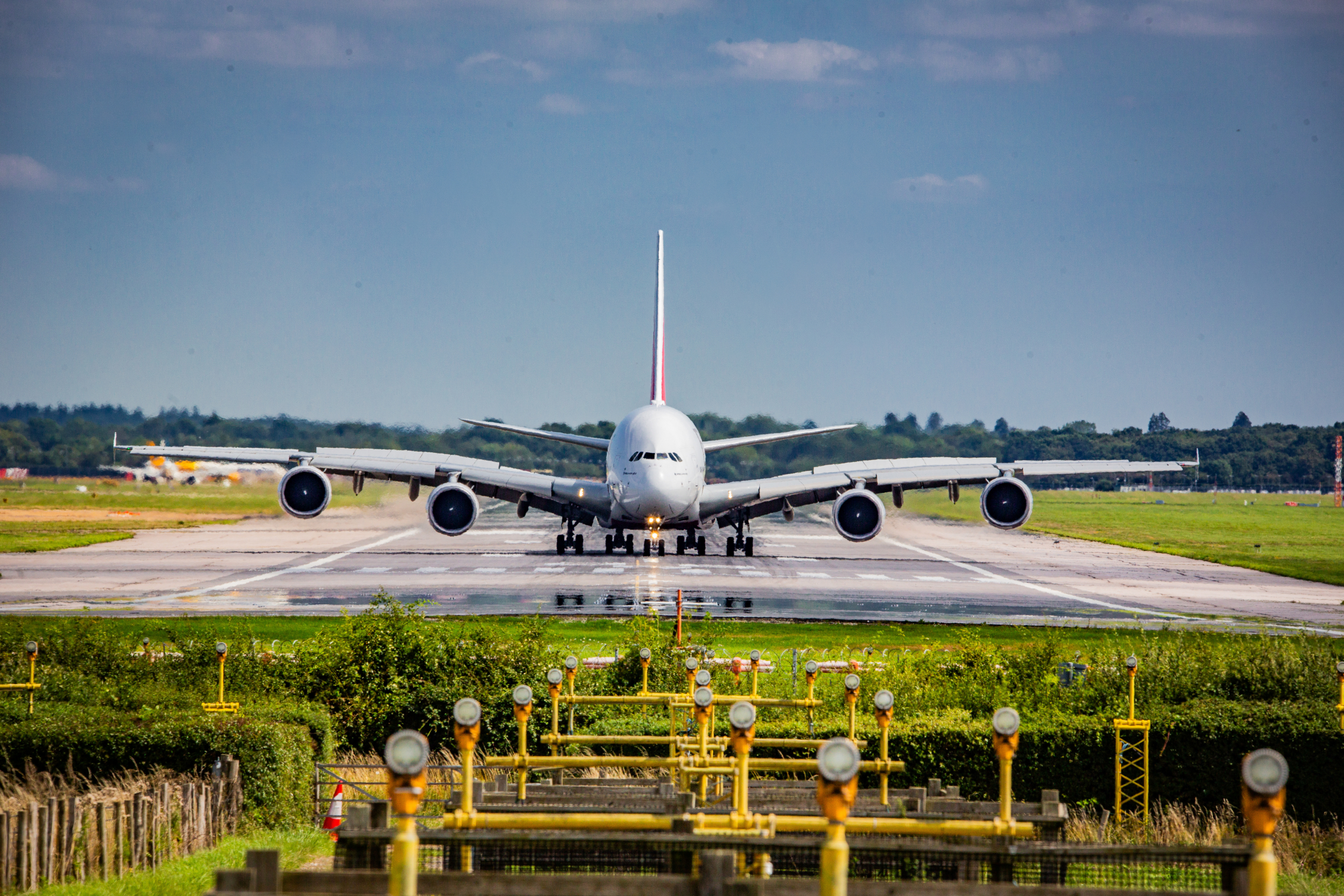
London Gatwick’s £2.2 billion Northern Runway project has cleared its final major legal obstacle, allowing the airport to move into the delivery phase of an expansion expected to add around 100,000 flights a year.
The significance of that change was reinforced in Gatwick’s half-year financial results on August 26. Chief Executive Pierre-Hugues Schmit said that, with the legal process now complete, the airport can turn its focus “from planning to detailed design work and delivery.”
The Court of Appeal rejected the remaining challenge to the scheme on 4 August, bringing an end to the legal process surrounding Gatwick’s plan to bring its existing Northern Runway into routine use alongside the main runway.
Rather than constructing an entirely new runway, Gatwick plans to reposition its existing Northern Runway 12 meters north and bring it into regular use alongside the airport’s Main Runway.
The two runways are currently too close together for simultaneous routine operations, meaning the Northern Runway is normally used only when the Main Runway is unavailable.
Gatwick moves from courtroom to construction
The project received government approval in September 2025, but remained exposed to legal challenges.
A High Court challenge was rejected on June 23, 2026, before campaigners sought permission to take the case to the Court of Appeal. That attempt was rejected on August 4, removing the final major legal obstacle facing the project.
Gatwick’s financial results now explicitly describe the Northern Runway Programme as cleared to move forward following the conclusion of all legal challenges.
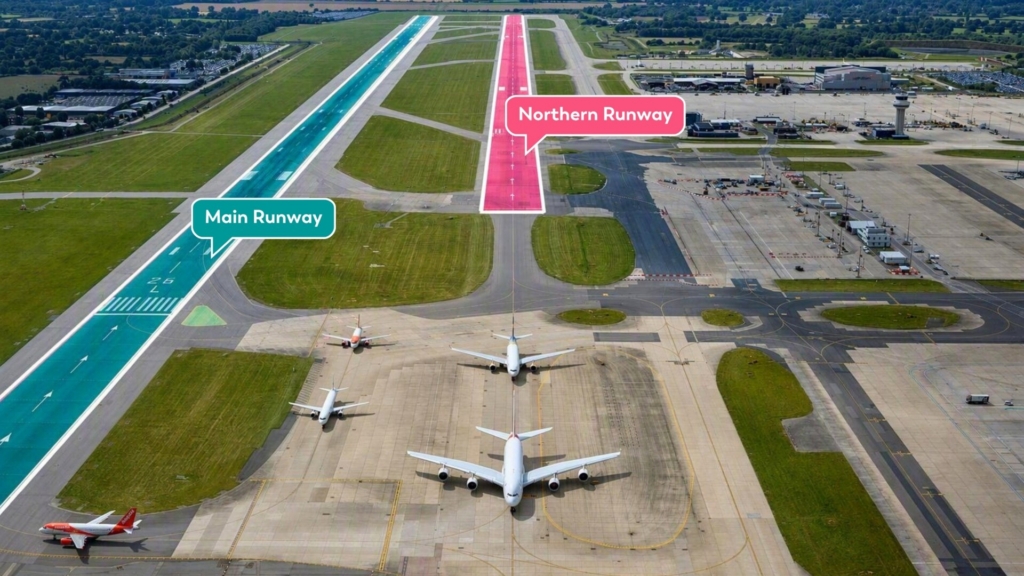
Detailed design and delivery work can now progress across the runway, taxiways, terminals, airport facilities and associated road infrastructure. Construction will be phased so the airport can continue operating while the Northern Runway is prepared for routine use.
The £2.2 billion project will be privately financed and sits alongside Gatwick’s existing £1.9 billion capital investment program. That wider program includes the £140 million Pier 6 western extension, which remains scheduled for completion in early 2027.
What a second operating runway changes for Gatwick
Gatwick already handles around 43 million passengers a year despite effectively operating as a single-runway airport. Its Main Runway has a declared maximum capacity of 57 aircraft movements an hour, which Gatwick says makes it the world’s most efficient single runway airport.
Bringing the Northern Runway into routine use is intended to break through that capacity constraint.
The expansion is expected to support around 100,000 additional flights annually while increasing the number of slots available to existing and prospective airlines. Gatwick’s longer-term plans envisage substantially higher passenger throughput as the additional runway capacity is progressively utilized.
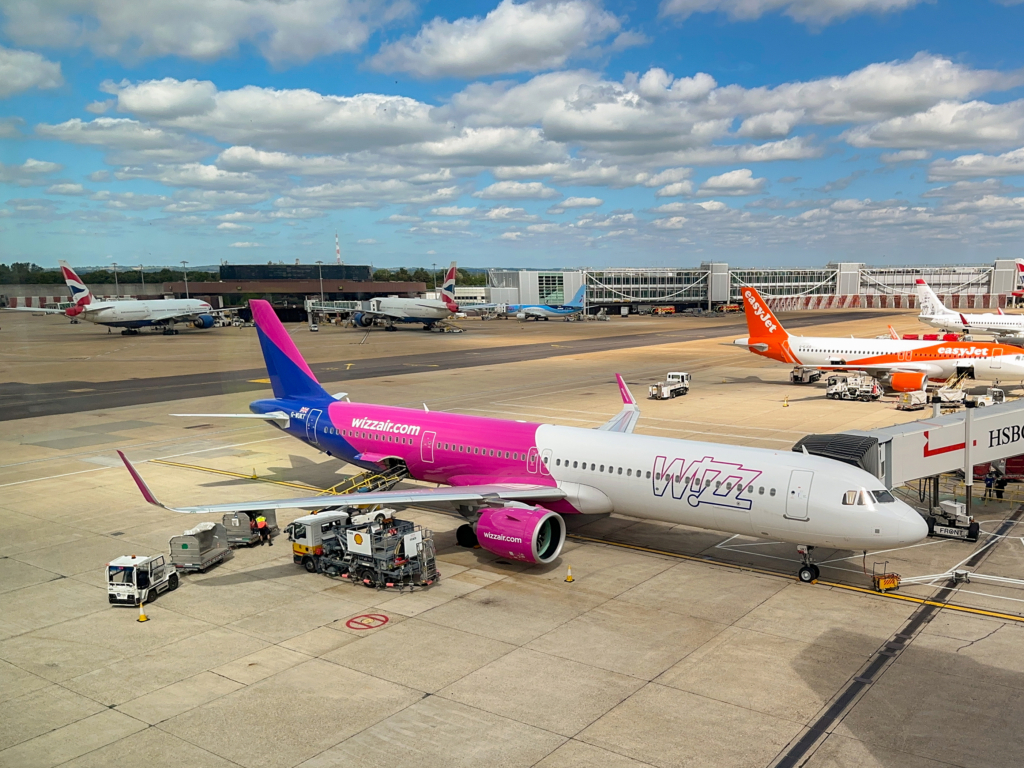
The airport also argues that two-runway operations will improve resilience. At present, disruption to the Main Runway can have an outsized effect because Gatwick has limited ability to transfer operations elsewhere.
The project is expected to create around 14,000 jobs and generate approximately £1 billion in additional economic benefits each year, according to Gatwick.
Gatwick grows revenue even as passenger numbers fall
The runway update came alongside an unusual set of first-half financial results.
Passenger traffic fell 4.7% to 19.1 million during the first six months of 2026, which Gatwick attributed to conflict in the Middle East and capacity reductions by some low-cost carriers.
Despite that decline, revenue increased 4.8% to £515.2 million and EBITDA rose 5.5% to £276.5 million. Seven airlines joined Gatwick during the period, with the airport now serving 231 destinations through more than 60 carriers.
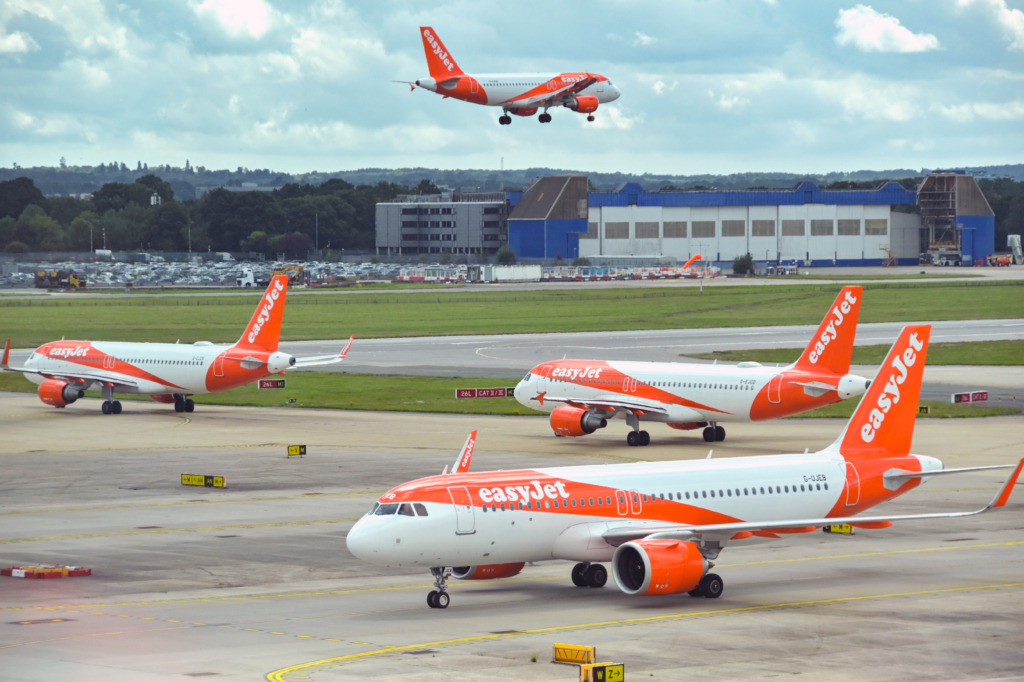
The Northern Runway therefore forms the centerpiece of a much larger growth strategy.
For years, the question surrounding Gatwick’s expansion was whether the airport would secure the political and legal permission to proceed. After the Court of Appeal decision, that question has largely been settled.
The challenge now is delivering the infrastructure and having the Northern Runway ready for routine aircraft operations in 2030.
Sign up for our newsletter and get our latest content in your inbox.
Similar Reads

Sign up for our newsletter. Select all sectors relevant to you.
Related