

Unpublished DfT study strengthens case for tougher night-noise policy


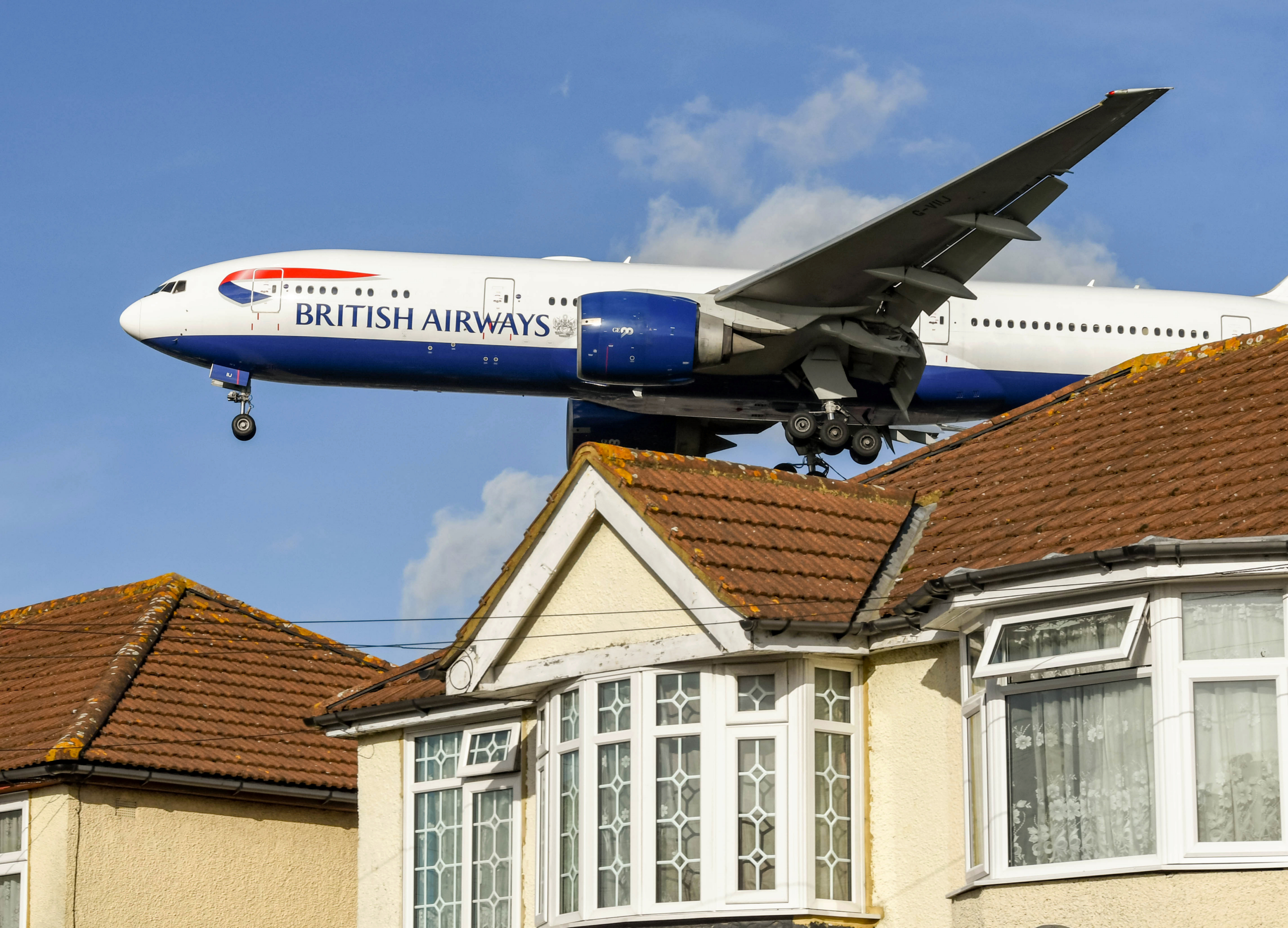
Night-time aircraft noise may have a much greater effect on airport communities than daytime flying, raising fresh questions about how noise should be valued in UK airport planning and expansion decisions.
A previously unpublished study commissioned by the Department for Transport found a “strong negative relationship” between aviation noise and subjective wellbeing, with the impact increasing at higher noise levels and becoming substantially greater at night.
Simetrica Jacobs completed the Aviation Noise & Subjective Wellbeing report in March 2021, but the research was not published. It was obtained through a freedom of information request by the New Economics Foundation.
The DfT told NEF that the report was not taken forward because work was reprioritised during the Covid-19 pandemic. As a result, it was unavailable during recent decisions involving expansion at airports including London City, Stansted, Luton and Gatwick.
Putting a value on lost wellbeing
The research examined communities around Heathrow, Gatwick and Stansted and attempted to express the effect of aircraft noise in monetary terms suitable for government cost-benefit assessments.
It compared reported life satisfaction with household income, noise exposure and other factors affecting wellbeing. Researchers then calculated how much additional annual income would theoretically be needed to offset the loss of wellbeing associated with another decibel of aircraft noise.
Among households not covered by subsidised noise-insulation schemes, increasing average night-time noise from 49 dB to 50 dB produced an estimated wellbeing loss equivalent to approximately £3,100 in annual household income, expressed in 2025 prices.
Increasing exposure from 55 dB to 56 dB produced an estimated impact equivalent to just over £4,000.
These figures are not direct financial losses, proposed compensation payments or estimates of reduced property values. They are hypothetical valuations intended to help policymakers compare noise impacts with the economic benefits of airport development.
The results nevertheless suggest that existing government appraisal methods may place too little weight on night-time aircraft noise.
Insulation could reduce the impact
The negative relationship between aircraft noise and wellbeing was found among households not eligible for subsidised insulation. For eligible households, the effect was not statistically different from zero.
Researchers did not know which properties had actually received insulation or what measures had been installed, so they recommended further research. Even so, the findings indicate that well-designed insulation schemes could have a material effect.
That has implications for airports seeking to maintain community support while increasing capacity.
Leeds Bradford Airport has proposed a Night Noise Insulation Scheme covering glazing, ventilation and bedroom air conditioning. The air-conditioning element would allow residents to keep windows closed during warmer nights without losing the benefit of sound insulation.
The airport has also proposed a noise-based Quota Count system intended to encourage airlines to operate quieter aircraft.
New evidence challenges existing thresholds
The unpublished report is reinforced by more recent government-commissioned research.
The Civil Aviation Authority’s Aviation Noise Attitudes Survey 2023–2024 found substantial annoyance at lower noise levels than recorded in the previous 2014 study.
Around 10% of respondents were classed as highly annoyed at approximately 43 dB. At 50 dB, the proportion reached 19.5%, rising to 40.6% at 60 dB.
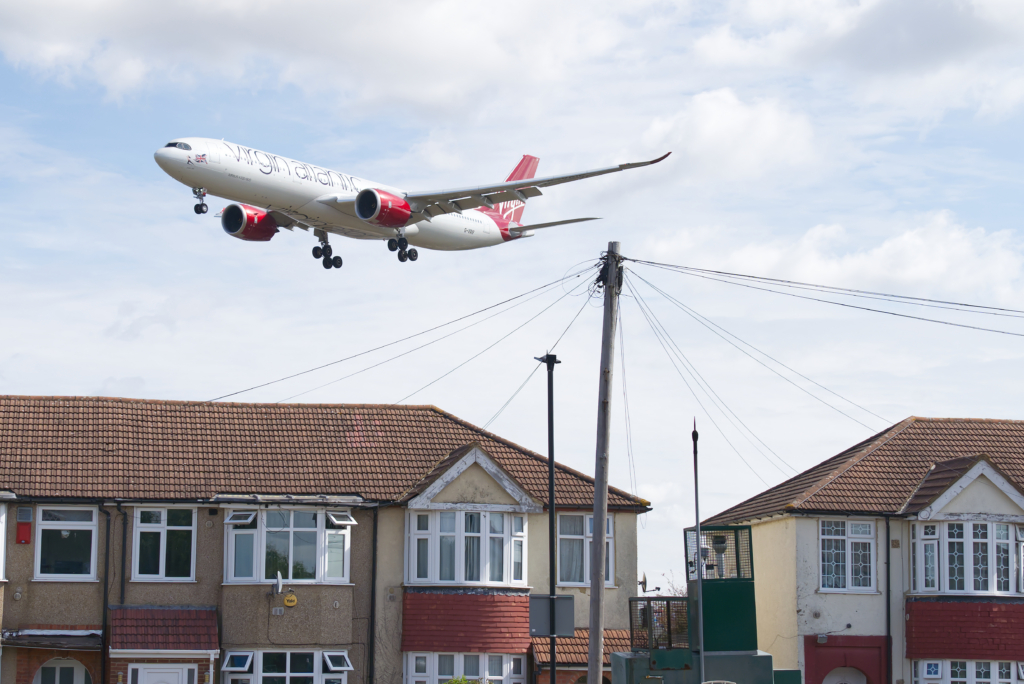
The UK’s current daytime Lowest Observed Adverse Effect Level is 51 dB, suggesting that a notable proportion of residents experience serious annoyance below the existing policy threshold.
The first phase of the DfT’s separate Aviation Night Noise Effects study reached a similar conclusion. Around 10% of respondents reported being highly sleep-disturbed at 44 dB, one decibel below the government’s current night-time threshold.
Researchers also found that flights between 01:00 and 06:00 could cause disturbance at levels that may be obscured by an eight-hour average. This suggests that policy may need to consider when aircraft operate, as well as the total noise generated across the night.
Implications for airport growth
Airport expansion remains important to national connectivity and economic growth, but the developing evidence base could change how its community impact is assessed.
Quieter aircraft will remain central to reducing noise at source. However, fleet renewal alone may not be enough where communities are already exposed to high levels of night-time activity.
The findings point towards a broader approach combining quieter aircraft, more effective insulation, operational incentives and tighter controls on the noisiest flights. Airports may also need to demonstrate that their mitigation schemes reach households affected below the thresholds traditionally used to determine eligibility.
For government, the immediate question is whether existing appraisal values and noise thresholds still reflect the evidence. For airports, the challenge is to show that future growth can be delivered without allowing the burden on neighbouring communities to grow alongside it.
Sign up for our newsletter and get our latest content in your inbox.
Similar Reads


Sign up for our newsletter. Select all sectors relevant to you.
Related