

BAE Systems wins £5 million contract to keep BBMF Lancaster flying


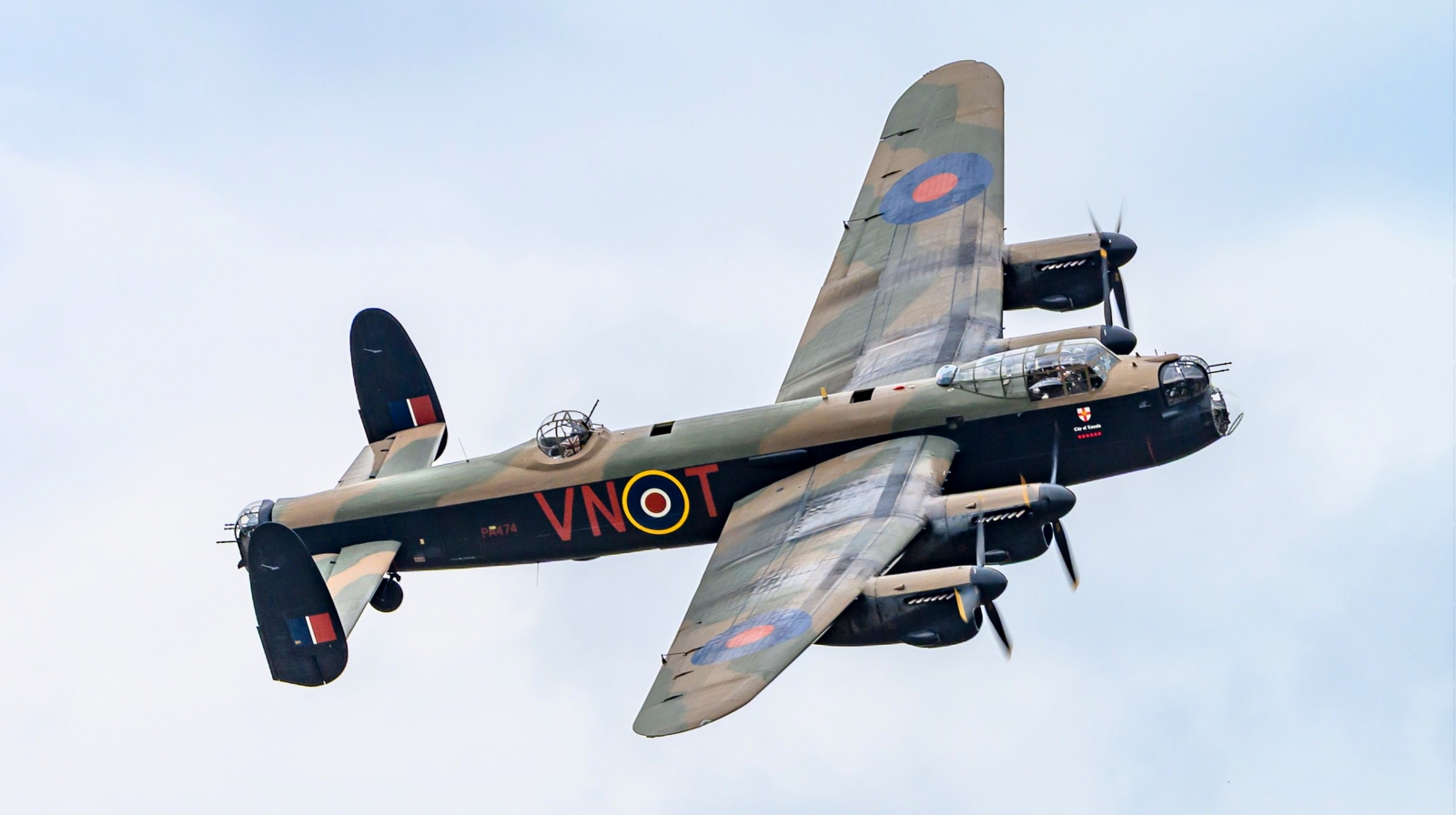
BAE Systems has received a £5 million contract to provide the specialist engineering support needed to keep the Battle of Britain Memorial Flight’s Avro Lancaster airworthy.
The direct award from Defence Equipment and Support was published on 27 August and made to BAE Systems Operations. It covers Post Design Services for Lancaster PA474 and associated support, although the procurement notice does not disclose the contract’s duration or provide a detailed breakdown of the spending.
Post Design Services provide continuing engineering oversight for aircraft whose original production lines and supply chains have long since disappeared. For an aircraft built in 1945, this includes investigating defects, assessing proposed repairs and finding safe alternatives when original materials, components or manufacturing processes are no longer available.
The £5 million award is separate from the contract covering the Lancaster’s physical maintenance at Duxford.
BAE Systems provides design support for the BBMF Lancaster
BAE Systems’ connection to the Lancaster reaches back through Britain’s complicated aerospace family tree to its original designer, A.V. Roe and Company.
Avro became part of Hawker Siddeley, which was absorbed into British Aerospace when much of the UK aviation industry was nationalised in 1977. British Aerospace subsequently became BAE Systems following its merger with Marconi Electronic Systems in 1999.
The company now acts as a design adviser for PA474, providing expertise when the RAF or its maintenance contractors encounter engineering questions concerning the airframe.
That role has already led BAE engineers into one of the most substantial renewal projects undertaken during the Lancaster’s post-war life.
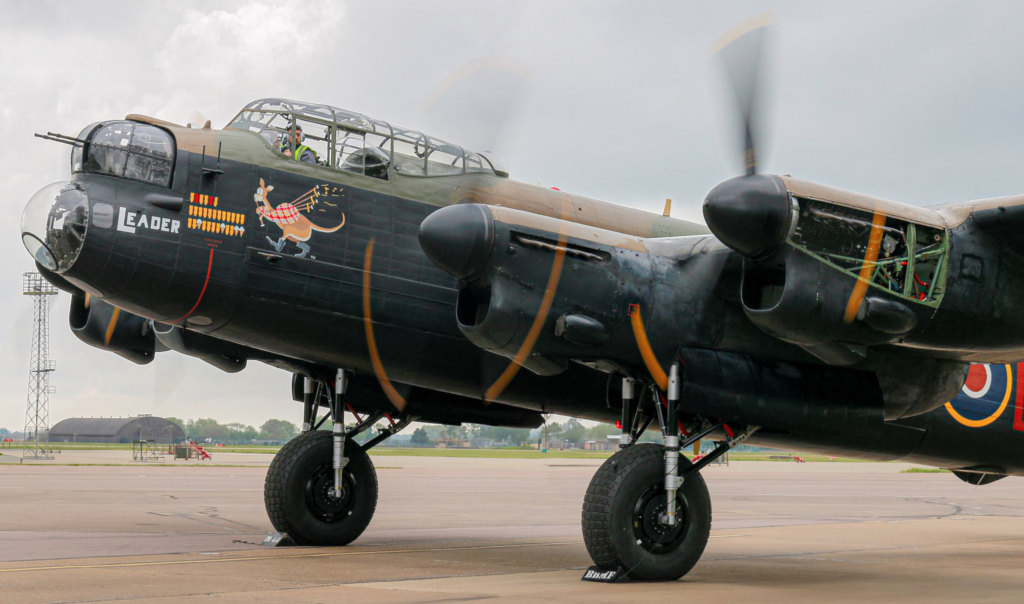
PA474 received newly manufactured port and starboard tailplanes after the previous structures reached the end of their fatigue lives. The replacements were constructed to the original design using traditional fabrication techniques, but required modern materials and processes to replace those no longer available.
BAE Systems engineers assessed changes for their effects on the Lancaster’s structure, aerodynamics and wider design. The project, delivered with the BBMF Project Team, DE&S and the Aircraft Restoration Company, received a Royal Aeronautical Society Bronze Team Award in 2025.
The company is also supporting PA474’s current overhaul. BAE engineers visited Duxford to compare the configuration of its six fuel tanks with the surviving drawings before replacements could be manufactured.
When damage was subsequently discovered in the starboard trailing-edge wing ribs, a proposed repair was referred to a BAE Systems structures specialist for assessment. The damage was linked to a seized joint in the flap actuation system, which caused misalignment and displaced part of the rib structure.
These examples illustrate why the Lancaster still needs a design-support contract eight decades after production ended. Engineers may understand what has failed and how it could be repaired, but any solution must also be shown to preserve the integrity and airworthiness of an irreplaceable aircraft.
BBMF Lancaster expected to return to flight in 2027
PA474 has been out of service since flying from its RAF Coningsby home to the Aircraft Restoration Company at Duxford on 31 October 2025.
Its absence is planned rather than the result of a single grounding incident. The Lancaster entered an extensive 18-month Major maintenance programme intended to preserve it for future display seasons.
The work involves considerably more than routine servicing. Engineers have removed all four Rolls-Royce Merlin engines, the three gun turrets, landing gear, radiators, oil coolers, control surfaces and fuel tanks. The rear fuselage has also been separated at its transport joint to allow the elevator and rudder control rods to be replaced.
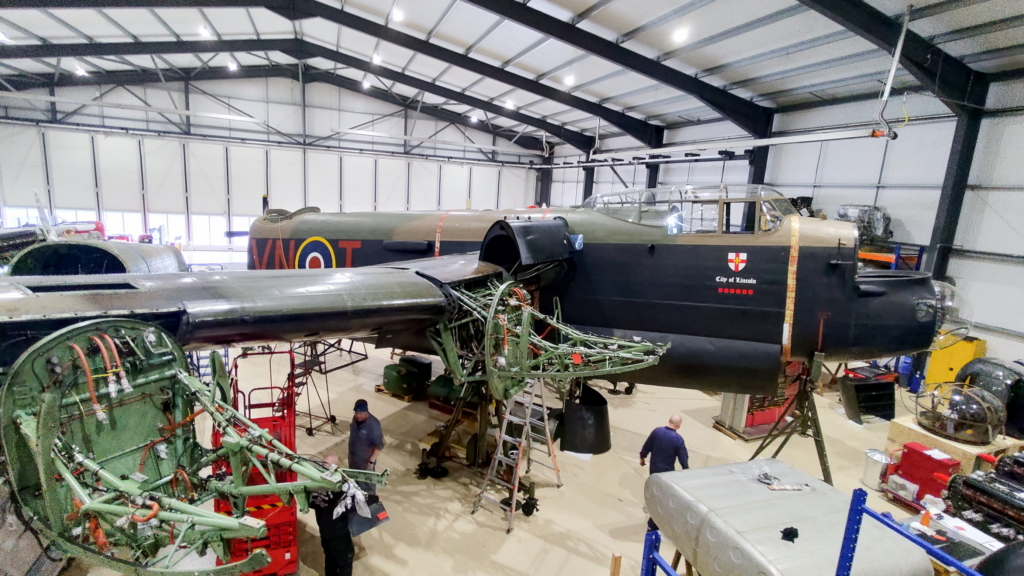
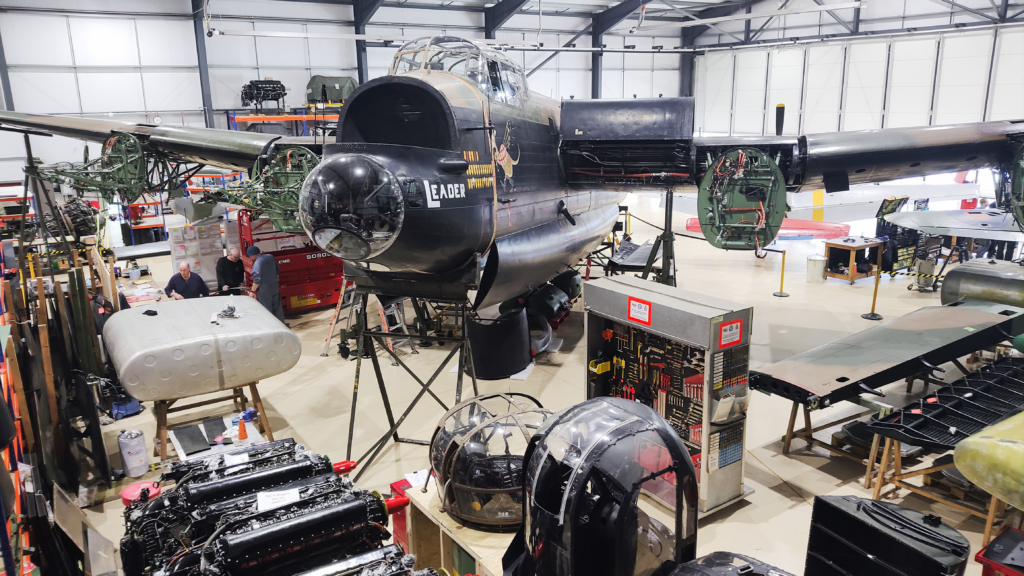
More than 80 components have undergone workshop maintenance, including the undercarriage and bomb-door retraction jacks. Extensive non-destructive testing has examined the airframe, including the reinforcing plates and shackles connecting the centre wing section to the outer wings.
For the first time during PA474’s service, control chains and cables normally hidden inside the aircraft are also being removed for inspection. Any unserviceable examples will be replaced by newly fabricated components using the correct chain type and link spacing.
The landing gear requires further work after engineers identified corrosion, seal damage and a configuration issue affecting the tail leg. Six new fuel tanks are also being manufactured, while damaged wing ribs and access panels require repair or replacement.
PA474 is scheduled to emerge from Major maintenance in 2027 wearing the markings of IX Squadron Lancaster “Getting Younger Every Day”. Its return will restore one of only two airworthy Lancasters worldwide to the display circuit, with BAE’s new support contract providing the engineering oversight needed to keep it there.
Sign up for our newsletter and get our latest content in your inbox.
Similar Reads




Sign up for our newsletter. Select all sectors relevant to you.
Related