

Harwell-based Open Cosmos secures €300m to scale sovereign satellite production



UK-based satellite manufacturer Open Cosmos has raised €300 million to expand satellite production and build out secure communications and near-real-time intelligence services, giving one of Britain’s fastest-growing space companies fresh capital to scale as the UK puts greater emphasis on sovereign space capability.
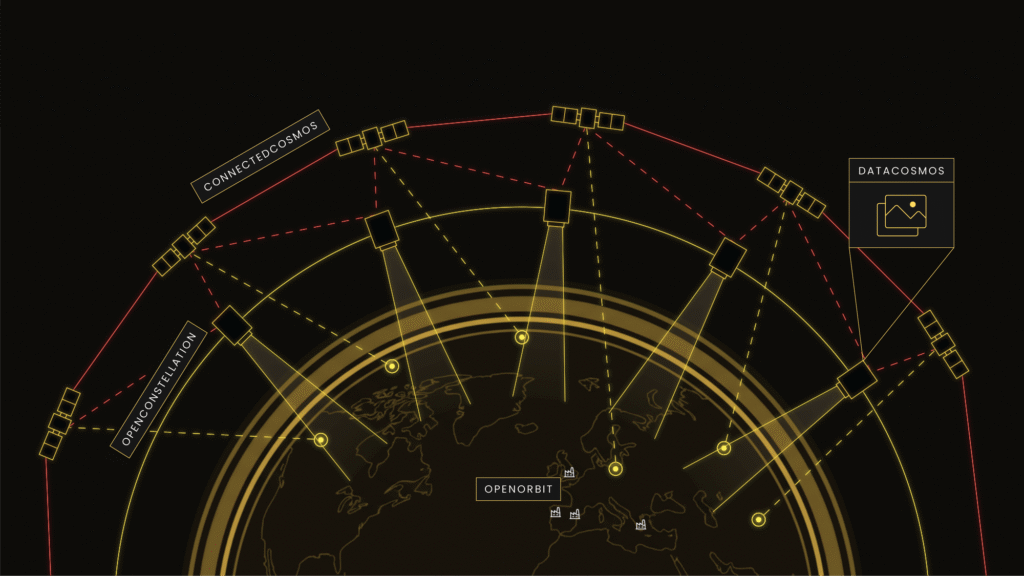
The Harwell-headquartered company will use the investment to increase satellite manufacturing and expand three parts of its space infrastructure business: OpenConstellation, ConnectedCosmos and DataCosmos.
The funding round was led by European investors and included Lightrock, ETF Partners, Institut Catala de Finances, Entrepreneurs First and two international pension funds. Britain’s National Security Strategic Investment Fund also participated, alongside Convex Group, Phoenix Court and Claret Capital Partners.
Open Cosmos says it can already manufacture one satellite a day across four European factories. The new investment will allow it to expand that industrial capacity while increasing its engineering, manufacturing and software workforce across the UK, Spain, Portugal and Greece. The company currently employs close to 400 people across those countries.
For UK, the investment comes as satellite communications, Earth observation and space-derived intelligence are increasingly being treated not simply as commercial services but as part of national resilience and defence infrastructure.
“This landmark investment represents a major vote of confidence in Open Cosmos and Britain’s growing space sector,” UK Space Minister Baroness Lloyd said.
“Our new UK Space Strategy recognises the increasing importance of satellite communications in all our lives, from connectivity to defending our country, and companies like Open Cosmos are vital for advancing that infrastructure.”
From building satellites to delivering intelligence in minutes
Open Cosmos was founded in 2015 and has grown from building relatively small satellites into a company attempting to provide an integrated system spanning spacecraft, communications and data analysis.
That distinction is important to its latest expansion. OpenOrbit covers the design, manufacture and operation of satellites.
OpenConstellation allows governments and other organisations to share satellite infrastructure rather than each building a standalone constellation.
ConnectedCosmos provides sovereign broadband and Internet of Things communications between satellites and Earth, while DataCosmos processes imagery and sensor information into operational intelligence.
The company is now trying to reduce the time between something happening on Earth and useful information reaching the people who need it.
Its latest OpenConstellation satellites are designed to cut delivery of Earth observation intelligence from as much as 48 hours to as little as 30 minutes.
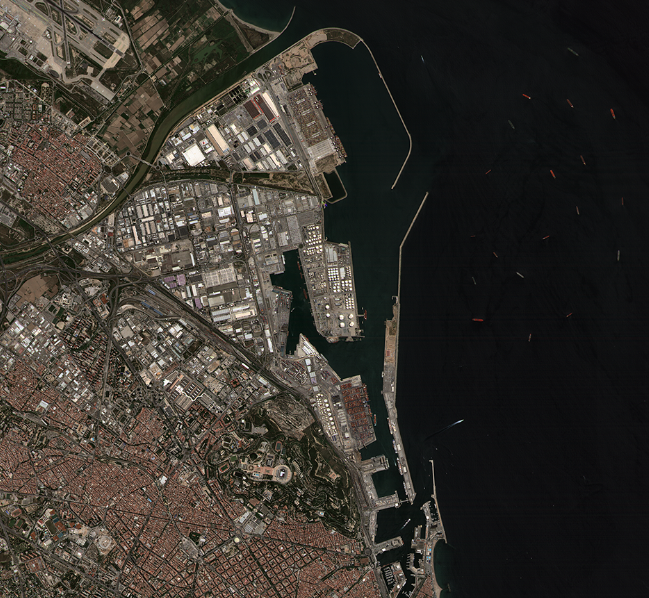
They combine onboard artificial intelligence processing with inter-satellite communications, allowing information to be analysed before it reaches the ground rather than simply downloading raw imagery for processing later.
That has obvious civilian uses in areas such as wildfire detection, disaster response and monitoring critical infrastructure. But the same ability to detect a change, analyse it quickly and move the resulting information securely to a user is increasingly important to defence and national security.
Open Cosmos chief executive and founder Rafel Jorda Siquier said the value was no longer in the spacecraft alone.
“Space infrastructure is becoming as critical as energy, digital networks and transport,” he said. “Governments and enterprises increasingly require secure communications and operational data delivered through resilient systems. But infrastructure alone isn’t enough.”
“The real value comes from the intelligence that relays what’s happening on Earth in real time and the global connectivity to deliver it.”
Open Cosmos builds around a shared constellation model
One of the more unusual elements of the company’s strategy is OpenConstellation.
Rather than requiring every government or organisation to finance an entire Earth observation constellation, the model allows participating customers to contribute and share satellite capacity.
The approach is intended to provide more frequent observations and access to different types of data while lowering the cost and complexity of establishing independent infrastructure.
Open Cosmos says the next-generation satellites recently launched for OpenConstellation incorporate onboard AI and inter-satellite links as it works towards the 30-minute intelligence-delivery target.
ConnectedCosmos adds the communications layer. Open Cosmos moved particularly quickly on that programme after gaining access to Liechtenstein’s Ka-band spectrum filings: according to the company, its first ConnectedCosmos satellites were launched within two months.
The ambition is eventually to make sensing and communications part of the same network.
Open Cosmos gives the example of a satellite detecting an unusual temperature rise over a forest. Onboard AI could classify it as a possible fire, before ConnectedCosmos relays the information directly to emergency services or aircraft. Other satellites and terrestrial sensors could then be tasked to gather more information, while the satellite network could provide connectivity if terrestrial communications had failed.
The technology is different in a defence setting, but the underlying requirement is similar: reduce the time between detection, analysis and a decision.
Harwell investment comes as UK links space more closely with defence
Open Cosmos’ expansion also reinforces the role of Harwell Campus in Oxfordshire as one of the centres of UK’s space industrial strategy.
The company is headquartered at Harwell, alongside the UK Space Agency, RAL Space, the Satellite Applications Catapult and the European Space Agency’s European Centre for Space Applications and Telecommunications.
That cluster has taken on a more explicit defence dimension this year.

King Charles III opened the UK Space and Defence Gateway at Harwell in July, an initiative intended to bring government, space agencies, academia, investors and industry together and help companies move from innovation towards larger-scale operations.
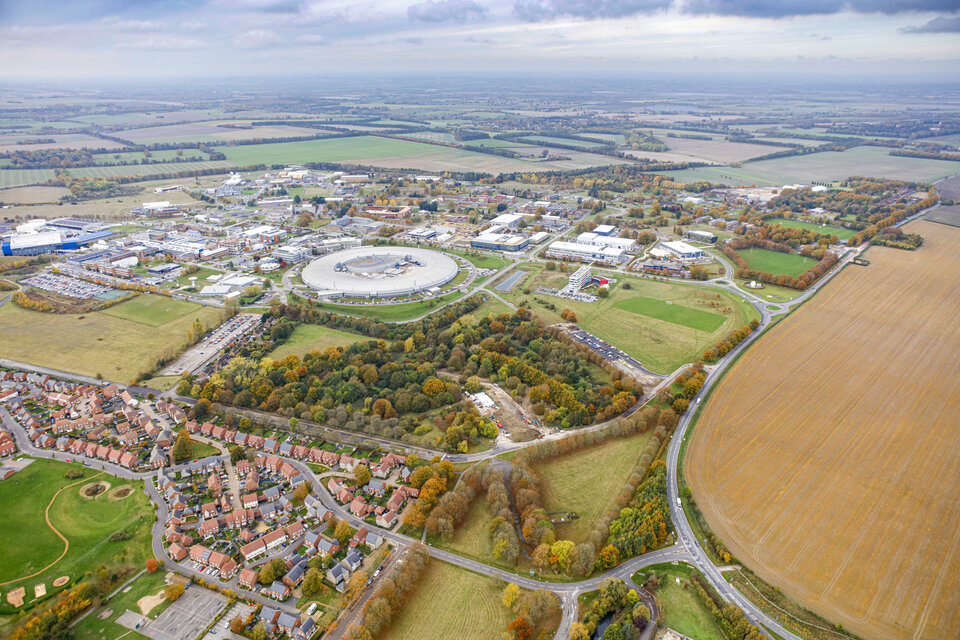
Barbara Ghinelli, founder of the Gateway and UKRI’s Director of Innovation Clusters and Harwell Campus, described it at the opening as “a new way of working which brings together civil and defence space stakeholders across government, industry, academia and investors to enable a clear pathway between innovation and scale-up and to deliver on national priorities.”
That scale-up challenge is precisely what the new Open Cosmos funding addresses.
The company says it has recorded five consecutive years of profitable growth and signed more than $370 million in customer contracts during the past three-and-a-half years. Its customers include European governments and space agencies as well as energy and infrastructure companies.
UK jobs and manufacturing form part of the next expansion
Open Cosmos has not disclosed how the €300 million will be divided between its different operations or how many additional UK jobs it expects to create.
It has, however, said the investment will increase engineering, manufacturing and software capacity across its European operations, including Britain.

Baroness Lloyd linked the financing directly to the government’s wider push for skilled employment in the space economy.
“Following previous UK government support, it is great to see the company continuing to grow, with investment that will help unlock high-skilled jobs and growth that will benefit people across the UK,” she said.
Jorda Siquier said the money would also help Open Cosmos meet existing demand rather than finance an entirely speculative expansion.
“This investment allows us to accelerate that vision, satisfying the satellite manufacturing orders that governments and large companies are placing for our reliable and high-performance satellites and delivering the sovereign services the world needs.”
That combination of manufacturing and sovereign services gives the investment particular relevance for the UK.
Sign up for our newsletter and get our latest content in your inbox.
Similar Reads





Sign up for our newsletter. Select all sectors relevant to you.
Related