DVD2026: Five key defence trends shaping the British Army’s future



As organisers of DVD2026 prepare to kick off proceedings at UTAC Millbrook in Bedfordshire from 16-17 September, the UK’s land-based defence equipment community will gather against the backdrop of the recently published Defence Investment Plan (DIP) and how the British Army buys, integrates and fields new military capabilities.
Jointly sponsored by the UK Ministry of Defence’s (MOD’s) newly formed National Armaments Director (NAD) Group and the Army Headquarters, this year’s edition of the biennial event is built around the theme: “Connected for Combat – Aligning People, Systems and Decisions.”
This emphasis reflects a domestic defence sector that is moving away from its traditional model of viewing platforms, equipment and modern capabilities as standalone programmes and towards the development and fielding of new integrated, software-enabled and increasingly autonomous combat systems.

Specifically, DVD2026 will serve as a crucial waypoint in showcasing the opportunities in the British Army’s approach to both combat mass and lethality, demonstrating how different elements of equipment can work together to reinforce one another and strengthen capabilities.
Commenting on the upcoming event, Maj Gen Lizzie Faithfull-Davies CBE – Director of Land Equipment at the UK MOD – explained: “DVD is hugely important for defence procurement, encouraging collaboration between industry, Army and NAD Group as collectively we seek to exploit science and technology to build a more modern and lethal [British] Army…
“The relationships we have with our stakeholders are critical. I am looking forward to engaging with industry, alongside Army HQ and HQ Field Army staff. The event provides a unique opportunity for industry to gain a better understanding of MOD needs, through direct engagement with Army, and insight from the [NAD] Group on procurement and support issues, as well as industry-to-industry engagement.”
For British suppliers and Small and Medium Enterprises (SMEs), five specific trends will likely dominate the conversation at DVD2026.
1. Vehicle modernisation: Moving from platform replacement to capability integration
Vehicle modernisation remains central to the British Army’s future force, but DVD2026 will likely show how the requirement no longer simply focuses on newer trucks, protected mobility platforms and other armoured vehicles, but also on their modularity and through-life upgradeability to maintain cutting-edge combat capabilities across the battlespace.
The most obvious programme to watch is the Army’s Light Mobility Vehicle (LMV) competition. The UK MOD formally launched the tender for the £2-2.5bn procurement project on 31 July, seeking a common base platform that is capable of supporting nine different vehicle variants ranging from troop-carrying, general-purpose and utility vehicles to ambulances and command-and-control (C2) and enhanced protection platforms.
With plans to acquire in excess of 9,500 vehicles, the LMV programme points to something bigger than just a straightforward replacement for the Army’s ageing Land Rover and Pinzgauer fleets. This new emerging model is one of common platforms, modular configurations and the ability to adapt vehicles as requirements change.

The tender also incorporates post-design services, training and through-life support, reinforcing the importance of what happens after a new military vehicle enters operational service. For SMEs, this could create opportunities well beyond vehicle manufacture, as power systems, communications, mission equipment, protection, sensors, hardware/software, maintenance, logistics and upgrade packages could all become part of the final product’s value chain.
The initial LMV contract will run from May 2027 to May 2036, with options extending to 2047, if exercised. Vehicle trials are expected to take place between October 2026 and January 2027.
What to watch: Whether modularity and upgradeability become standard requirements across the British Army’s future land-based vehicle and equipment acquisition programmes.
2. Uncrewed and autonomous systems: Becoming a greater part of the Army’s force design
Announced as part of the 2025 Strategic Defence Review (SDR), the 20/40/40 model is a three-layered combat framework for the British Army that is designed to better leverage autonomous technology and uncrewed systems, placing such platforms much closer to the centre of military planning. The review envisages a force mix combining crewed platforms with reusable and attritable uncrewed systems.
DVD2026 is explicitly tied to this direction, with the event promising insight into a future force design model that is shaped by current and future autonomous warfare trends. The question for industry has therefore shifted from ‘can autonomy work?’ to ‘how can it be integrated into the wider force?’
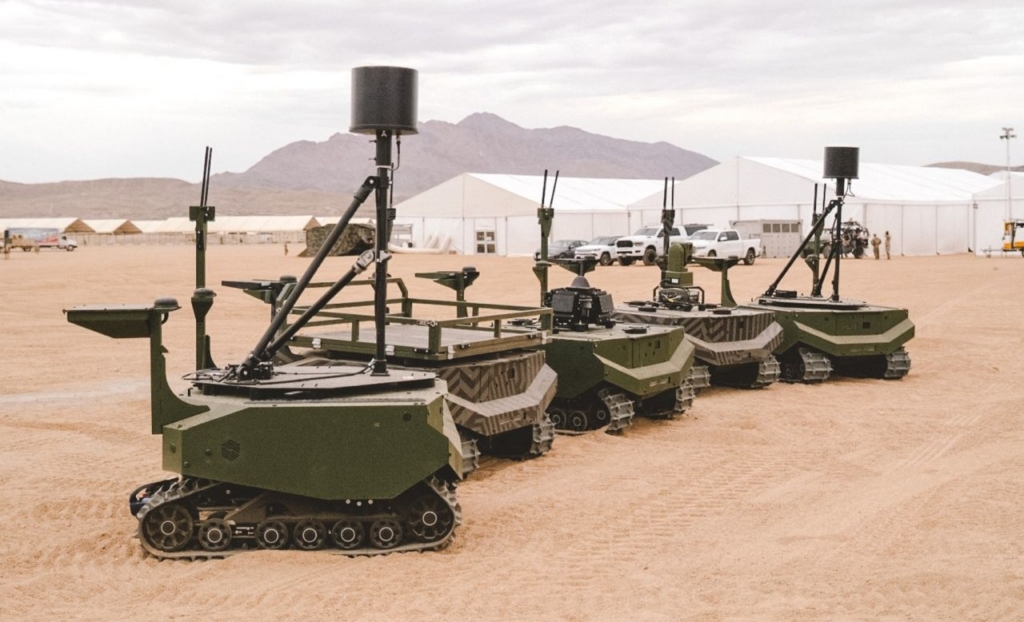
That creates a wide market for suppliers working on autonomous navigation, sensors, communications, mission systems, manned-unmanned teaming (MUM-T), safety, testing and assurance. It also raises the importance of technologies that allow autonomous platforms to operate when satellite communications or navigation capabilities are degraded.
What to watch: Evidence that the British Army is looking for scalable autonomous capabilities rather than standalone autonomous technology demonstrators and single-mission platforms.
3. The connected battlefield: A new procurement requirement
‘Connected for Combat’ is more than an exhibition slogan. DVD2026’s organisers are explicitly highlighting sensors, software and integrated systems with the aim of ensuring hardware operates within a coherent digital framework. This opens up new opportunities for industry and SMEs in the scope of interfacing between systems.
In the era of modern and future warfare, a highly capable military vehicle, sensor or weapon is of limited value if it cannot exchange information with the wider force across the battlespace. Attention on the practicality of new vehicles has shifted to focus on resilient communications and mission systems, data, edge computing, interoperability and the ability to fuse information into faster decisions.

For smaller technology companies, this could be particularly significant. Suppliers do not necessarily need to build the platform; they need to solve the connectivity, processing and/or integration problems.
What to watch: Whether future programmes place greater emphasis on open architectures, software integration and interoperability alongside traditional hardware performance.
4. Greater survivability in a contested battlespace
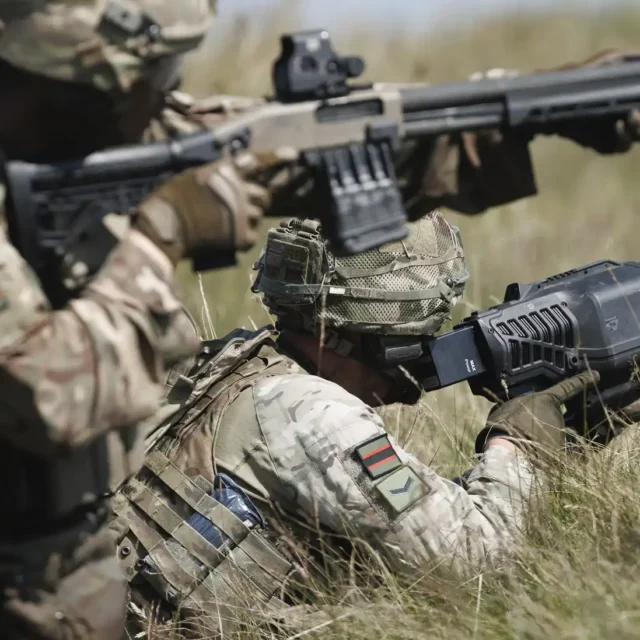
The other side of connectivity is vulnerability. DVD2026’s focus on ‘lethality and resilience’ reflects an operating environment in which platforms must survive drones, electronic warfare (EW), jamming, cyber threats and persistent surveillance while continuing to fight and manoeuvre.
Industry activity ahead of the event is already highlighting technologies for GPS-denied navigation, counter-UAS (C-UAS), electronic protection and autonomous operation in contested environments.
This matters because resilience is increasingly becoming a system-level problem. Protection cannot simply mean thicker armour; it can also mean reducing signatures, maintaining navigation without GPS, defeating incoming loitering munitions and one-way attack (OWA) drones, hardening communications and ensuring systems can continue operating when parts of the network are disrupted.
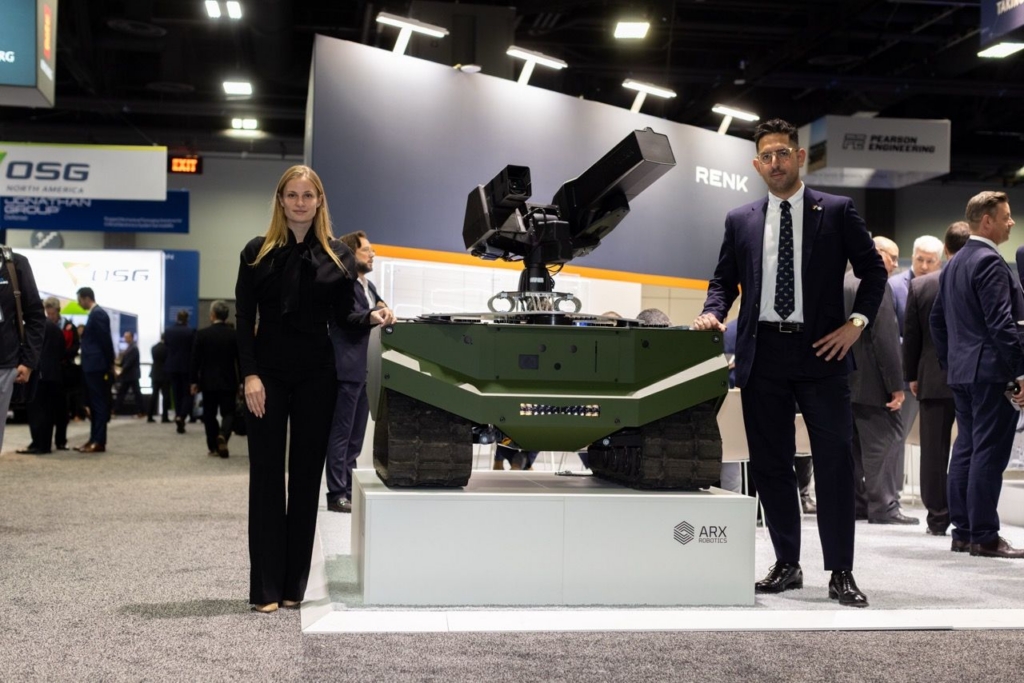
For industry and SMEs, this creates new opportunities across electronics, software, radio frequency (RF) technology, sensors, power, materials and systems engineering with the aim of enhancing the survivability of individual platforms and the wider force from current and emerging threats. Lessons learned from the conflicts in Ukraine and the Middle East will also likely feed into such developments.
What to watch: How the British Army balances mobility, protection, electronic resilience and affordability, along with whether crucial survivability requirements are being pushed down into the supply chain.
5. Procurement reform: Can SMEs actually get through the door now?
Perhaps the most important trend during DVD2026 is not actually a piece of equipment at all. It is instead the changing relationship between the UK MOD and the domestic and international defence industry.
DVD2026 introduces a dedicated ‘SME Zone’, while the Defence Office for Small Business Growth was established earlier this year to help SMEs navigate business engagement with the UK MOD. The government has also committed to increasing annual defence spending with SMEs by £2.5bn by May 2028. However, the key test will be whether this ambition translates into actual contracts.

The newly strengthened NAD Group is intended to bring procurement, science and technology, delivery and support closer together, with DVD2026 providing a forum for direct engagement between industry and decision-makers at the MOD. For SMEs, the message should be to look beyond the traditional prime contractor route. Emerging opportunities may be in specialist technology, integration, sustainment, upgrades and dual-use capabilities that can be brought into programmes quickly.
What to watch: Not just what the UK MOD says it wants to buy, but how quickly those requirements turn into funded opportunities and accessible routes to market.
How these themes form the bigger picture of DVD2026
Taken together, these five trends suggest that DVD2026 will be less about single ‘next-generation’ platforms and more about how the UK MOD, together with the British Army, builds an adaptable land enterprise. For industry, the opportunity is to understand where the gaps will sit between the headline platforms, autonomy, data, power, support, resilience, integration, support and rapid upgrades.
The companies best positioned to benefit may not necessarily be those selling the biggest systems or solutions. They could be SMEs providing the technology that makes the wider force more connected, more survivable and better positioned to adapt faster.
Sign up for our newsletter and get our latest content in your inbox.
Similar Reads




Sign up for our newsletter. Select all sectors relevant to you.
Related