RAF tests NATO air power in UK’s largest homeland defence exercise


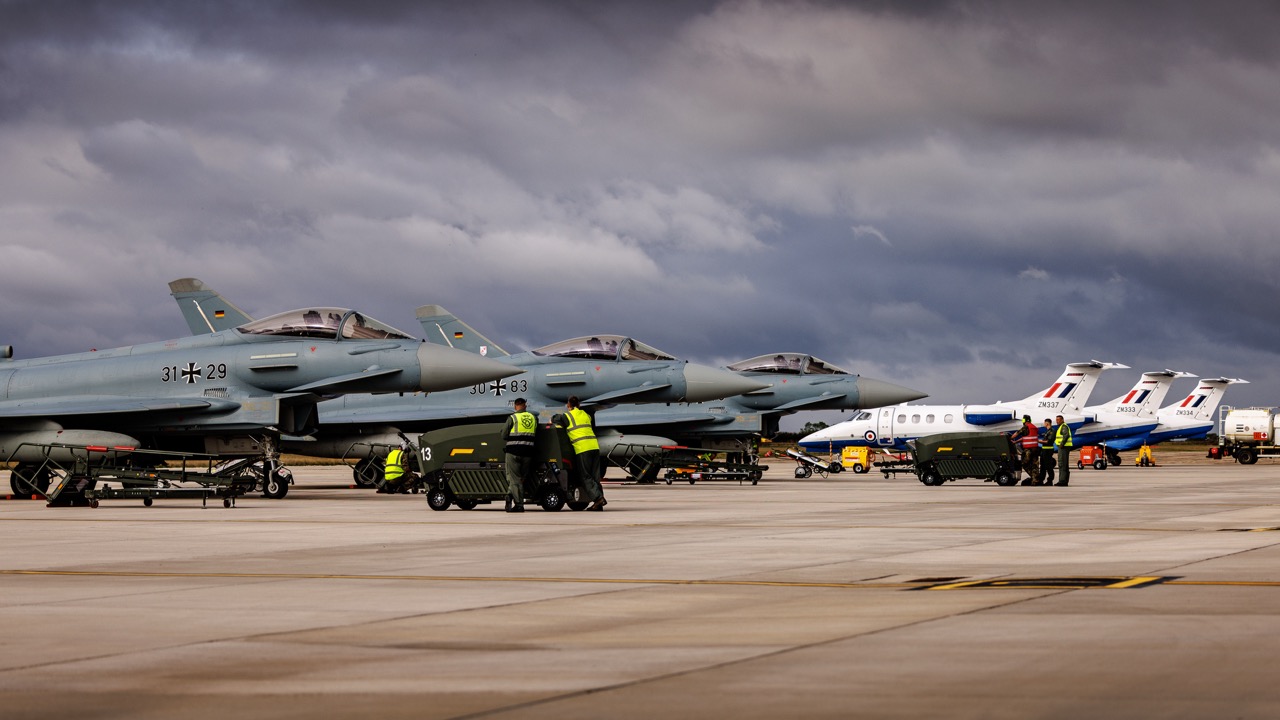
The Royal Air Force has launched its largest homeland defence air exercise, bringing together NATO fighters, surveillance aircraft and tankers to test how quickly allied air forces could respond to a major threat to the UK.
Exercise Cobra Warrior 26-2 runs from 14 September to 2 October and involves personnel and aircraft from the UK, Germany, Italy, the Netherlands and the United States.
The RAF says the exercise will test the integration, resilience and combat effectiveness needed to defend the UK and operate as part of a NATO force during a high-intensity conflict.
The training comes as the RAF focuses on preparedness for a potential conflict with a technologically advanced opponent.
RAF chief warns of growing threat from Russia
Chief of the Air Staff, Air Chief Marshal Sir Harv Smyth, described the current security environment in stark terms.
“The return of great power competition across the globe and the significant, and growing, threat posed by Russia to the UK and NATO makes this, by far, the most dangerous period in my 35 years of military service,” Smyth said. “This is why the RAF is investing in our People and our capabilities – to defend the UK, deter our adversaries and, if necessary, defeat them across the Air and Space domains.”
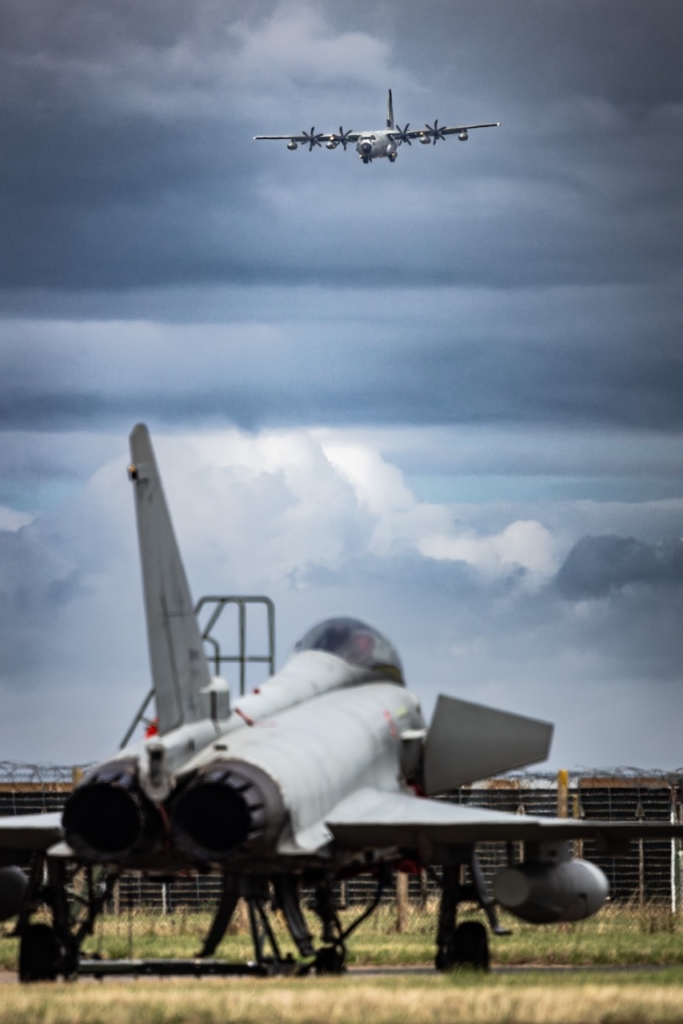
He said Cobra Warrior allows the service to practise its response to aggression and test its ability to operate with NATO forces during a real conflict.
The exercise follows other RAF training focused on operating under disrupted or contested conditions. Earlier in September, RAF A400M crews trained in Poland in tactical low-level flying, airdrops and operations from temporary runways as part of efforts to improve dispersal and resilience.
Typhoon, F-35 and F-15 fighters join Cobra Warrior
Cobra Warrior 26-2 brings together a broad mix of combat, surveillance and support aircraft.
RAF forces include Typhoon and F-35 Lightning fighters, P-8A Poseidon maritime patrol aircraft and Air Mobility Force assets, including Voyager air-to-air refuelling aircraft.
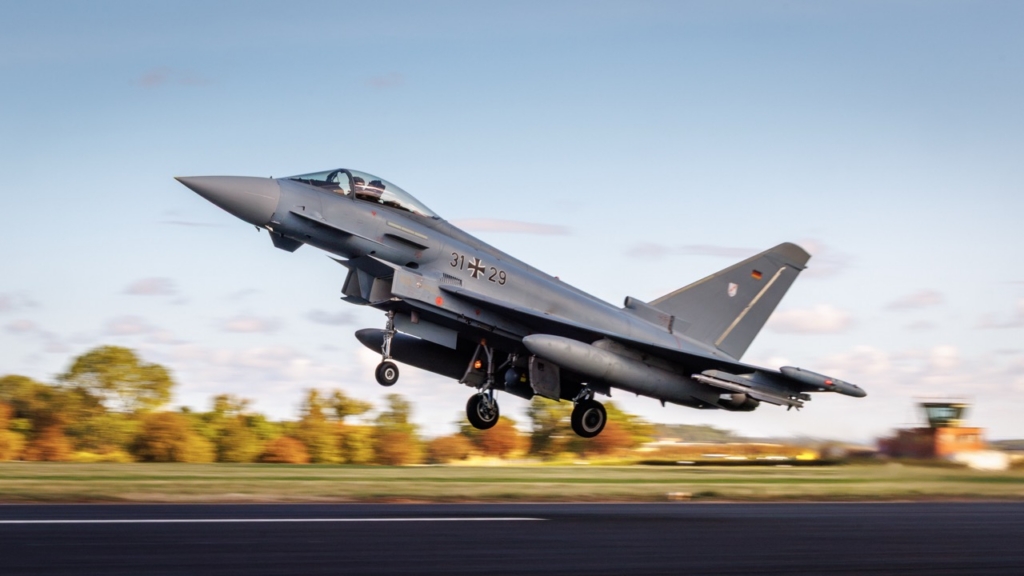
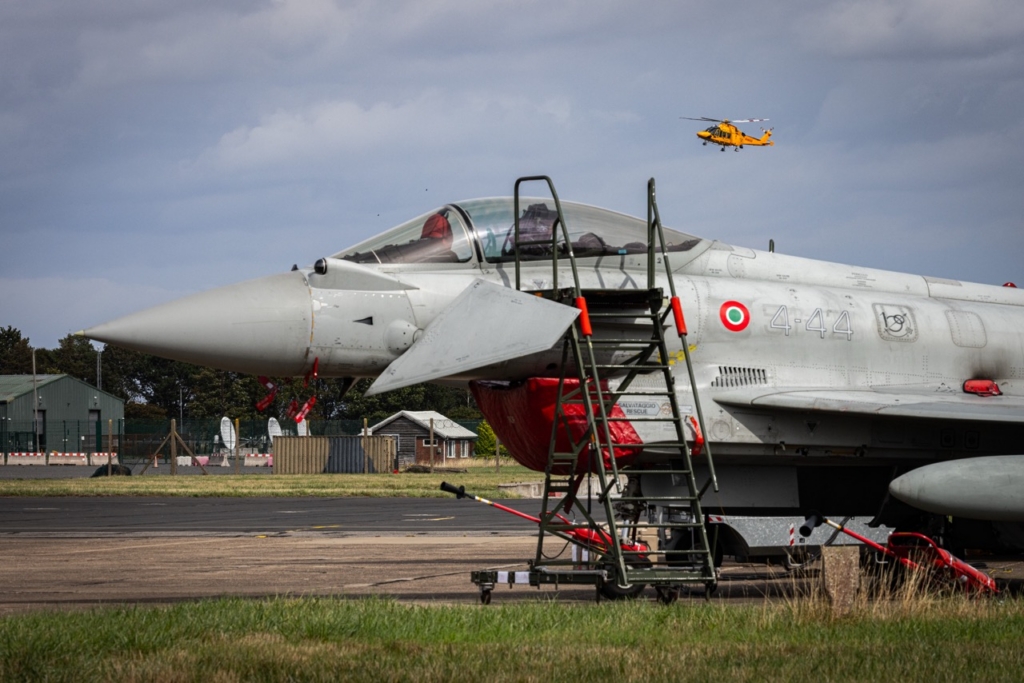
They are operating alongside Italian and German Eurofighter Typhoons and US Air Force F-15, F-16 and F-35 fighters.
NATO E-3A airborne warning and control aircraft and KC-135 tankers are also participating.
The combination allows crews to practise large-scale missions in which fighters, surveillance aircraft, tankers and command-and-control assets must work as a single force.
Exercise tests more than fighter pilots
Cobra Warrior is the RAF’s premier tactical training exercise, designed around high-intensity operations rather than individual aircraft performance.
The RAF says this autumn’s exercise will test how forces protect and operate from their home bases, integrate rapidly with allies, sustain complex missions and fight in contested airspace.
That makes command and control, aerial refuelling, logistics, intelligence and base resilience as important to the exercise as the fighter aircraft themselves.
The RAF ran the first Cobra Warrior exercise of 2026 from 16 to 27 March. That iteration involved British forces alongside German Eurofighters and Polish F-16s and generated more than 80 flights and around 195 flying hours.
Cobra Warrior is normally held twice a year and has become one of the RAF’s principal opportunities to practise large-force multinational air operations.
NATO forces practise fighting together
Italy is among the countries deploying aircraft and personnel to the UK.
Italian Deployment Commander Major Valerio C said Cobra Warrior provided an opportunity to “enhance our interoperability, refine joint tactics, and strengthen our collective readiness.”
“Participating with our aircraft and personnel allows us to test our capabilities in complex, contested and high-threat operational scenarios,” he said.
German Air Force personnel are operating from RAF Cranwell. Station Commander Wing Commander Mathew Thornton said hosting the German contingent provided an opportunity to strengthen existing relationships and train together.
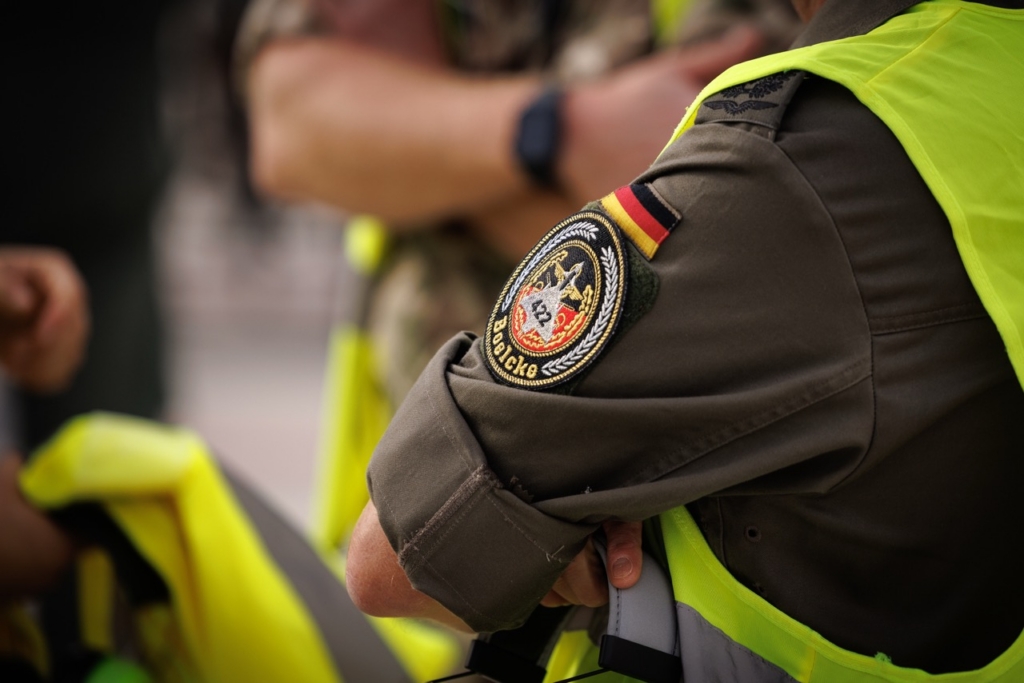
The multinational element is essential. Allied aircraft may use similar equipment but can have different procedures, tactics and command structures. Cobra Warrior provides an opportunity to identify those differences during training to avoid confusion during an operational deployment. It also helps build camaraderie.
“This Exercise provides an opportunity to strengthen our long-standing professional relationships, train alongside one another and build lasting friendships,” Thornton said.
Training the RAF’s next weapons instructors
The exercise also represents the final stage of the UK’s Qualified Weapons Instructor courses.
The QWI programme is the RAF’s highest-level postgraduate warfighting qualification and develops personnel capable of integrating aircraft, weapons, sensors and other capabilities during complex operations.
That role has long been closely connected with Cobra Warrior. The RAF has previously described the exercise as an opportunity for future weapons instructors to complete the mission-employment phase of their training while operating alongside international forces.
Cobra Warrior 26-2 goes beyond training individual specialists. The Royal Air Force sees the exercise as “a practical demonstration” of its ‘Warfighting Ready’ and ‘NATO First’ priorities, ensuring the RAF is prepared “for the demands of modern conflict.”
Sign up for our newsletter and get our latest content in your inbox.
Similar Reads



Sign up for our newsletter. Select all sectors relevant to you.
Related