

70 years of the British Army Land Rover: From Pink Panther to Defender Wolf II


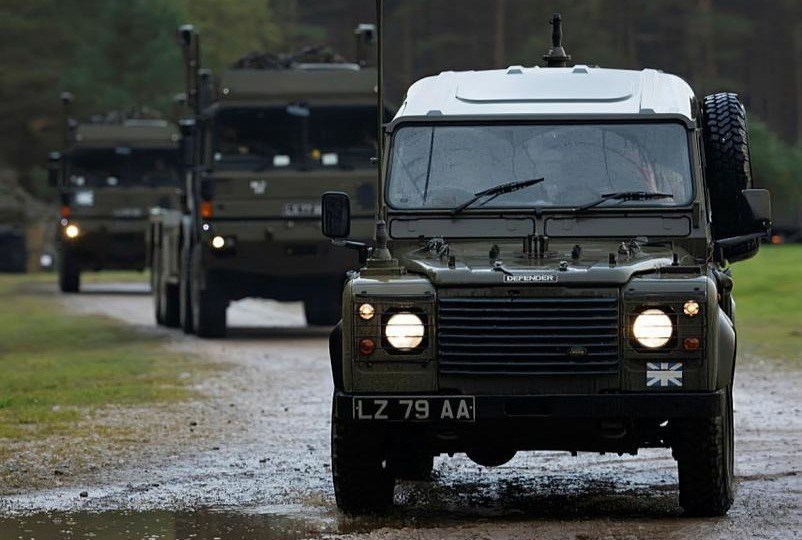
Few British vehicles have had such a long and varied military career as the Land Rover. For more than seven decades, the familiar boxy silhouette has carried soldiers, radios, stretchers and supplies across some of the world’s most demanding terrain.
It has served as a reconnaissance vehicle, ambulance, communications platform and patrol machine – and, in some remarkable experiments, was even prepared for amphibious operations.
Now, as the British Army begins retiring its historic Land Rover fleet, the name is poised to return to military service in a radically modern form. As reported yesterday by ADS Advance, the Defender Wolf Series II is Jaguar Land Rover’s bid to replace the outgoing fleet under the Ministry of Defence’s Light Mobility Vehicle (LMV) programme.
Here, Advance takes a look back at the illustrious UK military career of the Land Rover, takes a closer look at the proposed Wolf II, and looks back at the extraordinarily versatile vehicles that came before it.
How the British Army Land Rover became a military workhorse
Land Rover’s relationship with the British military dates back to the earliest days of the marque. The Army was among its most important customers almost from the beginning, attracted by the vehicle’s combination of four-wheel drive, compact dimensions, mechanical simplicity and ability to operate away from established roads.
Over subsequent decades, military Land Rovers evolved alongside the requirements of the armed forces. Series II and Series III vehicles were produced in numerous configurations, including general service, radio and ambulance versions. The platform’s great strength was its adaptability: the same basic vehicle could be configured for carrying personnel and equipment one day and supporting specialist duties the next.
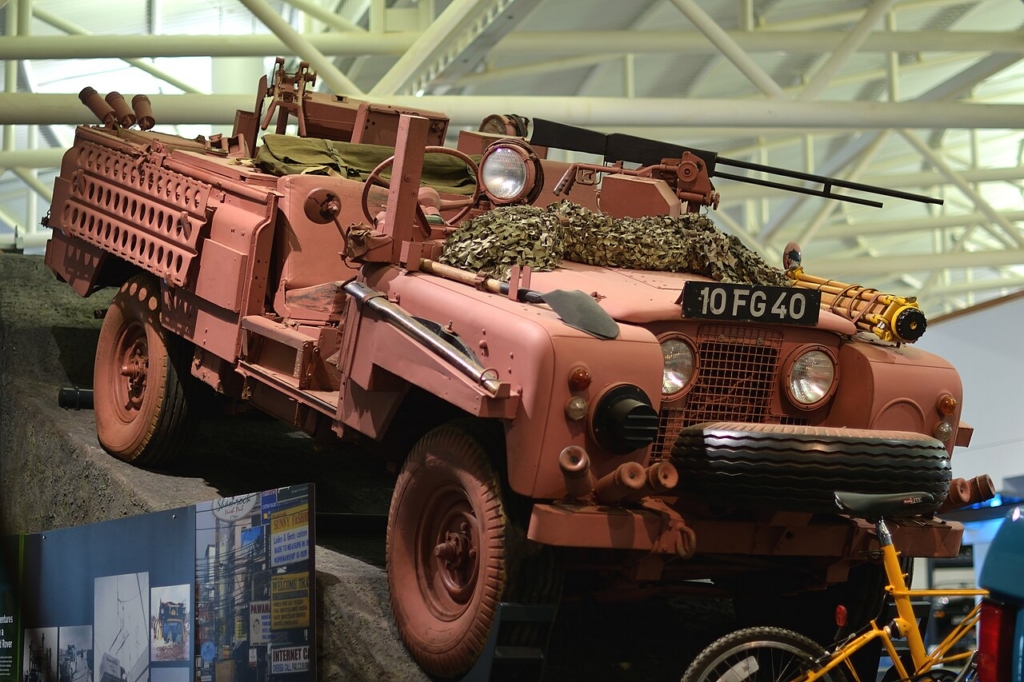
Some of the most fascinating examples were far removed from the standard Army Land Rover. Perhaps the most famous is the Series IIA 109-inch Pink Panther, developed for the Special Air Service.
Pink Panther and amphibious Land Rover projects
In the late 1960s, 72 long-wheelbase Land Rovers were converted by Marshalls of Cambridge for desert operations. Their distinctive pink finish was not intended as decoration. It was selected because it could provide useful camouflage in desert conditions, particularly around dawn and dusk.
The Pink Panthers were equipped for long-range reconnaissance and special operations, with modifications including heavy-duty suspension, additional fuel capacity and specialist equipment. Their appearance has subsequently become one of the most recognisable chapters in military Land Rover history.
Then there was the amphibious Land Rover. The Series IIA 109-inch amphibious prototype represented an altogether different interpretation of the basic Land Rover concept.
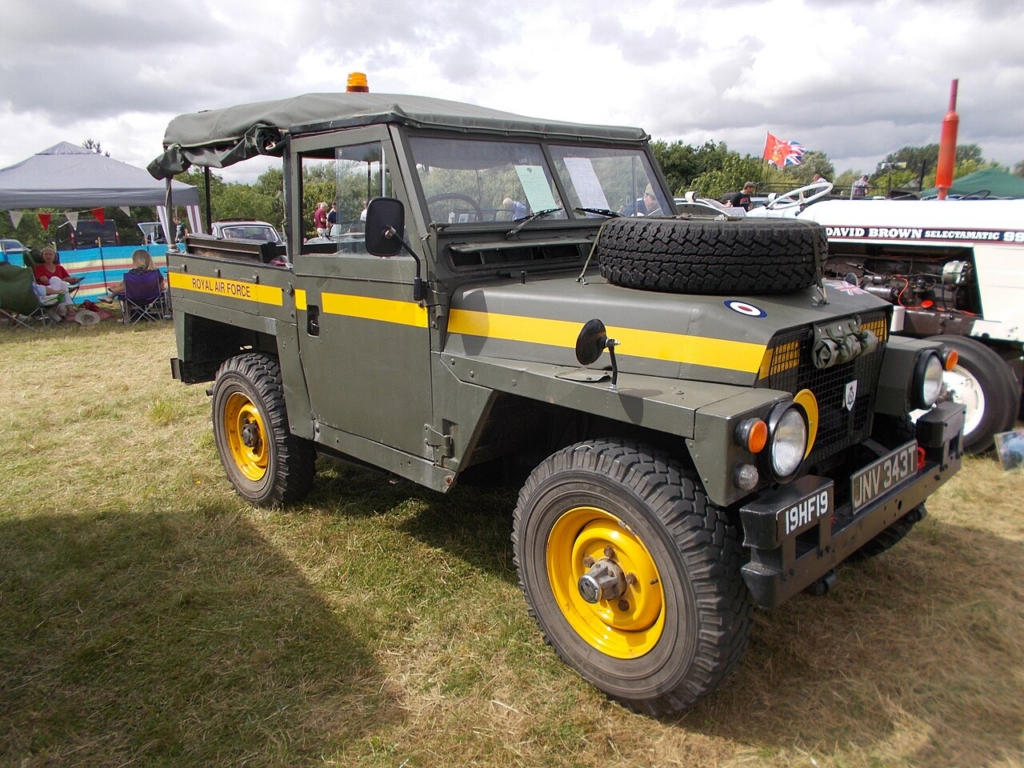
Developed as a potential vehicle for sea landings, the design was intended to extend the vehicle’s usefulness beyond the shoreline. It never became a standard production military vehicle, but it demonstrated just how far engineers were prepared to push the Land Rover platform.
Other unusual military experiments included the V8 Centaur Multi-Role Half-Track, which combined a Land Rover-based vehicle with tracked running gear derived from the Scorpion light tank. Together, these projects illustrate an important characteristic of the military Land Rover: it was never simply one vehicle, but a platform that could be repeatedly adapted to different requirements.
The Defender Wolf: The British Army’s Land Rover of the modern era
By the 1990s, however, the demands placed upon military vehicles had changed considerably. The next generation needed to be tougher, more capable and better suited to the equipment being carried by modern forces.
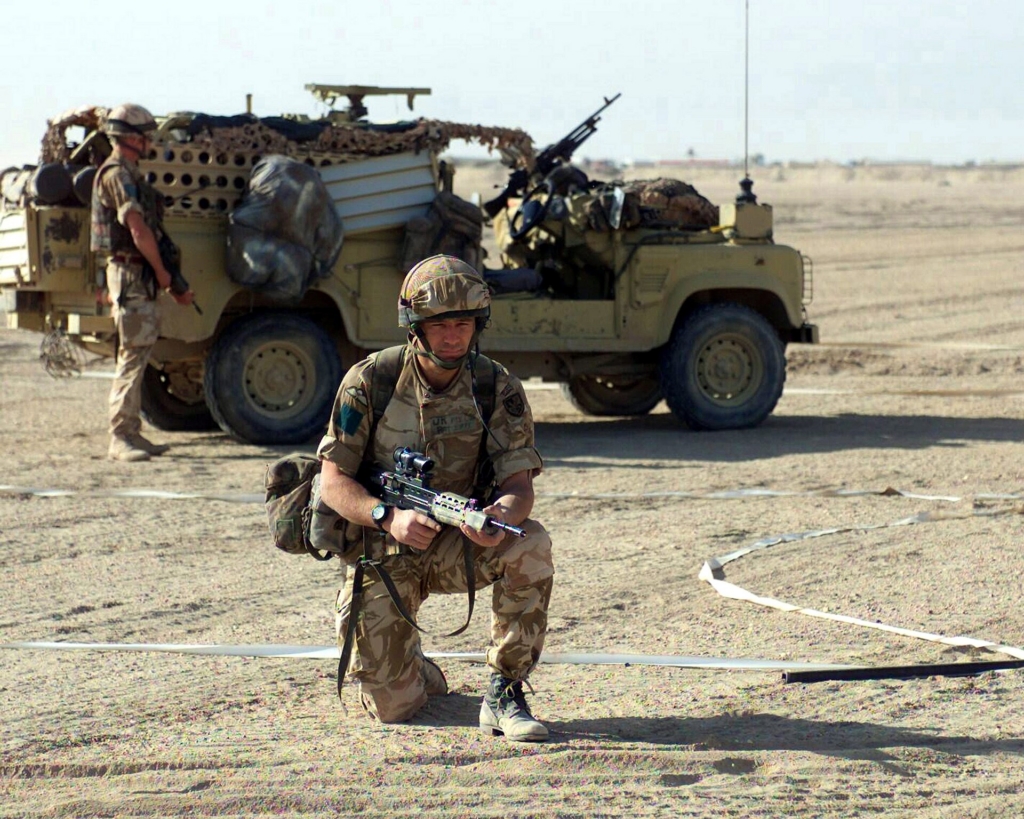
The original Wolf, formally associated with the Defender XD/Extra Duty programme, entered service in the late 1990s. Unlike a standard civilian Defender merely painted green, the military vehicle was substantially strengthened and developed specifically for service use. Almost 8,000 were acquired for the British armed forces, in short- and long-wheelbase configurations.
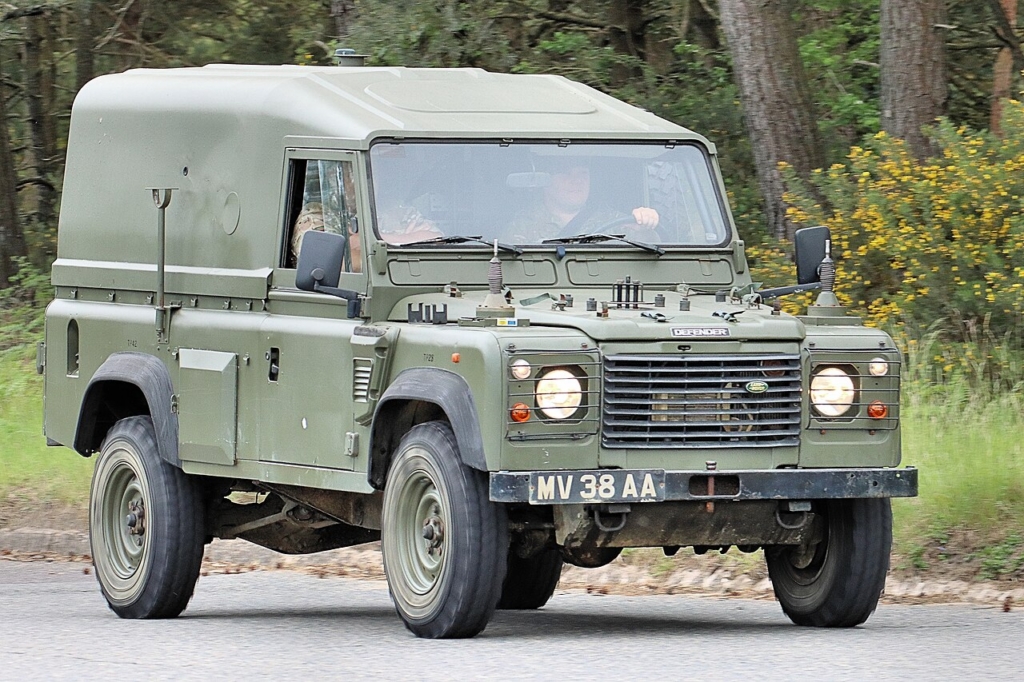
The Wolf became one of the defining British military vehicles of the post-Cold War era. It served in the Balkans, Iraq and Afghanistan and was adapted for a remarkably wide range of duties. Its appeal was straightforward: it could carry people and equipment, operate in difficult terrain and be modified for different missions while retaining the familiar Defender mechanical architecture.
But the old formula eventually reached its limits. The British Army’s Land Rover fleet has been gradually reduced and replaced as modern operations demanded greater protection and different mobility solutions.
In March 2026, the Ministry of Defence formally announced the beginning of the retirement of the iconic fleet after more than 70 years of service. More than 5,000 Land Rovers remained in UK military service in 2025, underlining the extraordinary longevity of the platform.
Defender Wolf II and the British Army LMV programme
The next chapter is the Defender Wolf Series II, unveiled by Jaguar Land Rover in September 2026.
Crucially, this is not simply the old Wolf with updated equipment. The new vehicle is based on the current Defender’s D7x architecture and uses a monocoque construction rather than the traditional separate ladder frame. JLR says the structure delivers high torsional rigidity while increasing payload capability. During development, the platform underwent more than 62,000 engineering tests and covered more than one million miles.
At the DVD 2026 event, JLR displayed three variants, including the Tactical Mobility Vehicle, Mono-Tactical Mobility Vehicle and Utility Vehicle, with further configurations planned or illustrated for roles such as command and control and battlefield ambulance duties. The company says the platform could ultimately support 26 variants, with 98 per cent commonality across key drivetrain, powertrain and exhaust components.
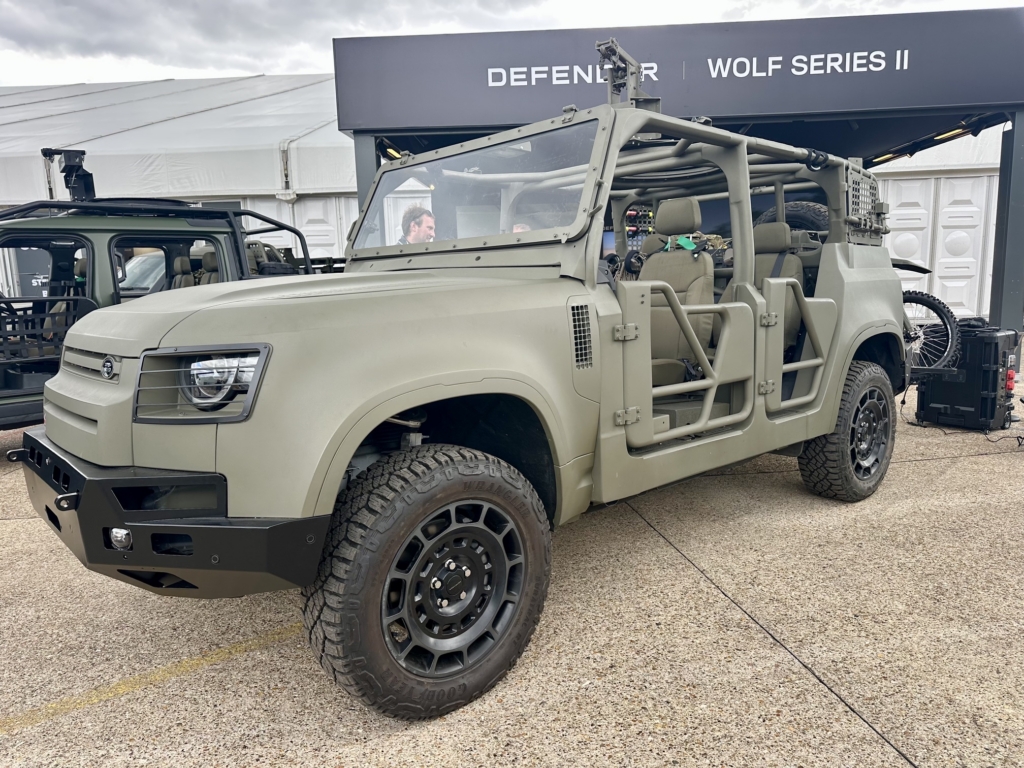
The specifications underline just how different modern military requirements have become. The new Wolf II uses a six-cylinder diesel producing a reported 250bhp and 576Nm of torque. Ground clearance is 293mm, while maximum fording depth is 900mm. JLR quotes a maximum range of 938km (583 miles).
The Defender 110-based Mono-Tactical Mobility Vehicle can carry four personnel and a 1,000kg payload while towing a braked trailer of up to 3,500kg. The longer Defender 130 Utility Vehicle increases payload to 2,000kg. Both can be transported internally by a Chinook helicopter.
From field repairs to predictive maintenance
Perhaps the biggest difference between the old Wolf and Wolf II is hidden beneath the bodywork. The original Defender earned its reputation partly because soldiers and mechanics understood its mechanical systems and could repair it in the field. Wolf II belongs to a different technological era, with dozens of sensors and electronic control units.
Speaking exclusively to ADS Advance, JLR said that it sees that complexity not simply as a liability but as an opportunity. The vehicle currently incorporates 32 sensors, with JLR proposing to work with the MOD to determine which information should be retained and used. The company’s Defence Division argues that digital monitoring could help identify developing faults before they become failures.
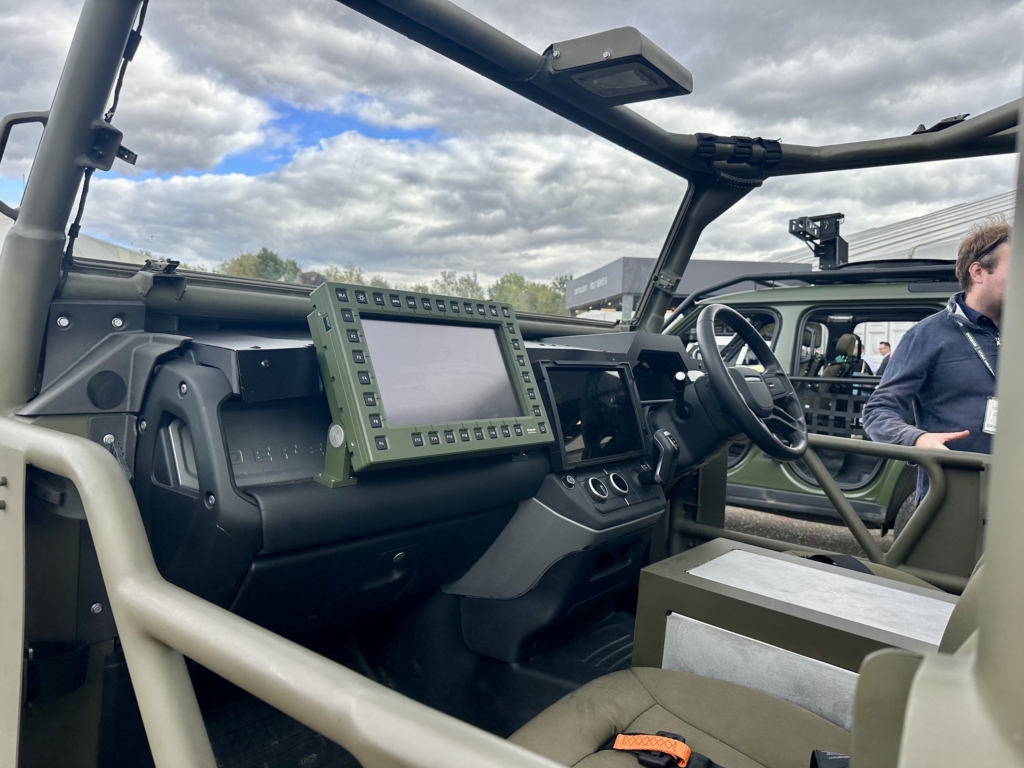
That is a significant philosophical shift. The old Land Rover was celebrated for being simple enough to fix. The new one aims to be intelligent enough to tell you when it needs fixing.
Whether that approach will deliver the same battlefield availability remains to be demonstrated. Wolf II is currently a contender for the British Army’s LMV requirement rather than its confirmed successor. The competition is intended to replace legacy light-mobility fleets, with new vehicles expected to enter service from around 2030.
More than 70 years of the British Army Land Rover
From the pink-painted SAS reconnaissance machines of the 1960s to an amphibious prototype, from the strengthened Wolf of the 1990s to today’s sensor-rich Wolf II, the military Land Rover story has always been about versatility and adaptability.
The remarkable thing is not that every experiment succeeded. Many did not. It is that the basic concept proved flexible enough to support generations of soldiers and an extraordinary variety of military requirements.
The original Land Rover was conceived as a simple, practical off-road vehicle. Seventy years later, its modern descendant is being proposed as a digitally connected light military platform. The shape has changed. The engineering philosophy has changed. The battlefield has changed.
But the fundamental requirement remains remarkably familiar: a vehicle that can carry people and equipment where ordinary transport cannot go and keep moving when conditions become difficult. That is the challenge Wolf II now faces – and perhaps the most fitting way to judge the next chapter of the Land Rover’s remarkable military career.
Sign up for our newsletter and get our latest content in your inbox.
Similar Reads