Royal Navy steps towards uncrewed undersea warfare with landmark Excalibur torpedo trial

The UK’s latest torpedo trial demonstrates how UUVs, like XV Excalibur, could evolve from surveillance platforms into autonomous combat systems operating alongside crewed naval forces.

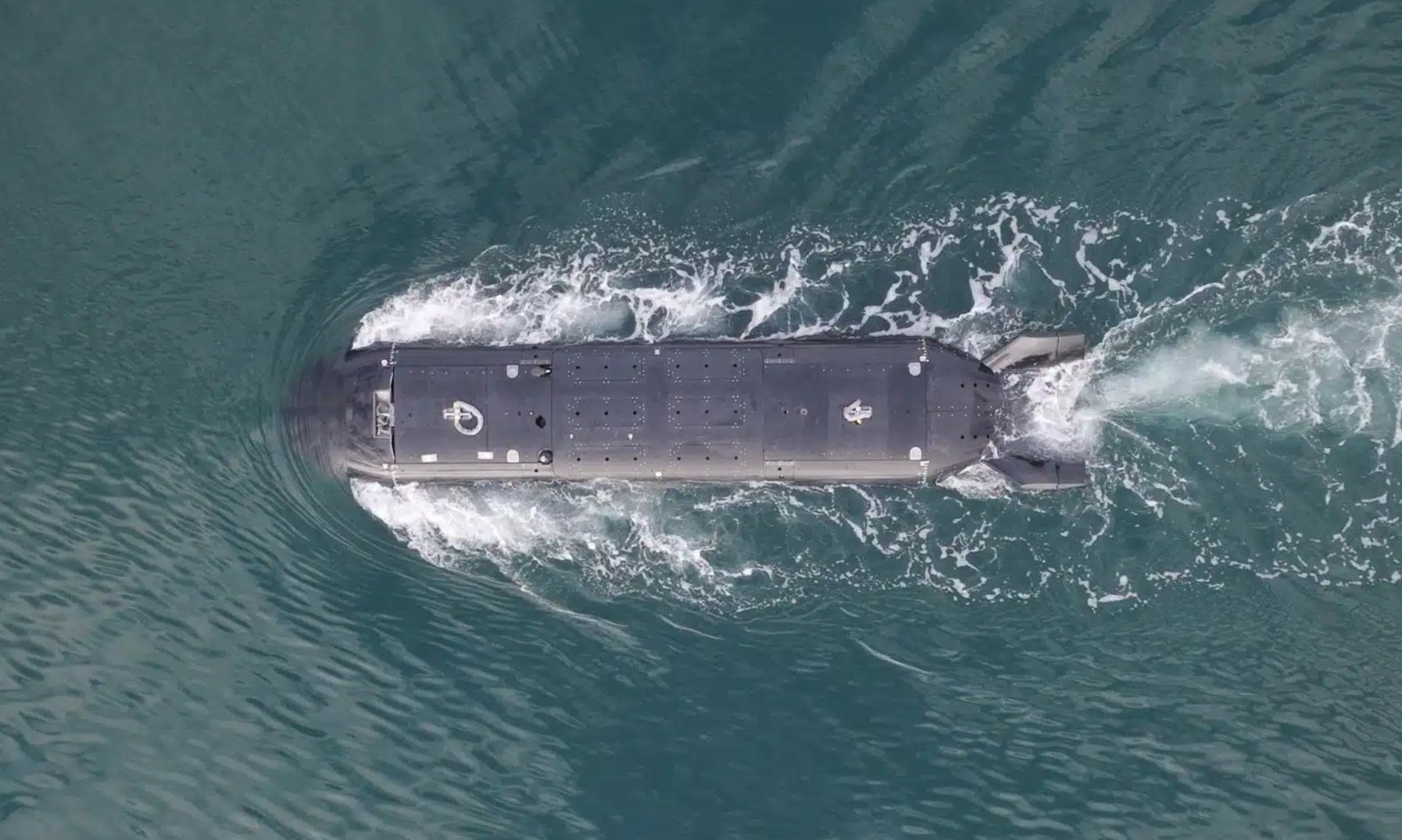
The Royal Navy's experimental XLUUV, XV Excalibur, conducts a trial at sea. Image: MSubs Ltd via LinkedIn
Photo: MSubs Ltd via LinkedIn

The UK has successfully fired a heavyweight torpedo from an uncrewed underwater vessel (UUV) for the first time, marking a major step forward in the continued development of the Royal Navy’s autonomous undersea warfare capabilities amid growing tensions with Russia.

This live-firing took place at the British Underwater Test & Evaluation Centre (BUTEC) in Scotland on 13 September as part of the AUKUS programme, with the 12m-long, Plymouth-built Extra-Large Uncrewed Underwater Vehicle (XLUUV) – known as XV Excalibur – launching a US-Australian-developed heavyweight torpedo.

The UK Ministry of Defence (MOD) said the trial was the first time either the UK or US had launched a torpedo from a UUV of any size. “This [milestone] marks a major advance in the future of submarine technology for the UK, US and Australia, and delivers a significant breakthrough for Euro-Atlantic security and NATO’s undersea advantage,” the UK defence ministry added.

The test marries together autonomous technology and an established naval weapon system, demonstrating that an XLUUV can both integrate and deploy a heavyweight kinetic payload.

Excalibur is classified as an XLUUV. Developed under Project Cetus with the Plymouth-based MSubs Ltd, the 19-tonne uncrewed vessel was handed over to the Royal Navy in May 2025. The experimental platform was designed to provide a testbed for autonomy, unique military payloads and future manned-unmanned teaming (MUM-T) operations.

Developing a new combat edge for autonomous submarines

While the Royal Navy’s crewed submarine fleet already operates the BAE Systems-developed Spearfish heavyweight dual-purpose torpedo to engage surface vessels and deep-diving submarines, this recent trial was carried out using a weapon that was developed jointly by Australia and the US.

Although the specific torpedo used in this demonstration was not disclosed by the MOD, the US Navy subsequently confirmed the Mk 48 Mod 7 Common Broadband Advanced Sonar System (CBASS) – which achieved Initial Operational Capability (IOC) in 2006 – was used.
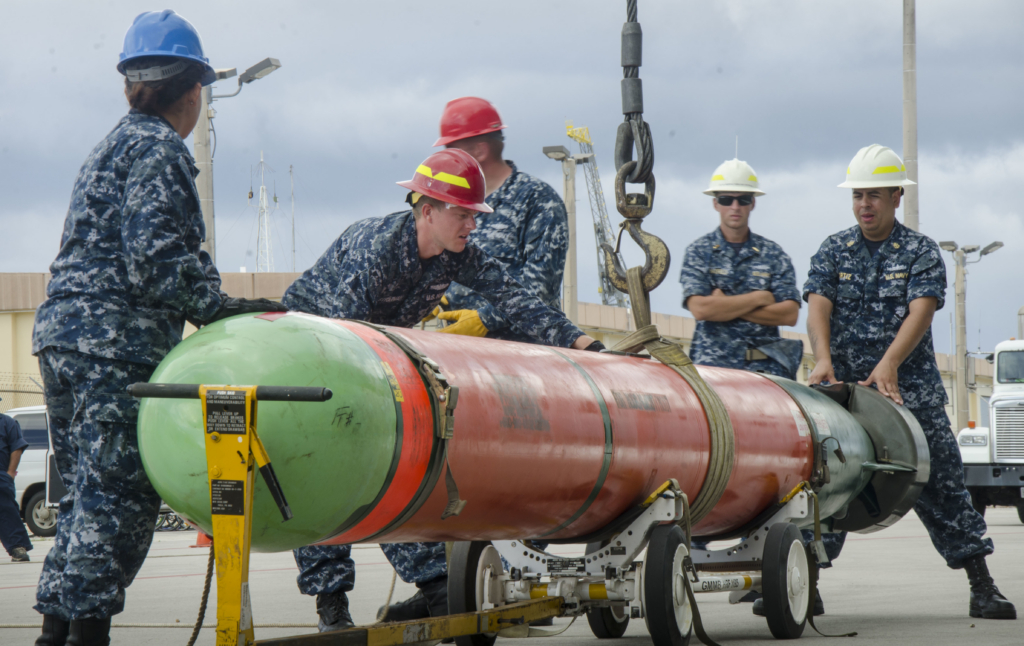
US Navy sailors prepare to load a Mk 48 heavyweight torpedo onto the Emory S Land-class submarine tender, USS Frank Cable (AS-40), at Santa Rita in Guam on 10 February 2017. Image: US Navy/Mass Communication Specialist 3rd Class Alana Langdon
Image: US Navy/Mass Communication Specialist 3rd Class Alana Langdon

This specific model of the wider Mk 48 torpedo family is the product of a bilateral development effort between the US and Australia, with the heavyweight torpedo being designed to engage submarines and surface ships by leveraging its increased sonar bandwidth and ability to search, acquire and attack targets effectively by taking advantage of improved broadband signal processing techniques.

Despite not having any dedicated torpedo tubes, Excalibur has a large central payload bay. However, at 5.8m in length, the Mk 48 Mod 7 torpedo is too long to fit within Excalibur’s payload bay, with the weapon instead being released from an external cradle that was temporarily fitted to the bottom of the innovative XLUUV’s hull.

Building toward the UK’s future ‘Hybrid Navy’ concept

For the Royal Navy and its AUKUS allies, this recent trial demonstrated a different approach to delivering undersea effects at a time of heightened tensions with Russia – especially on the maritime frontier.

The latest trial also comes as the Royal Navy accelerates its move towards a ‘Hybrid Navy’ that combines crewed platforms with autonomous systems, like Excalibur.
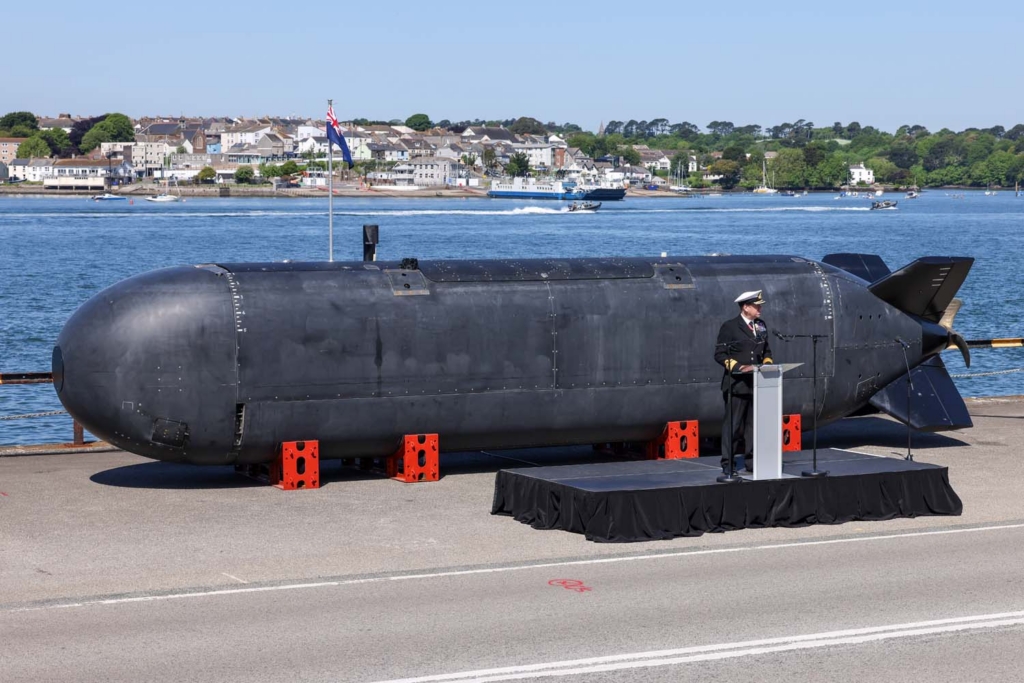
XV Excalibur is seen during the experimental XLUUV's formal handover to the Royal Navy at HMNB Devonport, Plymouth, in May 2025. Image: MOD Crown Copyright/LPhot Unaisi Luke
Image: MOD Crown Copyright/LPhot Unaisi Luke

The UK government has committed more than £5bn to accelerate uncrewed and autonomous capabilities across the UK Armed Forces, including the development of XLUUVs that are intended to operate alongside the Navy’s crewed, Astute-class hunter-killer submarines.

This ongoing development also sits within the framework of broader AUKUS cooperation between Australia, the UK and the US on advanced defence technologies.

For industry, the trial highlights the growing importance of integrating autonomous platforms, sensors, communications and weapons rather than developing them as separate capabilities. It also demonstrates how experimental uncrewed systems are moving from surveillance and experimentation towards increasingly complex operational combat roles.

How the UUV is evolving from a surveillance system to an effective combat platform

This latest live-fire trial marks a shift in the role previously envisaged for UUVs. Until now, much of the focus has been on surveillance, reconnaissance, seabed monitoring and infrastructure protection. AUKUS plans are now extending into strike capabilities, with new autonomous platforms being developed to carry military payloads.

The move could allow uncrewed submarines to undertake missions that would otherwise require a crewed vessel. Without personnel onboard, platforms such as Excalibur could potentially operate in higher-risk environments while still working alongside conventional submarines and surface vessels.
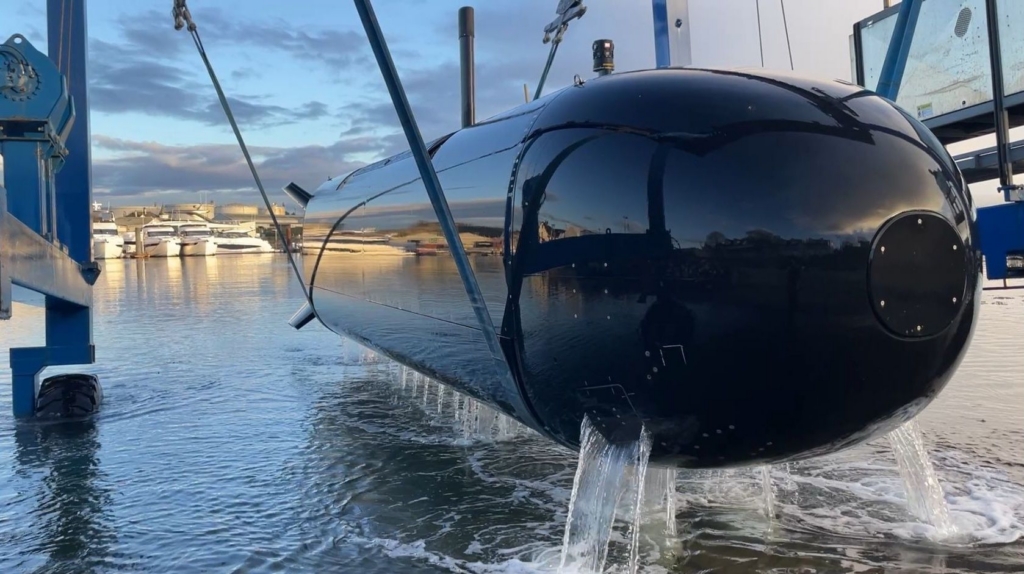
The Royal Navy's experimental XV Excalibur XLUUV is lifted out of the water at Turnchapel Wharf. Image: Turnchapel Wharf via MSubs Ltd on LinkedIn
Image: Turnchapel Wharf via MSubs Ltd on LinkedIn

The significance of this trial therefore goes beyond the successful launch of a heavyweight torpedo. It demonstrates the integration of an autonomous UUV with a weapon capable of delivering significant combat effect.

For the Royal Navy, Excalibur remains an experimental platform rather than an operational combat submarine. However, this trial demonstrates a new development direction: uncrewed submarines are moving beyond their traditional surveillance role and towards becoming another component of a future ‘hybrid’ fleet, operating alongside crewed vessels and potentially taking on complex combat missions.

Related

RAeS reveals its 2026 award winners
RAeS Awards 2026 Award Winners Group 9 Nov by Susanne Hakuba
RAeS reveals its 2026 award winners
Outstanding contributions to aerospace and space have been recognised at this year's annual Royal Aeronautical Society (RAeS) awards, which have been honouring advances across the global aerospace industry since 1909, when Wilbur and Orville Wright received the Society’s first Gold Medal..
Can drones safely share UK airspace with aircraft? Cranfield and Boeing put it to the test
Cranfield University Airfield
Can drones safely share UK airspace with aircraft? Cranfield and Boeing put it to the test
A CAA-backed trial at Cranfield Airport used live air traffic data and a virtual drone to test detect-and-avoid technology and support future UK beyond-visual-line-of-sight operations.
Aerospace

12 Nov 2026

Heathrow Airport defends controversial airline terminal changes following Virgin and Delta criticism
Heathrow Airport
Heathrow Airport defends controversial airline terminal changes following Virgin and Delta criticism
Starting in 2028, these major UK carriers face terminal separation to unlock stranded capacity.
Aerospace Events

12 Nov 2026

US Navy adds 59 Hydra MAX 2 terminals to its ALL.SPACE satcom fleet
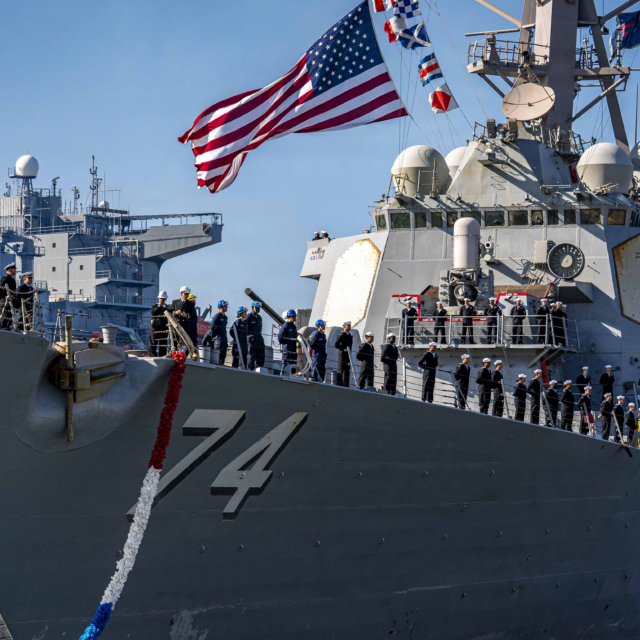
NAVAL STATION NORFOLK, Va. (Oct. 23, 2026) – US Navy Arleigh Burke-class guided-missile destroyer USS McFaul (DDG 74)
US Navy adds 59 Hydra MAX 2 terminals to its ALL.SPACE satcom fleet
ALL.​SPACE has secured a US Navy follow-on order for 59 Hydra MAX 2 Terminals, enhancing the service's resilient access to high-capacity Ka-band LEO constellations and maintaining interoperability with GEO, MEO and HEO networks.
Defence Member News

12 Nov 2026

BAE Systems accelerates delivery of LRASM sensors to Lockheed Martin
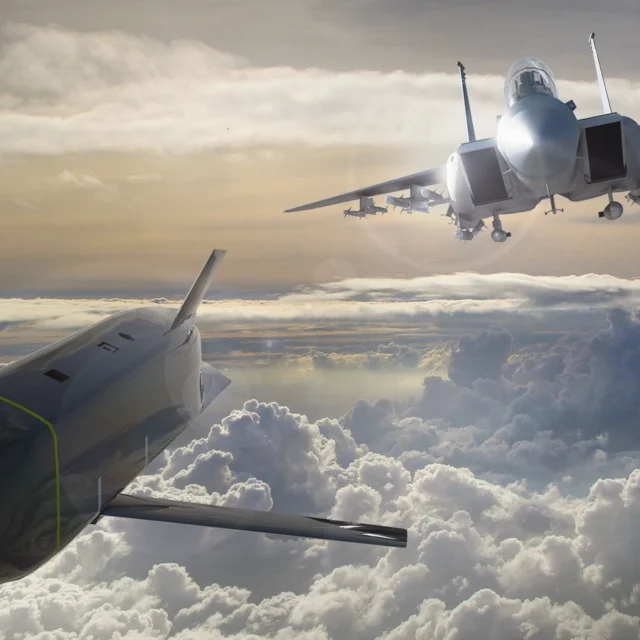
An F-15 fires a Long-Range Anti-Ship Missile (LRASM)
BAE Systems accelerates delivery of LRASM sensors to Lockheed Martin
Through strategic investment in modern electronic warfare facilities, BAE Systems has accelerated its production schedule to deliver advanced sensors for Lockheed Martin's Long-Range Anti-Ship Missile (LRASM).
Defence Member News

12 Nov 2026

Northern Navies Initiative: Royal Navy and JEF allies move to deepen maritime integration
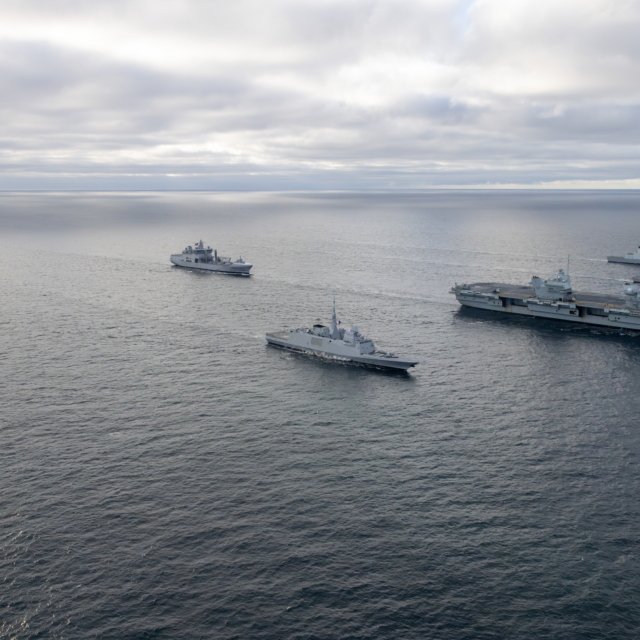
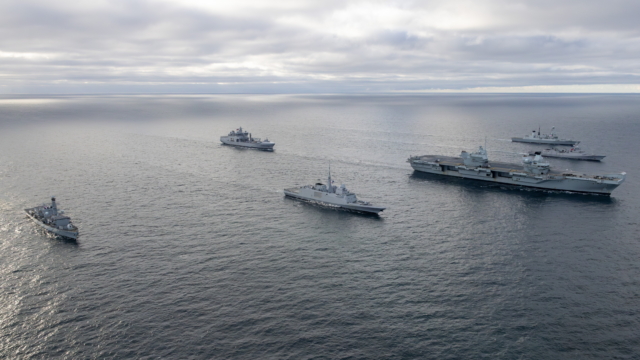
HMS Prince of Wales (R09) leads a formation of British, French and Norwegian warships during Exercise Neptune Strike 26-4 on 3 November 2026. Image: MOD Crown Copyright/AS1 Liam Ramsden
Northern Navies Initiative: Royal Navy and JEF allies move to deepen maritime integration
The Royal Navy and its JEF allies will deepen maritime integration, strengthen deterrence and improve collective responses to new and emerging threats in northern Europe as part of a historic new initiative.
Defence Security

12 Nov 2026

Serco acquires QinetiQ’s US business
Satellite orbiting earth
Serco acquires QinetiQ’s US business
It was announced today that Serco's acquisition of QinetiQ’s US business has been agreed, substantially expanding the defence capabilities of Serco, whilst strengthening QinetiQ's balance sheet and enabling it to concentrate its resources on the UK, European, NATO and key allied defence and security markets.
Defence Member News Space

12 Nov 2026

UK military satellite Titania reaches orbit as MoD trials space-threat sensors
Titania Satellite
UK military satellite Titania reaches orbit as MoD trials space-threat sensors
The UK's second ISTARI military satellite, Titania, reaches orbit as trials launch for a three-site sensor network to monitor potential threats to spacecraft.
Defence Space

9 Nov 2026

Leicester’s National Space Centre Discovery Team wins Sir Arthur Clarke Award
National Space Centre Discovery Team wins Sir Arthur Clarke Award
Leicester’s National Space Centre Discovery Team wins Sir Arthur Clarke Award
Following delivery of its education and outreach initiatives across the UK to inspire the next generation of scientists, engineers and space explorers, the National Space Centre's Discovery Team has gained national recognition by winning a prestigious Sir Arthur Clarke Award.
Member News Space

5 Nov 2026

Northern Navies Initiative: Royal Navy and JEF allies move to deepen maritime integration
HMS Prince of Wales (R09) leads a formation of British, French and Norwegian warships during Exercise Neptune Strike 26-4 on 3 November 2026. Image: MOD Crown Copyright/AS1 Liam Ramsden
Northern Navies Initiative: Royal Navy and JEF allies move to deepen maritime integration
The Royal Navy and its JEF allies will deepen maritime integration, strengthen deterrence and improve collective responses to new and emerging threats in northern Europe as part of a historic new initiative.
Defence Security

12 Nov 2026

NCSC launches new adversary simulation scheme to bolster UK cyber resilience
close up of someone programming computers
NCSC launches new adversary simulation scheme to bolster UK cyber resilience
The NCSC’s new CyAS scheme aims to strengthen the resilience of the UK’s critical infrastructure through rigorous, realistic cyber adversary simulation testing.
Security

12 Nov 2026

Lord Coaker calls for greater UK resilience against cyberattacks and infrastructure threats
Defence Talks podcast episode - Lord Coaker
Lord Coaker calls for greater UK resilience against cyberattacks and infrastructure threats
Speaking in a special Remembrance Day podcast, Lord Coaker paid tribute to those who serve while highlighting the need to strengthen UK preparedness against growing security threats.
Defence Security

11 Nov 2026